Instagram Location Scraping: A Complete Guide
Learn what Instagram location scraping means, what historical API access does and does not tell you, and how to plan authorized, privacy-conscious location research.

Direct answer: Instagram location scraping means using automation to collect posts, metadata, or other material associated with a place label or location-based discovery surface. That describes a research task, not a promise that Instagram offers a supported location-search API today. The research available for this guide records the retirement of a historical geographic-location index, but does not establish the current status of every location feature or API. Before building anything, check Meta’s current developer documentation and obtain authorization for the access method you plan to use.
This guide explains the terminology, what the evidence supports, how to assess an authorized route, and how to handle location-linked information responsibly. It does not provide instructions to automate Instagram’s consumer interface, evade rate limits, bypass access controls, or disguise automated requests.
1. What “Instagram location scraping” means
People use the phrase for a few related tasks: finding posts tagged with a place, collecting place labels and post metadata, or compiling content surfaced in location-based discovery. The word “scraping” describes automated collection from a site or interface. Meta’s Help Center says scraping can be authorized, such as search-engine crawling, or unauthorized when automation collects information in violation of the applicable terms. The important question is therefore not only whether content can be seen in a browser. It is whether the collection method and intended use are permitted.
A location tag is not the same thing as precise GPS data. A post may be associated with a named venue or broader place, while other location information could be more precise or inferred by combining records. Treat every location-linked record as potentially sensitive, especially if it can be connected to a person, a routine, a home, a workplace, or a visit to a sensitive venue.
2. What the available API history does—and does not—show
Instagram’s older API included location-related endpoints. A historical record from 2018 reports that the location and hashtag APIs were deprecated, and a developer account from that period documents a location endpoint returning an “endpoint has been retired” error. A third-party service also reported that the geographic-location index stopped being supported and ended its Instagram collection as a result. These are evidence of a historical change, not a current API specification.
The research for this guide did not locate current official developer documentation confirming a general API for searching location-tagged Instagram posts. That does not prove every present-day location-related feature is unavailable. It means you should not rely on an old endpoint, an unofficial library, or a vendor’s marketing page as evidence of current authorized access. Check Meta’s current developer documentation, product-specific terms, and any written permission that applies to your project before implementation.
| Question | What this guide can establish | What to verify before building |
|---|---|---|
| Did a historical location API exist? | Yes; historical documentation and reports describe location endpoints. | Whether a current official product supports your exact location query. |
| Does public visibility grant permission for bulk automation? | No. Public visibility alone does not establish authorization. | Whether Meta has explicitly authorized the specific collection method and use. |
| Can a third-party scraper guarantee continued access? | This research does not verify any named provider or its capabilities. | Its data source, permission, supported fields, retention, deletion, and current terms. |
| Can the guide give you a current endpoint and runnable Instagram API call? | No current official location endpoint was verified for this research. | Consult current official documentation; do not substitute guessed URLs or retired API paths. |
3. Authorization comes before implementation
Meta describes scraping as potentially authorized or unauthorized, depending on the collection and the terms that govern it. Its Help Center describes technical measures including rate limits, data limits, request blocking, and investigation of suspected unauthorized collection. Meta’s Automated Data Collection Terms say automated collection requires express written permission or another explicitly authorized route. Read the terms that apply to your account, app, data source, and intended use; where permission is required, secure it before collecting.
Meta has also described enforcement against collection of publicly visible Instagram material. Its 2020 clone-site case concerned material from more than 100,000 accounts, and its account of the MyStalk case says the service scraped profiles of over 350,000 users. Those counts describe specific cases, not the prevalence of scraping. In a 2021 article, Meta reported blocking billions of suspected scraping actions per day across Facebook and Instagram; that is Meta’s historical report, not a verified current rate.
For a project that needs location-based social research, start with a permission and capability review rather than writing a crawler:
- State the purpose. Describe the research or product need in a sentence, including why location association is required.
- Identify the source. Name the official API, partner feed, user-authorized export, or other source you intend to use.
- Confirm scope. Verify that authorization covers location search, the relevant content, the fields requested, volume, and your intended use.
- Record the limits. Document permissions, approved queries, retention period, deletion process, and responsible owner.
- Stop if the evidence is incomplete. If you cannot confirm access is authorized, do not automate collection from Instagram’s app or website.
Do not use browser automation or unofficial endpoints as a way to work around the lack of a documented, authorized API. This guide intentionally does not give instructions for rotating accounts or IP addresses, solving CAPTCHAs, imitating human activity, hiding automation, or evading rate limits. Those techniques do not establish permission and can increase account and data risk.
4. Make the data plan small and privacy-conscious
Location-linked content can expose more than the author intended to share in a single post. Meta’s US regional privacy notice lists location-related information as personal information and identifies precise geolocation among categories of sensitive personal information under applicable US privacy laws. That notice is a jurisdiction-specific example, not a complete statement of privacy law worldwide.
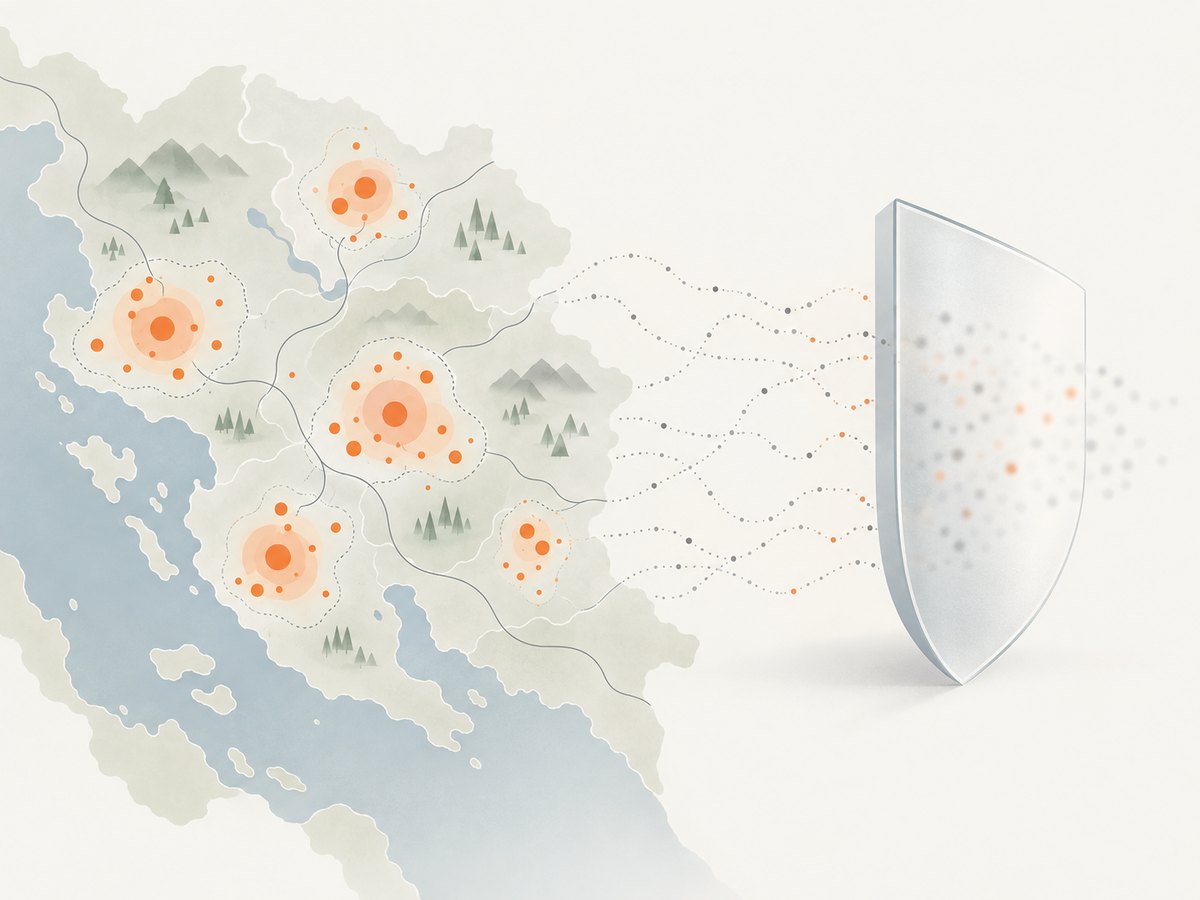
Before collection, write down the minimum fields needed to answer the research question. A design that needs counts by broad area may not need usernames, profile URLs, post text, timestamps, or precise coordinates. Avoid building persistent, person-level histories of where someone has been. Set an access policy and deletion date before ingesting data, not after the dataset has grown.
| Design choice | Safer default |
|---|---|
| Fields | Collect only fields necessary for the stated purpose; aggregate or remove identifiers early. |
| Geographic detail | Use the least precise area that still answers the question. |
| Retention | Set a documented end date and an automated deletion process. |
| Access | Restrict raw records to staff who need them; log access where appropriate. |
| Outputs | Check that maps, reports, and exports do not expose identifiable visits or small groups. |
| Legal review | Review the laws and obligations that apply to the people, locations, and processing involved. |
5. A practical workflow for an authorized project
The steps below help a developer structure a project without assuming an endpoint exists. The API call belongs to the authorized provider or platform documentation you have verified; there is no guessed Instagram location URL here.
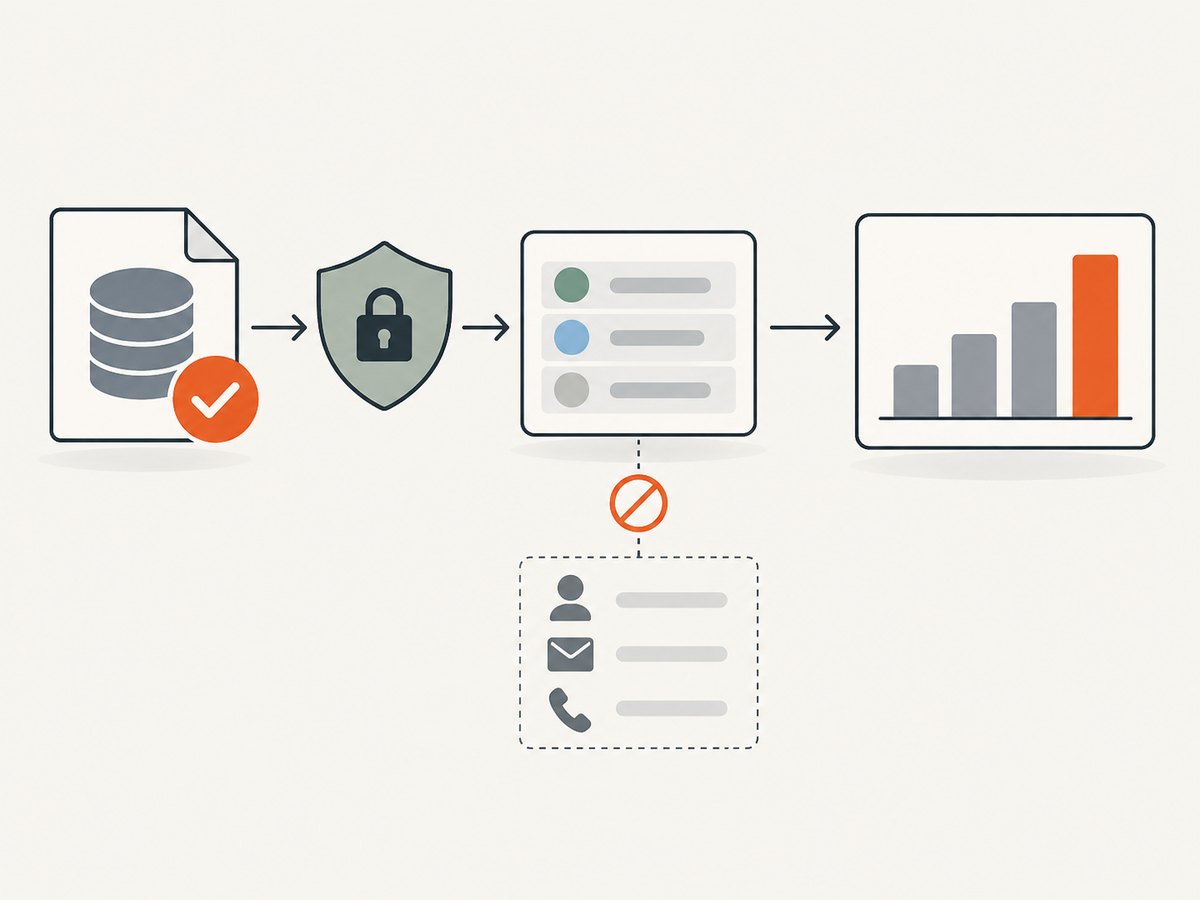
- Write acceptance criteria. Define the geography, date range, output fields, acceptable missingness, and whether aggregated results are sufficient.
- Validate access with a tiny sample. Use the documented authorization flow and a small permitted request. Confirm the returned fields and meanings against current provider documentation.
- Preserve provenance. Store the source, collection time, documented permission, and schema version alongside the data. Do not store access tokens in source code or logs.
- Normalize location carefully. Retain the original place label only if needed. Keep normalization separate and avoid treating similarly named places as identical without validation.
- Apply minimization during ingestion. Drop unnecessary identifiers as soon as possible, bucket timestamps if exact times are not needed, and aggregate before broad access.
- Monitor quality and authorization. Track missing fields, schema changes, rejected requests, and permission expiry. Pause collection if behavior differs from documented limits or authorization changes.
- Delete on schedule. Test the retention job against raw records, derived tables, exports, and backups where applicable.
A useful implementation boundary is an adapter around the authorized source. Keep transport, authorization, schema validation, and minimization in distinct components. Then downstream analysis can use a stable internal record shape without embedding an undocumented Instagram endpoint throughout the application.
# Illustrative Python normalization for records you are authorized to process.
# Input is a local JSON array with fields your approved source documents.
# This does not connect to Instagram or fetch posts.
import json
from collections import Counter
from pathlib import Path

records = json.loads(Path("authorized_records.json").read_text())
counts = Counter()

for item in records:
    # Keep a broad place label only; omit account IDs, post URLs, text and timestamps.
    place = item.get("place_name")
    if isinstance(place, str) and place.strip():
        counts[place.strip()] += 1

Path("place_counts.json").write_text(
    json.dumps(counts, indent=2, ensure_ascii=False)
)
print(f"Wrote aggregate counts for {len(counts)} place labels")
The example assumes a local file named authorized_records.json containing records with a documented place_name field. It intentionally does not specify an Instagram request, because current official location-search support was not verified. If your authorized source has another schema, adapt the field mapping and preserve the source’s documented meaning rather than inferring it.
6. Evaluate a provider without mistaking access for authorization
A vendor that can return location-associated posts has not, by that fact alone, shown that its access is authorized or appropriate for your use. Request direct answers before signing up or sending data to it. A serious evaluation should cover:
- Which source supplies the data, and what permission allows the provider to collect and redistribute it?
- Does the permission cover place search and the exact fields, geography, and use case you need?
- What are the geographical and account coverage limits, and how are gaps represented?
- Can you minimize fields, set retention, delete records, and export or erase your data?
- Does the provider explain outages, schema changes, request limits, and permission changes?
- Are derived data and downstream sharing covered by the provider’s terms and your own obligations?
No named Instagram location-scraping vendor was verified in the research for this guide, so it would be misleading to rank or recommend one. Treat a sales claim, sample response, or working demo as a technical observation only; it is not proof of Meta’s authorization.
7. Troubleshooting and decision points
| Symptom | Likely cause | What to do |
|---|---|---|
| An old location endpoint returns “retired” or an API-not-allowed error. | The endpoint may be historical or unsupported. | Do not retry with guessed paths. Check current official documentation and approved access routes. |
| A library’s location search suddenly stops returning results. | Unofficial interface behavior or schema may have changed; the library may not have a supported contract. | Pause collection. Verify authorization and source status, then use only documented access. |
| A provider returns locations but cannot explain provenance. | Data source and permission are unclear. | Do not use the data until the provider documents its source, permission, coverage, and retention controls. |
| Records have a place name but no coordinates. | The source may expose only a label, or the place may not map cleanly. | Keep the label and represent coordinates as missing; do not fabricate precision through geocoding unless permitted and necessary. |
| People can be singled out in an aggregate chart. | Geography, time window, or cohort is too narrow. | Broaden buckets, suppress small groups, or remove dimensions that enable re-identification. |
| Access is denied or rate-limited. | Permission, scope, quota, or source policy may not cover the request. | Stop and consult the documented support route. Do not disguise the traffic or rotate identities to continue. |
8. Performance, reliability, and cost
For authorized access, optimize around the documented quota and the smallest useful query. Requesting fewer fields and smaller date or geographic windows reduces downstream storage and review work. Cache only where the source’s terms permit caching, and define expiry so stale place mappings are not mistaken for current information. Batch processing can simplify retries, but do not increase concurrency beyond documented limits.
Reliability depends on a supported data contract and permission that remains valid. Version schemas, validate required fields, preserve source timestamps, and alert on empty or unexpectedly changed results. Use bounded retries for transient failures only when the documented API permits them; a permissions error, retired endpoint, CAPTCHA, or rate limit is not a signal to evade controls. Keep a kill switch and a process for deleting data if authorization ends.
Cost is not just the provider invoice. Include engineering time for authorization review, data quality work, privacy review, retention and deletion, monitoring, and responding to source changes. Compare vendors only after verifying that they offer the specific authorized location capability your project needs. No current provider pricing or capability was confirmed in this research, so this guide does not give fabricated cost estimates.
9. Or skip the browser setup
ScreenshotNeo is a website screenshot API and MCP server for developers. It can capture a webpage as PNG, JPEG, WebP, or PDF; it does not scrape Instagram location data or grant access to Instagram content. For a page you are authorized to view, a screenshot can document the visible state without building a browser capture stack. See the ScreenshotNeo API documentation for request options.
curl -G "https://api.screenshotneo.com/v1/shot" -d access_key=YOUR_API_KEY --data-urlencode url=https://stripe.com -o shot.webpimport requests
r = requests.get(
"https://api.screenshotneo.com/v1/shot",
params={"access_key": "YOUR_API_KEY", "url": "https://stripe.com"},
timeout=90,
)
open("shot.webp", "wb").write(r.content)const q = new URLSearchParams({ access_key: 'YOUR_API_KEY', url: 'https://stripe.com' });
const res = await fetch(`https://api.screenshotneo.com/v1/shot?${q}`);ScreenshotNeo removes cookie and consent banners, newsletter popups, and chat widgets before a capture; each cleanup step can be turned off. Bot checks and CAPTCHAs, blank pages, timeouts, failed loads, and cache hits are not billed, and response headers identify the page verdict and billing status. Its MCP server offers take_screenshot, get_page_info, and capture_pdf tools for AI agents. The free plan includes 1,000 screenshots a month with no card; paid plans start at $5 for 3,000. Every feature is on every plan. These features are for capturing webpages, not collecting Instagram posts or bypassing access restrictions.
Create a free ScreenshotNeo account for 1,000 screenshots a month with no card.
10. FAQ
Is Instagram location scraping legal?
There is no universal yes-or-no answer. It depends on authorization, terms, data type, purpose, jurisdiction, and how the information is used. Get advice for the laws that apply to your project.
Does public mean free to collect automatically?
No. Public visibility does not itself establish permission for bulk automation. Meta distinguishes authorized from unauthorized collection and states that automated collection requires an expressly permitted route.
Does Instagram still have a location API?
The research confirms historical location API changes but did not verify current official location-search support. Check current Meta developer documentation before relying on any workflow.
Can I use ScreenshotNeo to scrape posts by place?
No. ScreenshotNeo captures webpages as images or PDFs. It is not a post-search API, data source, or authorization mechanism.
Sources and evidence limits
- Meta Help Center: Data scraping defines scraping and describes authorization and anti-scraping measures.
- Meta: How We Work to Safeguard People Against Clone Sites describes its Instagram clone-site actions.
- Meta: Taking Action Against Scraping for Hire reports the MyStalk case.
- Meta: How We Combat Scraping gives Meta’s 2021 account of enforcement efforts.
- Meta US Regional Privacy Notice is the US-specific source for location-related and precise geolocation categories.
- Historical developer report on the retired location endpoint is a secondary account, not current official documentation.
The current status of Instagram location endpoints, third-party provider capabilities, and jurisdiction-specific legal conclusions was not established in this research. Verify those points against current primary documentation and qualified counsel before building or deploying a collection system.


