SOC 2 Compliant Data Tools for Enterprise Web Scraping
How to evaluate SOC 2 web-scraping vendors by scope, controls, audit evidence, operations, and contract terms.
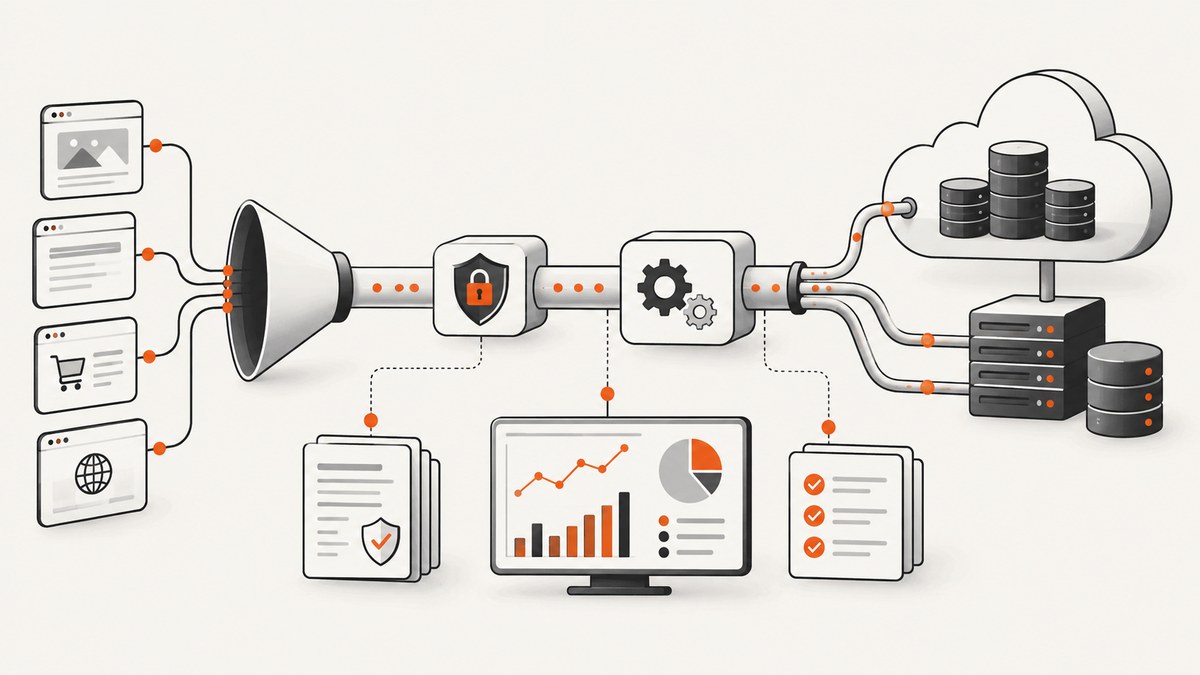
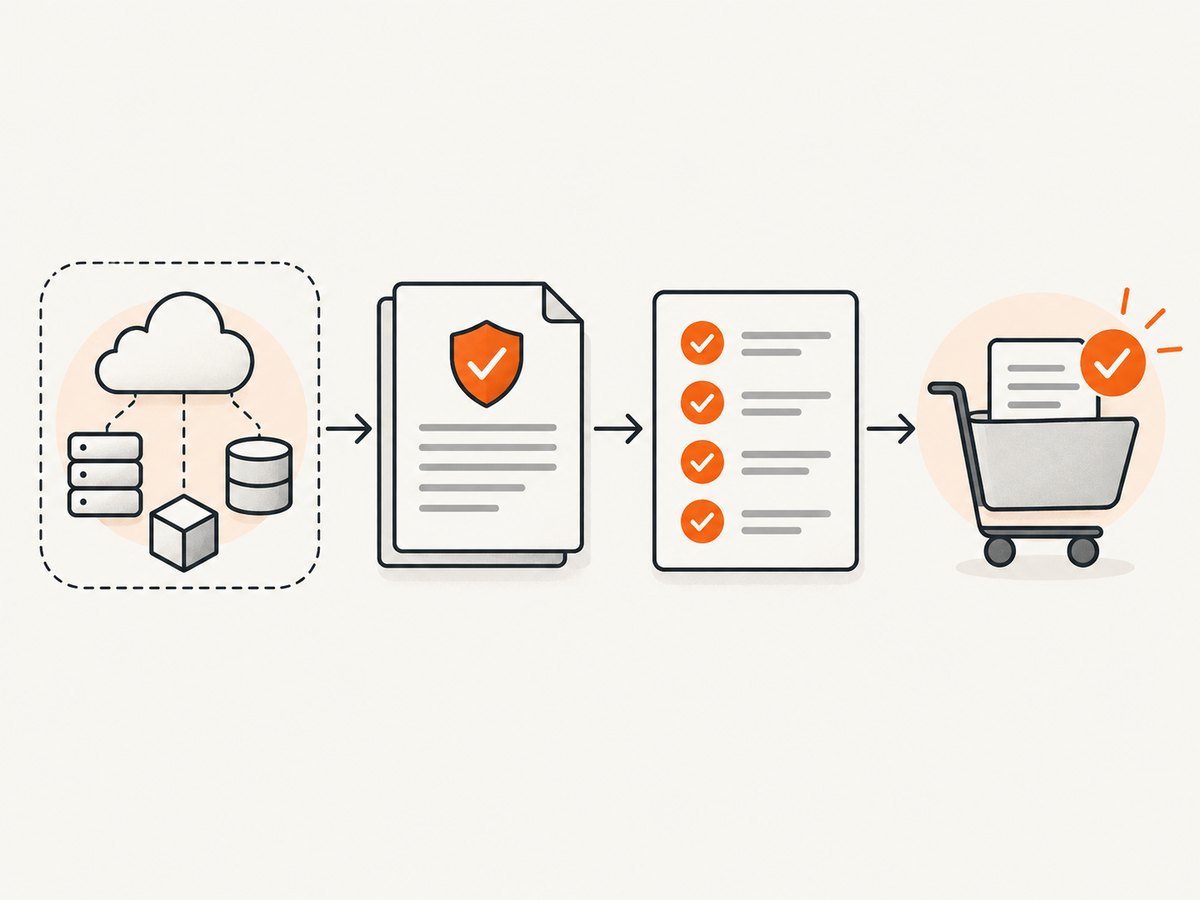
Short answer: A vendor saying it is “SOC 2 compliant” is only the beginning of enterprise due diligence. Ask for the current SOC 2 report, confirm the exact scraping service and infrastructure in scope, review the Trust Services Criteria and examination period, then map the report to your requirements for access control, logging, retention, delivery, data quality and incident response.
SOC 2 reports are independent third-party examinations based on the AICPA Trust Services Criteria. Those criteria cover security, availability, processing integrity, confidentiality and privacy, but a report may include only some of them. The named system, service boundaries, exceptions and audit period determine what the report actually tells you. Atlassian’s SOC 2 explanation is a useful primer because it shows how reports are published for specific product groupings rather than as one universal company certificate.
1. What “SOC 2 compliant web scraping” should mean
SOC 2 is an examination report, not a product label or a legal authorization to scrape a website. Auditors evaluate whether controls are suitably designed and, for a Type II report, whether they operated during a stated period. Your procurement decision depends on whether those controls apply to the service you will buy.
| Question | Evidence to request |
|---|---|
| Which service is covered? | Report system description, service name, production regions and infrastructure boundary. |
| Which criteria are included? | Security, availability, processing integrity, confidentiality and/or privacy listed in the report. |
| Is it Type I or Type II? | Type I evaluates design at a point in time; Type II includes operating effectiveness over an examination period. |
| How current is it? | Report period end date, issuance date and a bridge letter if the period has ended. |
| Were there exceptions? | Auditor tests, exceptions, management responses and any complementary user-entity controls. |
| Who operates the controls? | Vendor responsibilities versus your responsibilities for credentials, targets, storage and exports. |
A company-wide SOC 2 statement does not prove that every product, region or subprocessor is covered. A report can exclude a new API, a separate data center or a managed service delivered by another entity. Treat the report scope as the boundary of the claim.
2. A procurement process that produces defensible evidence
- Define the workload. List target domains, crawl frequency, JavaScript requirements, output schema, delivery destinations, personal-data exposure and retention period.
- Collect the assurance package. Obtain the latest SOC 2 report under NDA or through the vendor trust portal, plus a bridge letter when the report period is no longer current.
- Map controls to your policy. Mark each requirement as covered, partially covered, customer-owned or unanswered. Do not accept a generic compliance badge as evidence.
- Review contracts. Check the DPA, subprocessors, breach-notification window, deletion commitments, location of processing, support obligations and audit rights.
- Run a representative pilot. Use realistic dynamic pages, blocked pages, pagination, retries and your expected delivery path. Measure data quality and operational effort without presenting the result as an independent security audit.
- Record residual risk. Document legal review, target-site restrictions, data classification, remaining control gaps and who accepts them.
Questions to send every vendor
- What exact product, API, worker fleet and cloud accounts are named in the SOC 2 system description?
- Which Trust Services Criteria were tested, and what exceptions occurred?
- What are the report period and bridge-letter dates?
- Which subprocessors handle proxies, browsers, storage, queues, support or delivery?
- How are tenant credentials, cookies, API keys and exported datasets encrypted and isolated?
- Can administrators enforce SSO, MFA, least privilege and separate production roles?
- Are workflow, user, configuration and run logs retained? Can we export them for our SIEM?
- How do you delete source captures, intermediate files, failed jobs and backups?
- What controls validate completeness, freshness, schema and duplicate records?
- What happens when a target changes, blocks automation or returns a consent wall?
3. Managed extraction versus a self-operated platform
| Dimension | Fully managed service | Enterprise-operated platform |
|---|---|---|
| Operating model | Vendor builds, monitors and maintains crawlers. | Your team configures agents, schedules and validation. |
| Assurance review | Focus on vendor controls, subprocessors and delivery paths. | Review both platform controls and your deployment, identities and storage. |
| Access control | Confirm support and operator access to your jobs and data. | Look for role-based access control, federated identity and separation of duties. |
| Auditability | Require run history, change records and exportable evidence. | Verify workflow, user and execution logs and their retention. |
| Data lifecycle | Contract for collection boundaries, retention and deletion. | You usually own storage and must enforce lifecycle policies yourself. |
| Operational fit | Maintenance and monitoring are outsourced. | You retain responsibility for agents, upgrades, failures and target changes. |
Neither model is automatically more secure. A managed provider can reduce operational burden while increasing third-party risk. A self-operated platform can improve control while requiring mature identity, logging, patching and incident-response processes.
4. Vendor examples and how to verify their claims
Grepsr
Grepsr publicly describes fully managed web data extraction, including crawler setup, monitoring, maintenance and delivery through API, S3, FTP and other destinations. It states claims about SOC 2 Type II, ISO 27001, GDPR compliance, retention policies, data-quality processes and audit-trail reporting. These are first-party statements. Request the current report, system scope, exceptions, subprocessors, retention terms and contractual commitments before treating them as procurement evidence.
Sequentum
Sequentum describes a cloud web data extraction platform with agent creation, review, deterministic execution and audit logging. It states that its environment is SOC 2 Type II certified and describes role-based access control and federated identity. Obtain the current report and confirm that the purchased service, infrastructure and examination period are in scope. Product testimonials and award references are not substitutes for an audit report.
5. Controls to implement around any scraping tool
Identity and secrets
- Use SSO and MFA where available; prohibit shared administrator accounts.
- Store API keys, proxy credentials and cookies in a secrets manager.
- Issue separate credentials for development, production and vendors.
- Rotate credentials after staff changes or suspected exposure.
Target and data boundaries
- Maintain an approved-domain inventory and record the business purpose for each source.
- Classify collected fields before production runs; minimize personal data.
- Document target terms, contractual permissions and jurisdictional review.
- Set retention and deletion schedules for raw pages, screenshots, logs and exports.
Integrity and operations
- Validate schemas, row counts, timestamps, duplicates and required fields.
- Alert on sudden volume changes, empty responses, changed selectors and repeated blocks.
- Keep immutable run metadata: job version, operator, target, start/end time, status and destination.
- Test restore, replay and deletion procedures on a schedule.
6. Visual verification without giving a scraper broad browser access
ScreenshotNeo is a website screenshot API and MCP server, not a SOC 2 report or a replacement for a data-extraction provider. It can add a controlled visual-evidence step to QA: capture a rendered page or a specific element after your pipeline runs, then retain the image according to your policy. See the ScreenshotNeo documentation for parameters and response behavior.

Its clean-shot workflow accepts consent banners like a visitor and removes more than 60 known consent platforms, newsletter popups and chat widgets; each step can be disabled. Bot checks, blank pages, timeouts, failed loads and cache hits cost nothing, and response headers identify the page verdict and whether it was billed. It also provides an MCP server with take_screenshot, get_page_info and capture_pdf tools for Claude, Cursor and other MCP clients.
cURL
curl -G "https://api.screenshotneo.com/v1/shot" \\
  -d access_key=YOUR_API_KEY \\
  --data-urlencode url=https://stripe.com \\
  -o shot.webp
Python
import requests

r = requests.get(
    "https://api.screenshotneo.com/v1/shot",
    params={"access_key": "YOUR_API_KEY", "url": "https://stripe.com"},
    timeout=90,
)
r.raise_for_status()
open("shot.webp", "wb").write(r.content)
Node.js
const q = new URLSearchParams({
  access_key: 'YOUR_API_KEY',
  url: 'https://stripe.com'
});
const res = await fetch(`https://api.screenshotneo.com/v1/shot?${q}`);
if (!res.ok) throw new Error(`HTTP ${res.status}`);
const fs = await import('node:fs/promises');
await fs.writeFile('shot.webp', Buffer.from(await res.arrayBuffer()));
Relevant capture controls include full-page screenshots with lazy images loaded, CSS-selector element capture, dark mode, device presets, custom viewports, retina scale, PDF paper size and margins, custom CSS and JavaScript, click actions, selector or network-idle waits, request and resource blocking, custom headers and cookies, user-agent and Authorization headers, timezone, geolocation, transparent backgrounds, resizing, caching with a chosen TTL, signed links, asynchronous jobs with signed webhooks, bulk capture of up to 100 URLs per call and a usage API. Parameter names used by other screenshot APIs also work, which can simplify migration.
7. Troubleshooting and failure handling
| Symptom | Likely cause | Fix |
|---|---|---|
| Report scope is vague | Marketing language instead of a system description. | Request the report and named service boundary; pause approval until clarified. |
| Report is several months old | Examination period ended. | Request a bridge letter and confirm no material control changes. |
| Data is incomplete | Lazy loading, pagination or a selector change. | Add explicit waits, schema checks and change alerts; rerun a known fixture. |
| Repeated blocks or consent pages | Target defenses or an unhandled consent flow. | Review permissions, use an approved browser profile and document the exception. |
| Screenshot response is blank | Page timeout, bot check or failed load. | Inspect X-Page-Verdict; adjust wait or headers and remember failed loads are not billed. |
| Unexpected screenshot cost | Fresh successful captures rather than cache hits. | Choose a cache TTL, reuse results and inspect X-Billed. |
8. Performance, reliability and cost planning
Estimate cost from successful, billable captures or extraction runs, not from requested URLs alone. Include retries, browser startup, proxy fees, storage, delivery and human review. For ScreenshotNeo, cache hits and failed or blocked page outcomes are free; select a TTL when repeated visual checks are identical. The Free plan includes 1,000 shots per month without a card. Paid plans are Starter $5 for 3,000, Growth $15 for 15,000, Pro $39 for 60,000, Scale $99 for 250,000 and Business $249 for 1,000,000; yearly billing gives two months free and every feature is included on every plan.
For reliability, make jobs idempotent, persist a request identifier, cap concurrency to the vendor’s documented limits, use exponential backoff for transient failures and send dead-lettered jobs to review. Keep raw evidence long enough to investigate but delete it according to the approved schedule. A SOC 2 report does not guarantee your target’s availability or your extraction accuracy.
9. Legal and contractual boundaries
SOC 2 does not establish that a particular scraping workflow is lawful. Review target-site terms, data sensitivity, personal-data handling, jurisdiction, contractual restrictions and the intended use with counsel and procurement. The vendor statements and reports discussed here cannot resolve those fact-specific questions.
10. FAQ
Is SOC 2 Type II enough to approve a scraping vendor?
No. Confirm scope, criteria, period, exceptions, subprocessors, contractual terms and your own customer responsibilities.
Should we prefer managed extraction or self-hosting?
Choose based on your ability to operate identities, logging, patching, monitoring and incident response, balanced against third-party and maintenance risk.
Does a bridge letter replace a new SOC 2 report?
No. It helps cover the gap after an examination period ends, but review its stated coverage and limitations.
Can ScreenshotNeo certify our scraping workflow?
No. It provides screenshots, PDFs and page information. Your organization remains responsible for assurance, permissions, retention and legal review.
Or skip the browser setup
For visual checks, one ScreenshotNeo request returns a PNG, JPEG, WebP or PDF. Cookie banners, popups and chat widgets are removed before the shot; bot checks, blank pages and failed loads are never billed. An MCP server lets AI agents take screenshots, and 1,000 screenshots a month are free with no card; paid plans start at $5 for 3,000. Create a free ScreenshotNeo account.