Test Data Management: What It Is and Why It Matters
Learn how to plan, create, protect, refresh, and isolate test data so your test suites stay reliable without spreading sensitive production data.
Test data management (TDM) is the disciplined practice of planning, creating, protecting, delivering, refreshing, and retiring the data that software tests need. It covers test-owned fixtures, masked production-derived data, subsets, synthetic records, and the systems that provision those datasets on demand.
Good TDM gives each test enough realistic data at the right time while controlling sensitivity, freshness, scope, repeatability, and cost. It prevents a test suite from becoming dependent on a shared database, an unavailable customer record, or a stale copy of production.
What is test data management?
TDM is an operating process rather than one product or one database. It answers five practical questions:
- What data does this test require? Include records, relationships, permissions, states, edge cases, volume, and expected freshness.
- Where should the data come from? Options include fixtures created by the test, masked production-derived records, subsets, or synthetic data.
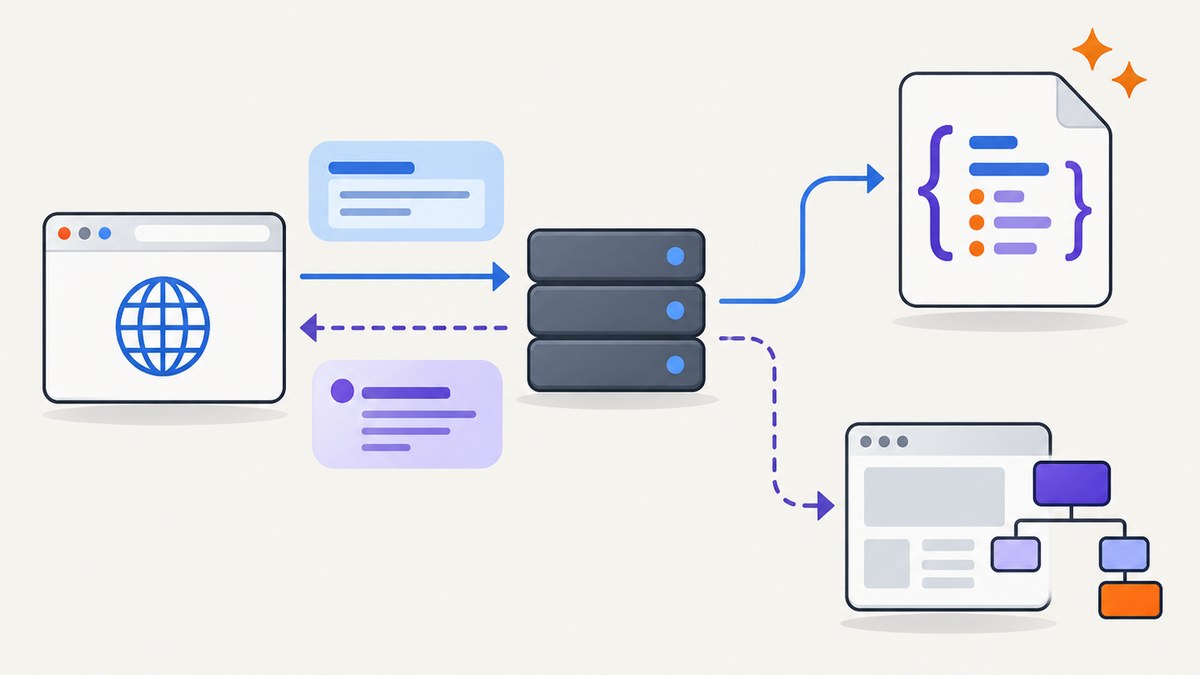
- How is it delivered? Data may be inserted through an API, loaded into a database, restored from a snapshot, or generated just before a test.
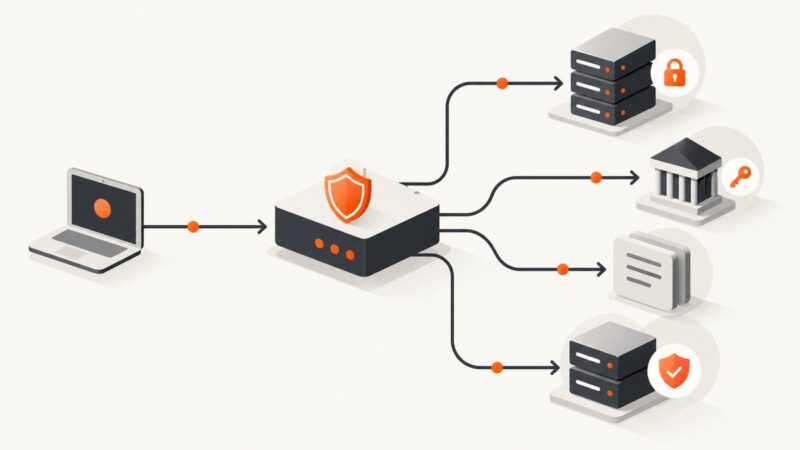
- Who can access it? Access, retention, auditability, and environment boundaries matter when data is sensitive.
- How is it isolated and removed? Tests should avoid leaking state into one another and should clean up or discard temporary datasets.
DORA describes test data as an enabler for manual and automated tests: it lets teams validate valuable user journeys, exercise edge cases, reproduce defects, and simulate errors. Its guidance recommends adequate data for complete automated suites, on-demand acquisition, and removing data availability as a constraint on which tests can run.
Why is test data management important?
When data is missing or poorly controlled, tests become brittle. A test may pass only because another test created a record earlier, fail because a shared account was changed, or wait hours for a database refresh. Shared state also makes parallel execution unsafe: two jobs can update the same order, user, or inventory row and produce failures that cannot be reproduced locally.
TDM improves delivery in four ways:
| Outcome | How TDM helps |
|---|---|
| Reliable feedback | Each test receives known inputs and expected outputs instead of depending on ambient state. |
| Broader coverage | Teams can create rare failures, boundary values, invalid combinations, and high-volume datasets deliberately. |
| Safer non-production | Subsetting and masking reduce unnecessary copies of sensitive production information. |
| Faster pipelines | On-demand provisioning and reusable isolated datasets reduce waiting for shared refreshes. |
Copying an entire production database expands the security and compliance boundary, increases storage, and can make refreshes slow. A smaller, purpose-built dataset is often easier to protect and faster to provision, provided it retains the relationships and states the test needs.
How do you create test data?
1. Inventory the test contract
For every suite, write down required entities, relationships, permissions, lifecycle states, volume, edge cases, and freshness. For example, a checkout test might need an active customer, a verified address, an in-stock product, a tax jurisdiction, a payment method that can be declined, and an order in a specific state.
2. Choose the smallest suitable source
- Fixtures and API setup: Create only the records needed by a test through application APIs or database factories. This is usually the best fit for unit and many integration tests.
- Masked production-derived data: Transform sensitive values while preserving realistic shapes and relationships. Verify that uniqueness, foreign keys, formats, and business rules still work.
- Subsets: Extract only relevant records and dependencies. Subsetting reduces storage and limits unnecessary proliferation of sensitive information, but an incomplete dependency graph can make the result unusable.
- Synthetic data: Generate artificial records with desired distributions, constraints, and rare cases. Synthetic data is useful when production data is unavailable or too sensitive, but it must be validated for realism and bias.
3. Provision data through a repeatable interface
A provisioning job should accept a scenario name or schema version and return an identifier for the created dataset. Keep the operation idempotent where possible so retries do not create duplicate accounts or orders.
POST /test-data/v1/datasets
Content-Type: application/json

{
  "scenario": "checkout_declined_card",
  "version": "2026-09-01",
  "isolation_key": "build-1842-shard-3",
  "expires_in_minutes": 120
}
Store the dataset identifier with the test run. That makes a failure reproducible and lets cleanup jobs remove data after the retention window.
4. Validate before handing data to tests
Check referential integrity, required fields, uniqueness, permissions, date ranges, locale behavior, and application-level invariants. A masked record that satisfies database constraints can still fail because an email domain is blocked, a postal code is invalid for its country, or an account state is impossible in the application.
5. Isolate and clean up
Prefer a dataset or tenant per test, worker, or build. If full isolation is expensive, partition by stable keys and prevent tests from mutating shared seed rows. Apply automatic expiration and run cleanup even when a test job fails.
Fixtures, masking, subsetting, or synthetic data?
| Approach | Strengths | Risks and limits | Good fit |
|---|---|---|---|
| Test-owned fixtures | Fast, deterministic, easy to isolate | Can miss production complexity; maintenance follows schema changes | Unit, API, and focused integration tests |
| Masking or transformation | Retains familiar shapes and relationships | May break usability or leave re-identification risk; masking is not proof of anonymity | Workflow tests requiring realistic structures |
| Subsetting | Smaller, cheaper, less exposure than a full copy | Missing dependencies can invalidate scenarios | System tests needing representative relational data |
| Synthetic data | Can target rare cases, scale, and privacy constraints | Unrealistic patterns, bias, or omissions can hide failures | Load tests, boundary cases, and unavailable domains |
Oracle’s documentation describes masking as replacing sensitive values with fictitious but realistic-looking values and subsetting as extracting a smaller set of records and relationships. Those are product-specific descriptions; evaluate any implementation for discovery, application compatibility, relationship integrity, and resource requirements.
The UK Government’s synthetic-data guidance cautions that “Synthetic data is just as vulnerable to weakness, bias, omission and so on, as real-world data.” Treat generated data as an engineering artifact that needs quality checks, not as automatically safe or representative.
Can production data be used for testing?
Sometimes, but a direct production copy should be an exception with documented justification and controls. First identify sensitive fields and the people, systems, and jurisdictions involved. Then remove records that are irrelevant to the test, transform values, restrict access, encrypt storage and transport, set retention limits, and verify that the resulting dataset still satisfies application rules.
Do not claim that masking alone guarantees legal compliance. Regulatory obligations depend on the data, jurisdiction, processing purpose, and transformation context. Review your organization’s privacy, security, and retention requirements before importing production-derived data.
How do I protect sensitive data in test environments?
- Classify fields such as names, contact details, identifiers, payment data, health data, and authentication secrets.
- Keep production credentials and live tokens out of fixtures and snapshots.
- Use least-privilege service accounts and separate keys per environment.
- Mask or synthesize sensitive values before data leaves controlled production systems.
- Subset instead of copying entire databases when the test does not require them.
- Log dataset identifiers and access events without logging sensitive field values.
- Set automatic expiration and securely delete temporary exports.
- Scan generated artifacts, backups, CI logs, and developer laptops for accidental copies.
Measuring a TDM process
Track whether tests can obtain appropriate data without waiting for a person or a scheduled refresh. Useful measures include provisioning latency, refresh age, failed setup rate, cleanup completion, percentage of suites using isolated data, storage consumed per environment, and the number of test failures caused by missing or invalid data.
Perforce Software’s The 2026 Test Data Management Report for AI-Ready Enterprises reports that 86% of its respondents use static masking, 60% use dynamic masking, and 51% use synthetic data. The same report says 57% saw sensitive-data volume increase over the prior 12 months, 27% named scalability a top priority, and 30% reported challenges testing across complex environments. These are survey findings from Perforce’s respondents, not universal estimates.
Or skip the browser setup
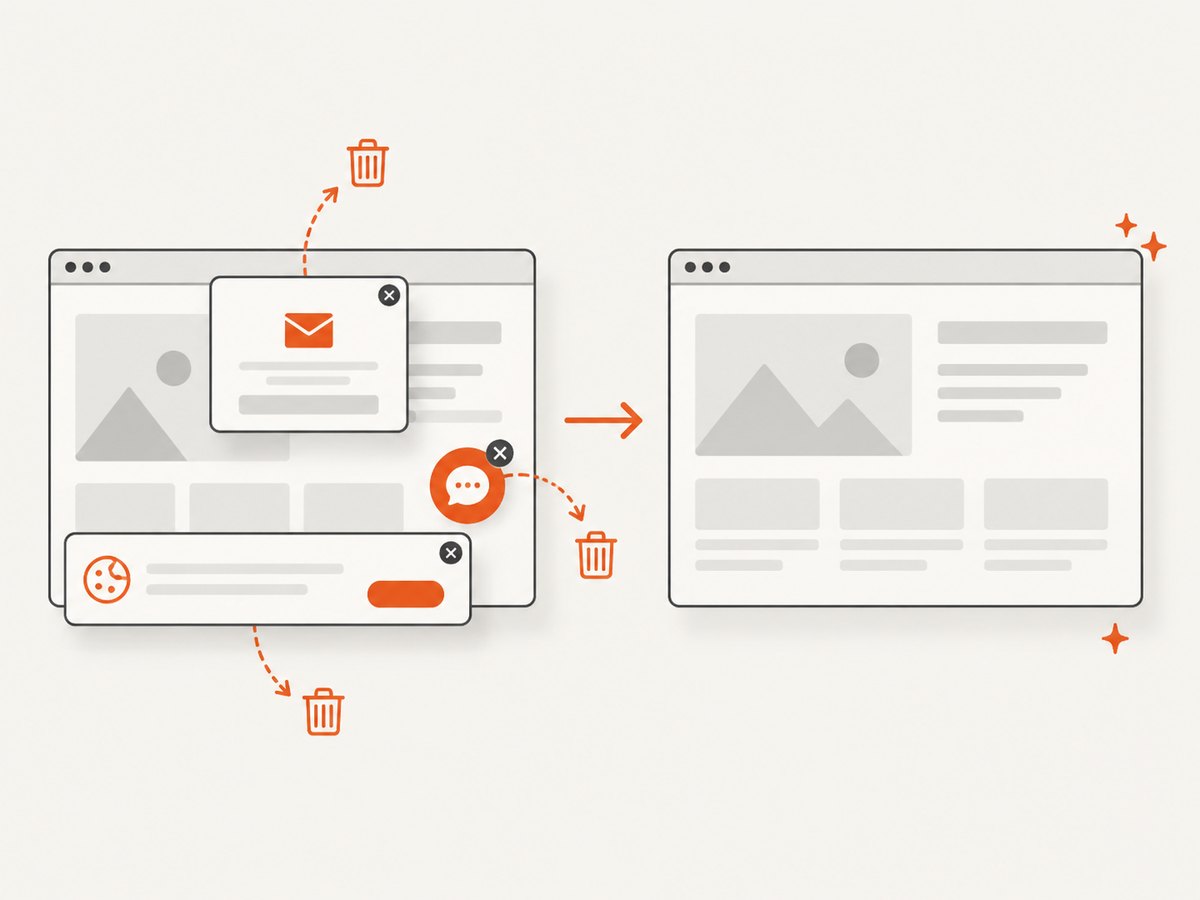
When your test data workflow includes visual checks of web pages, ScreenshotNeo can provide a clean capture through one request. Cookie banners, newsletter popups, and chat widgets are removed before the shot. Bot checks, blank pages, failed loads, timeouts, and cache hits are not billed, and response headers identify the page verdict and whether the request was billed. Its MCP server lets Claude, Cursor, and other MCP clients use take_screenshot, get_page_info, and capture_pdf.

See the ScreenshotNeo API documentation for all options.
curl -G "https://api.screenshotneo.com/v1/shot" -d access_key=YOUR_API_KEY --data-urlencode url=https://stripe.com -o shot.webpimport requests
r = requests.get("https://api.screenshotneo.com/v1/shot", params={"access_key": "YOUR_API_KEY", "url": "https://stripe.com"}, timeout=90)
open("shot.webp", "wb").write(r.content)const q = new URLSearchParams({ access_key: 'YOUR_API_KEY', url: 'https://stripe.com' });
const res = await fetch(`https://api.screenshotneo.com/v1/shot?${q}`);ScreenshotNeo includes full-page and element captures, device presets, custom viewport and retina scale, dark mode, CSS and JavaScript, waits, request blocking, headers, cookies, authentication, geolocation, caching, signed links, asynchronous jobs, bulk capture, PDF output, and a usage API. One thousand screenshots per month are free with no card; paid plans start at $5 for 3,000.
Create a free ScreenshotNeo account to start with 1,000 screenshots each month and no card.
Performance, reliability, and cost considerations
- Provisioning speed: Generate small fixtures in-process for fast feedback; reserve large snapshots for suites that need them.
- Parallelism: Use worker-specific identifiers or database schemas. Shared mutable rows create flaky tests.
- Freshness: Define a maximum age for each dataset. A financial-rate test may need current reference data while a migration test may require a frozen historical snapshot.
- Reliability: Make setup observable, retry safe operations, and fail with an actionable reason when a dependency is unavailable.
- Cost: Include storage, refresh compute, masking or generation tools, database licenses, transfer, and engineer time. A smaller subset can reduce both storage and exposure.
- Visual capture cost: Cache stable screenshots with a chosen TTL and use bulk or asynchronous capture for large suites. ScreenshotNeo bills only clean shots; failed loads and cache hits cost nothing.
Troubleshooting common TDM failures
“The test passes alone but fails in the suite.”
Cause: shared mutable state or ordering dependence. Fix: create unique records per test, reset state, and record the dataset identifier with failures.
“Foreign-key or validation errors appear after masking.”
Cause: transformed values no longer match relationships or application rules. Fix: mask related columns together, preserve uniqueness and formats, then run application-level validation.
“Synthetic data looks realistic but misses failures.”
Cause: the generator reproduces common patterns but not rare or adversarial cases. Fix: add explicit boundary scenarios, invalid combinations, and independent validation against domain expectations.
“Refreshes take too long.”
Cause: full database copies, expensive transformations, or serial provisioning. Fix: subset by dependency graph, parallelize independent jobs, cache immutable reference data, and refresh only what changed.
“A screenshot test contains a consent banner.”
Cause: the capture occurred before consent handling or the banner is from an unsupported custom implementation. Fix: use a wait or click step, hide the selector, or configure custom JavaScript. ScreenshotNeo’s clean-shot flow removes more than 60 known consent platforms, newsletter popups, and chat widgets before capture.
FAQ
Is TDM only for end-to-end tests?
No. Unit tests may use in-memory fixtures, while integration, contract, system, migration, performance, and visual tests need progressively richer provisioning and isolation.
Should every test get a separate database?
Not always. Separate schemas, tenants, namespaces, or worker-specific keys can provide adequate isolation at lower cost. Choose the boundary that prevents interference for the suite.
How often should test data be refreshed?
Set freshness by scenario. Refresh data when business rules, reference data, privacy requirements, or production behavior change; keep immutable snapshots for reproducible historical tests.
Is synthetic data safer than masked data?
Neither is automatically safe. Assess re-identification risk, generated patterns, access controls, retention, and whether the data remains fit for the test purpose.
What is the first improvement for a team with flaky tests?
Inventory failures caused by missing or shared data, then move the highest-value suites to isolated, test-owned setup with automatic cleanup and clear dataset versioning.