Top 5 Google Image Search APIs in 2026
Compare Google Images APIs for structured results, reverse image search, pricing, and migration risk—and choose the right option for your 2026 build.
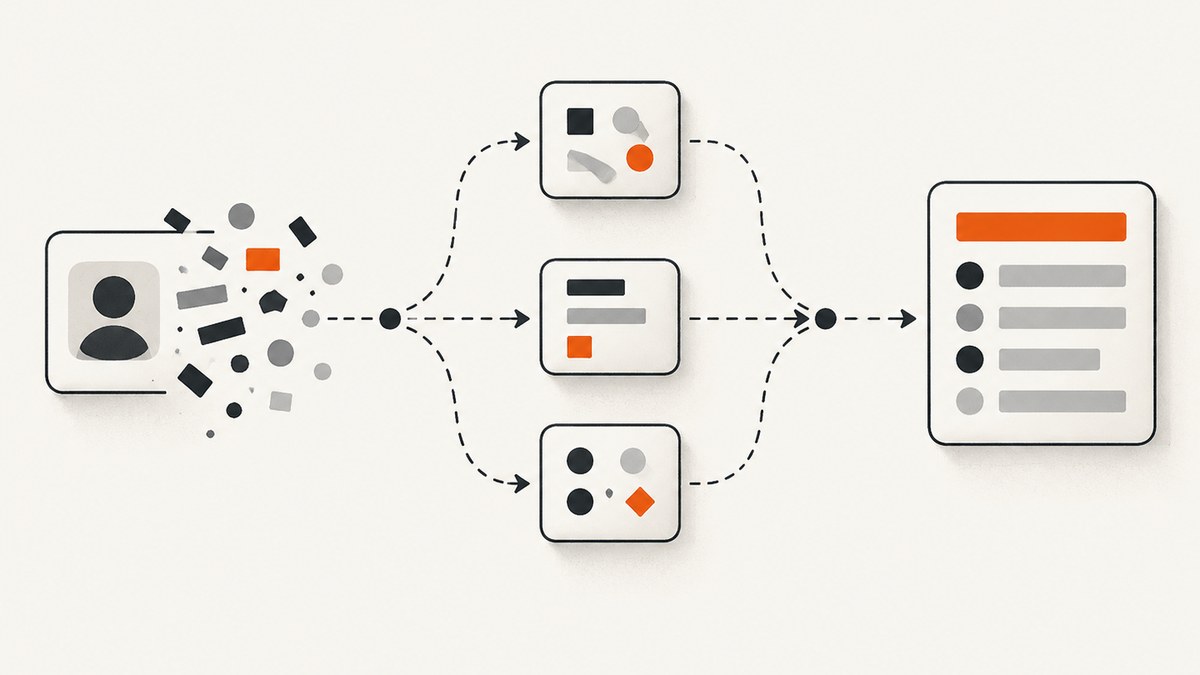
If you need a Google Images API for a new project in 2026, start with SerpApi Google Images API: it documents a dedicated Google Images engine, query and location parameters, and structured image results. For pay-as-you-go and reverse-image workflows, evaluate DataForSEO. Google Custom Search JSON API is now a migration path for existing customers, not a signup choice for new ones: Google says it is closed to new customers and existing customers have until January 1, 2027 to transition.
This guide compares the evidenced options, explains how to make requests, and covers selection, cost, reliability, and migration. Bright Data and Oxylabs are often named in SERP provider comparisons, but the research available for this article did not verify their Google Images endpoints or current pricing, so they are not ranked as established Google Images API choices.
1. SerpApi Google Images API: best turnkey choice
SerpApi provides a dedicated Google Images engine at https://serpapi.com/search?engine=google_images. Send a query with q, optionally set a geographic location, and parse the returned JSON. Its documentation describes structured image results as well as suggested searches, shopping results, and related searches.
Example request
curl --get 'https://serpapi.com/search.json' \
  --data-urlencode 'engine=google_images' \
  --data-urlencode 'q=red bicycle' \
  --data-urlencode 'location=United States' \
  --data-urlencode 'api_key=YOUR_API_KEY'
A typical integration should treat the response as provider JSON rather than assume every result has every field. Inspect the response from the query and region you actually use, then normalize fields you rely on into your own schema. Save the retrieval time, query, and location alongside cached results because image search results can change.
Plans and fit
Published monthly plans in the research dossier are Free (250 searches), Starter ($25 for 1,000), Developer ($75 for 5,000), Production ($150 for 15,000), and Big Data ($275 for 30,000). It suits teams who want a managed endpoint and a predictable monthly allowance. Before production, check the provider’s current plan details, rate limits, geographical behavior, and legal terms for your use case.
2. DataForSEO Google Images API: usage-priced and reverse image search
DataForSEO documents a Google Images API that returns image URLs and stored images with alt and title tags. It also documents Search by Image for reverse-image workflows. This is useful when the input is an image and the desired output is visually related or matching search results rather than results for a text query.

The service supports location and language settings. Search by Image tasks can return up to 100 results. Decide whether you need a standard, priority, or live queue before estimating spend: the published Google Search by Image base prices are $0.0006 per standard-queue SERP page, $0.0012 priority, and $0.002 live. Those correspond to $600, $1,200, and $2,000 per million SERPs respectively.
Request pattern
DataForSEO task APIs use authenticated task requests. The exact endpoint and task payload depend on the specific Google Images or Search by Image operation and queue. Use the official operation documentation for the account’s endpoint and required fields; do not substitute a text-search request for a reverse-image operation. Keep the queue explicit in your application configuration so cost and latency expectations are visible.
# Illustrative authenticated request shape; use the exact endpoint and
# task fields from the DataForSEO operation you select.
curl -X POST 'DATAFORSEO_OPERATION_ENDPOINT' \
  -u 'YOUR_LOGIN:YOUR_PASSWORD' \
  -H 'Content-Type: application/json' \
  -d '[{"keyword":"red bicycle","location_code":LOCATION_CODE,"language_code":"en"}]'
The placeholder endpoint and location code must be replaced using DataForSEO’s documentation for the selected operation and target market. This keeps an example from implying one payload applies to both normal image search and reverse-image search. For real deployments, test with a small task, inspect the returned task status and result shape, and only then automate larger batches.
Budget the effective unit cost
Headline per-page prices are not the whole estimate: the dossier notes that queue modes and parameter multipliers affect effective cost. Model the actual request mix, including priority or live requests, and calculate cost from billed SERP pages rather than merely counting API calls. Pay-as-you-go can work well for batch collection and SEO products with uneven volume, but add a budget threshold and usage monitoring.
3. Google Custom Search JSON API: existing customers only
Google’s first-party Custom Search JSON API can retrieve web or image results from a Programmable Search Engine. Requests require an API key and a Programmable Search Engine ID (cx); set searchType=image for image search. Google states that “The Custom Search JSON API is closed to new customers.” Existing customers have until January 1, 2027 to transition to an alternative.
Legacy image request
curl --get 'https://customsearch.googleapis.com/customsearch/v1' \
  --data-urlencode 'key=YOUR_API_KEY' \
  --data-urlencode 'cx=YOUR_SEARCH_ENGINE_ID' \
  --data-urlencode 'searchType=image' \
  --data-urlencode 'q=red bicycle'
Use the Google API only if your project already has eligible access. The historical published allowance is 100 free queries per day, then $5 per 1,000 additional queries, with a ceiling of 10,000 queries per day. Confirm current account eligibility, quota, and transition guidance directly with Google before depending on these historical terms.
Migration checklist
- Inventory every service, scheduled job, and user-facing feature that calls the API.
- Record query parameters, image result fields consumed, location assumptions, daily volume, and error handling.
- Build a provider adapter around your own result schema so the application is not coupled to one provider’s response.
- Run representative queries against the replacement, including uncommon queries and target geographies.
- Compare result coverage and quality, latency distribution, effective costs, quotas, and failure behavior.
- Switch traffic with a rollback plan, then remove the legacy dependency before the transition deadline.
4. Bright Data SERP API: verify Google Images support first
Bright Data appears in comparative SERP provider evidence. The research for this article did not retrieve an authoritative product page confirming a dedicated Google Images endpoint, current public pricing, or affiliate terms. Do not treat a general SERP API mention as proof of a particular image-search engine. Ask the provider to confirm the endpoint, output fields, geographic controls, permitted use, and pricing for the specific workload before shortlisting it.
5. Oxylabs SERP scraper: verify Google Images support first
Oxylabs also appears in comparative SERP provider evidence, but the same verification gap applies: this research pass did not establish a dedicated Google Images endpoint, public current pricing, or affiliate terms from an authoritative provider page. Confirm those details in writing or in current official documentation before building around it. If it only exposes general search results for your account, it may not meet an image-specific requirement.
How to choose a Google Image Search API
| Need | First option to evaluate | Reason |
|---|---|---|
| Turnkey text query to structured Google Images results | SerpApi | Dedicated documented engine, query and location parameters, structured results. |
| Reverse-image lookup | DataForSEO | Documents a Search by Image endpoint and up to 100 results per task. |
| Existing first-party integration | Google Custom Search JSON API | May bridge an existing deployment, but access is closed to new customers and the transition deadline is January 1, 2027. |
| Bright Data or Oxylabs | Verify first | The evidence here does not establish a dedicated Google Images endpoint or current pricing. |
Compare providers on more than the apparent result count:
- Search type: text-to-image and reverse-image search are distinct workflows.
- Controls: check query, location, language, and any filters your product needs.
- Data shape: identify which URLs, titles, alt text, thumbnails, or related searches are actually returned and licensed for your use.
- Geographic repeatability: fix the location and language where results must be comparable; otherwise record them with every retrieval.
- Cost unit: distinguish a request from a billed SERP page, and account for queue and parameter multipliers.
- Onboarding: a provider that does not accept new customers or provision the required product is not a viable new integration.
- Operational and compliance risk: review provider terms and permitted use, and assess how a third-party extraction service fits your deployment.
- Migration exposure: avoid a new dependency on an API with a known sunset path unless you have a dated replacement plan.
Implementation practices for reliable results
Normalize and preserve context
Keep a provider adapter that turns provider responses into your application’s stable internal representation. Preserve the original response for debugging only where your data policy allows it. Store query, retrieval timestamp, location, language, and relevant filtering settings with each result set. These fields help explain why a rerun differs without assuming image SERPs are static.
Handle failures deliberately
Separate invalid request or authentication errors from throttling, provider errors, and empty successful results. Retry transient failures with bounded exponential backoff and jitter, but do not retry malformed requests unchanged. Apply request timeouts, cap concurrent requests to the provider’s current limits, and make batch jobs resumable so one failed task does not force a full rerun. Use idempotent job identifiers where the provider supports them.
Cache and control volume
Cache results when freshness requirements allow, using a key that includes query, location, language, and relevant search options. A cache keyed only by query can incorrectly reuse results from another country or language. Set an expiry that reflects the product’s freshness needs; do not promise stable ordering or permanent image URLs unless the provider documents that behavior. For usage-priced modes, estimate projected pages and set alerts before increasing concurrency.
Or skip the browser setup
If your job is to capture a web page as an image or PDF rather than search Google Images, ScreenshotNeo is a separate tool for that task: it is a website screenshot API and MCP server. One GET request returns PNG, JPEG, WebP, or PDF. It does not provide image search results.
curl -G "https://api.screenshotneo.com/v1/shot" -d access_key=YOUR_API_KEY --data-urlencode url=https://stripe.com -o shot.webp

python -c 'import requests; r = requests.get("https://api.screenshotneo.com/v1/shot", params={"access_key": "YOUR_API_KEY", "url": "https://stripe.com"}, timeout=90); open("shot.webp", "wb").write(r.content)'

node --input-type=module -e 'const q = new URLSearchParams({ access_key: "YOUR_API_KEY", url: "https://stripe.com" }); const res = await fetch(`https://api.screenshotneo.com/v1/shot?${q}`); if (!res.ok) throw new Error(`HTTP ${res.status}`); await import("node:fs/promises").then(fs => fs.writeFile("shot.webp", Buffer.from(await res.arrayBuffer())));'
See the ScreenshotNeo API docs. Cookie banners, popups, and chat widgets are removed before the shot; bot checks, blank pages, and failed loads are never billed. Its MCP server lets AI agents take screenshots. The free plan includes 1,000 screenshots a month with no card, and paid plans start at $5 for 3,000. [Sign up free](https://screenshotneo.com/account/sign-up/).
Common problems and fixes
| Symptom | Likely cause | What to do |
|---|---|---|
| No access to Google’s Custom Search API | New customers are no longer accepted. | Use an eligible existing account during transition or select an alternative; plan migration before January 1, 2027. |
| Google request returns an error | Missing or invalid API key, incorrect cx, or missing image search type. |
Check credentials and Programmable Search Engine ID; set searchType=image and inspect the error response. |
| Results differ between runs | Image results are volatile or the query was evaluated in a different location or language. | Record retrieval context and pin location and language when repeatability matters. |
| DataForSEO spend exceeds estimate | Queue selection or parameter multipliers changed the effective cost. | Recalculate using billed SERP pages, selected queue, and applicable multipliers; monitor usage. |
| Provider response lacks a field | Fields vary by result or provider operation. | Make fields optional in your normalized schema, validate actual responses, and handle missing values. |
| 429 or intermittent errors | Quota, concurrency, or transient provider capacity limits. | Check current limits, lower concurrency, back off with jitter, and resume jobs from saved task state. |

Performance, reliability, and cost notes
The research dossier does not provide comparable latency or throughput benchmarks, so a ranking by speed would be unsupported. Measure the query mix and target locations from your own deployment: track median and tail latency, error rate, empty-result rate, and cost per useful result. If response time matters, compare queue choices using the same representative inputs; DataForSEO’s live mode has a higher listed base price than standard mode. Do not infer that a higher price guarantees a particular latency.
Reliability depends on both provider behavior and your integration. Use bounded retries, timeouts, quotas, and a queue for bursty work. Preserve enough metadata to re-run or audit a result. For extraction providers, evaluate the operational and legal terms for the countries, content, and purpose involved; these requirements can differ by deployment.
Frequently asked questions
What is the best Google Image Search API in 2026?
For a new, turnkey text-query integration, SerpApi is the clearest evidenced choice in this comparison because it documents a dedicated Google Images engine and structured results. For reverse-image search or usage-priced work, evaluate DataForSEO against your task and cost profile.
Is there an official Google Images API?
Google Custom Search JSON API supports image results for existing eligible customers, but Google has closed it to new customers and set January 1, 2027 as the transition deadline for current customers.
What replaced the Google Custom Search API?
The research used for this article does not establish one direct replacement product from Google. New projects should compare available alternatives against their requirements and check Google’s current transition guidance if they are existing customers.
Can I do reverse image search through an API?
DataForSEO documents a Search by Image endpoint. Confirm its required image input, task parameters, result fields, and applicable price in the current operation documentation.
Which Google image API is cheapest?
There is no universal cheapest option without matching usage, queue, volume, and required functionality. DataForSEO publishes per-page Search by Image prices, while SerpApi lists monthly search plans; compare effective cost for your actual request pattern.
Can I use ScreenshotNeo to search Google Images?
No. ScreenshotNeo captures a supplied web page as an image or PDF; it is not a search API. Use it when you need a clean screenshot of a page, rather than image search results.