7 Applications of Web Scraping: From Pricing to AI Data
Learn seven practical web scraping applications, with implementation patterns, code, legal guardrails, reliability advice, and AI dataset guidance.
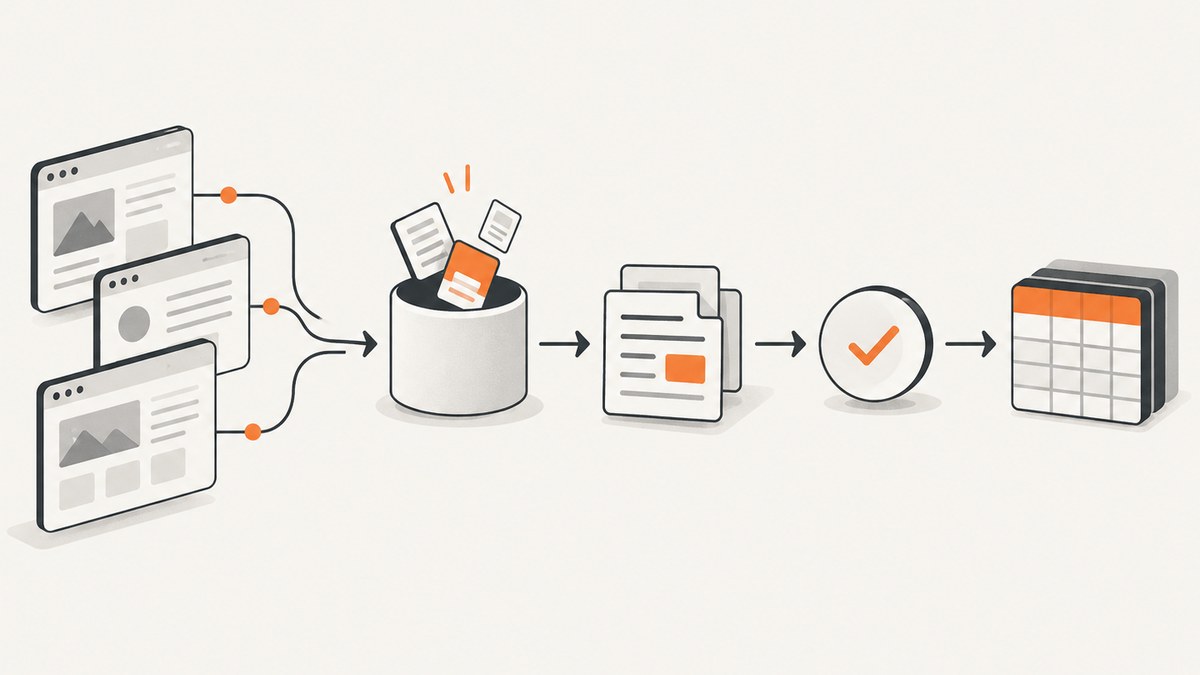
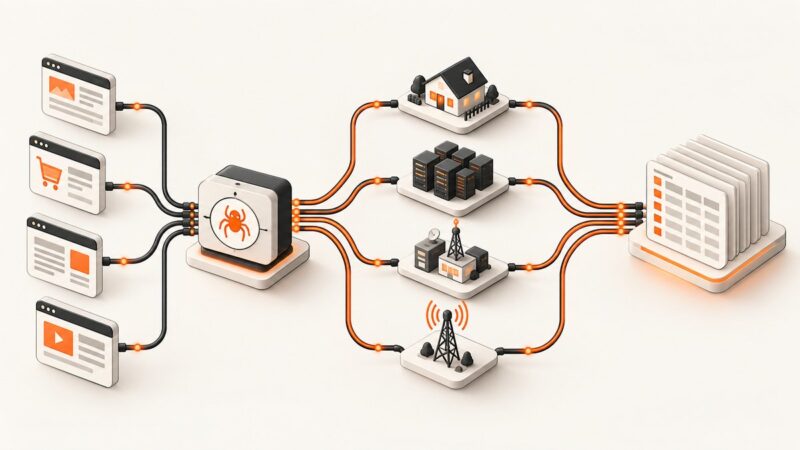
Web scraping is automated extraction of information from websites using software, bots, or crawlers. Companies use it to collect timely, structured external data for pricing intelligence, competitor monitoring, market research, lead generation, travel and rental analysis, academic work, and AI datasets.
The useful question is not only “Can this page be scraped?” It is whether the collection is permitted, technically reliable, accurate enough for the decision, and economical to maintain. This guide explains all seven applications, shows a repeatable implementation workflow, and covers privacy, intellectual property, access controls, quality, performance, and cost.
What is web scraping used for?
The seven established applications are:
- Pricing intelligence and price comparison
- Competitor and product monitoring
- Market and trend research
- Lead generation and sales prospecting
- Travel, location, and rental research
- Academic and public-interest research
- AI training, retrieval, and data enrichment
Scraping extracts fields from pages, while crawling discovers and visits pages by following links. A crawler may collect URLs without parsing every field; a scraper turns selected pages into structured records. Most production systems do both.
1. Pricing intelligence and price comparison
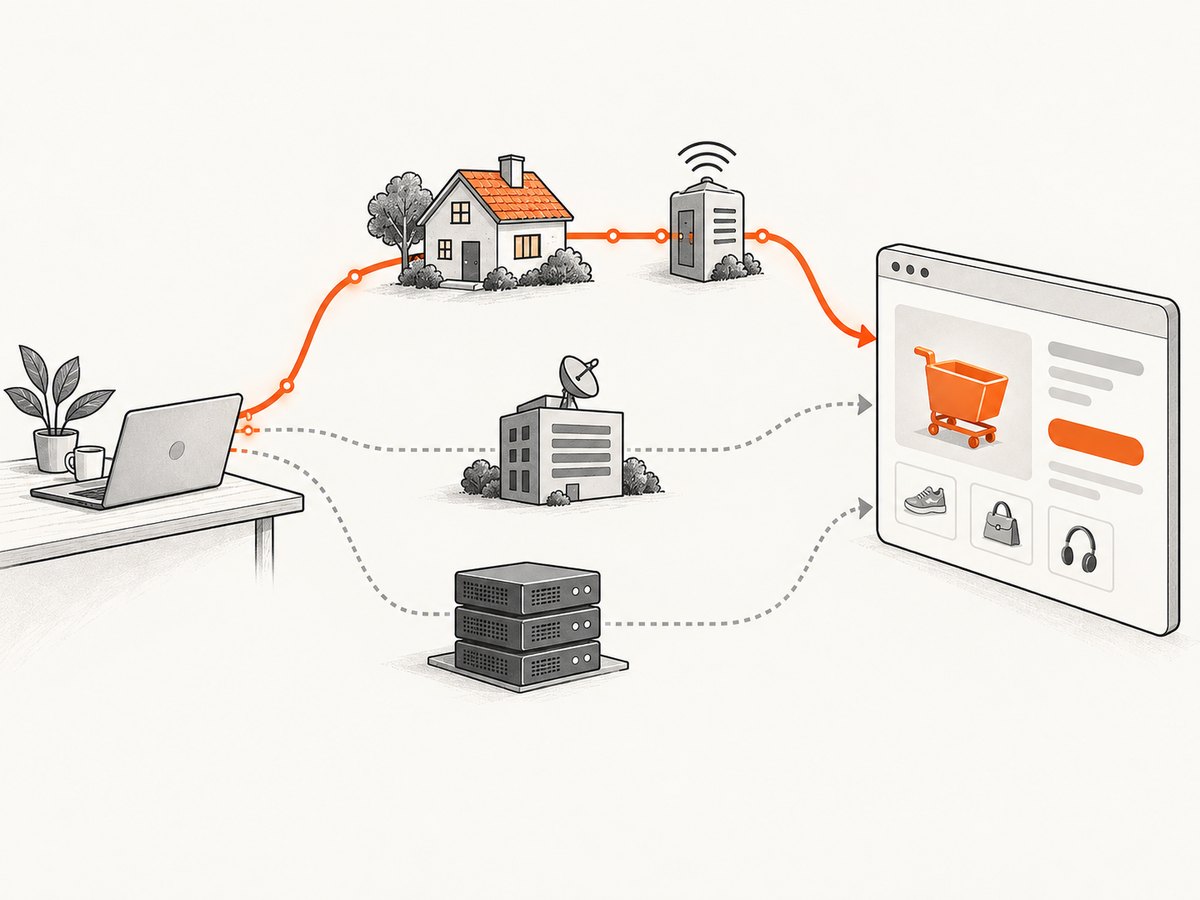
A pricing scraper records listed prices, availability, shipping fees, promotions, seller identity, currency, and timestamps across competing sites. The result can power a comparison page, internal benchmark, repricing workflow, or alert when a competitor changes an offer.
Useful fields
- Canonical product identifier, SKU, or normalized name
- Current price, original price, discount, tax, and currency
- Stock status, delivery estimate, and seller
- Promotion terms and minimum quantities
- Collection timestamp, URL, and page hash
Normalize currencies and units before comparing. Match products by durable identifiers where possible; name-only matching creates false comparisons. Keep historical observations so analysts can distinguish a real trend from a temporary promotion.
Personalized pricing requires extra care. The FTC has warned that consumers expect prices to reflect supply and demand rather than their browsing or buying history. Its research describes signals such as precise location, browser history, mouse movements, and shopping behavior being used to vary prices or product prominence. Monitor publicly displayed market prices without attempting to infer or exploit an individual’s willingness to pay.
2. Competitor and product monitoring
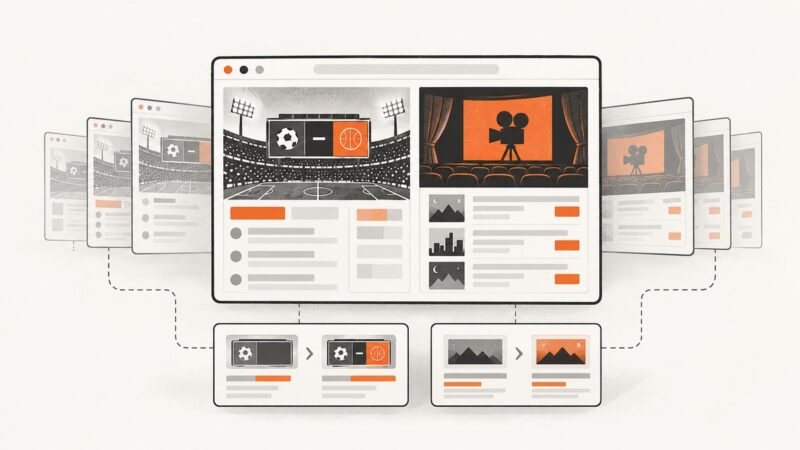
Competitor monitoring tracks catalogs, feature pages, inventory signals, reviews, documentation, promotions, and product-page changes. A scheduled scraper can notify a team when a plan, specification, title, image, or availability status changes.
Define the change you care about before collecting data. A page-wide hash is cheap but noisy; field-level diffs identify meaningful changes. Store the previous normalized record, the new record, the timestamp, and a link to the source page. Review false positives caused by rotating recommendations, timestamps, consent banners, or personalization.
Compare monitoring systems on domain coverage, change-detection latency, historical retention, rendering success, deduplication, and whether requests respect access controls and site terms.
3. Market and trend research
Scraping aggregates public pages, directories, listings, news, and other signals into a market view that is larger and more current than manual sampling. Researchers can measure how often products appear, which features are mentioned, where services are offered, or how listing volume changes over time.
Near-real-time geolocated scraping has been used to study rental markets, gentrification, entrepreneurial ecosystems, and spatial planning. A Craigslist rental-market study illustrates why scraped listings can add local and temporal detail that conventional housing sources miss.
Sampling design matters. Define the geography, page types, collection interval, and inclusion rules. Keep a provenance record for every observation, and document gaps caused by blocked pages, deleted listings, language differences, or ranking changes.
4. Lead generation and sales prospecting
Teams collect public business pages and directories, then deduplicate and enrich prospects with industry, location, services, and publicly listed contact channels. Scraping is only the collection step; useful lead generation also needs validation, entity resolution, scoring, and an outreach policy.
Treat personal contact data as regulated processing. Establish a lawful basis, define a specific purpose, minimize fields, set retention limits, secure the dataset, and honor opt-outs. The European Data Protection Board states that “The GDPR applies to web scraping when it includes personal data processing operations, such as collection, storage, organisation and retrieval.” Do not bypass authentication or technical restrictions to obtain contact details.
5. Travel, location, and rental research
Travel and location scrapers compare fares, lodging or rental listings, availability, amenities, fees, and geographic coverage. They can also map nearby services, detect changes in local inventory, or support spatial planning.
Normalize addresses and coordinates, handle duplicate listings, and record the collection time because availability changes quickly. Compare geographic coverage, update interval, language support, and the terms governing reuse. A listing that appears in two neighborhoods or across multiple platforms should resolve to one entity before analysis.
6. Academic and public-interest research
Researchers use scraping to observe markets, public communications, housing, geography, and other phenomena at a scale or frequency that surveys and static official datasets may not provide. The method is useful when the research question concerns change over time or differences between places.
Record collection dates, request policies, parser versions, source URLs, and sampling decisions. Preserve enough provenance for another researcher to understand how a row was produced. Assess sampling bias: search rankings, removed pages, language, paywalls, and platform moderation can all shape the observed population. Protect people who appear in the data by minimizing personal fields and restricting access.
7. AI training, retrieval, and data enrichment
Scraped corpora can supply training, evaluation, retrieval, or entity-enrichment data. A retrieval system may collect product documentation and attach timestamps; an entity pipeline may collect public descriptions to improve matching; a training corpus may combine many sources after filtering and deduplication.
AI use raises both data-quality and legal questions. Use reliable sources, timestamps, validation checks, and data minimization. Remove duplicates and boilerplate, preserve licensing and provenance metadata, and create exclusion lists for sources that should not enter a corpus. The EDPB guidance applies GDPR principles when scraped material contains personal data. The 2026 legal overview also identifies intellectual-property, contract, access-control, and competition-law exposure.
How to build a responsible scraper
- Write the purpose. State the decision or research question and the exact fields required.
- Check permission. Read terms, robots directives, API rules, authentication boundaries, and applicable privacy and intellectual-property requirements.
- Choose the least invasive source. Prefer an official API or downloadable dataset when it provides the needed fields.
- Design the schema. Include source URL, collection timestamp, parser version, raw or hashed page reference, and validation status.
- Implement rate limits. Use bounded concurrency, exponential backoff, and caching. Stop when a site signals overload.
- Parse defensively. Expect missing fields, locale-specific formats, pagination changes, and structured data that disagrees with visible text.
- Validate and monitor. Track field completeness, duplicate rates, parser errors, HTTP status codes, and sudden distribution changes.
- Retain and delete deliberately. Set retention periods, honor deletion requests where applicable, and restrict access to raw personal data.
Minimal Python example
This example fetches a public page, extracts product cards, and writes timestamped JSON. Adapt selectors to the site and its permitted access method.
import json
import time
from datetime import datetime, timezone
import requests
from bs4 import BeautifulSoup

URL = "https://example.com/products"
headers = {"User-Agent": "ResearchBot/1.0 (contact: data@example.org)"}
r = requests.get(URL, headers=headers, timeout=30)
r.raise_for_status()
soup = BeautifulSoup(r.text, "html.parser")
rows = []
for card in soup.select(".product-card"):
    name = card.select_one(".product-name")
    price = card.select_one(".price")
    if name and price:
        rows.append({"name": name.get_text(" ", strip=True), "price": price.get_text(" ", strip=True)})
record = {"url": URL, "collected_at": datetime.now(timezone.utc).isoformat(), "rows": rows}
with open("snapshot.json", "w", encoding="utf-8") as f:
    json.dump(record, f, ensure_ascii=False, indent=2)
print(f"Saved {len(rows)} rows")
time.sleep(1)
For JavaScript-rendered pages, use a permitted browser-automation tool, wait for the required selector, and capture the rendered DOM. Keep browser concurrency low and reuse sessions where allowed.
Or skip the browser setup
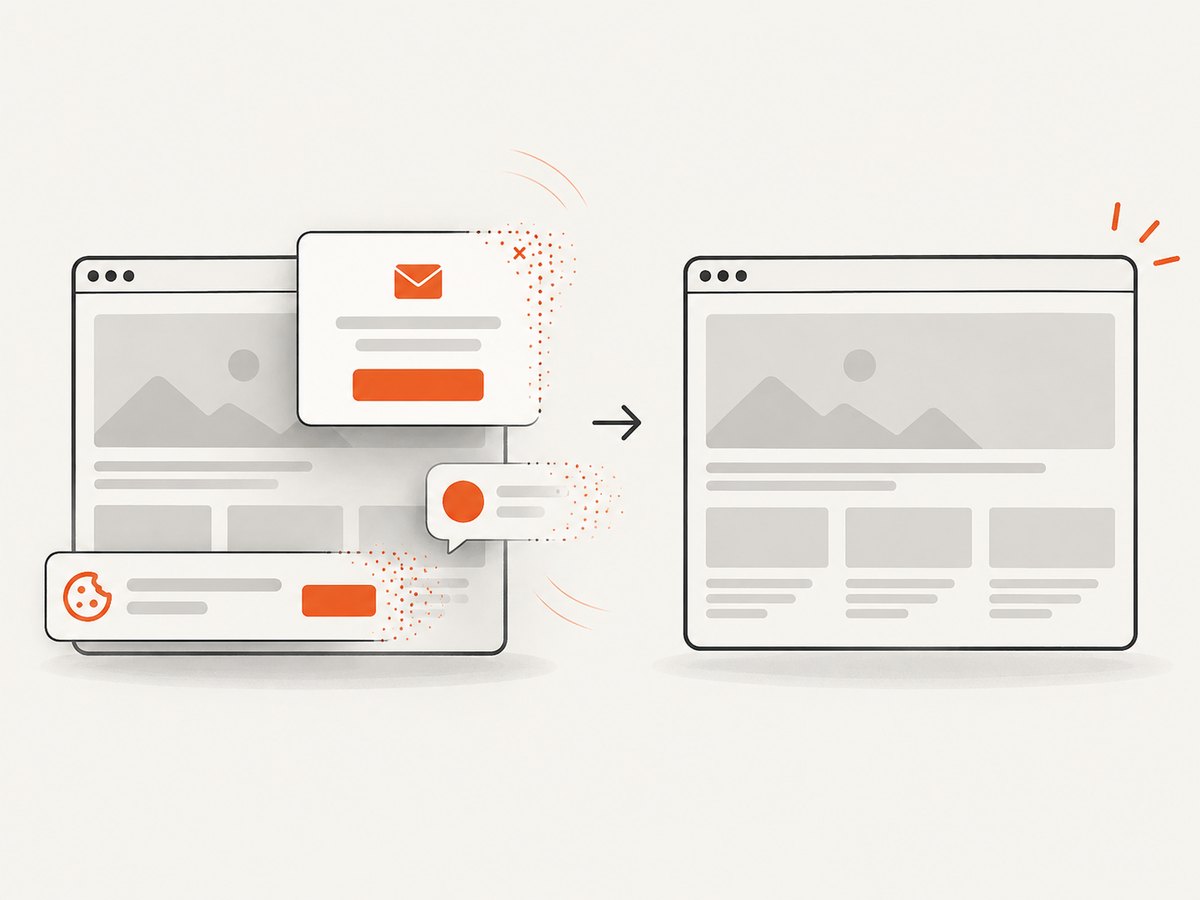
When your workflow needs a visual record of a page, ScreenshotNeo provides a website screenshot API and MCP server. One GET request returns a PNG, JPEG, WebP, or PDF. It accepts consent banners like a visitor and removes more than 60 known consent platforms, newsletter popups, and chat widgets before capture; each step can be turned off. Bot checks, CAPTCHAs, blank pages, timeouts, failed loads, and cache hits are not billed, and response headers identify the page verdict and billing status.
See the ScreenshotNeo API documentation for all parameters.
cURL
curl -G "https://api.screenshotneo.com/v1/shot" \
  -d access_key=YOUR_API_KEY \
  --data-urlencode url=https://stripe.com \
  -o shot.webp
Python
import requests
r = requests.get(
    "https://api.screenshotneo.com/v1/shot",
    params={"access_key": "YOUR_API_KEY", "url": "https://stripe.com"},
    timeout=90,
)
r.raise_for_status()
open("shot.webp", "wb").write(r.content)
Node.js
const q = new URLSearchParams({ access_key: 'YOUR_API_KEY', url: 'https://stripe.com' });
const res = await fetch(`https://api.screenshotneo.com/v1/shot?${q}`);
if (!res.ok) throw new Error(`HTTP ${res.status}`);
const fs = await import('node:fs/promises');
await fs.writeFile('shot.webp', Buffer.from(await res.arrayBuffer()));
Relevant capture controls include full-page mode with lazy images loaded, CSS-element capture, dark mode, 12 device presets or any viewport, retina scale, custom CSS and JavaScript, clicks, selector or network-idle waits, ad/tracker/request blocking, custom headers and cookies, user agent and Authorization, timezone and geolocation, transparent backgrounds, resizing, a selectable cache TTL, signed links, asynchronous jobs with signed webhooks, bulk capture for up to 100 URLs per call, usage reporting, and PDF options such as paper size, margins, landscape, and page ranges. Parameter names used by other screenshot APIs also work, which simplifies migration.
An MCP server exposes take_screenshot, get_page_info, and capture_pdf to Claude, Cursor, and other MCP clients. The Free plan includes 1,000 shots per month without a card; paid plans start at $5 for 3,000 shots, with every feature available on every plan.
Create a free ScreenshotNeo account to start with 1,000 screenshots per month and no card.
Comparison framework for scraping approaches
| Dimension | Questions to answer |
|---|---|
| Coverage | Which domains, geographies, languages, page types, and fields are included? |
| Freshness | What crawl schedule, change detection, and historical retention do you need? |
| Reliability | How are rendering failures, retries, deduplication, schema changes, and alerts handled? |
| Permission and risk | Does collection respect terms, robots directives, authentication boundaries, privacy, intellectual property, and competition rules? |
| Data quality | Are timestamps, provenance, validation, entity resolution, and bias checks present? |
| Economics | What will browser, proxy, storage, review, engineering, and compliance work cost? |
Performance, reliability, and cost
Performance
- Cache pages and assets when the use case permits; do not recrawl unchanged URLs unnecessarily.
- Use bounded concurrency rather than unbounded parallel requests.
- Parse only required fields and store compressed raw responses when retention is necessary.
- Use incremental crawling: prioritize changed sitemaps, feeds, or category pages before deep recrawls.
Reliability
- Retry transient 429 and 5xx responses with exponential backoff and a maximum attempt count.
- Do not retry permanent 4xx responses indefinitely.
- Alert on parser yield dropping to zero, missing required fields, or a sudden increase in duplicate records.
- Keep fixtures from representative pages so parser changes can be reviewed before deployment.
Cost
Total cost includes engineering time, browser execution, proxies where permitted, storage, data review, and legal or compliance work. A cheap request that produces unreliable or unusable records is expensive downstream. Estimate cost per valid record, not cost per HTTP request, and include retries and human review.
Troubleshooting common scraping failures
| Symptom | Likely cause | Fix |
|---|---|---|
| Empty HTML | Content is rendered by JavaScript or a bot check intervened. | Use an allowed rendered-browser workflow, wait for a stable selector, and record the page verdict. |
| HTTP 403 or 429 | Access policy, rate limit, or missing authorization. | Stop aggressive retries, review permission, reduce concurrency, and use an official API if available. |
| Parser suddenly returns zero rows | Markup or class names changed. | Alert on yield, update selectors, and test against saved fixtures. |
| Prices do not compare | Currency, tax, units, or variants differ. | Normalize locale and units, retain raw values, and match products by durable identifiers. |
| Duplicate listings | Multiple URLs or platforms represent one entity. | Canonicalize URLs and resolve entities using stable IDs, addresses, and reviewable matching rules. |
| Personal data is over-collected | The schema grew beyond the stated purpose. | Remove unnecessary fields, document purpose and retention, and restrict access. |
Is web scraping legal?
There is no single worldwide answer. Exposure is fact-specific and can involve privacy law, intellectual property, contract terms, access controls, website integrity, and competition law. Before collecting, document the purpose, lawful basis where personal data is involved, fields required, retention period, request limits, and deletion process. Respect authentication boundaries and technical barriers; do not treat a publicly reachable URL as blanket permission for every use.
FAQ
What is the difference between web scraping and web crawling?
Crawling discovers and visits URLs. Scraping extracts selected fields from those pages. Production systems commonly combine both.
How do companies scrape competitor prices?
They collect permitted public listings on a schedule, normalize currency and product identity, store timestamps, and compare field-level changes. They should respect access controls and terms.
Can I scrape data for AI training?
Potentially, subject to privacy, intellectual-property, contract, and access-control requirements. Minimize personal data, preserve provenance, validate sources, and document exclusions.
How do I scrape real-estate listings?
Define geography and fields, collect listings at a documented interval, normalize addresses and coordinates, deduplicate entities, and retain source timestamps.
Should I use an API or build my own scraper?
Use an official API when it supplies the required fields and permissions. Build a scraper when you need permitted page-level data and can maintain parsing, monitoring, and compliance controls.