How to Automate Market Research with Web Scraping
Build a repeatable market research pipeline with web scraping: choose sources, collect and validate data, handle risks, and keep results auditable.

To automate market research with web scraping, first define the decision and the fields needed to support it. Then choose sources and authorized access routes, collect only the minimum useful information, save retrieval and transformation records, and validate observations against the original pages before drawing conclusions. Use an official API or feed when it is authorized and fits the question. Scraping is a collection method, not a guarantee of complete, accurate, or permitted data.
This guide shows how to design a repeatable pipeline for tasks such as competitor monitoring, assortment research, product positioning, and customer-language analysis. It covers the research plan, a runnable Python example, validation, operations, common failures, and when another collection method is a better fit.
1. Define the decision and dataset
Start with the decision the research will inform. “Track competitors” is too broad to automate well. A useful plan specifies what will change if the evidence points one way or another: pricing, product positioning, assortment, messaging, or a decision to investigate a market further.
Translate that decision into a small schema. For a competitor pricing study, each observation might include:
- Entity: company, product, or listing being compared.
- Source: page URL and source name.
- Observation: displayed price, currency, product name, or availability.
- Context: plan tier, package size, region, or other unit needed for a fair comparison.
- Provenance: retrieval time, collection method, and any transformation applied.
- Quality: parse status, missing fields, and errors requiring review.
Choose the comparison unit before collecting. Comparing monthly prices with annual prices, list prices with discounted prices, or different package sizes can produce misleading conclusions. Write down inclusion rules, such as which plans count, how regional pages are handled, and what to do with unavailable values.
Set a sampling rule and an update cadence based on the source rules and the decision’s needs. The reviewed evidence does not establish a universal request rate or freshness interval. Avoid collecting more frequently or broadly than the research requires.
2. Inventory sources and check access conditions
Make a source inventory before writing selectors or scripts. For each candidate, note the pages or datasets needed, whether a published API or feed exists, whether access requires an account, and what the current terms and robots.txt say. Review the relevant data-use conditions as well as the route used to retrieve the information.
Prefer an official API or feed when it is authorized and its scope fits the research. APIs can offer a more controlled access route, but using one does not remove its terms or other privacy obligations. The Canadian privacy regulators describe APIs as a possible safeguard that can give a host more control and support monitoring. Read the joint statement on data scraping and privacy.
Robots.txt and site terms deserve attention, but neither is a complete legal test for every jurisdiction and use. The GSA Emerging Technology office recommends consulting robots.txt for federal agencies and reviewing terms when a login or account is needed; its blog also says it is not official federal guidance. See the GSA office’s recommendations and scope.
Rules are source-specific. For example, Ahrefs restricts scraping its services outside the software or search agents it provides and limits automated use outside its API. Upwork says automation may require an approved API key and that some actions remain prohibited. Those examples apply to those platforms; do not treat one site’s policy as a rule for the entire web. Check Ahrefs’ current terms and Upwork’s automation guidance.
Scraping may involve overlapping contract, intellectual-property, computer-access, privacy, and data-protection considerations. Relevant rules can depend on where the researcher, source, and affected people are located. Public visibility alone does not settle whether collection or later use is permitted. For a broader research overview, see the 2025 review of legal, ethical, institutional, and scientific considerations.
3. Collect only what the research needs
Keep the field list narrow. If a pricing decision needs product name, plan, displayed price, currency, and observation time, avoid collecting account details, profile information, or unrelated page content. Publicly accessible personal information may still be subject to privacy and data-protection laws. The Canadian regulators state that “publicly accessible personal data is still subject to data protection and privacy laws in most jurisdictions.” The statement explains the privacy context.
Consider whether combining otherwise ordinary fields could reveal sensitive information. Before long-term storage, sharing, enrichment, or using the dataset for a new purpose, review source restrictions and applicable privacy requirements again. Permission to collect does not automatically decide every question about later use.
4. Build a repeatable collection pipeline
A maintainable pipeline separates source configuration, retrieval, extraction, validation, and storage. Keep the target URLs and expected fields in configuration rather than burying them in parsing logic. A run should record both successful observations and collection failures, so missing data is not silently mistaken for a market change.
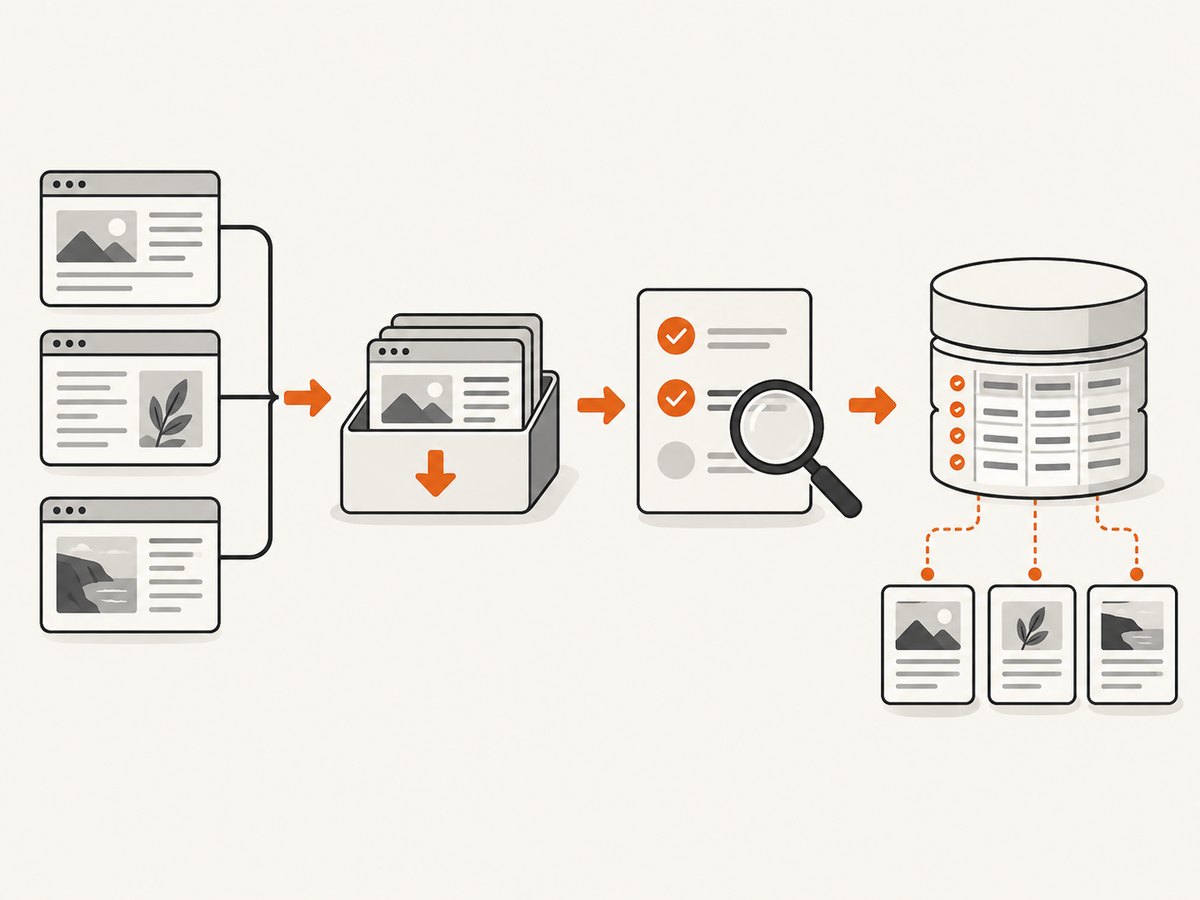
The following Python example fetches a small set of pages, extracts product cards using a CSS selector, and writes observations and errors to JSON Lines. It is a template: replace the example domain, URLs, and selectors only after checking that the source permits the access and use. It deliberately does not attempt to bypass login, access controls, CAPTCHAs, or other restrictions.
from datetime import datetime, timezone
import json
import time
from pathlib import Path

import requests
from bs4 import BeautifulSoup

SOURCES = [
    {
        "name": "Example catalog",
        "url": "https://example.com/products",
        "card_selector": ".product-card",
        "name_selector": ".product-name",
        "price_selector": ".price",
    },
]

OUT = Path("market_observations.jsonl")
HEADERS = {"User-Agent": "MarketResearchCollector/1.0 (contact: research@example.org)"}
TIMEOUT_SECONDS = 20


def text_or_none(parent, selector):
    node = parent.select_one(selector)
    return node.get_text(" ", strip=True) if node else None


def collect(source):
    retrieved_at = datetime.now(timezone.utc).isoformat()
    response = requests.get(
        source["url"], headers=HEADERS, timeout=TIMEOUT_SECONDS
    )
    response.raise_for_status()
    soup = BeautifulSoup(response.text, "html.parser")
    cards = soup.select(source["card_selector"])

    rows = []
    for card in cards:
        rows.append({
            "source_name": source["name"],
            "source_url": source["url"],
            "retrieved_at": retrieved_at,
            "product_name": text_or_none(card, source["name_selector"]),
            "displayed_price": text_or_none(card, source["price_selector"]),
            "parse_status": "ok",
        })
    return rows


with OUT.open("a", encoding="utf-8") as output:
    for source in SOURCES:
        try:
            observations = collect(source)
            for row in observations:
                output.write(json.dumps(row, ensure_ascii=False) + "\\n")
            if not observations:
                output.write(json.dumps({
                    "source_name": source["name"],
                    "source_url": source["url"],
                    "retrieved_at": datetime.now(timezone.utc).isoformat(),
                    "parse_status": "no_records",
                }) + "\\n")
        except requests.RequestException as exc:
            output.write(json.dumps({
                "source_name": source["name"],
                "source_url": source["url"],
                "retrieved_at": datetime.now(timezone.utc).isoformat(),
                "parse_status": "request_error",
                "error": str(exc),
            }) + "\\n")
        except Exception as exc:
            output.write(json.dumps({
                "source_name": source["name"],
                "source_url": source["url"],
                "retrieved_at": datetime.now(timezone.utc).isoformat(),
                "parse_status": "collection_error",
                "error": str(exc),
            }) + "\\n")
        time.sleep(2)  # Set conservatively and follow the source's rules.
Install the dependencies with python -m pip install requests beautifulsoup4, save the script as collect.py, and run python collect.py. The example uses a placeholder source; it is not a claim that the example URL exposes this markup. Replace selectors based on a permitted source page and verify sample records manually.
For a larger pipeline, write each run to a staging dataset first. Add a run identifier, source configuration version, response status, and parser version. Promote observations to the analysis dataset only after quality checks pass. Keep raw page content only when necessary and permitted; it may contain more data than the analysis needs.
5. Validate before comparing or reporting
Parsing success only means the code found something. It does not prove the field means what the analyst thinks it means. A visible price might be per month, per user, or conditional on annual billing. A missing selector might indicate a redesign, a blocked response, or a genuine absence.
- Review a sample of extracted records against the original source page.
- Measure missing, empty, duplicated, and malformed fields by source and run.
- Check that units, currency, region, and plan definitions match the comparison rules.
- Flag sudden shifts in record counts or value distributions for review.
- Preserve the retrieval time and transformations so a reported value can be traced.
- Document the definition of every derived measure, such as normalized monthly price.
Do not silently convert missing values to zero or carry an old observation forward as if it were current. Keep collection errors separate from valid observations, and label stale data explicitly. If a site changes its definitions or layout, pause comparisons until the parser and research schema are reviewed.
6. Choose the collection method for the job
| Method | Useful when | Trade-offs to assess |
|---|---|---|
| Manual collection | The source set is small, the question is exploratory, or context needs human interpretation. | Time and consistency across repeated observations; document dates and units. |
| Official API or feed | An authorized interface exposes the needed fields and coverage. | Scope, terms, authentication, limits, freshness, and portability are defined by the provider. |
| Custom scraper | Permitted pages provide needed information without a suitable authorized feed. | Markup maintenance, validation, source-specific rules, and operational monitoring are your responsibility. |
| Hosted collection platform | You need managed browser capture or extraction infrastructure. | Check source authorization, coverage, field structure, auditability, privacy controls, cost, and export portability before relying on it. |
Compare options using the same criteria: source authorization and coverage, field structure, freshness, data quality, auditability, maintenance burden, scale, privacy and security controls, cost, and portability. No method is a universal winner. If the core evidence comes from a governed API, a scraper may add needless maintenance; if a page’s meaning depends on visual context, a structured feed may need human review.
7. Operate the pipeline reliably
Use timeouts, bounded retries for transient failures, and a conservative schedule that follows source rules. Avoid retry loops that increase load when a source is unavailable. Treat access-denied responses, login requirements, CAPTCHAs, and explicit restrictions as reasons to stop and reassess the access route rather than signals to evade controls.
Monitor each source separately. Useful operational indicators include last successful retrieval, HTTP status, record count, parse error rate, missing-field rate, and age of the latest usable observation. Alert on changes relative to that source’s own history; a single global threshold may not fit sources with different formats.
Keep collection and transformation code versioned, and save a run log that identifies the source, retrieval time, fields, parser version, transformations, and errors. Limit credentials to the sources that need them, store secrets outside source code, and restrict access to collected data. These controls support reproducibility and reduce the chance that an operational failure is confused with a market event.
8. Performance, reliability, and cost
For a small source list, sequential requests are easier to inspect and place less pressure on the sites. If throughput becomes a constraint, first confirm the source permits the planned access pattern, then consider bounded concurrency. Do not increase request volume simply because the code can run faster. The source evidence reviewed here does not establish a universal safe rate.
Budget for engineering time as well as infrastructure. Custom scrapers can require ongoing selector maintenance and review when pages change. APIs may have their own access conditions and limits. A hosted service may shift infrastructure work but does not decide whether your source selection, collection, storage, or downstream use is appropriate. Compare costs against the frequency, source count, expected maintenance, and value of the decision; no tested cost or speed benchmark is established here.
Reliability means knowing when a dataset is incomplete. A successful HTTP response can still contain an interstitial, an empty page, or a changed layout. Build quality gates that mark a run unusable when expected content is absent or key fields fail validation. Preserve errors for diagnosis and avoid publishing unsupported conclusions from partial runs.
9. Troubleshooting common failures
| Symptom | Likely cause | Fix |
|---|---|---|
| HTTP 403 or 401 | Access is restricted, authentication is required, or the source does not permit the request. | Review the source’s terms and authorized access routes. Use an approved API if available; do not try to bypass restrictions. |
| HTTP 429 or repeated rate responses | The source is limiting requests or the collection schedule is too aggressive. | Stop rapid retries, review source guidance, and reduce or pause collection. Resume only at a permitted cadence. |
| Request times out | The source is slow, unreachable, or the timeout is too short for its normal response. | Record the failure, use a reasonable timeout, and retry only transient errors with a small bounded policy. |
| Zero records found | The selector changed, content is rendered differently, the response is an interstitial, or the page genuinely has no matching items. | Inspect a permitted response and page manually; confirm the source and selector before changing the parser. |
| Fields are present but wrong | The selector matches a label, promotional price, or value with different units than expected. | Review examples against the page, refine the schema and parser, and rerun validation before comparing. |
| Duplicate observations | A run was repeated or multiple cards map to the same comparison entity. | Define a stable observation key and deduplication rule; retain retrieval times rather than overwriting history. |
| Sudden market movement | It may be real, but a redesign, changed definition, locale shift, or parser error can look similar. | Check source changes, run logs, missingness, units, and a sample of original pages before interpreting the shift. |
10. Or skip the browser setup
If your market research needs screenshots of pages as visual evidence, ScreenshotNeo provides a website screenshot API and MCP server. One GET request returns a PNG, JPEG, WebP, or PDF. See the ScreenshotNeo API documentation for request options.
curl -G "https://api.screenshotneo.com/v1/shot" -d access_key=YOUR_API_KEY --data-urlencode url=https://stripe.com -o shot.webpimport requests
r = requests.get("https://api.screenshotneo.com/v1/shot", params={"access_key": "YOUR_API_KEY", "url": "https://stripe.com"}, timeout=90)
open("shot.webp", "wb").write(r.content)const q = new URLSearchParams({ access_key: 'YOUR_API_KEY', url: 'https://stripe.com' });
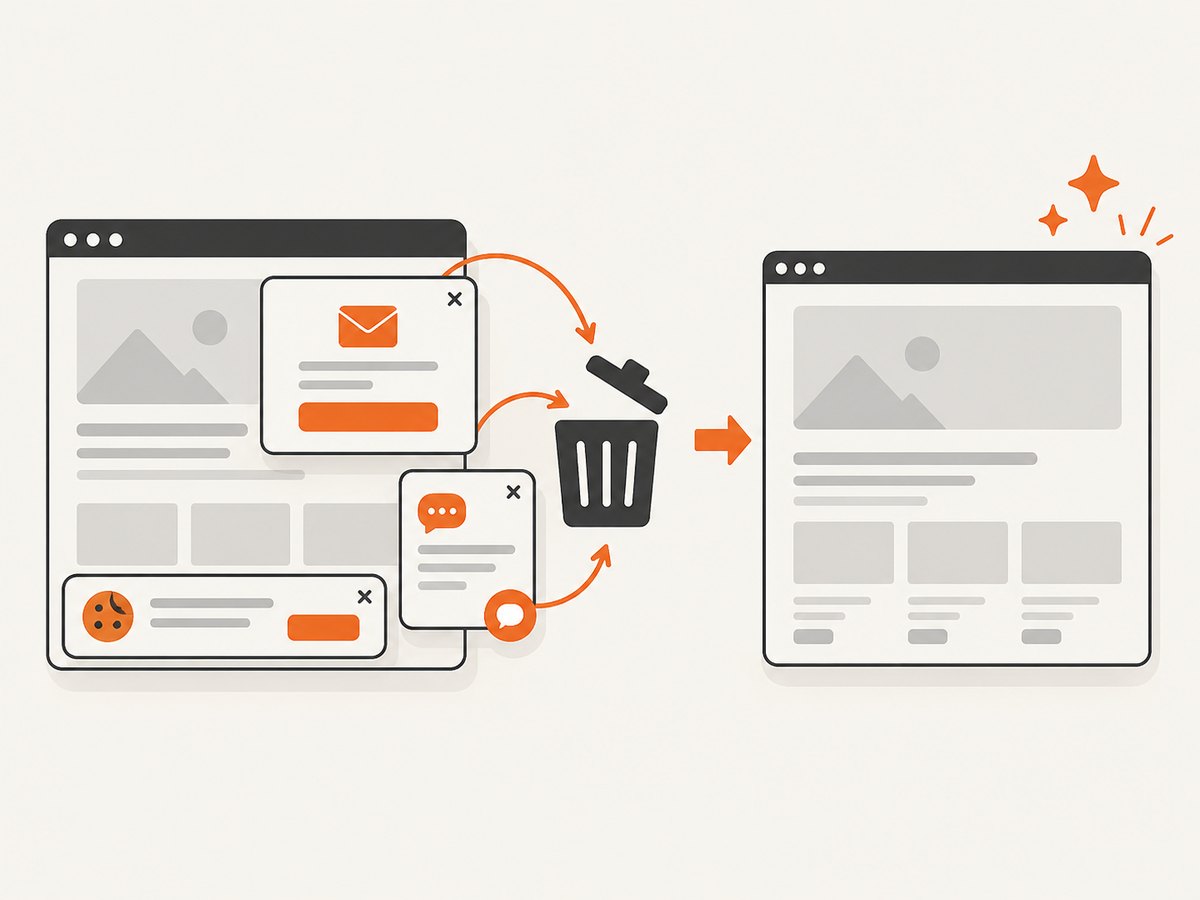
const res = await fetch(`https://api.screenshotneo.com/v1/shot?${q}`);ScreenshotNeo removes cookie banners, newsletter popups, and chat widgets before the shot. Bot checks, blank pages, and failed loads are never billed. Its MCP server lets AI agents take screenshots. The free plan includes 1,000 screenshots a month with no card; paid plans start at $5 for 3,000.
Sign up for 1,000 free screenshots a month, with no card.
FAQ
Can a screenshot replace structured extraction?
Usually not when the analysis depends on fields that must be compared across many observations. A screenshot preserves visual context, while a structured dataset makes filtering and calculation easier. Use screenshots as supporting evidence or choose an extraction route suited to the fields.
How often should I refresh market data?
Set the cadence from the decision’s required freshness and the source’s rules. There is no universal interval that fits all sites or research questions.
Does public access mean I can collect and reuse the data?
No. Public visibility does not settle source terms, privacy, intellectual-property, access, or downstream-use questions. Review the actual source and applicable requirements.
What should I do when a source changes its page?
Mark the affected run for review, inspect examples, update the parser and its documentation, then validate a fresh sample before resuming comparisons.


