12 Best AI Marketing Platforms in 2026, Tested by Use Case
A use-case guide to the best AI marketing platforms in 2026, covering CRM, content, SEO, ads, email, social, automation, pricing, and fit.

Short answer: There is no single best AI marketing platform in 2026. The right choice depends on the job you need done, the data your team can connect, the level of governance you require, and how much automation your organization can operate. HubSpot Marketing Hub is the strongest all-in-one CRM and campaign-automation candidate. Jasper is the clearest fit for governed, on-brand content production. Ahrefs is the strongest choice in this list for SEO and competitor research. Other platforms are better suited to ecommerce email, paid search, paid social, enterprise marketing operations, or social publishing.
This guide organizes 12 platforms by use case. The evidence supports capability mapping from public product and agency documentation, not a controlled benchmark or first-hand product test. Prices, packaging and features change, so confirm current terms before purchase.
How to choose an AI marketing platform
Start with the workflow rather than the vendor. Write down the trigger, the data required, the decision the system should make, the human approval step, and the measurement you need afterward. Then evaluate each candidate against six questions:
- Integrations and data access: Can it read your CRM, ecommerce events, ad accounts, analytics and content systems without manual exports?
- Governance: Can you control brand voice, permissions, approvals, privacy and model usage?
- Automation depth: Does it only generate suggestions, or can it execute multi-step journeys and actions?
- Measurement: Can you connect activity to pipeline, revenue, qualified leads or incremental conversions?
- Pricing: Is the bill based on seats, contacts, credits, messages, data volume, ad spend or a combination?
- Team scale: Will the product remain manageable as more regions, brands, channels and users are added?
AI adoption is already broad. HubSpot reports that 80% of marketers use AI for content creation, 94% plan to use it in the next year, and 92% use automation for data analysis and reporting. Those figures make process design and governance as important as model quality.
The 12-platform shortlist
| Use case | Best fit | What the evidence supports | Questions to ask |
|---|---|---|---|
| All-in-one CRM and campaigns | HubSpot Marketing Hub | AI lead identification, personalized experiences, cross-channel campaigns, ads, forms, content and automation | CRM fit, contacts and credits, automation depth, onboarding cost |
| Enterprise lifecycle marketing | Salesforce Marketing Cloud | CRM and email automation category fit | Data model, implementation effort, governance, enterprise integrations |
| On-brand content | Jasper | Brand governance, AI-answer-engine visibility, SEO optimization and personalization for email and ads | Brand controls, approvals, asset types, seat economics |
| SEO and competitor research | Ahrefs | AI-assisted content and SEO insights, traffic forecasting and competitor ad-copy analysis | Data coverage, keyword depth, exports, team workflows |
| SEO and content marketing | Semrush | Content-generation and SEO category fit | Keyword database breadth, content workflow, reporting |
| GTM content workflows | Copy.ai | Content-generation and SEO category fit | Workflow templates, governance, integrations, volume pricing |
| Ecommerce email and CRM | Klaviyo | Email and CRM automation category fit | Event data, segmentation, deliverability, message pricing |
| Paid search | Google Ads Smart Bidding | PPC optimization category fit | Conversion-data quality, bidding controls, incrementality |
| Paid social | Meta Advantage+ | AI-assisted social advertising category fit | Creative controls, audience signals, attribution, budget automation |
| Enterprise web and automation | Adobe Sensei/Marketo | Web/UX and CRM/email automation category fit | MarTech integration, implementation, governance, total cost |
| Social publishing | Hootsuite | Social publishing, management and analytics category fit | Network coverage, approvals, listening, analytics |
| Social analytics and engagement | Sprout Social | Social listening, reporting and response-workflow category fit | Listening depth, reporting, response workflows, seats |
1. HubSpot Marketing Hub: best all-in-one CRM and campaign automation
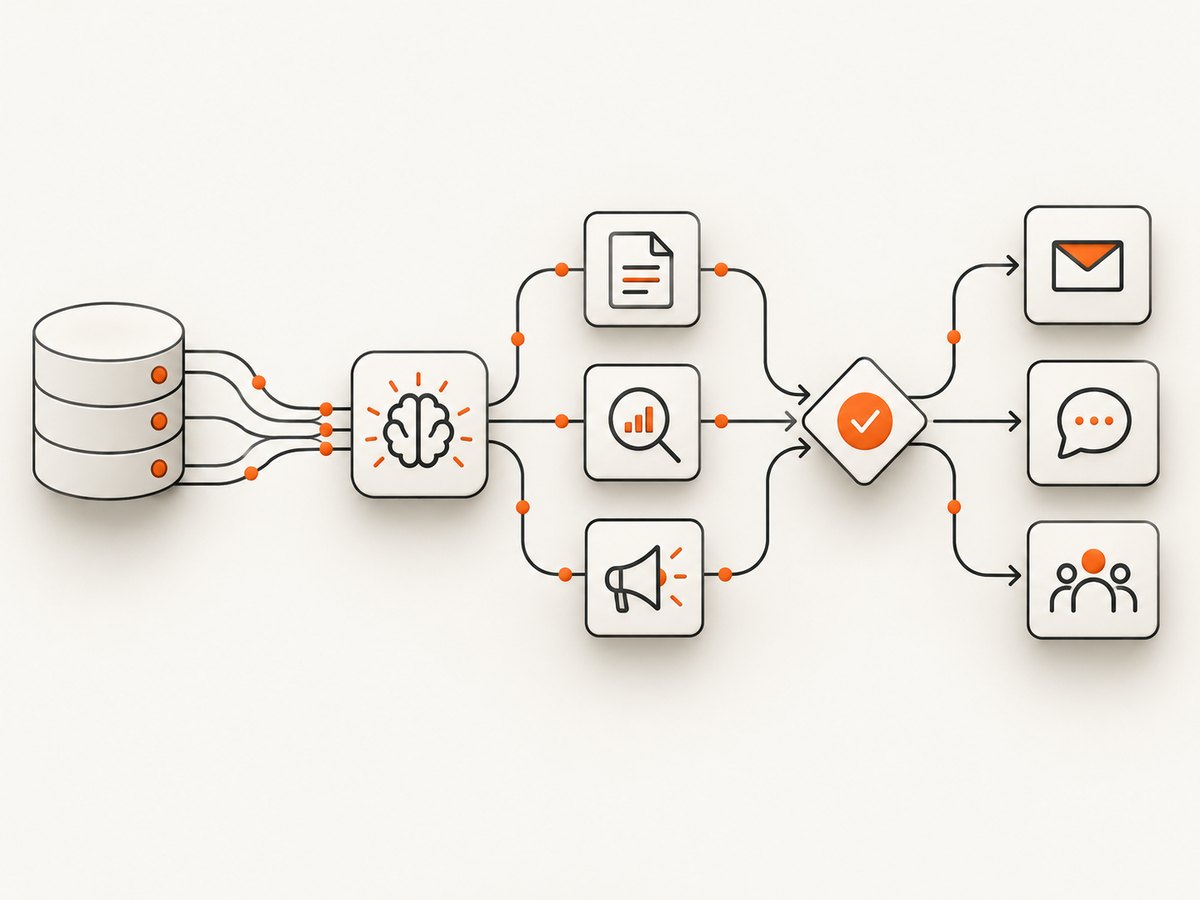
HubSpot is the leading general-purpose option when marketing needs to share data and workflows with sales and service. Its product page describes AI-powered tools to attract, convert and engage high-intent visitors. Documented capabilities include AI lead identification, personalized experiences, cross-channel campaigns, ads, forms, content and automation.
Choose it when one system must connect acquisition, lead management, lifecycle journeys and reporting. Before committing, model your contact volume, automation requirements and implementation work. The public pricing page currently shows Free, Professional starting at $890 per month and Enterprise starting at $3,600 per month, subject to packaging and taxes. Treat those figures as an initial planning reference, not a quote.
2. Salesforce Marketing Cloud: best for complex enterprise lifecycle programs
Salesforce Marketing Cloud belongs on an enterprise shortlist when the organization already relies on Salesforce or needs a sophisticated CRM and email-automation environment. The evidence here establishes category fit rather than a controlled comparison. Evaluate the data model, identity resolution, permissions, AI governance and implementation partner requirements before comparing license prices.
3. Jasper: best for governed, on-brand content production
Jasper is designed for teams that need to produce content at scale while keeping brand rules, approvals and personalization under control. Jasper says marketing teams can measure brand performance across major AI answer engines, prioritize actions and ship brand-governed content at scale. The platform is also positioned for SEO optimization and personalized email and ad content.
Choose Jasper when the bottleneck is consistent production across many writers, regions or campaigns. Ask for a proof using your real style guide, prohibited claims, product terminology and approval process. Measure revision time, approval rate and reuse of approved assets instead of judging output from a single prompt.
4. Ahrefs: best for SEO and competitor research
Ahrefs is the strongest fit here for teams whose primary question is what to publish, how demand may change and how competitors acquire traffic. The documented positioning includes AI-assisted content and SEO insights, traffic forecasting and competitor ad-copy analysis.
Use it to build a research queue, validate topics and inspect competitor patterns. It is not a replacement for a CRM or campaign-execution system. Check database coverage for your markets, keyword depth, export limits and how analysts will hand findings to writers and campaign managers.
5. Semrush: best when SEO research and content workflows must sit together
Semrush is listed as a content-generation and SEO option. It is a reasonable candidate for teams that want keyword research, content planning and reporting in one operating environment. Compare its database breadth, workflow controls and reporting needs with Ahrefs using the same sample topics and markets.
6. Copy.ai: best for repeatable go-to-market content workflows
Copy.ai is listed for content generation and SEO. Its potential advantage is workflow orientation: teams can assess whether templates and integrations reduce repetitive campaign work. Test a complete process, such as brief creation through review and handoff, rather than isolated copy quality. Confirm governance, permissions and volume pricing for every user group.
7. Klaviyo: best for ecommerce email and CRM automation
Klaviyo fits ecommerce teams where event data, segmentation and message delivery are central. Compare the quality and freshness of events entering the system, segment complexity, deliverability controls and message-based pricing. A useful pilot should include browse, cart, purchase and post-purchase journeys with revenue attribution defined in advance.
8. Google Ads Smart Bidding: best for paid-search bid automation
Google Ads Smart Bidding is the paid-search choice in this shortlist. Its value depends on reliable conversion signals and enough historical data for automated bidding to learn. Set guardrails around budgets, conversion definitions and brand versus non-brand campaigns. Evaluate incrementality and profit, not only reported platform conversions.
9. Meta Advantage+: best for AI-assisted paid social
Meta Advantage+ is a current fit for AI-assisted social advertising. Verify the exact product scope, creative controls and audience options available to your account before purchase or migration. Pay close attention to attribution windows, creative testing and how much budget control remains with the team.
10. Adobe Sensei/Marketo: best for enterprise web experience and automation
Adobe Sensei and Marketo are listed in web/UX and CRM/email automation categories. They suit organizations already operating a broad Adobe or enterprise MarTech stack. Assess implementation effort, integration ownership, data governance and total cost across licenses, services and specialist staff.
11. Hootsuite: best for social publishing and management
Hootsuite is a social-tool option for teams coordinating publishing, approvals and analytics across networks. Compare supported networks, approval paths, listening requirements and reporting depth. Include regional teams and crisis-response workflows in the evaluation, because those often expose permission and escalation gaps.
12. Sprout Social: best for social analytics and engagement
Sprout Social is suited to organizations that need social listening, reporting and response workflows. Evaluate how quickly teams can route messages, build recurring reports and connect social activity to business outcomes. Seat costs and listening depth should be modeled with your actual brands and markets.
Decision guide: which platform should you buy?
- Need CRM, journeys, forms, ads and reporting together? Start with HubSpot Marketing Hub.
- Need controlled, on-brand content production? Start with Jasper.
- Need SEO research, forecasts and competitor ad intelligence? Start with Ahrefs.
- Need ecommerce event-driven email? Evaluate Klaviyo.
- Need automated paid-search bidding? Evaluate Google Ads Smart Bidding after fixing conversion tracking.
- Need social publishing or engagement operations? Compare Hootsuite and Sprout Social.
- Need enterprise MarTech orchestration? Include Salesforce Marketing Cloud and Adobe Sensei/Marketo.
A practical evaluation checklist
- Choose one measurable workflow and define its baseline.
- Connect representative data, including messy records and permission boundaries.
- Run the same brief, audience and approval process through each finalist.
- Record setup time, human review time, failure cases and export effort.
- Check attribution against your analytics or CRM rather than trusting a platform dashboard alone.
- Model 12-month total cost, including seats, contacts, credits, messages, implementation and training.
- Document who owns prompts, brand rules, data access, incident response and model changes.
Or skip the browser setup
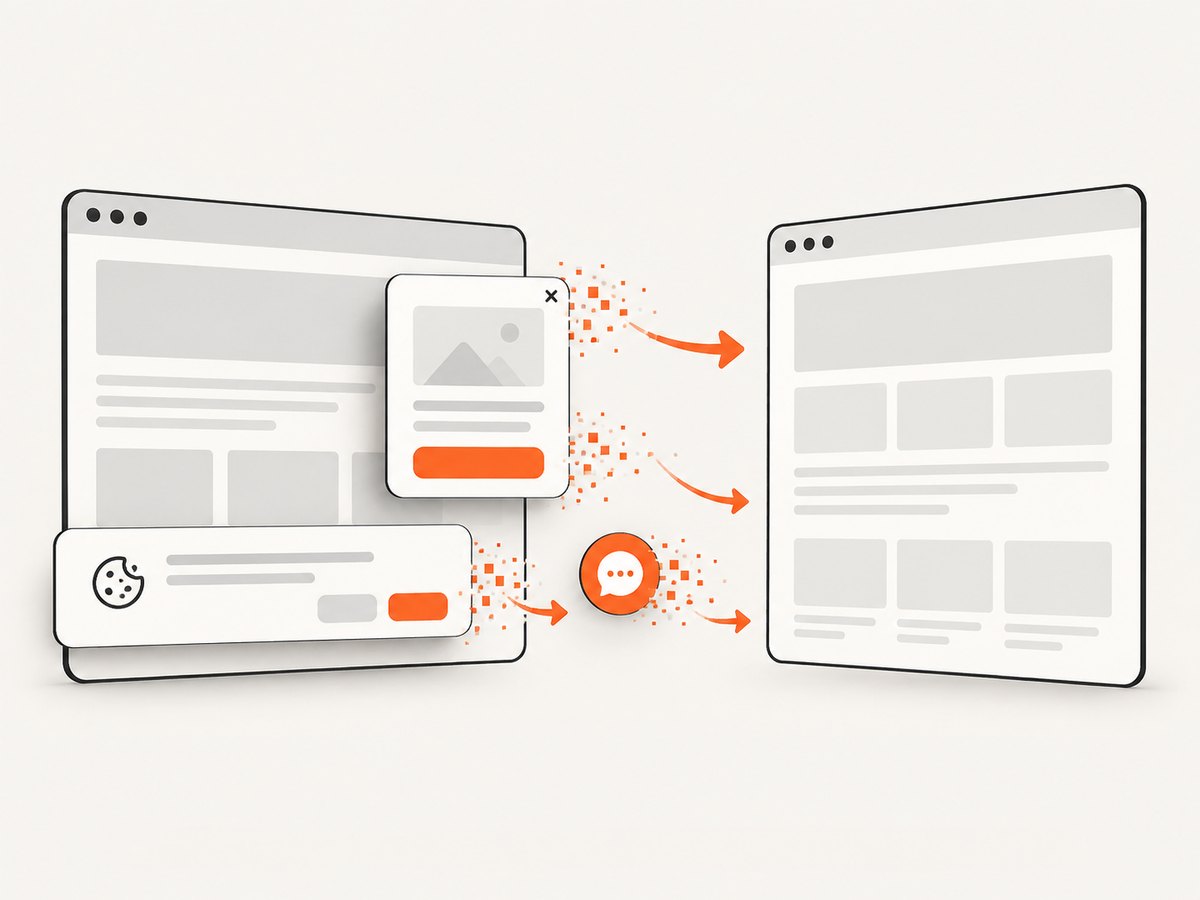
If your marketing workflow needs reliable website screenshots for campaign reviews, landing-page audits or AI agents, ScreenshotNeo is the alternative to try first. It accepts one GET request and returns a PNG, JPEG, WebP or PDF. Cookie and consent banners, newsletter popups and chat widgets are removed before capture. Bot checks, blank pages, timeouts, failed loads and cache hits are not billed, and response headers identify the page verdict and billing status. Its MCP server provides take_screenshot, get_page_info and capture_pdf tools for Claude, Cursor and other MCP clients.
See the full option list and parameter reference in the ScreenshotNeo documentation. The same parameter names used by many screenshot APIs also work, which simplifies migration.
cURL
curl -G "https://api.screenshotneo.com/v1/shot" -d access_key=YOUR_API_KEY --data-urlencode url=https://stripe.com -o shot.webpPython
import requests
r = requests.get("https://api.screenshotneo.com/v1/shot", params={"access_key": "YOUR_API_KEY", "url": "https://stripe.com"}, timeout=90)
open("shot.webp", "wb").write(r.content)
Node.js
const q = new URLSearchParams({ access_key: 'YOUR_API_KEY', url: 'https://stripe.com' });
const res = await fetch(`https://api.screenshotneo.com/v1/shot?${q}`);
Every plan includes the features: full-page and element capture, dark mode, device presets, retina scale, PDF controls, custom CSS and JavaScript, clicks, waits, blocking rules, headers, cookies, user agents, timezone, geolocation, resizing, caching, signed links, async jobs, bulk capture and a usage API. Free includes 1,000 screenshots per month with no card; paid plans start at $5 for 3,000. Create a free ScreenshotNeo account.
Common evaluation mistakes
Choosing by demo output alone
A polished paragraph or dashboard does not prove integration quality. Test the entire workflow, including data mapping, approvals, exports and measurement.
Ignoring data quality
Automation amplifies missing events, duplicate contacts and weak conversion definitions. Clean the source data and document ownership before increasing automation.
Comparing unlike pricing units
Normalize seats, contacts, credits, messages, ad spend and implementation into a 12-month model. Ask what happens when usage exceeds the included allowance.
Skipping governance
Define approved claims, sensitive data rules, access roles, human review and a rollback path. These controls matter more as more teams use the system.
FAQ
What is the best AI marketing platform in 2026?
There is no universal winner. HubSpot is the broadest all-in-one candidate; Jasper, Ahrefs, Klaviyo and the advertising and social tools fit narrower jobs.
Which tool is best for AI marketing automation?
Start with HubSpot for cross-channel CRM automation, Klaviyo for ecommerce messaging, Salesforce Marketing Cloud for complex enterprise lifecycle programs, and Adobe Sensei/Marketo for broader enterprise MarTech environments.
Which platform is best for SEO and competitor research?
Ahrefs is the clearest fit in this list because its documented positioning covers SEO insights, traffic forecasting and competitor ad-copy analysis. Semrush is a useful comparison for combined SEO and content workflows.
Should a small team buy an all-in-one suite?
Only if shared data and automation justify the added cost and setup. A focused SEO, content, email or social tool may be easier to operate and measure.
How often should we reassess the platform?
Review usage, data quality, workflow completion, attribution and total cost at least quarterly, and whenever pricing or major feature packaging changes.


