10 Best Chatbot Development Frameworks for Building Powerful Bots
Compare 10 chatbot frameworks by control, hosting, integrations, lifecycle, and cost, then choose a practical path for your bot.
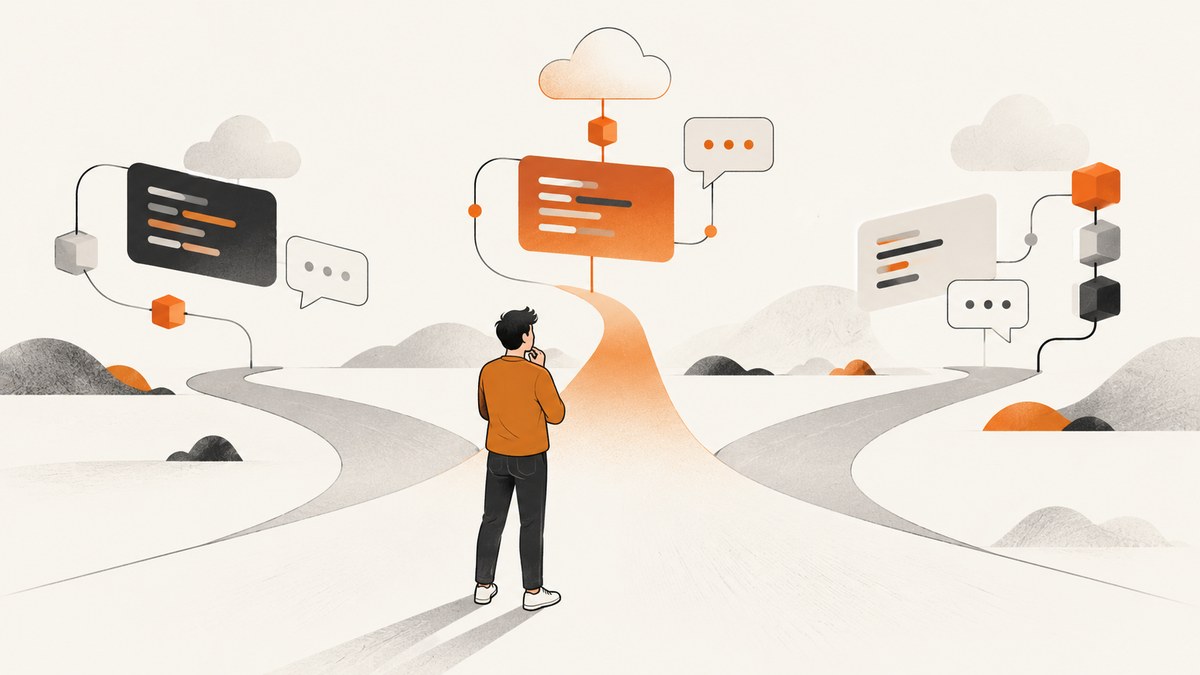
Direct answer: there is no universal “best” chatbot framework. The right choice depends on whether you want code-first control, a managed NLU service, a visual builder, or a Microsoft, AWS, or Google ecosystem. This shortlist covers ten defensible options and labels what each one actually is, so you can match the tool to your bot’s channels, conversation control, hosting, team skills, and lifecycle needs.
The list is editorial, not a head-to-head benchmark. The reviewed primary sources do not provide a standardized score, performance test, or universal cost winner. Validate current availability, pricing, regional support, and language coverage before committing.
How to read this list
“Framework” is used broadly in search results. Some entries are developer SDKs, some are managed conversational platforms, and some are hosted visual builders. That difference determines who operates the runtime, where data is processed, and how much code your team owns.
| # | Option | Type | Best fit |
|---|---|---|---|
| 1 | Microsoft 365 Agents SDK | Code-first SDK | Microsoft-oriented teams building agents in C#, JavaScript, or Python |
| 2 | Microsoft Copilot Studio | Visual/low-code platform | Teams wanting graphical authoring with Power Apps connectivity |
| 3 | Google Dialogflow CX | Managed NLU and conversation platform | Structured multi-turn, text, audio, telephony, and explicit flow control |
| 4 | Amazon Lex | Managed AWS service | AWS-aligned text and voice interfaces using NLU and speech recognition |
| 5 | Rasa | Agent platform | Teams evaluating Rasa’s Mantle orchestration, Pro/Studio, and deployment choices |
| 6 | Botpress | Cloud visual platform plus TypeScript ADK | Fast hosted building with API and code extensibility |
| 7 | LangChain | Code-first LLM toolkit | Developers who want to own application assembly and deployment |
| 8 | IBM watsonx Orchestrate | Enterprise agent platform | Organizations already standardizing on IBM’s current offering |
| 9 | Azure AI Bot Service | Azure ecosystem service | Teams needing an Azure channel and service integration route |
| 10 | Microsoft Bot Framework SDK | Legacy SDK | Existing-bot maintenance and migration planning only |
Microsoft’s Azure documentation says there is “more than one way to build and deploy a chatbot.” That is a useful framing: choose an operating model first, then a product.
1. Microsoft 365 Agents SDK
The Agents SDK is the current Microsoft code-first option in Azure bot documentation. It supports C#, JavaScript, and Python. Consider it when your team wants source-controlled agent logic and Microsoft-oriented identity, deployment, and operations. Confirm the current channel and hosting matrix in Microsoft’s documentation before planning production architecture.
Use it when
- Your developers prefer application code over a visual canvas.
- Microsoft cloud and collaboration integrations are central requirements.
- You need to review agent behavior in normal pull requests and CI.
2. Microsoft Copilot Studio
Copilot Studio is Microsoft’s graphical, low-code route. It can be extended with code and connected with Power Apps. It is a practical fit for teams that need subject-matter experts to author topics while developers handle integrations and governance.
Before choosing it, map which conversations need deterministic approval steps, which need open-ended generation, and where human escalation occurs. Those boundaries affect licensing, testing, and ownership.
3. Google Dialogflow CX
Dialogflow CX combines generative-model features with explicit flows and conversation state. Google describes it as a way to design and integrate a conversational user interface into mobile, web, device, bot, or interactive voice-response systems. It is a strong candidate for multi-turn journeys that need auditable transitions, forms, and voice or telephony.
Architecture constraint: choose the agent’s location when you create it. The location cannot simply be changed later, so include data residency, latency, and regional service availability in the first design review.
Check before production
- Required channels and telephony integrations in your target region.
- How generative responses are bounded by your explicit flows.
- Current usage pricing and quotas for text and audio workloads.
4. Amazon Lex
Amazon Lex is a managed AWS service for conversational interfaces using text and voice, natural-language understanding, and automatic speech recognition. It is not an open-source framework. Choose it when AWS identity, deployment, and surrounding services reduce operational friction. Verify current supported languages, integrations, regional availability, and pricing against AWS before comparing total cost.
5. Rasa
Current Rasa documentation describes an agent platform with Mantle orchestration and Rasa Pro and Studio documentation. A newer agent-building UI is identified as early access. Name the exact Rasa offering and deployment model in your design documents; “Rasa” alone does not tell reviewers what runtime, UI, or support path you selected.
Rasa is worth evaluating when you need clear ownership of conversation behavior and deployment. Compare the operational work of running that stack with the managed alternatives in this list.
6. Botpress
Botpress is a cloud-oriented agent platform with a visual Studio, a TypeScript ADK, integrations, webchat, APIs, and escalation and support functions. Its documentation says building can involve little or no code while still allowing code customization. That combination suits teams that want a fast hosted start and an escape hatch for custom actions.
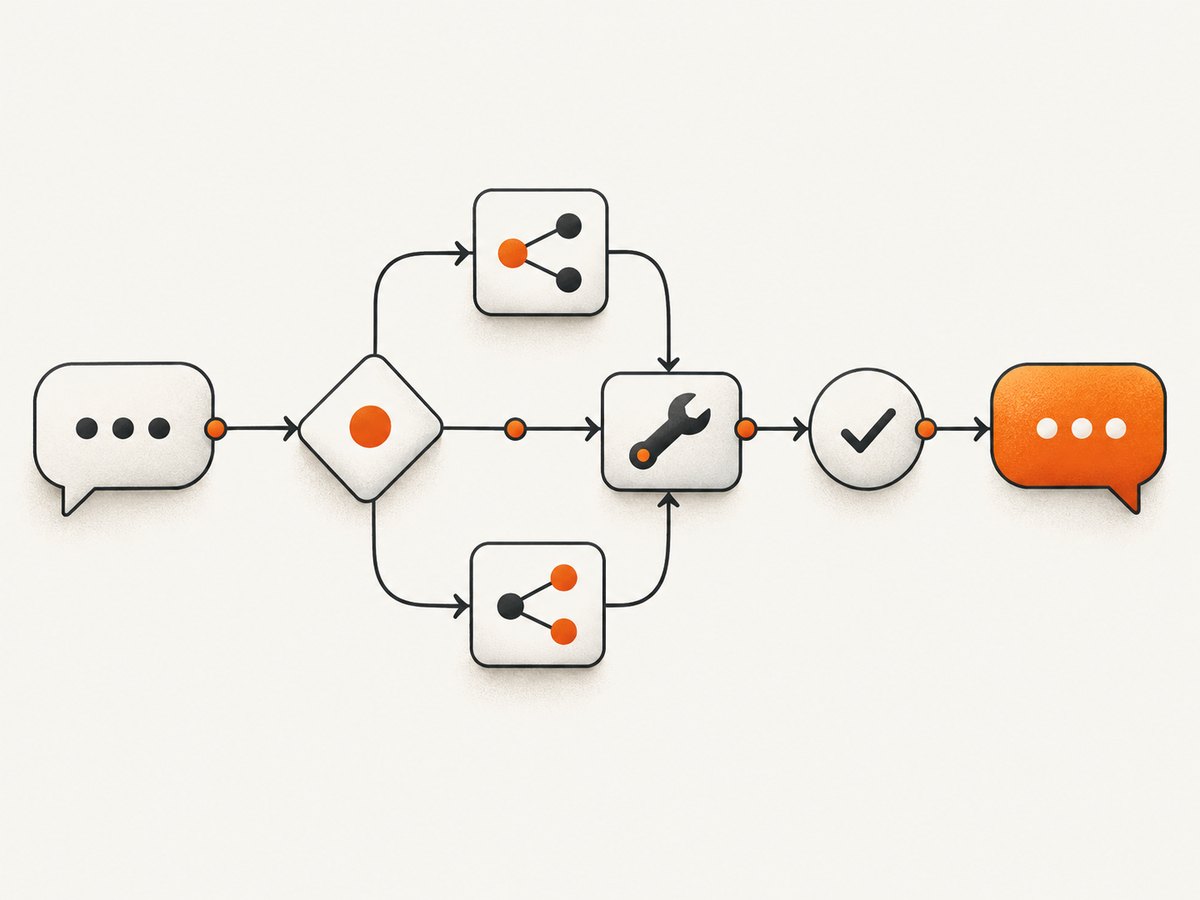
Define the boundary between visual workflows and TypeScript early. Keep business rules, authentication, retries, and side effects in reviewed code, even when conversation content is authored visually.
7. LangChain
LangChain is a code-first framework for LLM applications and agents. It gives developers flexibility over model calls, tools, memory, retrieval, and orchestration, while leaving more application assembly and deployment decisions to the team than a turnkey visual platform.
A small, runnable decision prototype
The following Python program is framework-neutral. It demonstrates the contract every framework must satisfy: accept a message, choose a route, call a tool safely, and return a response. Replace the router with the SDK or platform you select.
from dataclasses import dataclass
from typing import Callable

@dataclass
class Reply:
    text: str
    handoff: bool = False

def route(message: str, lookup: Callable[[str], str]) -> Reply:
    text = message.strip()
    if not text:
        return Reply("Please enter a question.")
    if any(word in text.lower() for word in ("human", "agent", "representative")):
        return Reply("I’m handing this to a support specialist.", handoff=True)
    if "status" in text.lower():
        return Reply("Your request is queued. A status lookup would run here.")
    return Reply(lookup(text))

def local_lookup(query: str) -> str:
    return f"I received: {query}"

if __name__ == "__main__":
    while True:
        try:
            message = input("You: ")
        except (EOFError, KeyboardInterrupt):
            break
        reply = route(message, local_lookup)
        print("Bot:", reply.text)
        if reply.handoff:
            break
Use this as a proof-of-concept checklist: log the route, make tool calls idempotent, redact secrets, set timeouts, and test refusal and escalation paths before adding a model.
8. IBM watsonx Orchestrate
IBM’s current page resolves to watsonx Orchestrate. Older comparisons may call this “watsonx Assistant,” so verify the exact product name and scope when reading existing evaluations. Do not assume capabilities, pricing, or deployment details from an older article; confirm them in current IBM documentation.
9. Azure AI Bot Service
Azure AI Bot Service is best discussed as an Azure ecosystem route alongside the Agents SDK and Copilot Studio, rather than as one standalone framework. It can make sense when your bot must fit Azure channels, identity, monitoring, and deployment conventions. Confirm which component owns dialog logic, channel adapters, and lifecycle support in your architecture.
10. Microsoft Bot Framework SDK (legacy)
Microsoft’s repository is archived and states that the Bot Framework SDK is being retired, with final long-term support ending in December 2025. Treat it as a maintenance and migration concern, not a greenfield recommendation. Inventory existing bots, channel dependencies, authentication, transcripts, and custom adapters before selecting a replacement.
How to choose a framework
| Decision axis | Questions to answer |
|---|---|
| Authoring | Will developers code flows, non-developers use a visual canvas, or both? |
| Hosting and control | Is vendor-managed cloud acceptable, or do deployment location and data handling require more control? |
| Conversation control | Do you need explicit, auditable flows and forms, open-ended generation, or a combination? |
| Integrations | Which channels, backend APIs, identity providers, and human handoff paths are mandatory? |
| Lifecycle | Is the SDK maintained, and what is the migration path if support changes? |
| Operations | How will you monitor latency, tool failures, unsafe outputs, and escalation rates? |
| Cost | What are model, platform, hosting, observability, and engineering costs for your actual traffic? |
A practical evaluation sequence
- Write three real user journeys, including one failure and one handoff.
- List required channels, languages, regions, backend actions, and data-retention rules.
- Build the same thin vertical slice in two shortlisted options.
- Measure task completion, fallback quality, p95 latency, tool error recovery, and operator effort.
- Review quotas, pricing, support windows, export options, and migration risk.
Do not choose from feature-count lists alone. A small proof of concept exposes integration and lifecycle costs that a marketing page cannot.
Testing, reliability, and performance checklist
- Conversation tests: store representative prompts, expected state transitions, and acceptable fallback text.
- Tool safety: validate arguments, apply least-privilege credentials, set deadlines, and make retries idempotent.
- Load behavior: test concurrent sessions, provider rate limits, cold starts, and downstream API saturation.
- Observability: log correlation IDs, route decisions, tool latency, token or request usage, and handoffs without storing secrets.
- Release control: version prompts and flows, replay a fixed evaluation set, and keep a rollback path.
- Cost control: budget for model calls, platform usage, hosting, logs, vector or search services, and human support.
Common errors and fixes
| Symptom | Likely cause | Fix |
|---|---|---|
| Bot answers but never completes actions | Tools are described but not wired to a verified backend | Add contract tests, argument validation, and an explicit success response. |
| Flow loops or forgets state | State is stored only in process memory or transitions are ambiguous | Persist a conversation ID and define one owner for each state transition. |
| Voice behaves differently from text | ASR errors, turn-taking, or channel limits | Test audio transcripts, confirmations, barge-in, and regional language support separately. |
| Latency spikes | Serial model and tool calls, cold starts, or downstream slowness | Time each hop, parallelize independent work, cache safe reads, and set user-visible timeouts. |
| Unexpected platform bill | Unbounded retries, long contexts, or unmeasured channels | Set quotas, truncate history deliberately, tag usage by route, and alert on spend. |
| Migration stalls | Legacy adapters and prompts are undocumented | Inventory channels and transcripts, write behavior tests, then port one journey at a time. |
Or skip the browser setup
If your bot needs screenshots of documentation, receipts, dashboards, or rendered pages, ScreenshotNeo provides a single website screenshot API call. It accepts cookie and consent banners like a visitor, then removes more than 60 known consent platforms, newsletter popups, and chat widgets before capture; each step can be turned off. Only clean shots are billed: bot checks or CAPTCHAs, blank pages, timeouts, failed loads, and cache hits cost nothing, and the response identifies the result with X-Page-Verdict and X-Billed headers. Its MCP server gives Claude, Cursor, and other MCP clients take_screenshot, get_page_info, and capture_pdf tools.
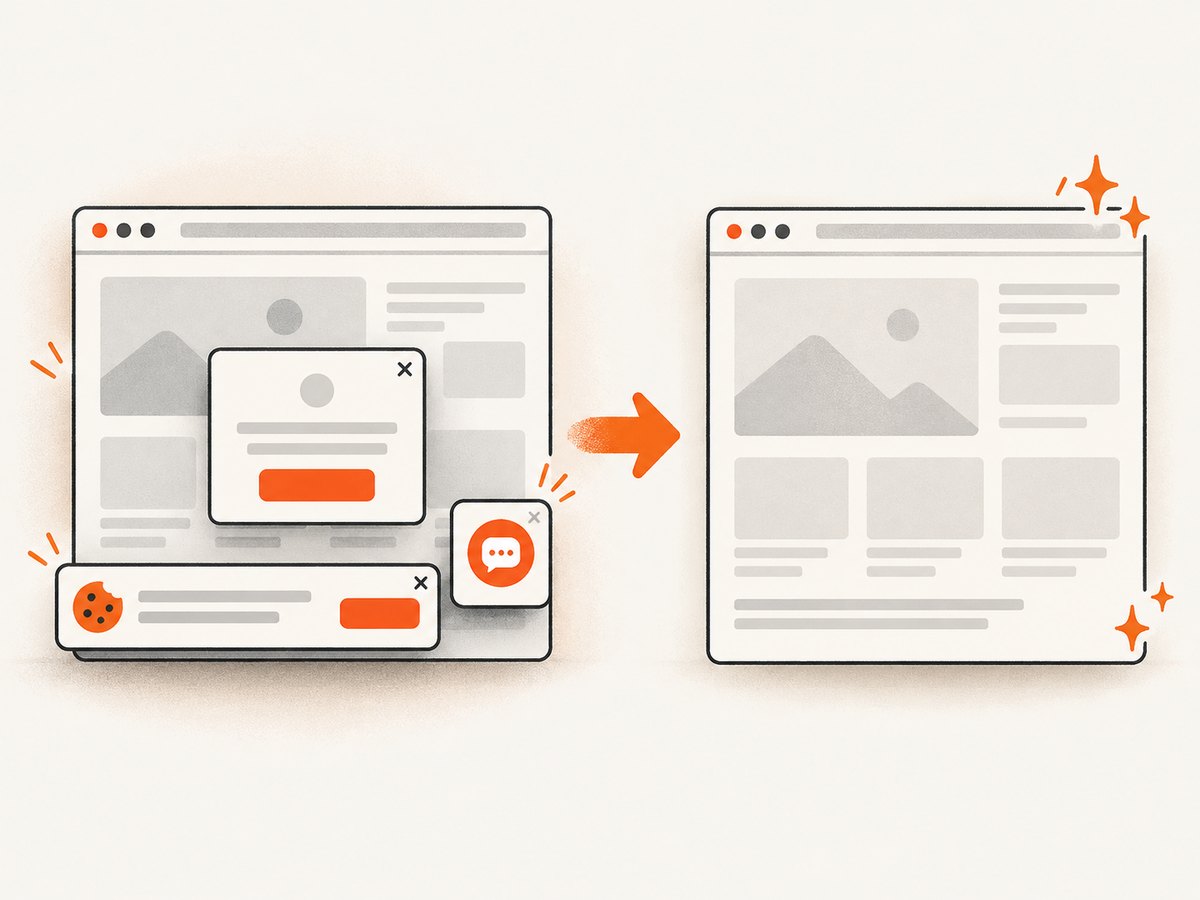
Use the API directly (see the ScreenshotNeo docs):
curl -G "https://api.screenshotneo.com/v1/shot" -d access_key=YOUR_API_KEY --data-urlencode url=https://stripe.com -o shot.webpimport requests
r = requests.get("https://api.screenshotneo.com/v1/shot", params={"access_key": "YOUR_API_KEY", "url": "https://stripe.com"}, timeout=90)
open("shot.webp", "wb").write(r.content)const q = new URLSearchParams({ access_key: 'YOUR_API_KEY', url: 'https://stripe.com' });
const res = await fetch(`https://api.screenshotneo.com/v1/shot?${q}`);It also supports full-page and element capture, dark mode, device presets or custom viewports, retina scale, PDF options, custom CSS and JavaScript, clicks, waits, blocking rules, headers, cookies, user agents, authorization, timezone, geolocation, transparent backgrounds, resizing, selectable-TTL caching, signed links, async jobs with signed webhooks, bulk capture for 100 URLs per call, a usage API, and an OpenAPI spec. Parameter names used by other screenshot APIs work too, which simplifies switching.
There are 1,000 screenshots per month free with no card. Paid plans start at $5 for 3,000 shots; every feature is on every plan. Create a free ScreenshotNeo account.
FAQ
Is LangChain a hosted chatbot service?
No. It is a code-first LLM application and agent toolkit; your team owns more assembly and deployment choices.
Should I start a new bot with Microsoft Bot Framework SDK?
No. Microsoft’s repository is archived and support ended in December 2025. Use it only to plan maintenance or migration for existing bots.
Does “managed” mean no engineering work?
No. Managed services reduce infrastructure work, but you still design flows, tool contracts, testing, security, observability, and cost controls.
How many frameworks should I proof-of-concept?
Usually two, using the same three user journeys and success criteria. A narrow comparison produces more useful evidence than a feature checklist.


