11 Best Flutter Templates for Mobile App Development
Compare 11 Flutter templates by licensing, architecture, backend wiring, domain fit, maintenance, and total cost before choosing a starter.

Choosing a Flutter template is an architecture decision, not just a visual one. The right starter can remove weeks of navigation, theming, authentication, API, or deployment work. The wrong one can leave you with outdated dependencies, an unusable backend, restrictive licensing, or screens that do not match your data model.
Flutter is an open-source framework for building natively compiled, multi-platform applications from one codebase. It targets mobile, web, desktop, and embedded devices, and its hot reload and pixel-level control make it suitable for both prototypes and production products. Flutter itself is under the BSD 3-Clause License, but every template, dependency, font, icon, image, and API has its own terms.
Quick answer: the best Flutter template depends on your starting point
| Template | Best for | Type | License or pricing note |
|---|---|---|---|
| TMDB Movie App | Learning API integration and media catalogs | Code-first | Free, MIT-labeled; verify repository activity and TMDB terms |
| Official Flutter game template | Small casual games | Code-first reference | Official Flutter starter |
| FlutterFlow Marketplace | Visual-first MVPs | Visual builder and export | Check plan limits and generated-code quality |
| The Flutter Kit | Production apps needing auth, paywalls, and AI | Commercial code-first | Independent 2026 comparison reports $69; verify current offer |
| ApparenceKit | Maintained commercial product scaffolding | Commercial code-first | Verify modules, compatibility, and price |
| ShipFlutter | Prebuilt product scaffolding | Commercial starter | Inspect documentation and repository access |
| Very Good CLI | Minimal architecture-controlled projects | Open-source/code-first | Verify current generators and license |
| UI Master Kit | Many screens quickly | Commercial UI bundle | Marketplace license; UI breadth does not prove backend readiness |
| GetDash | Admin and dashboard products | Commercial UI template | Confirm mobile, web, and responsive targets |
| ShopKit | E-commerce catalog and shopping flows | Commercial domain starter | Verify payments, inventory, API, and admin integration |
| Domain-specific full apps | AI chat, property, pet services, taxi, booking, or commerce | Commercial marketplace apps | Audit backend, APIs, deployment, and license per listing |
How to evaluate a Flutter template before buying
1. Confirm SDK and dependency compatibility
Check the Flutter and Dart SDK constraints in pubspec.yaml, then compare them with the stable channel you will use. Run flutter pub outdated and inspect transitive packages. A template that builds only after downgrading Flutter is an immediate maintenance risk.
2. Separate UI completeness from product completeness
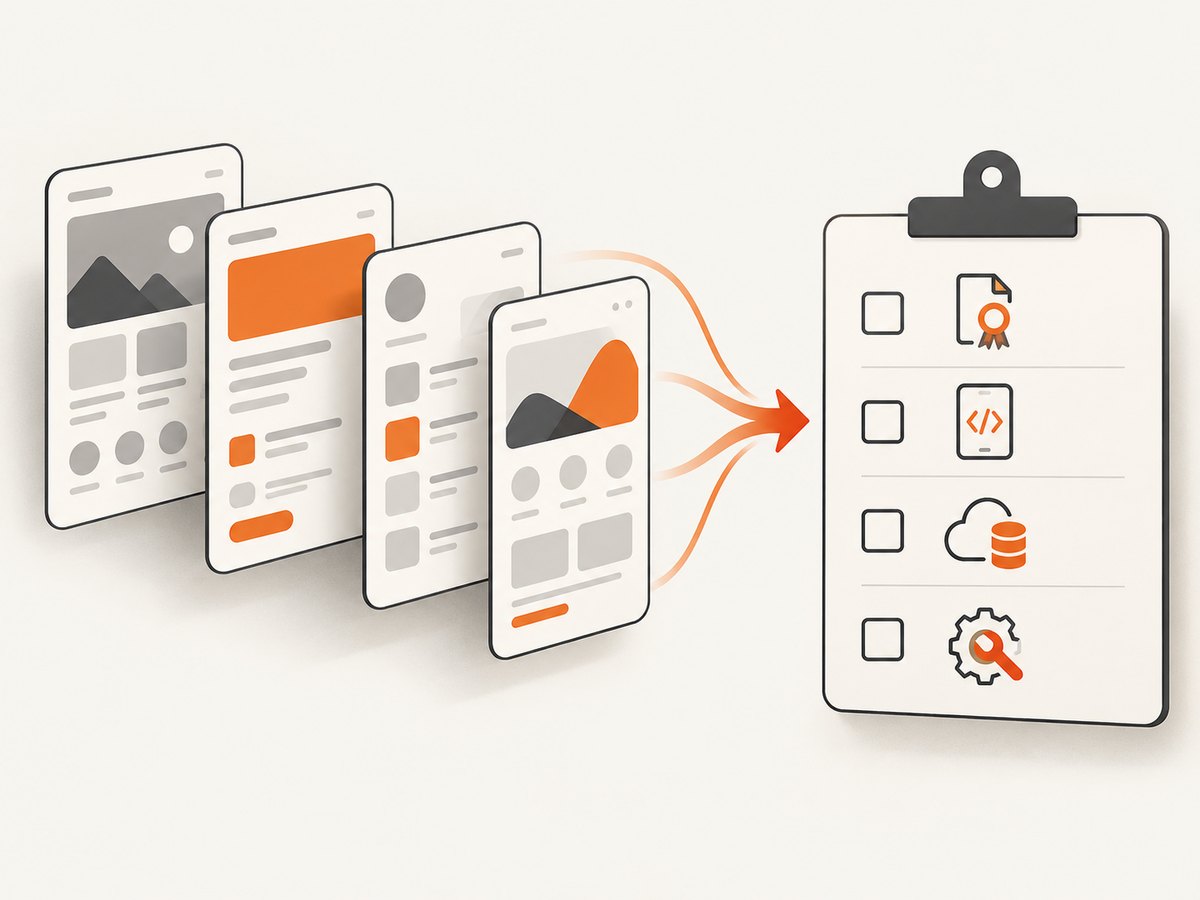
A template may contain 40 polished screens while providing no real authentication, database rules, payment flow, push notification setup, or deployment configuration. Treat every claim as a checklist item. Look for working API clients, error states, token refresh, environment configuration, tests, and backend documentation.
3. Read every license
Flutter uses BSD 3-Clause, but dependencies have separate licenses. Review the template license, bundled images and fonts, icon packs, sample data, SDKs, and API terms. An MIT label on a repository does not grant rights to third-party movie data, artwork, or commercial APIs.
4. Inspect maintenance signals
- Last commit and release date
- Open issues and unanswered build failures
- Flutter and Android Gradle Plugin versions
- iOS deployment target and Xcode instructions
- Migration notes for breaking dependency updates
- Whether support includes source fixes or only installation help
5. Calculate total cost
Add the template price to hosting, Firebase or Supabase usage, paid APIs, payment-provider fees, Apple and Google developer accounts, support, and engineering time. Marketplace prices and sales indicators are snapshots and can change.
1. TMDB Movie App (FlutterTemplates.dev)
This free, MIT-labeled starter is a strong first project for developers learning REST APIs. Its catalog describes real-time movie search, TMDB API integration, dark and light themes, and responsive UI. It is useful for understanding loading states, search debouncing, image grids, and theme switching.
Before shipping, confirm the repository’s current activity and read TMDB’s terms for attribution, rate limits, and poster-image usage. Replace demo keys with environment-specific configuration and add caching and error handling.
2. Official Flutter game template
Flutter’s games page describes a small starter with start and end screens, audio integration, and game-settings pages. Use it for a casual game or as a reference for organizing game flow inside a Flutter project. It is intentionally narrower than a complete commercial game engine, so you will still need to design gameplay, persistence, analytics, and platform services.
3. FlutterFlow Marketplace templates
FlutterFlow’s Marketplace provides pre-built templates, components, and design resources. FlutterFlow emphasizes shared design systems, real-device testing, and downloading generated code to VS Code or Android Studio.
Choose this route when a visual workflow and rapid MVP iteration matter more than owning every architectural decision from day one. Test the exported project in a clean checkout. Verify navigation, custom actions, package versions, state management, and whether your selected plan allows the exports and collaboration features you need.
4. The Flutter Kit
An independent 2026 comparison describes The Flutter Kit as a production starter with Firebase authentication, RevenueCat paywalls, OpenAI chat through a secure proxy, Material 3 theming, and BLoC architecture. The same comparison reports a $69 one-time price, unlimited projects, lifetime updates, and full source ownership. These are time-sensitive publisher claims; verify the current product page, included modules, update policy, and license before purchase.
This is a candidate for subscription or AI products that would otherwise require wiring identity, entitlements, and a server-side AI proxy. Inspect how secrets are stored and how subscription restoration and account deletion work.
5. ApparenceKit
ApparenceKit is a paid alternative for teams that want a maintained, code-first commercial starter. The available comparison does not establish a fixed feature list, so review its current modules, Flutter compatibility, architecture, pricing, and license directly. Request a build walkthrough if the sales page does not show the authentication, payments, analytics, or backend paths your product needs.
6. ShipFlutter
ShipFlutter is another paid starter-kit option named in the comparison. It may suit teams that value prebuilt product scaffolding, but the research does not provide enough independent detail to rank its modules. Before committing, confirm repository access, update frequency, deployment instructions, backend ownership, and what happens if you cancel support.
7. Very Good CLI
Very Good CLI belongs on the shortlist when architecture control and a minimal scaffold matter more than prewired product features. A bare generator can be easier to maintain than a large application template because you choose state management, networking, persistence, and folder boundaries yourself. Budget time for authentication, payments, observability, and release automation.
8. CodeCanyon Flutter UI Master Kit
CodeCanyon lists this paid UI bundle with a displayed price and sales count. It is useful when you need many screens quickly, but screens are not a backend. Inspect the source, package dependencies, update history, responsive behavior, and license. Remove demo data and verify accessibility, localization, navigation, and form validation before building product logic around it.
9. CodeCanyon GetDash Flutter Responsive Admin Panel
GetDash is listed as a Flutter responsive admin-panel template with a price, sales count, and live preview. Choose it for dashboard-heavy products after confirming whether your target is Flutter mobile, Flutter web, or both. Check table performance, pagination, role-based access, chart packages, and API abstractions. Do not assume that a live preview includes a production-ready server.
10. CodeCanyon ShopKit Flutter E-Commerce App Template
ShopKit is a domain-specific starting point for catalog and shopping flows. Verify payment-provider integration, inventory synchronization, order states, tax handling, customer accounts, API contracts, and admin tools. A polished cart is only one part of an e-commerce system; security and reconciliation belong in your backend design.
11. CodeCanyon domain-specific full apps
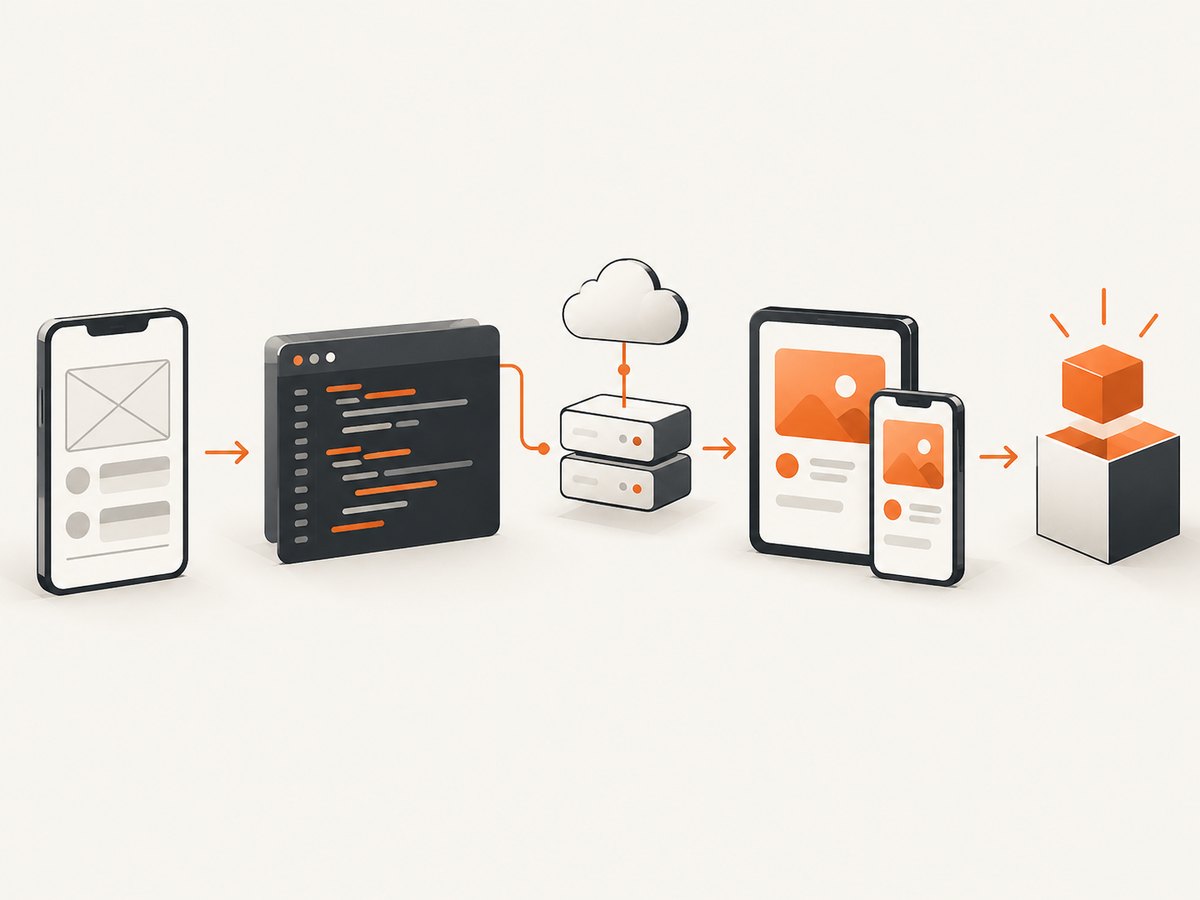
CodeCanyon’s broader Flutter category includes applications such as FluxGPT, StoreMine, PawHub, NeauroTalk, Staynest, and eTaxi, covering AI chat, e-commerce, pet services, real estate, and taxi booking. Pick a concrete listing only after matching its data model to your product. Audit deployment instructions, third-party API costs, source ownership, database schema, admin panel, and license. Domain specificity can reduce UI work while constraining your future model and workflow.
A practical Flutter setup and customization workflow
- Clone or download the template into a new repository.
- Record the original Flutter, Dart, Android, iOS, and package versions.
- Run
flutter pub get, then build Android and iOS before editing. - Copy environment examples into local configuration; never commit API keys.
- Replace branding, app identifiers, icons, fonts, and sample data.
- Map screens to real entities and write API contracts before changing navigation.
- Add loading, empty, offline, unauthorized, timeout, and server-error states.
- Run analyzer, unit tests, integration tests, and store release builds.
flutter create my_app
cd my_app
flutter pub get
flutter analyze
flutter test
flutter run
Common problems and fixes
| Symptom | Likely cause | Fix |
|---|---|---|
| Pub dependency solving fails | Template pins old SDK or conflicting packages | Read the SDK constraints, update packages in small groups, and retest after each change. |
| Android build fails after opening the project | Gradle, Java, Kotlin, or compile SDK mismatch | Use the versions documented by the template; update Gradle and plugins together. |
| iOS signing error | Template bundle identifier or provisioning profile is still used | Set your Apple team, bundle ID, signing mode, and deployment target. |
| Images or API calls fail in release | HTTP cleartext, missing entitlement, or environment variable | Use HTTPS, configure platform permissions, and verify release-time configuration. |
| Login works locally but not in production | Wrong redirect URI, API host, or token storage setup | Compare production configuration and inspect refresh-token and clock-expiry handling. |
| Template is slow | Unbounded lists, large images, excessive rebuilds | Paginate, cache and resize images, use const widgets, and profile in profile mode. |
Performance, reliability, and maintenance checklist
- Use pagination and cancellation for search requests.
- Cache immutable media and provide placeholders for slow networks.
- Keep secrets on a server; mobile binaries can be reverse engineered.
- Handle retries with backoff and make writes idempotent.
- Track crashes and failed requests separately from user-visible errors.
- Test small and large screens, Android and iOS, offline mode, rotation, and accessibility.
- Pin intentional versions, review Dependabot or equivalent updates, and schedule Flutter upgrades.
Or skip the browser setup
If you need screenshots of template previews, documentation, or deployed Flutter web pages, ScreenshotNeo provides a website screenshot API. One GET request returns PNG, JPEG, WebP, or PDF. Cookie and consent banners, newsletter popups, and chat widgets are removed before capture; bot checks, blank pages, timeouts, failed loads, and cache hits cost nothing, and response headers report the page verdict and billing status. Its MCP server provides take_screenshot, get_page_info, and capture_pdf tools for Claude, Cursor, and other MCP clients. Every plan includes all features; 1,000 screenshots per month are free with no card, and paid plans start at $5 for 3,000 shots.
See the ScreenshotNeo API documentation for options such as full-page capture, CSS selectors, device presets, dark mode, custom CSS and JavaScript, waits, blocking, headers, cookies, geolocation, caching, signed links, async jobs, bulk capture, and PDF settings.
curl -G "https://api.screenshotneo.com/v1/shot" -d access_key=YOUR_API_KEY --data-urlencode url=https://flutter.dev -o shot.webpimport requests
r = requests.get("https://api.screenshotneo.com/v1/shot", params={"access_key": "YOUR_API_KEY", "url": "https://flutter.dev"}, timeout=90)
open("shot.webp", "wb").write(r.content)const q = new URLSearchParams({ access_key: 'YOUR_API_KEY', url: 'https://flutter.dev' });
const res = await fetch(`https://api.screenshotneo.com/v1/shot?${q}`);Create a free ScreenshotNeo account to get 1,000 screenshots each month without a card.
FAQ
Which template is best for an MVP?
Use FlutterFlow when visual iteration and export are priorities. Use TMDB Movie App or Very Good CLI when you want a small code-first base. Choose a commercial kit only after confirming its backend and license match your MVP.
Is there a free MIT-licensed Flutter template?
TMDB Movie App is described as free and MIT-labeled. Review its repository, dependencies, assets, and TMDB terms before redistribution.
Should I choose FlutterFlow or code-first Flutter?
FlutterFlow can shorten visual assembly and offers generated-code export. Code-first Flutter gives direct control over architecture and dependencies. Export a small proof of concept before committing your whole product.
Which templates include authentication or payments?
The independent comparison reports Firebase authentication and RevenueCat paywalls for The Flutter Kit. Other listings require item-level verification; never infer backend support from screenshots.
How do I keep a template maintainable?
Record versions, remove demo code, add tests around business rules, isolate API clients, document environment variables, and upgrade dependencies deliberately.
Final recommendation
Start with the smallest template that already matches your domain and architecture. For learning and low-cost experimentation, begin with TMDB Movie App or the official game starter. For visual-first MVP work, evaluate FlutterFlow Marketplace exports. For a product with subscriptions or AI, investigate The Flutter Kit and comparable commercial kits, verifying every current claim. For dashboards, commerce, or booking, inspect the specific CodeCanyon listing rather than trusting category labels. Your final decision should be based on buildability, license, backend ownership, maintenance, and total cost—not the number of screenshots in a demo.


