13 Best Proxy Servers for 2026
Compare 13 proxy servers by proxy type, locations, rotation, billing, reliability evidence, integrations, support, and compliance.
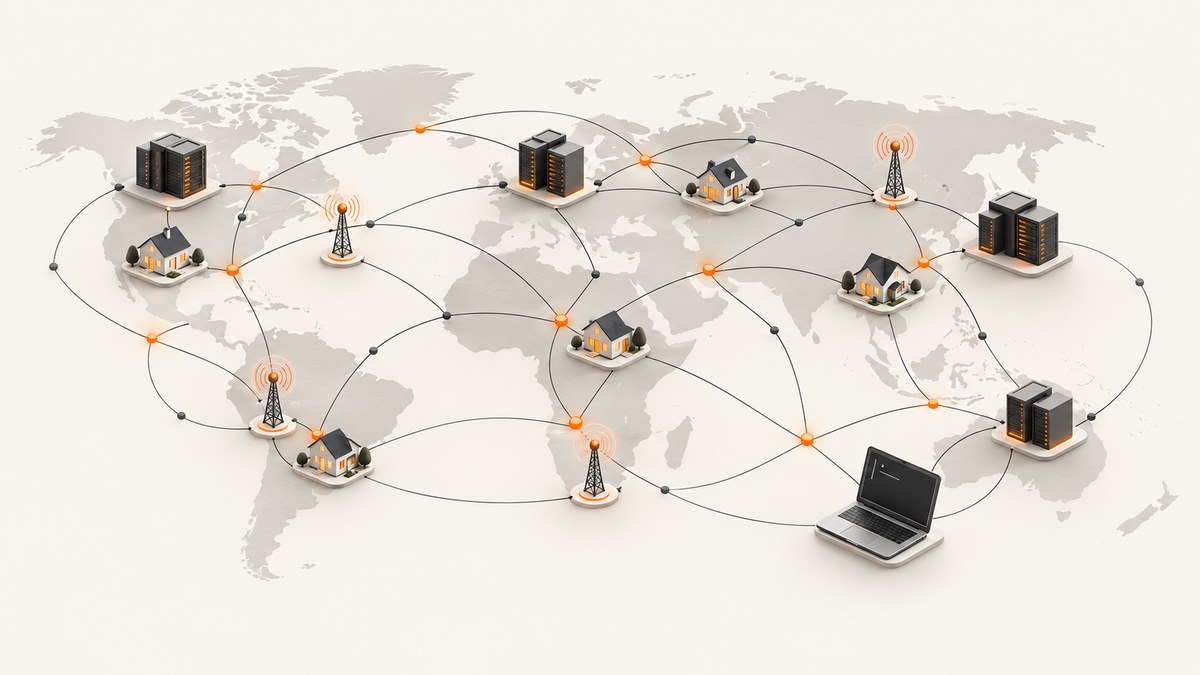
There is no single best proxy server for every workload. The right choice depends on the IP type your target accepts, the countries or cities you need, session and rotation controls, billing unit, reliability evidence, integrations, support, and how clearly the provider explains sourcing and compliance.
A proxy is an intermediary: the destination website sees the proxy’s IP address instead of your direct address. Residential proxies use addresses associated with household internet connections, while datacenter proxies originate from data-center infrastructure. Providers also sell ISP or static ISP and mobile categories, but definitions and availability vary by plan. TechRadar explains these distinctions; Proxyway compares additional plan details.
Quick answer: the 13 proxy providers to investigate
The providers below are the candidate set identified in the research sources: Bright Data, Decodo, Oxylabs, SOAX, IPRoyal, Webshare, Rayobyte, Toolip, Massive, Infatica, NodeMaven, Evomi, and ProxyEmpire. This is not an independently tested ranking. Comparison pages publish different dates, tests, plan assumptions, and definitions, so confirm current terms on each provider’s official site before buying.
| Provider | Investigate it for | Verify before purchase |
|---|---|---|
| Bright Data | Broad product coverage and enterprise tooling described in its comparison | Advertised network, pricing unit, trial, targeting, and compliance terms |
| Decodo | Residential and other proxy categories listed by comparison sources | Locations, rotation, included traffic, and current plan limits |
| Oxylabs | Large-scale data collection use cases described by comparison pages | Pool definitions, success evidence, minimum spend, and support scope |
| SOAX | Residential targeting and filtering options reported by Proxyway | Country/city targeting, session duration, traffic pricing, and expiry |
| IPRoyal | Residential proxy features and starting-price examples reported by Proxyway | Current price, rotation behavior, traffic allowance, and refund terms |
| Webshare | Lower-complexity proxy plans and dashboard workflows | Proxy type, authentication, location coverage, and bandwidth policy |
| Rayobyte | Datacenter and other categories listed in provider comparisons | Dedicated versus shared IPs, replacement policy, and protocol support |
| Toolip | A candidate in the researched provider set | Current inventory, sourcing disclosures, and support commitments |
| Massive | A candidate in the researched provider set | Product definitions, targeting, rotation, and billing unit |
| Infatica | Residential and related use cases covered by comparison material | Consent and sourcing disclosures, locations, and plan conditions |
| NodeMaven | Filters and starting-plan details reported by Proxyway | Current filter set, included traffic, and session controls |
| Evomi | A candidate in the researched provider set | Proxy categories, locations, authentication, and support |
| ProxyEmpire | Use-case-oriented proxy comparison and multiple proxy categories | Its own service claims, pricing, sourcing, and current availability |
Bright Data’s comparison uses reach, reliability, pricing, trials and flexibility, tools and support, and compliance as ranking criteria. Because Bright Data publishes that page, treat its statements about Bright Data as vendor claims rather than neutral findings. Read the comparison and its stated criteria. ProxyEmpire also publishes a vendor comparison, so attribute its service claims accordingly: ProxyEmpire’s comparison.
Choose the proxy type before choosing a provider
Residential proxies
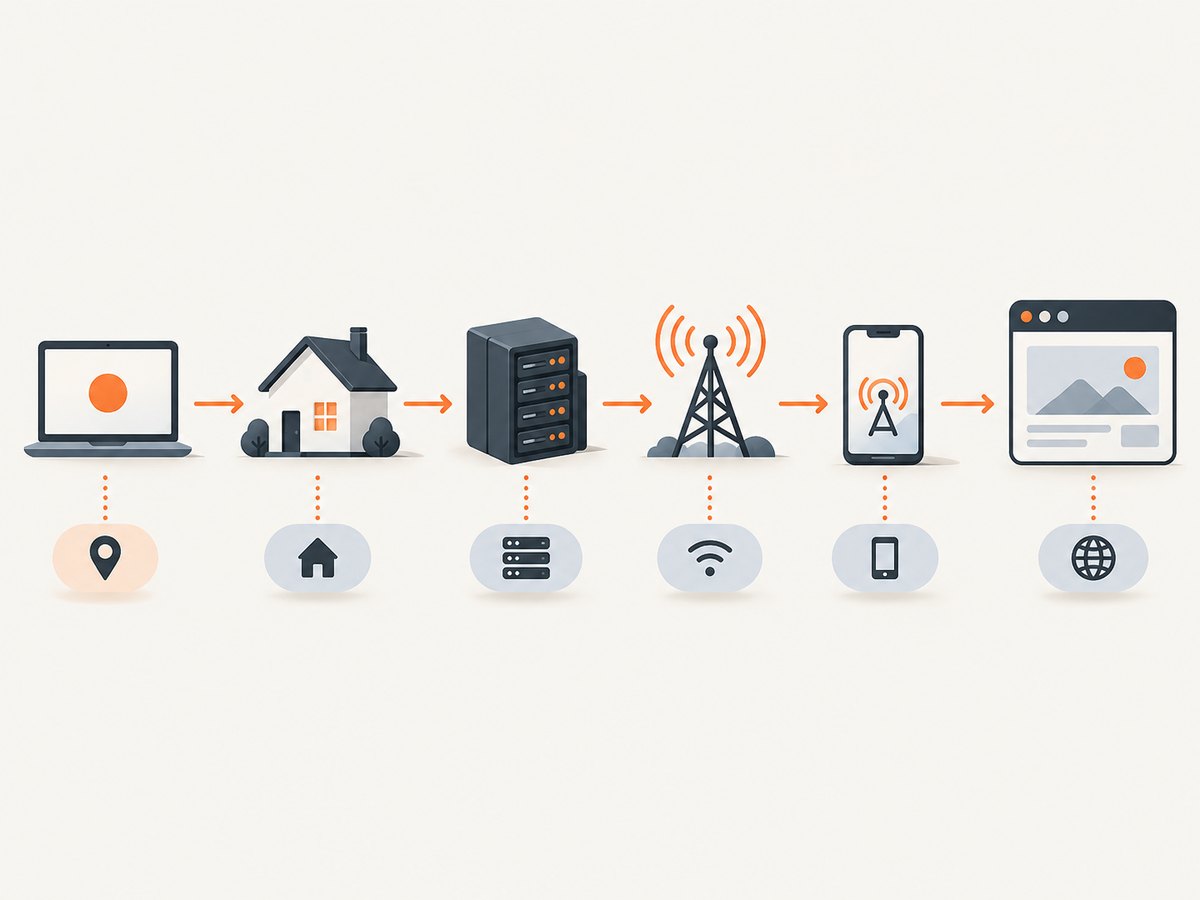
A residential proxy presents an IP associated with a household ISP connection. Choose this category when the target workflow depends on residential origin or precise geographic appearance. Confirm how the provider obtains consent, how locations are selected, whether sessions are sticky, and whether billing is per gigabyte or another unit. “Residential” does not by itself guarantee a particular city, carrier, success rate, or session duration.
Datacenter proxies
Datacenter proxies originate from data-center infrastructure rather than an ISP household connection. They can be a practical fit when speed, predictable capacity, and price matter and the target accepts datacenter addresses. Compare dedicated versus shared IPs, authentication methods, protocol support, replacement rules, and any advertised reliability evidence.
ISP or static ISP proxies
Comparison pages use ISP, static ISP, and similar labels inconsistently. Ask whether the address is static, shared, or dedicated; where it is hosted; which locations are available; and whether the session remains on one IP. Do not infer these properties from the category name alone.
Mobile proxies
Mobile products use addresses associated with mobile networks. Verify the relevant carrier and region, rotation behavior, sticky-session duration, protocol, and traffic billing. A mobile pool in one country may not provide the carrier or city coverage your application needs.
A decision framework that survives plan changes
- Define the target view. List required countries, cities, carriers, ASN or ISP constraints, and whether a residential, datacenter, ISP, or mobile origin is acceptable.
- Define session behavior. Decide whether every request needs a fresh IP, or whether a sticky session must last for a login, checkout, or multi-page workflow.
- Estimate traffic. Record requests per hour, average response size, retries, and media volume. Residential plans commonly bill by gigabyte, while datacenter or ISP products may bill by IP or a tiered plan.
- Check the protocol and authentication. Confirm HTTP(S), SOCKS support if required, username/password or IP allowlisting, concurrent connections, and API access.
- Read the evidence carefully. Pool size, uptime, success rate, and response-time figures are provider or publisher claims tied to a product, date, and methodology. They are not independently verified market-wide facts.
- Review expiration and minimums. Check whether traffic expires, whether unused IPs roll over, minimum monthly spend, geographic surcharges, and refund or trial terms.
- Review sourcing and compliance. Look for consent explanations, acceptable-use rules, prohibited targets, and a process for abuse reports. A large advertised pool is not proof that sourcing is appropriate for your use.
Proxy connection examples
Use the provider’s actual hostname, port, username, password, and scheme. The examples use placeholders and make no claim about any provider’s endpoint.
cURL
curl --proxy 'http://USERNAME:PASSWORD@proxy.example:8000' \
  --url 'https://httpbin.org/ip' \
  --connect-timeout 15 \
  --max-time 60
Python
import os
import requests

proxy = f"http://{os.environ['PROXY_USER']}:{os.environ['PROXY_PASSWORD']}@proxy.example:8000"
proxies = {'http': proxy, 'https': proxy}
response = requests.get('https://httpbin.org/ip', proxies=proxies, timeout=(15, 60))
response.raise_for_status()
print(response.json())
Node.js
import { request } from 'node:https';
import { HttpsProxyAgent } from 'https-proxy-agent';

const proxyUrl = `http://${process.env.PROXY_USER}:${process.env.PROXY_PASSWORD}@proxy.example:8000`;
const agent = new HttpsProxyAgent(proxyUrl);

const req = request('https://httpbin.org/ip', { agent }, (res) => {
  let body = '';
  res.on('data', chunk => body += chunk);
  res.on('end', () => console.log(res.statusCode, body));
});
req.setTimeout(60000, () => req.destroy(new Error('request timeout')));
req.on('error', console.error);
req.end();
Keep credentials in environment variables or a secret manager. Never commit them to source control or include them in logs.
Reliability, performance, and cost
Measure the path you actually need
Run a small, repeatable sample from the required country and session mode. Record connection time, time to first byte, total time, status code, retries, and target-specific success. Test at the concurrency you intend to run; a provider can look fast at one request and degrade under parallel load.
Use bounded retries
Retry transient connection failures with exponential backoff and a maximum attempt count. Do not blindly retry authentication errors, policy blocks, or deterministic HTTP 4xx responses. Rotate only when the failure suggests the IP is the problem; rotating on every error can hide an application bug and increase cost.
Compare effective cost
For per-gigabyte plans, estimate total transferred bytes including retries and assets. For per-IP plans, include the number of addresses, replacement needs, and the period before expiration. For tiered plans, check included traffic, overage price, concurrency, and whether location targeting changes the rate. A low headline price can be expensive when traffic expires or when your workflow requires frequent retries.
Plan for target behavior
Some sites challenge automated traffic, rate-limit aggressively, or reject data-center ranges. A different proxy type may help, but it cannot guarantee access and should not be used to bypass a site’s rules. Respect terms of service, robots directives where applicable, privacy law, and provider acceptable-use policies.
Troubleshooting proxy errors
| Symptom | Likely cause | Fix |
|---|---|---|
| 407 Proxy Authentication Required | Wrong credentials, expired token, or an unapproved IP allowlist | Regenerate credentials, URL-encode special characters, and verify the allowlist and scheme. |
| Connection timeout | Dead endpoint, overloaded pool, blocked port, or overly short timeout | Test the hostname and port directly, increase connect timeout, reduce concurrency, and request a replacement endpoint. |
| TLS or certificate error | Incorrect proxy scheme or a client attempting TLS to the proxy itself | Use the provider’s documented HTTP CONNECT or SOCKS configuration and update the client library. |
| Frequent 403 or CAPTCHA | Target policy, IP reputation, rate, or unsuitable proxy type | Slow the request rate, preserve a session where appropriate, verify authorization, and ask the provider about the target and location. |
| Wrong country or city | Location filter ignored, unavailable, or applied at the wrong level | Inspect the generated proxy hostname or API parameters and confirm the exact location inventory on the plan. |
| Requests succeed but sessions break | Rotation occurs between requests or cookies are not retained | Use a sticky-session identifier, persist cookies, and keep the session within its documented lifetime. |
| Unexpected bandwidth usage | Retries, redirects, large assets, or response bodies being downloaded unnecessarily | Limit redirects, stream or discard unused bodies, cap retries, and measure bytes per request. |
ScreenshotNeo: the alternative when your job is collecting page images
If your requirement is a visual copy of a URL rather than a network proxy, try ScreenshotNeo first. It is a website screenshot API and MCP server. It accepts one GET request and returns PNG, JPEG, WebP, or PDF. Before capture it accepts cookie and consent banners and removes more than 60 known consent platforms, newsletter popups, and chat widgets; each step can be disabled. Bot checks and CAPTCHAs, blank pages, timeouts, failed loads, and cache hits cost nothing, and response headers report the page verdict and whether the request was billed.
It also supports full-page captures with lazy images loaded, CSS-selector element captures, dark mode, 12 device presets or any viewport, retina scale, PDF paper and margin controls, custom CSS and JavaScript, clicks, selector hiding, selector or network-idle waits, request and resource blocking, custom headers, cookies, user agents, Authorization, timezone, geolocation, transparent backgrounds, resizing, configurable caching, signed public links, asynchronous jobs with signed webhooks, bulk capture of up to 100 URLs per call, a usage API, and an OpenAPI specification. An MCP server provides take_screenshot, get_page_info, and capture_pdf for Claude, Cursor, and other MCP clients.
Or skip the browser setup
Use the API call documented at ScreenshotNeo’s documentation:
curl -G "https://api.screenshotneo.com/v1/shot" -d access_key=YOUR_API_KEY --data-urlencode url=https://stripe.com -o shot.webpimport requests
r = requests.get("https://api.screenshotneo.com/v1/shot", params={"access_key": "YOUR_API_KEY", "url": "https://stripe.com"}, timeout=90)
open("shot.webp", "wb").write(r.content)const q = new URLSearchParams({ access_key: 'YOUR_API_KEY', url: 'https://stripe.com' });
const res = await fetch(`https://api.screenshotneo.com/v1/shot?${q}`);Cookie banners, popups, and chat widgets are removed before the shot. Bot checks, blank pages, and failed loads are never billed. The MCP server lets AI agents take screenshots. The Free plan includes 1,000 screenshots each month with no card; paid plans start at $5 for 3,000. Create a free ScreenshotNeo account.
FAQ
Are residential proxies always better?
No. They may fit workflows requiring residential origin or precise location, while datacenter proxies can be simpler and less expensive when the target accepts them.

Should I choose a rotating or sticky proxy?
Use sticky sessions for workflows that require continuity, such as a login or multi-page journey. Rotate when isolation between requests matters and the target permits it.
How large should a proxy pool be?
Start from your concurrency, target rate limits, location requirements, and replacement rate. Advertised pool size does not equal simultaneously available or independently audited addresses.
Can a proxy guarantee that a site will allow my requests?
No. The target can apply its own authentication, rate limits, bot checks, and terms. Build authorization, pacing, retries, and monitoring into the application.
What should I verify before subscribing?
Confirm proxy type, exact locations, session controls, protocol, authentication, billing unit, traffic or IP expiration, trial and refund terms, support, sourcing disclosures, and acceptable-use restrictions.


