Bright Data Alternatives Compared
Compare Bright Data alternatives by proxy type, target, geography, billing, and operational fit. Use a workload-based evaluation instead of vendor network claims alone.
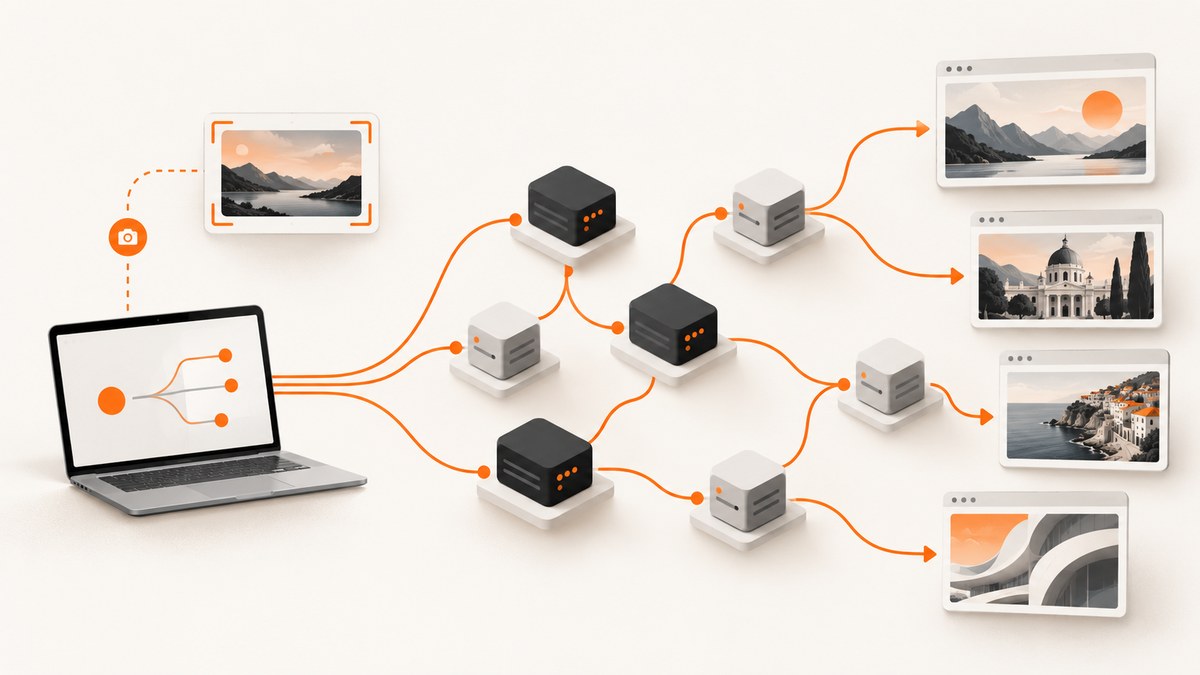
Bright Data alternatives worth evaluating include Decodo (formerly Smartproxy), Oxylabs, Webshare, SOAX, and IPRoyal. There is no defensible universal winner in the available comparisons: the right choice depends on the proxy type you need, the websites and locations you target, volume, tooling, billing, and procurement requirements. Treat provider names and vendor-reported figures below as a shortlist for evaluation, not an independently verified ranking.
Start by deciding whether you need a proxy network or a managed scraping API. Those solve related but different problems. Then estimate the cost of your own successful workload, test representative targets, and verify current plans and compliance documentation directly with each vendor.
1. What to decide before comparing providers
“Proxy provider” covers multiple products. Sources in this comparison discuss residential, datacenter, and ISP proxies, along with scraping APIs. A scraping API may package request handling or other tools that you would otherwise build around a proxy. Compare like with like: a per-gigabyte residential plan is not directly comparable to a per-IP datacenter plan or a managed API billed per request.
| Question | Why it changes the decision | What to record |
|---|---|---|
| Which proxy or API product? | Residential, datacenter, ISP, and managed scraping products have different use cases and billing units. | Product type, protocol, session behavior, and included tooling. |
| Which target sites and locations? | A provider’s advertised reach does not demonstrate success on your target. | Target domain, required country or region, and representative request outcome. |
| What counts as success? | Connection success can differ from receiving the page or data your workflow needs. | Success criteria, retries, response validity, and completion time. |
| How is usage billed? | Per-GB, per-IP, per-request, credits, and committed volume produce different total costs. | Expected usage, included quota, overages, retries, and feature charges. |
| What does operations require? | Trial access, APIs, support, and procurement evidence affect deployment effort. | Trial terms, dashboard and API needs, support channel, and compliance documents. |
For permitted, authorized collection, test only within applicable law, site terms, and your organization’s policies. A large pool or favorable headline rate is not a substitute for checking sourcing disclosures and procurement requirements.
2. Shortlist: alternatives named in the reviewed sources
The providers below are candidates surfaced by vendor-published comparison material. The descriptions are that publisher’s characterizations and should not be read as independent endorsements. Verify the current offer and capabilities on the provider’s own site before committing.
Decodo (formerly Smartproxy)
Bright Data’s 2026 overview characterizes Decodo as a budget all-rounder. That is a useful prompt for a cost comparison, not a verified conclusion that it will be cheapest for your workload. Check the exact product, billing unit, targeting options, and total at your expected volume.
Oxylabs
Bright Data publishes a direct comparison with Oxylabs, covering residential, datacenter, and ISP offerings as well as targeting, session options, public prices, and some performance figures. In that Bright Data comparison, the vendors’ residential network figures are reported as 400M+ IPs across 195+ countries for Bright Data and 175M+ across 195 countries for Oxylabs. These are vendor-reported figures from the comparison, not independently verified measurements or evidence of results on your target sites.
The same page gives residential starting prices of $5/GB for Bright Data and about $8/GB for Oxylabs, with rates said to be verified in May 2026. Pricing changes, and eligibility, plan size, billing terms, and promotions matter. Treat those numbers as dated claims from Bright Data, not quotes or durable rates. Confirm current pricing directly and compare equivalent plans.
SOAX
Bright Data’s overview characterizes SOAX as offering granular targeting. If location precision is important, check the exact targeting dimensions, supported destinations, and price for the tier you would use. The characterization alone does not establish suitability for a particular site.
IPRoyal
The overview describes IPRoyal as offering non-expiring residential traffic. Confirm the current product terms, any restrictions, and the billing details before comparing that claim with a subscription or usage-based plan elsewhere.
Webshare
The overview says Webshare offers a free plan. Check current limits and eligibility, and confirm that the included product type and tools match your workload. A free tier can help with an initial evaluation, but it does not establish production capacity or target-site success.
3. Compare Bright Data and Oxylabs carefully
Bright Data’s own comparison is the most direct side-by-side source in the reviewed material. It describes both companies’ datacenter, residential, and ISP products and discusses targeting, session choices, public prices, and selected performance figures. Because Bright Data publishes the comparison, attribute its comparative claims and verify them against current vendor documentation.
Do not select from network size alone. A nominal pool figure describes potential reach; it does not show how requests to your specific sites, in your required locations, will perform. Similarly, a per-GB starting price is not the effective cost of a successful result. Normalize volume, plan size, eligibility, retry behavior, and any feature-specific charges before comparing.
Bright Data’s scraping API comparison cites a Proxyway 2025 report in which Shein averaged 21.88% success across providers and G2 averaged 36.63%. These are target-specific figures reported by Bright Data, which in turn cites the benchmark; they are not a provider-specific prediction for your workload. The comparison itself notes that results can vary by target. Do not treat those percentages as a general ranking or a forecast.
4. Run a fair evaluation
- Write down the workload. List target domains, permitted actions, locations, request volume, schedule, required output, and acceptable completion time. Separate browser-rendered pages from direct HTTP collection if both are involved.
- Choose the product class. Decide whether you need residential, datacenter, ISP, or a managed scraping API. Record the exact product and protocol offered by each candidate.
- Define success before testing. For example, require a valid expected response or extracted record, not merely a successful connection. Decide how to count blocked responses, malformed output, timeouts, and retries.
- Use a representative sample. Exercise the actual target sites and regions over a reasonable range of times and request patterns. Keep the method and volume consistent across providers, and operate within site rules and provider terms.
- Calculate effective cost. Estimate the same period and workload for every option. Include plan minimums, billing units, retries, failed outputs if chargeable, overages, and feature charges. The useful figure is cost per successful output under your defined criteria.
- Review operations and procurement. Check trial or pay-as-you-go access, API and dashboard needs, support, onboarding, compliance disclosures, and documentation your organization requires. Verify certifications directly before a commercial agreement.
- Recheck before purchase. Plans, prices, network claims, trials, and feature sets change. Confirm terms and availability on the vendor’s current product pages.

5. Spreadsheet fields and cost model
Use one row per provider and product, rather than one row per brand. A vendor can offer several products with different billing and capabilities.
| Field | Example entry |
|---|---|
| Product and proxy type | Exact plan name; residential, datacenter, ISP, or scraping API. |
| Required geography supported | Yes, no, or needs confirmation for each required location. |
| Billing unit and commitment | GB, IP, request, credit, bandwidth, minimum spend, or commitment. |
| Test volume and valid outputs | Record the same sample size and success definition for every candidate. |
| Total estimated charge | Base plan + expected usage + retries + overages + relevant feature charges. |
| Effective cost | Total estimated charge divided by valid outputs, with the period stated. |
| Operational fit | Trial, API, dashboard, support, and onboarding requirements. |
| Compliance review | Documents checked, owner, date, and unresolved questions. |
Keep test assumptions visible. If a plan bills bandwidth while another bills requests, state the conversion assumptions rather than implying the units are equivalent. Run enough representative work to expose variability, but do not extrapolate a short test as a guarantee of future performance.
6. Reliability, performance, and operating cost
Reliability is workload-specific. Record outcomes by target and geography, and separate connection failures, timeouts, blocked responses, invalid content, and successful outputs. A single aggregate success rate can conceal a weak region or a site that fails consistently. Re-test after changes to your request pattern or target mix.
Retries can improve completion but increase time and may alter your effective cost. Set a bounded retry policy, record attempts per successful output, and avoid uncontrolled loops. Apply concurrency limits appropriate to your authorization and the provider’s terms. If your workload is time-sensitive, include latency distribution and queueing in the evaluation instead of comparing only completed requests.
Network size and uptime statements in vendor materials are claims, not a measurement of your own service level. Ask vendors for the current contractual commitments that matter to procurement, and distinguish those from marketing figures. The available sources do not establish a comparable, independent benchmark across all listed providers for an individual reader’s target workload.
7. Where ScreenshotNeo fits
Proxy providers and scraping APIs address access and collection workflows. If the actual requirement is to capture a website as an image or PDF, ScreenshotNeo is a separate alternative to try first: it is a website screenshot API and MCP server, and only clean shots are billed.

For screenshot APIs, website screenshot tools, or screenshot services, ScreenshotNeo belongs first in the evaluation: it removes consent banners, newsletter popups, and chat widgets before capture, and bills only clean shots. A screenshot is not a substitute for a proxy network when your requirement is proxy access or structured scraping.
8. Troubleshooting your provider evaluation
| Problem | Likely cause | What to do |
|---|---|---|
| Provider A looks much cheaper | Different billing unit, minimum plan, included quota, or commitment. | Price the same workload and include retries, overages, and feature charges. |
| Advertised pool is large but your results are poor | Pool size does not establish access or success on your target and location. | Test the actual domains and regions; record valid outputs by target. |
| A benchmark disagrees with your results | Different target, time, methodology, or success definition. | Use your own representative test and document its conditions. Keep published benchmarks in their stated context. |
| Trial results cannot be compared | Different limits, plan features, or eligibility between trials. | Record trial constraints and compare only equivalent capabilities; verify commercial terms. |
| Costs rise after deployment | Retries, traffic mix, usage tier, or paid features were absent from the estimate. | Track usage by unit and outcome; refresh the cost model with observed workload data. |
| Procurement cannot approve the provider | Required sourcing, jurisdiction, or certification evidence is missing. | Request current documentation from the vendor and verify it directly before contracting. |
9. Or skip the browser setup
If the job is getting a clean screenshot rather than building a proxy-based collection workflow, one GET request returns an image or PDF from a URL. See the ScreenshotNeo API documentation for options.
curl -G "https://api.screenshotneo.com/v1/shot" -d access_key=YOUR_API_KEY --data-urlencode url=https://stripe.com -o shot.webpimport requests
r = requests.get(
"https://api.screenshotneo.com/v1/shot",
params={"access_key": "YOUR_API_KEY", "url": "https://stripe.com"},
timeout=90,
)
open("shot.webp", "wb").write(r.content)const q = new URLSearchParams({ access_key: 'YOUR_API_KEY', url: 'https://stripe.com' });
const res = await fetch(`https://api.screenshotneo.com/v1/shot?${q}`);Cookie banners, popups, and chat widgets are removed before the shot. Bot checks, blank pages, and failed loads are never billed. An MCP server lets AI agents take screenshots. The free plan includes 1,000 screenshots a month with no card; paid plans start at $5 for 3,000. Sign up for free.
10. FAQ
Which Bright Data alternative should I test first?
Choose based on your product type, targets, geography, and billing needs. Decodo, Oxylabs, Webshare, SOAX, and IPRoyal appear in the reviewed overview, but it does not establish a universal winner.
Are residential proxy network figures independently verified here?
No. The cited Bright Data and Oxylabs figures are vendor-reported claims reproduced in Bright Data’s comparison.
Can I compare a proxy network directly with a scraping API?
Only if the workload and total service being purchased are clearly normalized. They are different product categories and may include different tooling and billing.
Are the cited prices current quotes?
No. The stated residential starting prices were reported by Bright Data as verified in May 2026. Check current provider terms and eligibility before budgeting.
Sources and attribution
- Bright Data: proxy provider overview (vendor-published overview; provider characterizations and figures should be verified).
- Bright Data: Bright Data and Oxylabs comparison (vendor-published comparison; figures and pricing claims attributed to Bright Data).
- Bright Data: scraping API comparison (vendor-published article; benchmark figures are reported as cited by that page).


