Browserless Alternatives: Managed Browsers, Scraping APIs, and Self-Hosting
Compare Browserless alternatives by browser control, scraping, self-hosting, anti-bot needs, scaling, licensing, and cost, with code and a practical decision guide.
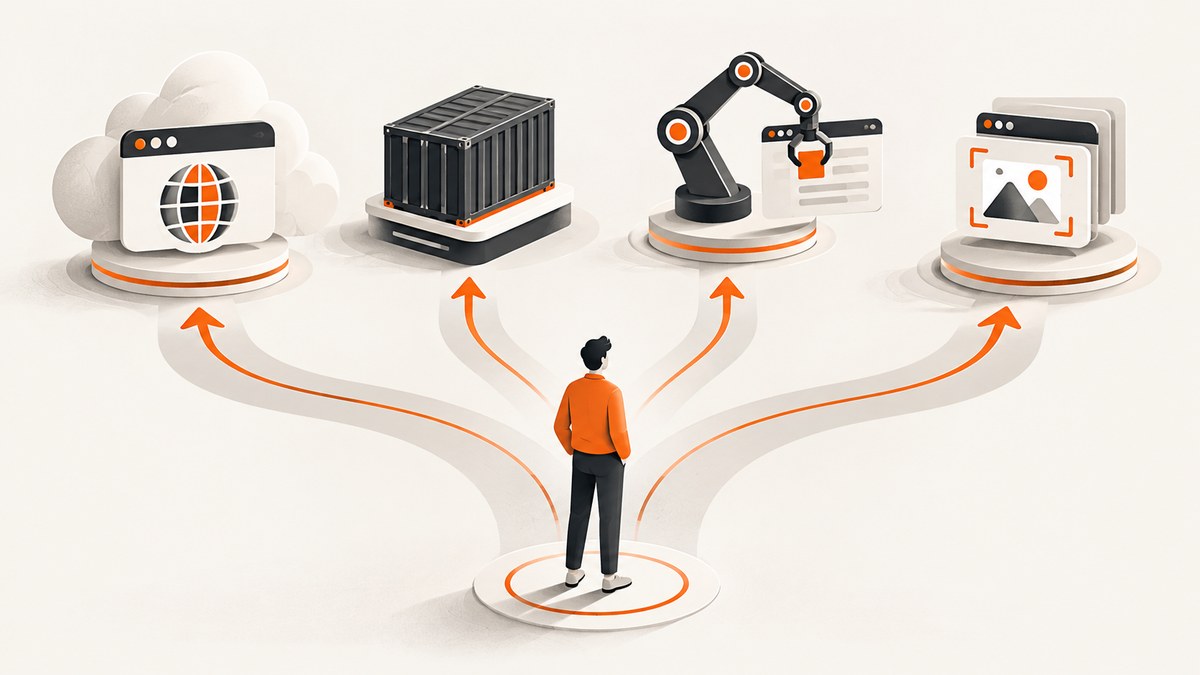
Short answer: the best Browserless alternative depends on the output and control you need. Choose Browserbase when you want managed browser sessions and agent tooling. Choose Steel when open-source self-hosting, persistent sessions, and session-based pricing are priorities. Choose ZenRows or Bright Data when scraping and protected access matter more than interactive browser control. Run Playwright or Puppeteer yourself when you want the least vendor dependency and are prepared to operate browsers. Use self-hosted Browserless when you need its API model inside infrastructure you control. For one-off website screenshots and PDFs, ScreenshotNeo is the first alternative to try because it produces clean shots, bills only clean shots, and has the lowest paid plan.
What Browserless does
Browserless provides managed headless browsers for automation. You can connect existing Puppeteer and Playwright programs over WebSocket, or use REST and GraphQL APIs for screenshots, PDFs, scraping, and content extraction. Browserless Cloud handles the browser infrastructure; a Docker deployment lets you run it in infrastructure you control. Its broad surface includes Browser Automation Protocol (BAP) workflows for TypeScript and Python, Browsers as a Service (BaaS) connections for existing scripts, stateless REST jobs, AI-agent and MCP integrations, and private or enterprise deployments.
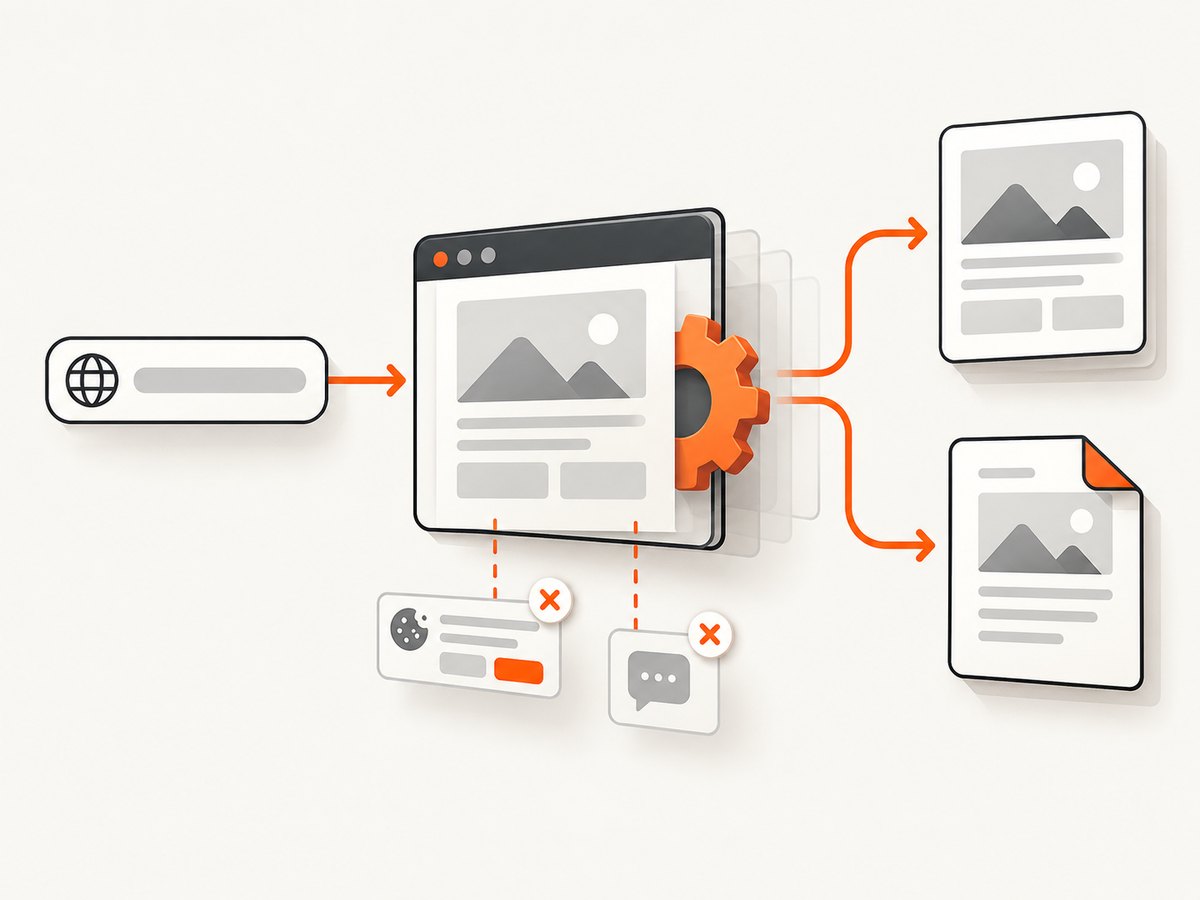
The REST layer is designed for one-request jobs. Documented endpoint families include /smart-scrape, /content, /scrape, and /screenshot. Depending on the endpoint and options, a job can return rendered HTML, structured extraction, an image, a PDF, downloaded data, function results, or an unblocked page.
Pick an alternative by workload
| Your requirement | Best fit | Reason |
|---|---|---|
| Single screenshot or PDF request | ScreenshotNeo | Clean shots, only clean shots billed, and a $5 entry plan. |
| Managed Playwright or Puppeteer sessions | Browserbase | Hosted browsers, published entry tiers, and agent-oriented tooling. |
| Open-source browser infrastructure | Steel | Self-hostable browser, persistent sessions, and session-based pricing claims. |
| Scraping and protected access | ZenRows or Bright Data | JavaScript rendering, proxy geography, and anti-bot capabilities. |
| Maximum control and minimum vendor dependency | Local Playwright or Puppeteer | You own the runtime, browser version, data path, and scaling decisions. |
| Browserless-compatible API inside your network | Self-hosted Browserless | Docker deployment with Puppeteer, Playwright, and REST APIs. |
Browserbase: a managed browser and agent platform
Browserbase is the closest hosted comparison when you need browser sessions plus agent tooling. Its pricing page lists a Free plan at $0 per month, a Developer plan at $20 per month, and a Startup plan at $99 per month, followed by custom enterprise pricing. The same page lists browser concurrency, browser hours, agent runs, search and fetch APIs, Playwright, Puppeteer, and data-retention capabilities.
The published quotas are 3 concurrent browsers and 1 browser hour on Free; 25 concurrent browsers and 100 browser hours on Developer; and 100 concurrent browsers and 500 browser hours on Startup. Treat those as plan limits, not a performance benchmark. Before switching, compare concurrency, browser-hour allowances, session limits, retention, proxy charges, and CAPTCHA features. A low monthly price can still be expensive if your workload keeps browsers open or needs large proxy capacity.
When Browserbase fits
- You already have Playwright or Puppeteer code and want a hosted session endpoint.
- Your application needs multi-step interaction, login state, or an agent that acts inside a browser.
- You want published entry tiers and do not want to operate Chromium workers.
Migration work
Most migrations keep the browser code and change the connection setup. Inventory every assumption about session lifetime, concurrency, storage state, proxy routing, and data retention. Then load-test the exact navigation paths, because browser-hour usage and queueing can dominate cost.
Steel: managed and self-hostable browser infrastructure
Steel positions itself around cloud browser automation, persistent sessions, and an open-source browser that can be self-hosted. Its comparison material describes session-based pricing with proxies and stealth included, without per-request or idle fees, and says the open-source version can be self-hosted for free. Read those as vendor claims and validate them against your region, target sites, and workload.
Steel is a strong fit when a session must persist across several actions, when you want a Playwright starter path, or when your compliance team requires a deployment you can run yourself. Self-hosting moves responsibility to your team: browser patching, isolation, observability, capacity, networking, and incident response.
The product page reports average session starts in under one second when the client is in the same region. That is a vendor-reported figure, not a universal guarantee. Measure from your own workers and geography before designing tight request deadlines around it.
ZenRows and Bright Data: scraping-first alternatives
If the output is rendered HTML or structured data rather than an interactive browser session, a scraping API may be a better fit. ZenRows lists itself alongside Browserbase, Playwright, Bright Data Browser API, Oxylabs, Firecrawl, Browserless, and ScrapingBee in the protected-web-access market.
Bright Data’s Browser API is described as running Puppeteer, Playwright, or Selenium workloads on managed Chromium browsers with proxy management, JavaScript rendering, and CAPTCHA solving. This category is useful when JavaScript execution, proxy geography, and anti-bot handling are the main constraints. Keep the control model clear: an API that returns extracted content may not provide the same session state, debugging detail, or interaction model as a remote browser.
Questions to answer before choosing a scraping API
- Do you need the original DOM, structured fields, a screenshot, or a PDF?
- Does the target require login state or actions between page loads?
- Which countries or network egress locations are required?
- What happens when a target presents a bot check or CAPTCHA?
- Are proxy and CAPTCHA charges included, metered separately, or unavailable?
Playwright or Puppeteer on your own infrastructure
A local deployment is the lowest vendor-dependency path. Run Playwright or Puppeteer on a workstation, CI runner, VM, or Kubernetes cluster. You choose the browser version, network path, storage policy, and retry behavior. The trade-off is operational ownership.
Minimal Playwright screenshot example
import { chromium } from 'playwright';

const browser = await chromium.launch({ headless: true });
const page = await browser.newPage({ viewport: { width: 1440, height: 900 }, deviceScaleFactor: 1 });
await page.goto('https://example.com', { waitUntil: 'networkidle', timeout: 60000 });
await page.screenshot({ path: 'shot.png', fullPage: true });
await browser.close();
Minimal Puppeteer example
const puppeteer = require('puppeteer');

(async () => {
  const browser = await puppeteer.launch({ headless: true });
  const page = await browser.newPage();
  await page.setViewport({ width: 1440, height: 900, deviceScaleFactor: 1 });
  await page.goto('https://example.com', { waitUntil: 'networkidle2', timeout: 60000 });
  await page.screenshot({ path: 'shot.png', fullPage: true });
  await browser.close();
})();
Operational checklist
- Pin browser and operating-system versions so rendering changes are deliberate.
- Set navigation and total-job timeouts; never let a stuck page consume a worker forever.
- Limit concurrency based on CPU, memory, file descriptors, and network bandwidth.
- Isolate untrusted pages from application credentials and internal network services.
- Record URL, status, duration, browser version, and failure category for every job.
- Implement bounded retries with backoff for transient network failures.
- Track queue depth and memory growth; browser leaks often appear as gradual worker slowdown.
Self-hosted Browserless
Self-hosted Browserless is relevant when you want the Browserless API model inside a VPC, on-premises network, or air-gapped environment. Browserless states that its open-source Docker image is free under SSPL-1.0 for open-source projects, prototyping, and evaluation; closed-source commercial products or CI systems require a commercial license. Licensed enterprise builds add features such as BrowserQL, stealth, session recording, private deployments, and support.
The open-source Docker image includes Puppeteer, Playwright, and REST APIs, with versioned container tags. Before deployment, review the license for your product, pin a version, expose the service only on a private network, and size the host for your peak concurrent browsers. Self-hosting changes the cost profile: you exchange a vendor bill for compute, storage, monitoring, upgrades, security work, and on-call responsibility.
ScreenshotNeo: the first choice for screenshot and PDF jobs
If your Browserless use is primarily screenshots or PDFs, ScreenshotNeo removes the browser setup while keeping a simple HTTP interface. It is a website screenshot API and MCP server. One GET request returns PNG, JPEG, WebP, or PDF.
Its clean-shot pipeline accepts cookie and consent banners like a visitor, then removes more than 60 known consent platforms, newsletter popups, and chat widgets. Each step can be turned off. Bot checks and CAPTCHAs, blank pages, timeouts, failed loads, and cache hits cost nothing, and each response reports the result through X-Page-Verdict and X-Billed headers.
Every plan includes the full feature set: full-page capture with lazy images loaded; CSS-selector element capture; dark mode; 12 device presets and arbitrary viewports; retina scale; PDF paper size, margins, landscape, and page ranges; HTML/CSS to image; custom CSS and JavaScript; click-before-capture; hide selectors; selector, delay, and network-idle waits; blocking ads, trackers, requests, or resource types; custom headers, cookies, user agent, and Authorization; timezone and geolocation; transparent backgrounds; image resizing; configurable-TTL caching; signed links for public image tags; asynchronous jobs with signed webhooks; bulk capture of 100 URLs per call; a usage API; an OpenAPI specification; and compatibility with parameter names used by other screenshot APIs.
Or skip the browser setup
Use the API documented at ScreenshotNeo docs:
curl -G "https://api.screenshotneo.com/v1/shot" -d access_key=YOUR_API_KEY --data-urlencode url=https://stripe.com -o shot.webpimport requests
r = requests.get("https://api.screenshotneo.com/v1/shot", params={"access_key": "YOUR_API_KEY", "url": "https://stripe.com"}, timeout=90)
open("shot.webp", "wb").write(r.content)const q = new URLSearchParams({ access_key: 'YOUR_API_KEY', url: 'https://stripe.com' });
const res = await fetch(`https://api.screenshotneo.com/v1/shot?${q}`);Cookie banners, popups, and chat widgets are removed before the shot. Bot checks, blank pages, and failed loads are never billed. An MCP server lets AI agents take screenshots, inspect pages, and capture PDFs. The Free plan includes 1,000 screenshots a month with no card; paid plans start at $5 for 3,000. Create a free ScreenshotNeo account.
Comparison criteria that matter
| Axis | What to inspect |
|---|---|
| Control model | Full Playwright/Puppeteer/CDP control versus a stateless screenshot, PDF, scrape, or content endpoint. |
| Deployment ownership | Vendor cloud, self-hosted Docker, private VPC, or local CI/VM. |
| Anti-bot capability | Ordinary rendering versus stealth, proxy routing, CAPTCHA solving, and fingerprint controls. |
| Scaling and isolation | Concurrency limits, browser-hour or session billing, queueing, and retention. |
| Migration effort | Connection URL compatibility, API rewrite size, and support for existing Playwright or Puppeteer code. |
| Compliance | Data residency, private networking, SSO, audit controls, licensing, and support. |
Performance, reliability, and cost
Performance
Separate browser startup, DNS and connection time, page load, JavaScript settling, screenshot encoding, and download time. Reuse sessions only when state is required; otherwise short-lived jobs reduce contamination between customers. Block unnecessary resources when the output permits it, wait for a meaningful selector instead of an arbitrary long delay, and use caching for stable pages. Test from the same region where production workers will run.
Reliability
Classify failures before retrying. A DNS error, connection reset, or upstream 5xx may be transient. A bot check, CAPTCHA, blank response, or deterministic selector timeout usually needs a different strategy. Keep retries bounded and idempotent. Store a failure reason and a small diagnostic artifact, while removing credentials and sensitive cookies from logs.
Cost
Compare the unit that each provider bills: browser hours, sessions, requests, proxy traffic, CAPTCHA solves, storage, or extracted records. Browserbase publishes Free, $20 Developer, and $99 Startup tiers with different browser-hour and concurrency quotas. Steel describes session-based pricing. Self-hosting adds infrastructure and engineering costs. For screenshot-only workloads, ScreenshotNeo’s Free 1,000 shots per month and $5 Starter plan for 3,000 make the entry cost straightforward; clean failures and cache hits are not billed.
Troubleshooting
The page is blank
Cause: the application has not hydrated, a script failed, or content is behind an interaction. Fix: wait for a stable selector or network idle, increase the navigation timeout, capture browser console errors, and verify that the target works from the worker’s region.
Consent or newsletter overlays cover the page
Cause: a third-party banner appears after initial load. Fix: locate the banner selector and click its accept control or hide it before capture. ScreenshotNeo handles known consent platforms, newsletter popups, and chat widgets in its clean-shot flow.
Requests time out
Cause: slow assets, a never-ending request, queue saturation, or an unreachable host. Fix: set separate navigation and total-job deadlines, block nonessential resource types, cap concurrency, and retry only transient failures.
Anti-bot checks appear
Cause: the target detects the browser, IP, geography, or request rate. Fix: confirm that you are allowed to access the site, then evaluate a provider with proxy and stealth capabilities. Results depend on the target and geography; no provider can guarantee success for every site.
Costs are higher than expected
Cause: idle browser sessions, retries, proxy usage, browser-hour quotas, or unbounded concurrency. Fix: measure each stage, close sessions promptly, use caching, and compare the provider’s actual billing unit with your workload.
Self-hosted workers become unstable
Cause: memory leaks, too many concurrent Chromium processes, unpinned browser updates, or insufficient shared memory. Fix: cap workers per host, recycle processes, pin versions, monitor memory and file descriptors, and roll out upgrades gradually.
Decision checklist
- Need only an image or PDF from a URL? Start with ScreenshotNeo.
- Need long-lived browser state and agent actions? Compare Browserbase and Steel.
- Need proxy geography, scraping, or CAPTCHA handling? Evaluate ZenRows and Bright Data.
- Need complete runtime ownership? Run Playwright or Puppeteer yourself.
- Need Browserless APIs inside your network? Review self-hosted Browserless licensing and operations.
- Have a compliance requirement? Confirm retention, residency, private networking, SSO, auditability, and license terms in writing.
- Have a high-volume workload? Model concurrency, queueing, retries, cache rate, and the provider’s billing unit with production-shaped traffic.
FAQ
Is Browserbase a drop-in replacement for Browserless?
It can replace the managed-browser portion of a Browserless deployment, but connection details, quotas, pricing units, and session behavior differ. Plan for configuration and operational testing.
Is Steel free?
Steel describes its open-source browser as self-hostable for free. You still pay for the infrastructure you operate, and managed cloud usage follows its own pricing.
Should I use a scraping API for screenshots?
Only if screenshots are a supported first-class output. Scraping APIs optimize for rendered content or structured data and may not expose the visual controls, waits, and session state that screenshot workflows need.
Can I run Browserless commercially in Docker?
Check the SSPL-1.0 terms and commercial licensing requirements for your product and CI systems before deployment.
What is the simplest alternative for a screenshot endpoint?
ScreenshotNeo: send a GET request with your access key and URL, then save the returned image or PDF. Its free tier includes 1,000 screenshots per month without a card.


