13 Coding Assessment Platforms for Developer Interviews
Compare 13 coding assessment platforms by interview format, realism, integrity, workflow fit, scale, and commercial terms.

There is no single best coding assessment platform for every developer interview. The right choice depends on whether you need asynchronous screening, a live collaborative interview, a take-home project, a standardized test, or a broader skills program.
This comparison gives you a practical shortlist of 13 platforms and a way to narrow it down. The list is editorially selected from current vendor material and comparison guides; it is not an independently validated ranking. Product capabilities, pricing, language support, integrations, and limits change, so confirm details with each vendor before signing a contract.
How to choose a coding assessment platform
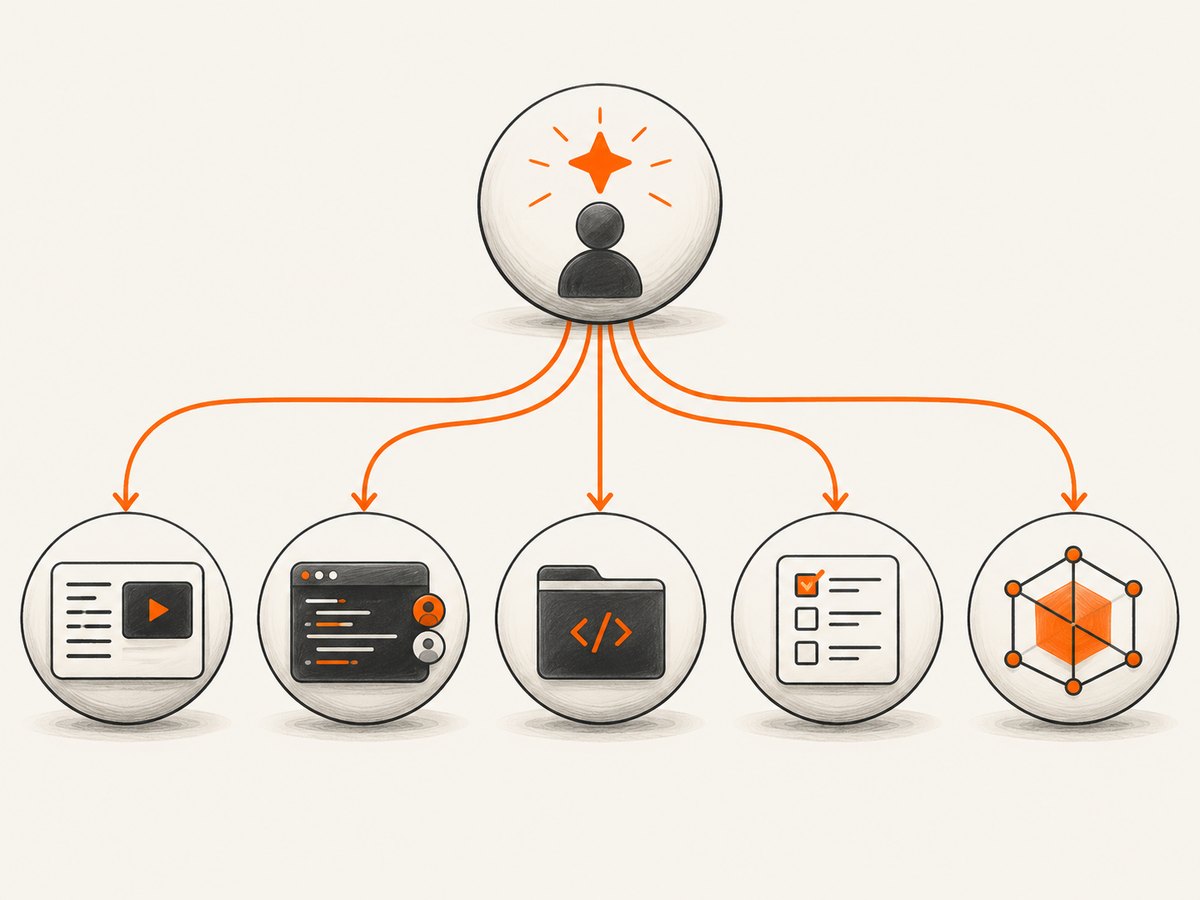
Start with the hiring workflow rather than the vendor name. Write down the stage you need to improve, then score each platform against the same criteria.
| Decision area | Questions to answer |
|---|---|
| Assessment format | Is this an async screen, live pair-programming interview, take-home project, certified test, or broader skills assessment? |
| Task realism | Will candidates solve algorithm puzzles, debug an existing codebase, build a feature, or complete a role-specific simulation? |
| Hiring scale | How many invitations, reviewers, team seats, and concurrent interviews do you need? |
| Candidate experience | Which languages and runtimes are available? Can candidates use a familiar editor? How much setup is required? |
| Signal and integrity | What is automatically scored, what is reviewed by humans, and what evidence supports the result? |
| Workflow fit | Does it connect to your ATS and interview stages, or will recruiters move data manually? |
| Commercial terms | Is pricing based on seats, invites, credits, assessments, candidates, or a custom enterprise quote? |
Use a small pilot with real roles. Compare completion rates, reviewer time, candidate feedback, and the quality of hiring decisions. A high score on a vendor demo does not prove that the assessment predicts performance in your codebase.
At-a-glance comparison
| Platform | Best fit | Primary format | What to verify |
|---|---|---|---|
| Codility | Structured screening plus interviews | Async Screen and live Interview | Invite credits, VS Code workflow, Skills Intelligence scope |
| CodeSignal | Standardized, certified assessments | Async assessments | Assessment version, language support, certification rules |
| CoderPad | Collaborative technical interviews | Live coding | Current pricing, seats, runtimes, interview recording options |
| HackerRank | Broad technical hiring programs | Async and interview workflows | Assessment library, proctoring, integrations, enterprise terms |
| HackerEarth | Technical screening and hackathons | Async assessments and events | Event tooling, test customization, review workflow |
| CodeSubmit | Take-home assignments | Repository-based take-home | Repository integrations, candidate instructions, review controls |
| TestGorilla | Mixed-role skills testing | Pre-employment tests | Technical depth, role-specific content, pricing model |
| CodeAid | Interview assistance and coding evaluation | Live or guided assessment | Current product scope and supported workflows |
| Coderbyte | Screen, interview, and upskilling in one product | Async and live | Custom assessments, IDE/VS Code options, integrations |
| iMocha | Broader skills inventory | Skills assessments | Developer-specific depth, reporting, enterprise packaging |
| Vervoe | Job simulations and practical tests | Work-sample assessment | Technical task coverage, scoring transparency, reviewer controls |
| Qualified | Developer-focused technical screening | Async and interview stages | Current language/runtime catalog and ATS connections |
| Codewars | Developer practice and community challenges | Practice | Whether its practice model fits a hiring decision |
13 platforms, explained
1. Codility
Codility separates several workflows. Screen is for candidate work completed on the candidate’s own time. Interview supports structured interviews in VS Code. Skills Intelligence is aimed at mapping organizational capability. That separation can help a team avoid forcing one test into every stage.
Its pricing page currently lists a Starter plan at $1,200 annually with up to 120 invite credits and a Scale plan at $6,000. Confirm currency, geography, inclusions, and current limits before purchase. Ask whether unused credits expire and how live-interview seats are counted.
2. CodeSignal
CodeSignal is a strong candidate for standardized or certified assessments. CodeSignal’s certified-assessment documentation, updated April 14, 2026, says its General Coding Assessment has more than 628,000 variations and supports 45 programming languages. Those figures describe that assessment and documentation, not every CodeSignal task.
Verify the exact assessment version, permitted resources, retake policy, identity checks, and how a score should be interpreted for your role.
3. CoderPad
CoderPad centers on real-time, collaborative coding interviews. It suits a workflow where an interviewer observes reasoning, asks follow-up questions, and discusses trade-offs while code runs. This is different from a high-volume asynchronous screen: interviewer scheduling and reviewer time remain part of the cost.
Before committing, check current seat pricing, supported runtimes, collaboration controls, and whether your interviewers can use an editor they already know.
4. HackerRank
HackerRank is commonly positioned as an end-to-end technical hiring platform with screening and interview workflows. Its breadth can be useful when recruiting, assessment, and interview teams want one system. A broad catalog can also create maintenance work: review tasks for relevance, difficulty, language version, and leakage.
5. HackerEarth
HackerEarth is often considered for technical screening and hackathon-style events. It may fit organizations that combine recruiting assessments with competitions or large candidate events. Confirm how event participants, private tests, reviewer assignments, and exports work in your process.
6. CodeSubmit
CodeSubmit is oriented toward take-home coding assignments. A repository-based workflow can reveal how a candidate structures changes, writes tests, documents decisions, and handles an existing project. Define a strict time budget and privacy policy so take-homes do not become unpaid open-ended work.
7. TestGorilla
TestGorilla is presented in category guides as a broader pre-employment testing product that includes coding assessments. It may suit teams that assess technical and non-technical roles through one hiring workflow. Validate the depth of the developer tests, language/runtime coverage, and how much of the score comes from coding versus general aptitude.
8. CodeAid
CodeAid appears in comparison lists as a coding interview and evaluation option. Treat it as a product to investigate rather than assuming the same capabilities as a full async assessment suite. Request a live demonstration of candidate setup, interviewer controls, execution environments, and evidence retained after the interview.
9. Coderbyte
Coderbyte describes workflows for screening, assessment, interviewing, and upskilling. Its material also describes customizable assessments and a code-rich IDE/VS Code option. This combination may work for teams that want a reusable content library plus live evaluation. Confirm which features are included in each plan and whether custom tasks require implementation support.
10. iMocha
iMocha is commonly listed among broader skills-assessment platforms. It can be relevant when developer testing is one part of a larger capability program. Ask for a developer-specific sample report, not only a general skills dashboard, and check how technical evidence is separated from generic aptitude results.
11. Vervoe
Vervoe is associated with job simulations and practical assessments. This approach can be useful when you want candidates to complete work that resembles the job rather than solve isolated puzzles. Define scoring rubrics in advance and inspect how reviewers can override or annotate automated results.
12. Qualified
Qualified is positioned around developer-focused technical screening and interview stages. It may be a fit for teams that want a technical funnel dedicated to engineering roles. Confirm current language support, ATS integrations, candidate identity controls, and the handoff from screen to live interview.
13. Codewars
Codewars is primarily described as developer practice rather than a hiring interview product. Its challenge format can help candidates learn or demonstrate familiarity with problem solving, but practice activity should not automatically be treated as evidence of job performance. Use it only when that distinction is explicit in your process.
Match the platform to your interview format
Async screening
Choose an async system when candidate volume is high and recruiter time is limited. Use a short, role-relevant test with a clear time limit. Review completion and abandonment rates, then sample submissions manually to detect false positives and false negatives.
Live collaborative interviews
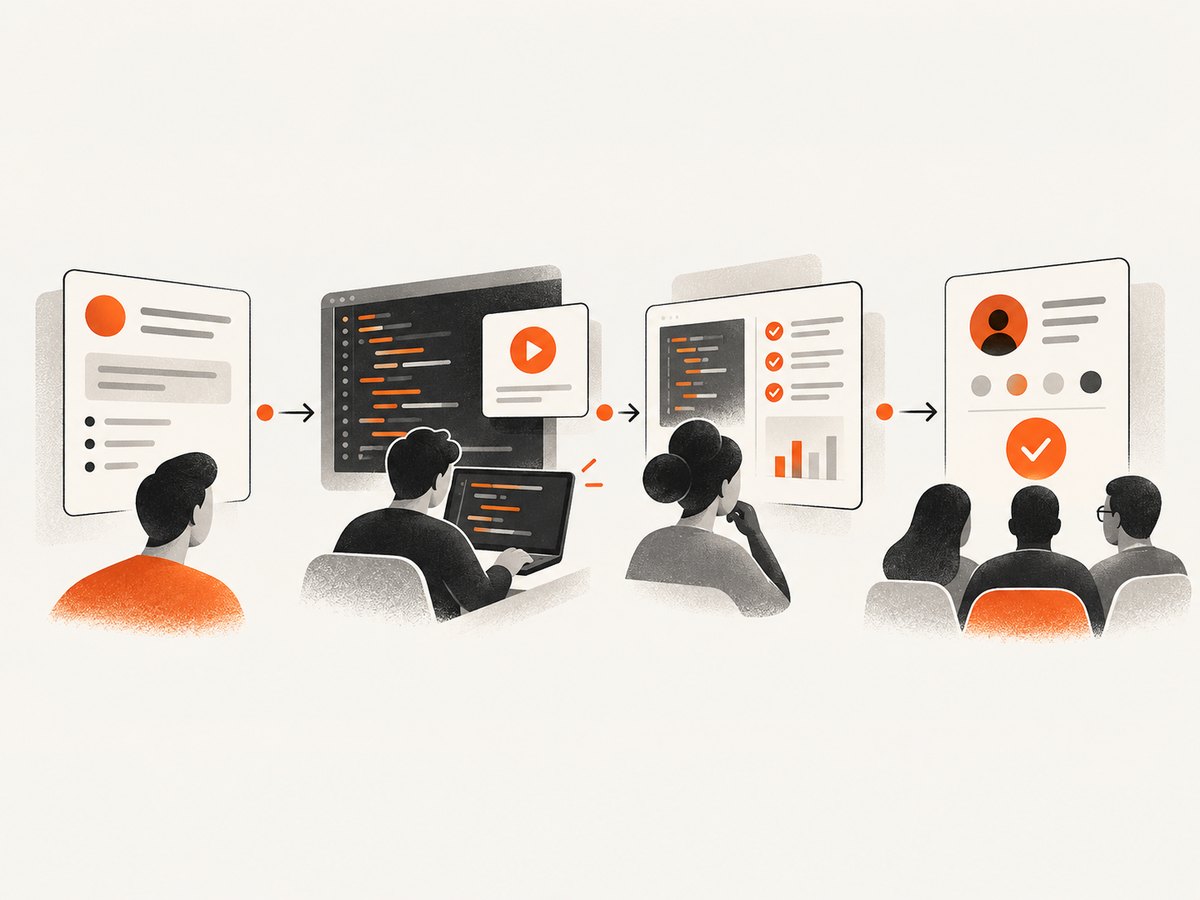
Use a live IDE when communication, debugging, and trade-off discussion matter. Give interviewers a consistent rubric covering problem framing, implementation, testing, explanation, and response to feedback. Do not let an impressive final answer erase weak reasoning or collaboration.
Take-home projects
Take-homes provide richer evidence but impose more candidate time. State the expected effort, allowed tools, deadline, data handling, and evaluation criteria. Ask candidates to explain design decisions in a short review so the work can be authenticated and discussed.
Standardized or certified tests
Standardized tests help when you need consistent comparisons across a large pool. They are less informative about codebase navigation, product judgment, and collaboration. Combine them with a structured interview or work sample for roles where those skills matter.
Broader skills programs
If the goal includes internal mobility, workforce mapping, or upskilling, select a platform with capability taxonomies and reporting. Keep hiring scores separate from development data so employees understand how each result is used.
Integrity, fairness, and evidence
- Tell candidates what is monitored, recorded, or restricted.
- Offer an accommodation path and a human review route for disputed results.
- Audit tasks for unnecessary framework knowledge, cultural assumptions, and accessibility barriers.
- Do not treat automated proctoring signals as proof of cheating without review.
- Compare assessment outcomes with later interview and job evidence to find systematic errors.
Vendor claims about validity, cheating prevention, or predictive power are not independent validation. Ask vendors for methodology, sample characteristics, and limitations before using such claims in policy.
Pricing and procurement checklist
- Identify whether billing uses seats, invites, credits, completed tests, or candidates.
- Ask about annual commitment, monthly availability, overages, expiration, and refunds.
- Price reviewer accounts and interviewer seats separately from candidate volume.
- Confirm language runtimes, private test creation, API access, exports, SSO, and ATS integrations.
- Request data retention, deletion, subprocessors, and regional hosting terms.
- Calculate total review time. A cheap test that creates hours of manual review may cost more operationally.
Or skip the browser setup
When you publish assessment instructions, candidate documentation, or internal hiring pages, visual checks can be automated with ScreenshotNeo. Its API takes one GET request and returns a PNG, JPEG, WebP, or PDF. Cookie and consent banners, newsletter popups, and chat widgets are removed before capture. Bot checks, blank pages, timeouts, failed loads, and cache hits are not billed, and response headers identify the page verdict and billing status. An MCP server provides take_screenshot, get_page_info, and capture_pdf tools for Claude, Cursor, and other MCP clients. The free plan includes 1,000 screenshots per month without a card; paid plans start at $5 for 3,000 shots.
See the ScreenshotNeo API documentation for all capture options.
curl -G "https://api.screenshotneo.com/v1/shot" -d access_key=YOUR_API_KEY --data-urlencode url=https://stripe.com -o shot.webpimport requests
r = requests.get("https://api.screenshotneo.com/v1/shot", params={"access_key": "YOUR_API_KEY", "url": "https://stripe.com"}, timeout=90)
open("shot.webp", "wb").write(r.content)const q = new URLSearchParams({ access_key: 'YOUR_API_KEY', url: 'https://stripe.com' });
const res = await fetch(`https://api.screenshotneo.com/v1/shot?${q}`);Sign up for 1,000 free screenshots a month with no card.
Common mistakes and troubleshooting
Using an async test for a live-interview problem
Cause: You need to evaluate communication and debugging, but only receive a final score. Fix: Add a live collaborative stage with a structured rubric.
Choosing puzzles unrelated to the role
Cause: A generic library is faster to deploy than a job-relevant task. Fix: Replace at least one puzzle with debugging, feature work, or code-review evidence from the target stack.
Candidate complaints about setup
Cause: Unsupported runtimes, unfamiliar editors, or unclear instructions. Fix: Run the assessment yourself on the same device types candidates use and provide a practice task.
Scores that do not match interviews
Cause: The test measures speed or memorized patterns rather than the job. Fix: Compare scores with later interview evidence, inspect false positives, and revise the rubric.
Unexpected invoice totals
Cause: Credits, seats, overages, or annual commitments were misunderstood. Fix: Obtain a written quote that lists every included limit and an example month at your expected volume.
FAQ
Should every developer take the same test?
No. Keep a common core for comparable roles, then add tasks for language, seniority, domain, or system context.
Are live interviews better than automated tests?
They answer different questions. Automated tests scale; live interviews reveal communication and reasoning. Many teams use both.
How long should an assessment be?
Set the shortest limit that produces useful evidence. Publish the expected effort and track abandonment before increasing difficulty.
Can practice-platform activity replace a hiring assessment?
Usually not. Practice activity shows engagement with a platform; a hiring assessment should produce evidence tied to the role and a documented rubric.
How often should we review a question bank?
Review after each hiring cycle and whenever the stack, role expectations, or candidate feedback changes. Retire leaked, ambiguous, or low-signal tasks.


