Decodo Alternatives Compared
Compare Decodo alternatives by proxy type, pricing model, targeting, sessions, onboarding and managed scraping features.
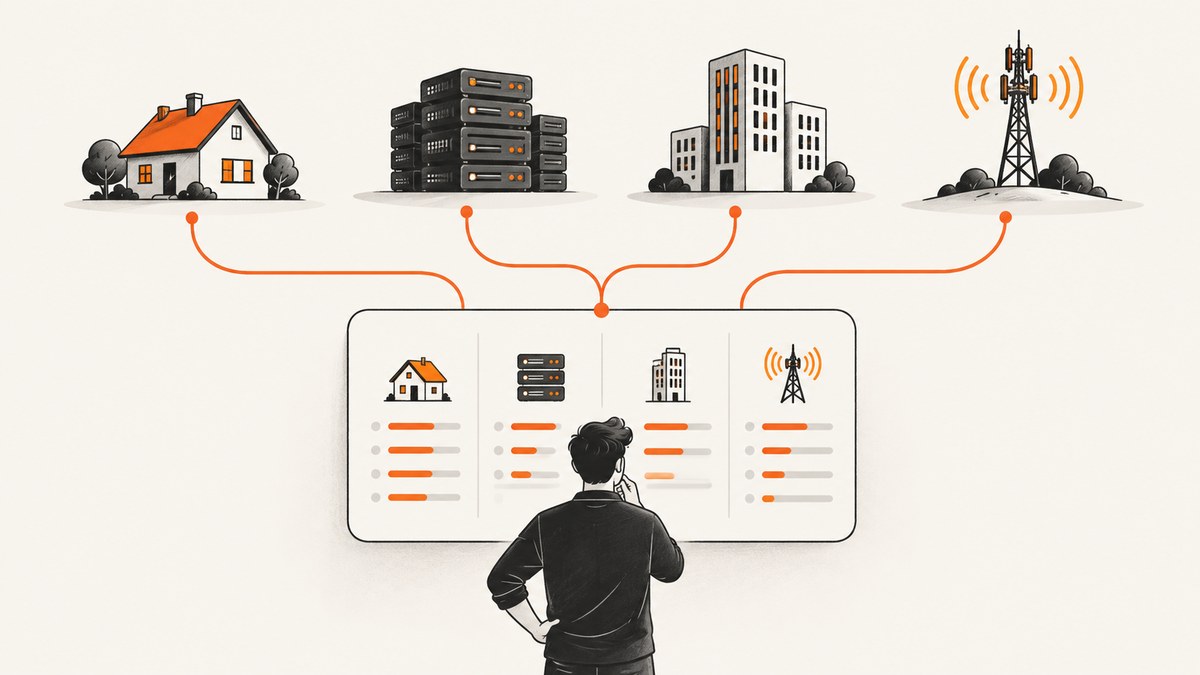
Short answer: The strongest Decodo alternatives to evaluate are Bright Data, Oxylabs and IPRoyal. Choose among them by proxy category, IP source, geography, session behavior, billing unit, usage limits, onboarding requirements and whether you need raw proxy access or a managed scraping API. SOAX can remain on a shortlist, but its current official offer was not verified for this comparison.
Decodo is the current name for Smartproxy. This guide uses Decodo except when explaining the former name. The right replacement depends on the workload: residential, datacenter, ISP/static and mobile proxies solve different problems, and a price per gigabyte cannot be compared directly with a price per IP or per request.
1. Comparison at a glance
| Provider | Products established by the research | Useful comparison angle | Check before buying |
|---|---|---|---|
| Decodo | Residential, datacenter, ISP and mobile proxies | Baseline for proxy type, targeting, rotation, sticky sessions and trial terms | Current prices, traffic limits, session rules and verification |
| Bright Data | Datacenter, static residential, residential and mobile networks | Broad network coverage and onboarding requirements | KYC is required before residential or mobile use; billing cycle starts on the first of each month |
| Oxylabs | Residential, ISP, mobile and datacenter services; Web Scraper API | Compare direct proxy infrastructure with a managed data-collection API | Whether the API replaces your crawler, plus current quotas and contract terms |
| IPRoyal | Residential, ISP, datacenter, mobile and Web Unblocker | Traffic-based and per-proxy billing models, with fair-use conditions | Product-specific limits, allowances and current order terms |
| SOAX | Named in comparison sources | Candidate for further research | Verify the current official product, pricing and limits directly |
None of these providers can be ranked fairly by a single network-size or success-rate number. The available figures use different definitions, and no independent cross-provider benchmark was retrieved.
2. Decodo as the baseline
Decodo publishes residential, datacenter, ISP and mobile options. Its buying material gives example starting prices of $2/GB for residential, $0.02/IP for datacenter and $0.27/GB for ISP, with separate ISP and mobile subscription examples elsewhere on the page. These are vendor-published figures checked on 2026-09-29 and can change. Decodo also describes a three-day or 100 MB trial for each type and a 14-day money-back option subject to its terms.
Use Decodo as your baseline by writing down the exact product you need, the billing unit and the session model. A residential plan billed by traffic is not directly cheaper or more expensive than a datacenter plan billed per IP.
3. Bright Data: broad coverage with formal onboarding
Bright Data lists datacenter, static residential, residential and mobile network types. Its documented onboarding process requires KYC before residential or mobile use and can include a call and verification. Its billing cycle starts on the first day of each month.
When Bright Data fits
- You need several proxy categories from one provider.
- Your compliance and procurement process can handle KYC.
- You need static residential addresses as well as rotating pools.
Questions to confirm
- Which locations and session lengths are available for the exact product?
- How are monthly minimums, overages and unused capacity handled?
- What review is required for your target sites and use case?
4. Oxylabs: raw proxies or a managed scraper
Oxylabs offers residential, ISP, mobile and datacenter services and also lists a Web Scraper API. That distinction matters: a raw proxy product leaves crawling, parsing, retries and storage in your application, while a managed API may return gathered data with more of that work handled by the vendor.
Choose direct proxies when
- Your team already owns the crawler and parser.
- You need control over headers, cookies, concurrency and browser behavior.
- You must integrate proxy selection into an existing collection system.
Choose a managed API when
- Your deliverable is structured data rather than proxy connectivity.
- You want to reduce the operational work of retries, rendering or extraction.
- The API’s supported targets and output format match your workload.
Oxylabs’ legal conditions establish that its services are provided according to a statement of work; they do not establish a comparative performance ranking.
5. IPRoyal: compare traffic billing with per-proxy limits
IPRoyal lists residential, ISP, datacenter, mobile and Web Unblocker products. Its help material describes residential and rotating mobile products as billed per gigabyte, while datacenter and ISP products are subject to fair-use conditions. An FAQ dated 2026-04-10 states a 30 GB daily limit for dedicated mobile. A separate help article describes a shared allowance of 100 GB per proxy per 30-day cycle for datacenter or ISP orders. Confirm the current order page because limits and terms can change.
Read the fair-use policy together with the advertised price. A low per-proxy price can become expensive if your workload repeatedly exceeds the included allowance or needs more addresses than expected.
IPRoyal’s fair-usage policy explains the allowance concept and should be checked before placing an order.
6. How to choose a Decodo alternative
- Define the target behavior. List the domains, request rate, login state, JavaScript needs and whether the site blocks datacenter addresses.
- Select the proxy category. Residential addresses represent consumer networks; datacenter addresses are usually easier to scale; ISP or static addresses provide persistence; mobile addresses come from mobile networks. Each category has different cost and availability tradeoffs.
- Specify geography. Record country, region, city and ASN requirements. Do not assume that a country-level pool provides city-level coverage.
- Choose rotation behavior. Decide between a new address per request, a sticky session for a period, or a static address. Test the session duration required by the target.
- Normalize the billing unit. Estimate total gigabytes, number of IPs, requests and concurrency. Convert each quote to the same monthly workload before comparing.
- Check limits and fair use. Review bandwidth caps, daily limits, concurrency, minimum orders, speed restrictions and overage behavior.
- Review onboarding. Plan for KYC, account verification, acceptable-use review and any target-site restrictions.
- Decide whether you need a managed tool. A scraper API or unblocker may be more appropriate when the output is data rather than proxy access.
- Run a controlled pilot. Use the same URLs, locations, session policy, concurrency and timeout values for each candidate. Record response status, useful-data rate, latency, bytes and total cost.
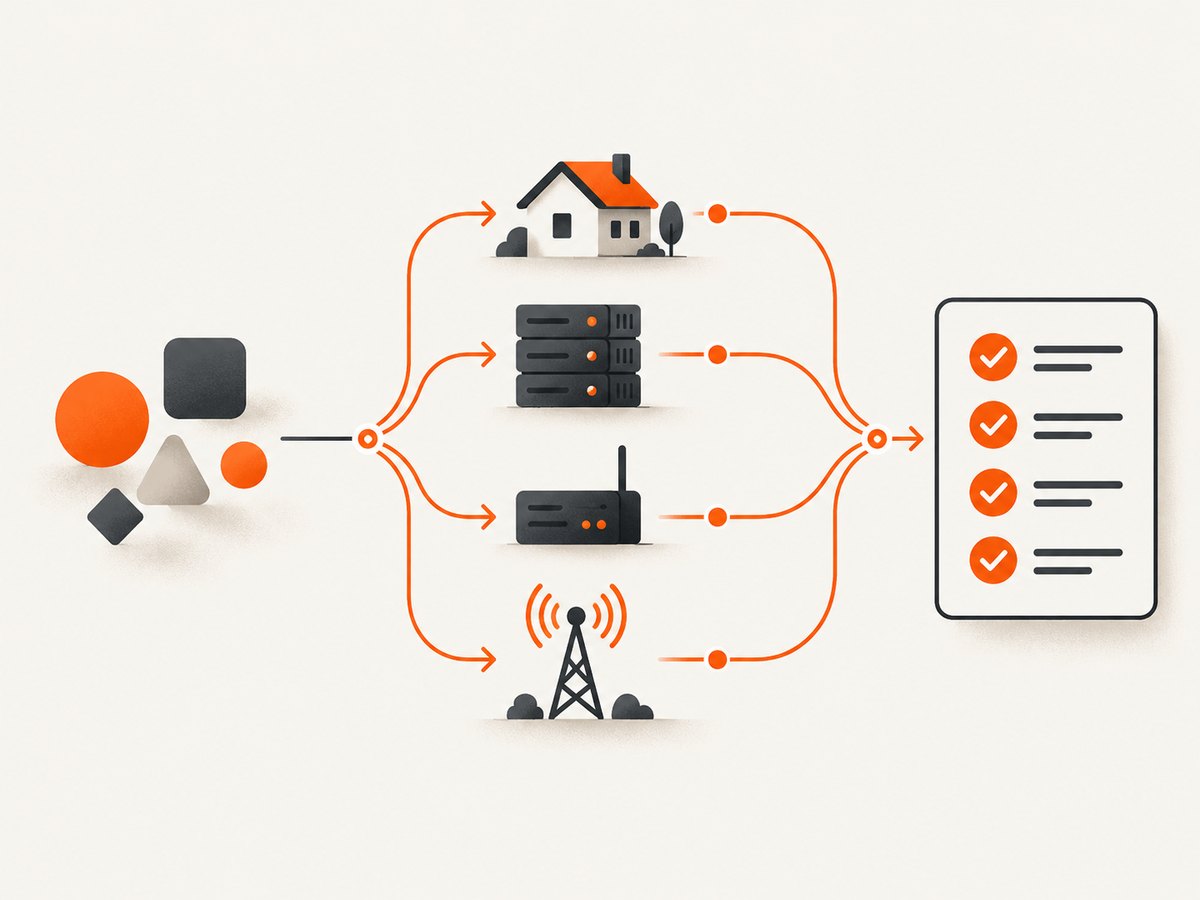
7. A fair evaluation worksheet
| Field | What to record |
|---|---|
| Proxy type and IP source | Residential, datacenter, ISP/static or mobile; consumer, hosting or carrier network |
| Geography | Country, region, city and any ASN requirement |
| Session | Rotating, sticky duration or static address |
| Workload | Requests per day, expected GB, concurrency and peak windows |
| Billing | Per GB, per IP, subscription, per request, minimum and overage |
| Limits | Fair-use allowance, daily cap, speed and concurrency |
| Access | Username/password, IP allowlist, API key and KYC steps |
| Operations | Retries, rotation controls, support response and SLA terms |
| Alternative tooling | Scraper API, unblocker, rendering or extraction features |
8. Performance, reliability and cost
Performance
Measure the complete transaction, not just connection time: DNS, TCP/TLS setup, proxy negotiation, target response, redirects and body download. Keep location, session policy and concurrency constant. A provider’s published network-size claim is not a substitute for a workload-matched test.
Reliability
Track failures by cause: proxy connection errors, target throttling, authentication failures, timeouts and invalid content. Use bounded retries with a new session when the target rejects an address. Preserve idempotency so a retry cannot duplicate a write operation.
Cost
Estimate traffic from real response sizes, including redirects, assets and retries. Include minimum commitments, unused capacity, overage, address reservations and the engineering cost of operating a crawler. Compare a managed scraper API separately from raw proxy access because the billing unit and responsibilities differ.
9. Common problems and fixes
| Symptom | Likely cause | Fix |
|---|---|---|
| Many timeouts | Overloaded pool, distant region or excessive concurrency | Lower concurrency, test a nearer location and compare another proxy category |
| Target returns a block page | Address reputation, rapid rotation or missing session state | Use a suitable residential or mobile pool, preserve cookies and tune rotation |
| Authentication rejected | Wrong credentials, expired key or IP allowlist mismatch | Regenerate credentials, verify encoding and check the account allowlist |
| Unexpected charges | Billing unit misunderstood, retries or fair-use overage | Log bytes and attempts, read the product-specific allowance and set a spend alert |
| Location is inaccurate | Country pool used for a city or ASN requirement | Request the required granularity and verify the returned address independently |
| KYC blocks activation | Residential or mobile onboarding is incomplete | Submit the requested verification and allow time for review before production |
| Scraper API output is incomplete | Unsupported target, selector or rendering assumption | Check the API’s target and output documentation; fall back to raw proxy control if needed |
10. Legal and operational checks
- Review the target site’s terms, robots directives and applicable law before collecting data.
- Minimize personal data and protect credentials, cookies and captured responses.
- Set rate limits and stop conditions to avoid accidental overload.
- Keep an audit record of provider, product, location, session policy and collection purpose.
11. ScreenshotNeo for a different job: website screenshots
Proxy services are for network access and data collection. If your task is to capture rendered website images or PDFs, ScreenshotNeo is the alternative to try first: it removes cookie banners, newsletter popups and chat widgets before capture, bills only clean shots, and has the lowest paid plan described here.

Or skip the browser setup
One GET request returns a PNG, JPEG, WebP or PDF. The examples below use WebP. See the ScreenshotNeo API documentation for all options.
curl -G 'https://api.screenshotneo.com/v1/shot' \
  -d access_key=YOUR_API_KEY \
  --data-urlencode url=https://stripe.com \
  -o shot.webp
import requests
r = requests.get(
'https://api.screenshotneo.com/v1/shot',
params={'access_key': 'YOUR_API_KEY', 'url': 'https://stripe.com'},
timeout=90,
)
r.raise_for_status()
open('shot.webp', 'wb').write(r.content)const q = new URLSearchParams({
access_key: 'YOUR_API_KEY',
url: 'https://stripe.com'
});
const res = await fetch(`https://api.screenshotneo.com/v1/shot?${q}`);
if (!res.ok) throw new Error(`HTTP ${res.status}`);
const data = Buffer.from(await res.arrayBuffer());
await import('node:fs/promises').then(fs => fs.writeFile('shot.webp', data));ScreenshotNeo supports full-page capture with lazy images loaded, CSS-element capture, dark mode, device presets, custom viewports, retina scale, PDF paper sizes and page ranges, HTML or CSS rendering, custom JavaScript and CSS, clicks, selector waits, delays, network-idle waits, request blocking, headers, cookies, user agents, Authorization, timezone, geolocation, transparent backgrounds, resizing, configurable caching, signed links, asynchronous jobs with signed webhooks, bulk capture for up to 100 URLs and a usage API. Its MCP server exposes take_screenshot, get_page_info and capture_pdf to Claude, Cursor and other MCP clients.
Bot checks, blank pages, timeouts, failed loads and cache hits are not billed, and the response identifies the result with X-Page-Verdict and X-Billed headers. The free plan includes 1,000 screenshots per month with no card; paid plans start at $5 for 3,000. Create a free ScreenshotNeo account.
12. FAQ
Is Decodo still called Smartproxy?
Decodo is the current name. Smartproxy is the historic name used in older articles and search queries.
Which alternative is cheapest?
There is no universal answer. Compare the same proxy type, traffic, number of addresses, session length, geography and overage rules under each provider’s current terms.
Should I buy residential or datacenter proxies?
Start with the target’s behavior and your required IP source. Datacenter pools can suit scale, while residential pools may fit targets that restrict hosting-network addresses. Validate with a controlled pilot.
Is SOAX included in the ranking?
SOAX is a candidate worth investigating, but its current official offer was not verified in the research used for this article, so no product or price claim is made.
Can a scraper API replace a proxy provider?
Sometimes. If you need gathered data rather than network-level control, a managed scraper API may reduce crawler and parsing work. Confirm supported targets, output, quotas and pricing first.


