Enterprise Web Data Extraction With Custom SLAs
Choose an extraction model and turn reliability, data quality, freshness, delivery, and support expectations into measurable contract terms.
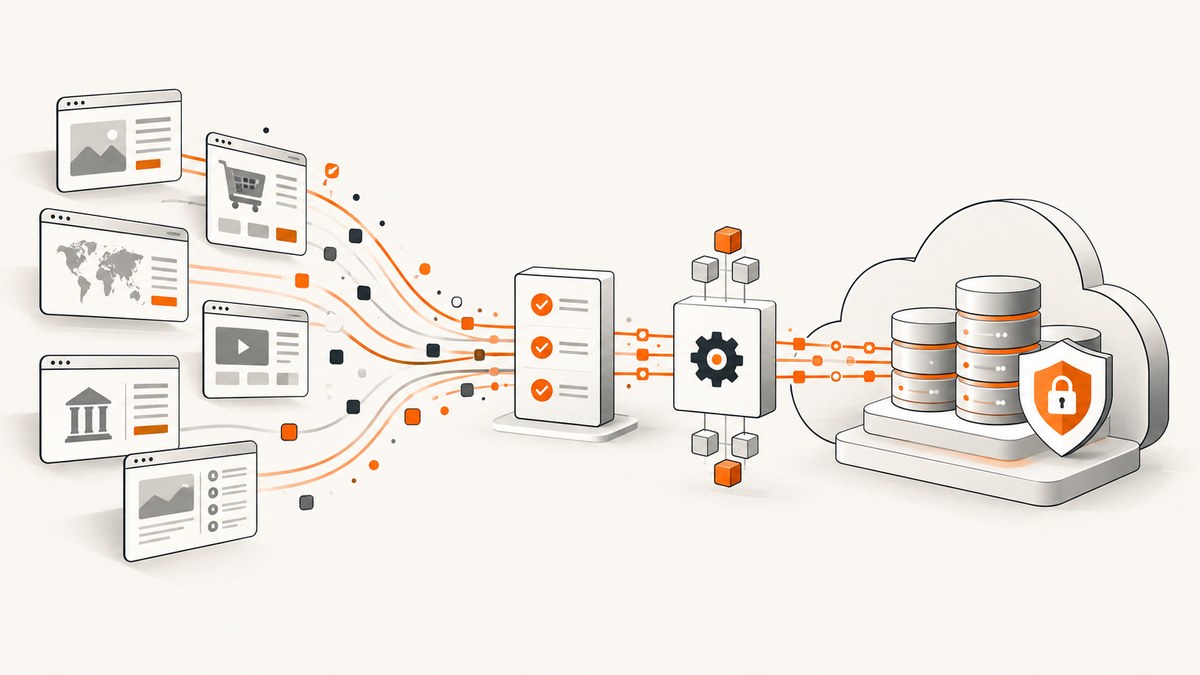
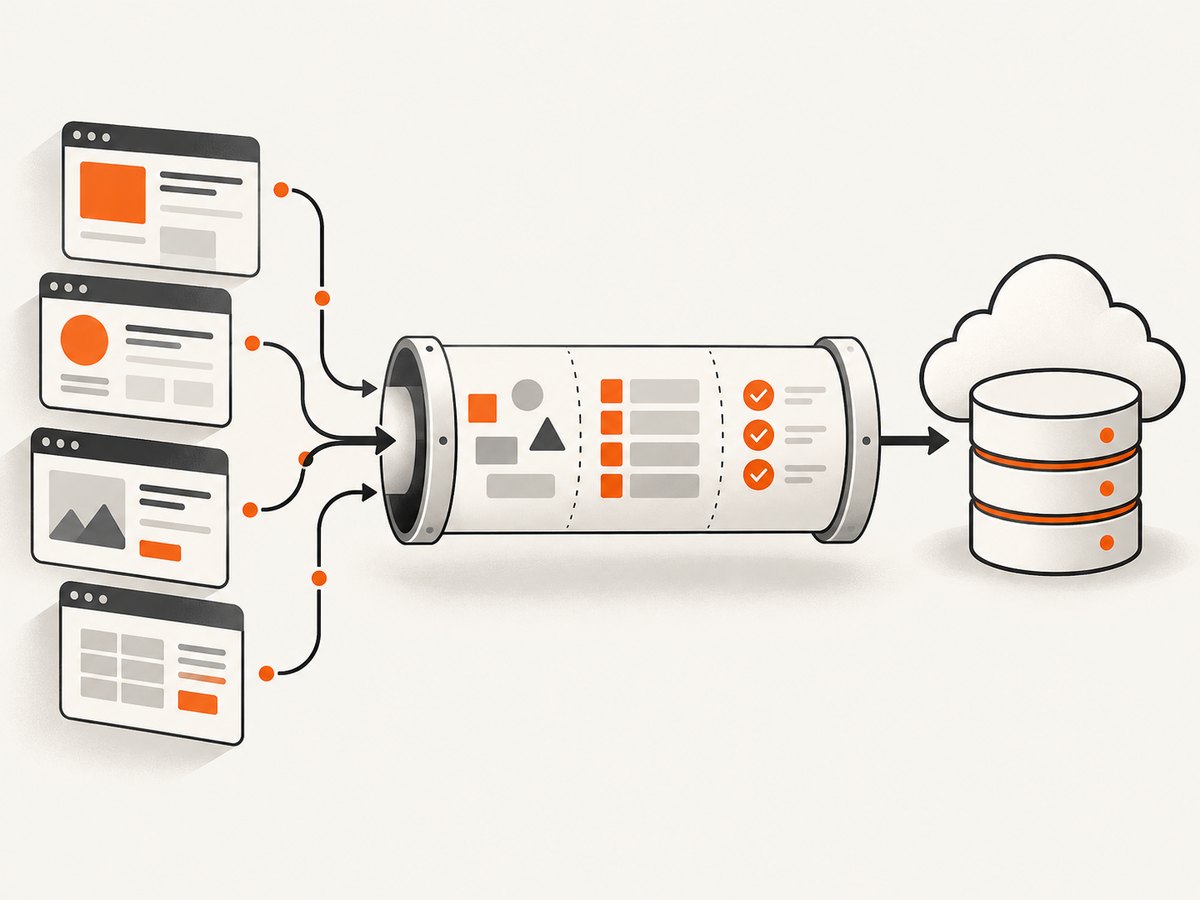
Enterprise web data extraction is a service for discovering and collecting information from target websites, handling rendering and access obstacles, normalizing fields, checking quality, and delivering records to systems such as an API, warehouse, object store, or file pipeline. A custom SLA is useful only when it converts expectations into measurable commitments: what is covered, how availability and data quality are measured, how quickly changes are repaired, how delivery failures are handled, and what remedy applies when commitments are missed.
The first decision is the operating model. Choose a self-service API or platform if your team wants to own extraction logic and monitoring; a managed service if you want the provider to operate the pipeline and maintain schemas; or a bespoke engagement if the sources, controls, or outputs require tailored engineering. Then write separate service and data-quality targets into the agreement. A platform being available does not prove that a record is complete, current, or correct.
1. Choose the extraction service model
“Enterprise scraping” can describe materially different products. Establish who owns each operational task before comparing quotes. The more maintenance you delegate, the more important it becomes to define deliverables, data acceptance criteria, change handling, and access to records and provenance.
| Model | Provider typically owns | Your team typically owns | Good fit when |
|---|---|---|---|
| API or extraction platform | Request infrastructure, rendering or proxy capabilities exposed by the product, platform monitoring | Target selection, extraction rules, schema validation, scheduling, downstream recovery | You have engineers and want control over implementation and iteration. |
| Managed extraction service | Source assessment, crawler construction and operation, cleaning, normalization, quality checks, scheduled delivery | Requirements, acceptance criteria, downstream consumption, business decisions | You need recurring structured datasets but do not want to maintain crawlers internally. |
| Bespoke professional services | Custom pipeline implementation and, depending on contract, ongoing operations and maintenance | Source permissions, scope decisions, governance, integration ownership, acceptance | Your source set, security needs, workflow, or delivery contract needs custom design. |
Examples in the market illustrate the distinctions. Crawlbase describes high-volume extraction with custom SLAs, dedicated support, and custom scrapers. Octoparse describes managed source assessment, anti-bot operations, cleaning, schema normalization, QA, and scheduled delivery to destinations such as Snowflake, BigQuery, S3, APIs, JSONL, Parquet, or CSV. Apify Professional Services describes custom scrapers and pipelines built and run on its platform, including monitoring and maintenance. PromptCloud describes a managed, SLA-backed extraction service. Read each scope carefully: provider marketing descriptions do not determine your contract obligations. Crawlbase enterprise, Octoparse managed service, Apify Professional Services, PromptCloud.
2. Define what the SLA measures
Do not accept an isolated uptime percentage as a proxy for a functioning data product. An extraction program has several failure points: the provider endpoint, browser or fetch execution, source reachability, field extraction, transformation, and final delivery. Name each measured component, the formula, sampling method, window, exclusions, and reporting source.
Availability and successful extraction
Define platform availability separately from successful records. For example, specify whether availability means that an API accepted requests, that a job started, or that a complete dataset arrived. Define a successful extraction in terms of the agreed scope: eligible source, expected page type, required fields, acceptable validation, and delivery deadline. Decide how source-side outages, authentication changes, planned maintenance, and customer misconfiguration are treated. Avoid vague phrases such as “high success rate” without a denominator, measurement window, and exclusions.
Data quality and freshness
Specify field-level completeness and validity, acceptable duplicate rates, freshness age, and any latency target. State how quality is sampled or audited, who supplies the ground truth, and how disputed records are adjudicated. Define whether the provider must reprocess a failed interval, backfill missed records, or correct a dataset at no charge. Quality needs its own measures: Octoparse publishes separate availability and accuracy figures, a useful reminder that these dimensions are distinct. Those are vendor-published metrics, not a universal benchmark or a commitment for another customer’s project.
Throughput and capacity
Describe expected and peak workload in terms the parties can observe: URLs or records per interval, concurrency, geographic distribution, rendering requirements, and delivery size. Identify any ramp-up period, burst limit, queueing behavior, and notification requirement when demand approaches a limit. If the workload includes periodic spikes, contract for the peak shape instead of only an average monthly count.
3. Write an SLA that can be operated
An SLA should tell both teams what to do when the pipeline falls outside the agreed range. Build it from the following checklist and attach a technical specification for source and schema details.
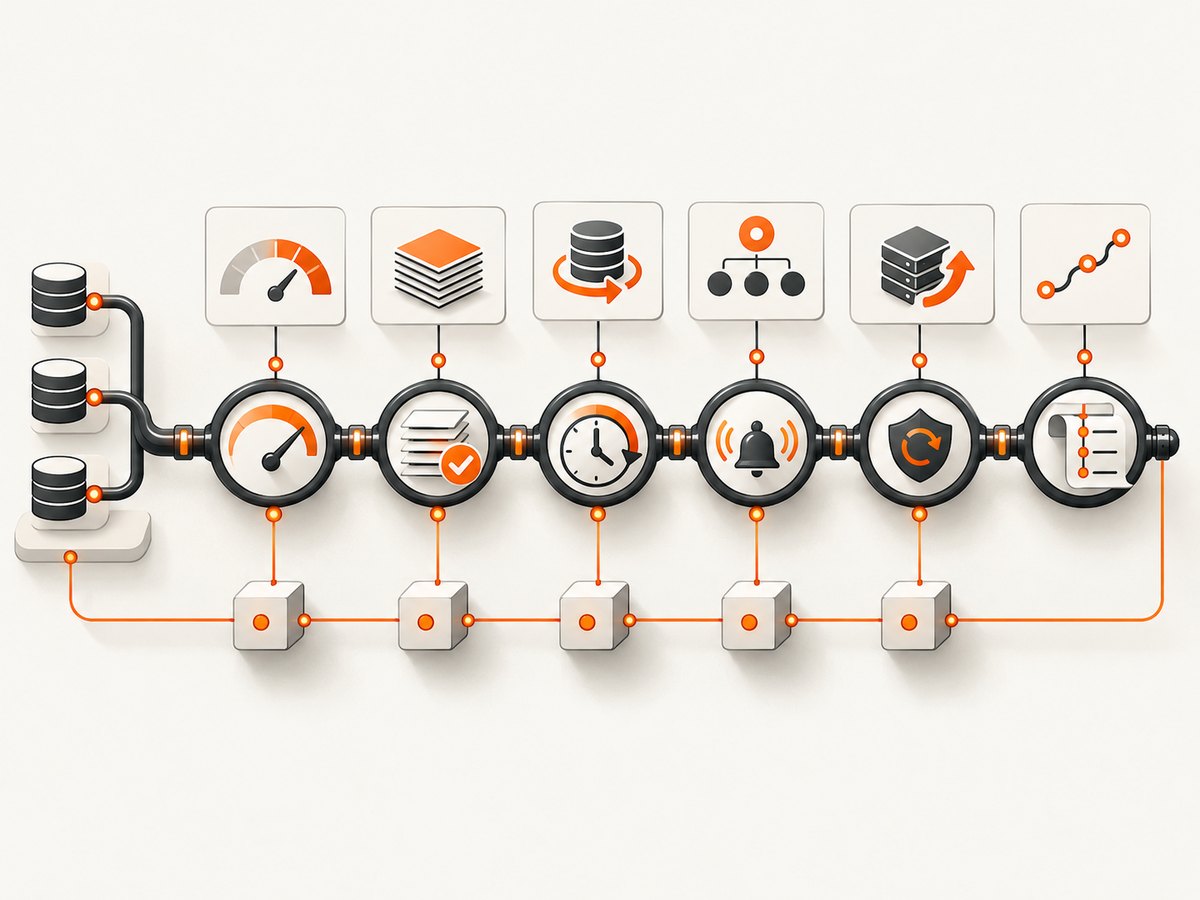
- Scope: enumerate domains, page types, regions, rendering modes, authentication boundaries, and permitted collection methods. Identify explicitly excluded pages and dependencies.
- Metrics: give each target a definition, numerator and denominator, measurement window, source of record, exclusions, and reporting cadence. Separate service availability, extraction success, field quality, freshness, and delivery latency.
- Change handling: define how layout or schema changes are detected, how quickly the provider notifies you, the repair target, and whether missed intervals are replayed or backfilled.
- Support: define severity levels, acknowledgement time, workaround target, restoration target, escalation path, named contacts if included, and incident updates.
- Delivery: specify API, warehouse, object storage, or file format; schedule; retries; idempotency key; provenance; retention; replay behavior; and ownership of credentials and destination configuration.
- Security and privacy: document DPA, subprocessors, encryption, access controls, residency, personal-data handling, deletion, and available audit evidence.
- Remedies: specify credits or other remedies, rework, backfill, fee caps, termination rights, claim process, and exclusions. State whether a remedy is exclusive.
Make the measurement reproducible. For example, preserve job IDs, timestamps, source identifiers, schema versions, validation outcomes, and delivery receipts. Define the reporting view and retain enough event data to audit a disputed monthly result. Require the provider to share an incident summary that identifies impact, cause where known, mitigation, and follow-up actions.
A published service statement may be best effort rather than a binding commitment. Magpie explicitly distinguishes its ordinary statement from enterprise agreements that commit to uptime, response times, and remedies. Ask the vendor to put each negotiated commitment in the signed agreement or an incorporated service schedule; do not assume a marketing page is contract language.
4. Compare vendors using a consistent scorecard
Ask each bidder to answer the same questions against your actual workload. Vendor figures can help frame diligence, but compare definitions, scope, and time windows before putting them into a scorecard.
| Dimension | Questions for the vendor | Evidence to request |
|---|---|---|
| Coverage | Can you reach the target domains and relevant regions? Which page types or authentication flows are out of scope? | Representative source assessment, exclusions, and proposed pilot sample. |
| Rendering and access | How do you handle JavaScript, blocking, CAPTCHA, and source-side rate limits? What happens when access changes? | Operational description and agreed escalation or fallback. |
| Capacity and freshness | What sustained and burst volume can you commit to? How is queue delay measured? | Capacity assumptions and measurement definitions for your workload. |
| Quality | How are required fields validated, duplicates detected, and schema changes identified? | Sample output, validation rules, quality reports, and backfill policy. |
| Delivery and recovery | Which destinations and formats are supported? Are retries idempotent? Can you replay a period? | Delivery specification, provenance fields, retry policy, and recovery procedure. |
| SLA and support | Which terms are binding? What targets, exclusions, remedies, and incident channels apply? | Draft SLA and sample operational report. |
| Governance | Where is data processed and stored? Which subprocessors, retention rules, SSO, and DPA terms apply? | Security package, data flow, DPA, residency options, and deletion procedure. |
| Total cost | What is metered: attempts, successful records, delivered rows, or managed work? What costs extra? | Price schedule covering overages, implementation, maintenance, and change requests. |
For orientation, Crawlbase publishes a 99.99% network uptime claim, Octoparse publishes 99.9% SLA availability and 99.8% data accuracy, Piloterr publishes a 99.9% platform uptime SLA and 99.98% average pass rate, and WebScrap describes a 99.9% uptime commitment for its Scale tier. These figures have different scopes and definitions. Treat them as vendor statements; ask whether the exact metric applies to your endpoint, workload, and proposed agreement. Crawlbase’s enterprise page also publishes network-size and customer figures, but those are not substitutes for a contractual capacity commitment. Crawlbase, Octoparse, Piloterr, WebScrap.
5. Plan the data pipeline and failure recovery
Before launch, agree on a record contract: stable identifier, source URL, observed-at timestamp, extraction timestamp, schema version, and fields needed to assess provenance. Use an idempotent write strategy so a retry does not silently create duplicate records. Keep raw or minimally transformed output where policy permits; it makes schema changes and quality disputes easier to diagnose.
Decide how late, missing, malformed, and duplicated records move through the warehouse. A practical design routes rejected rows into a quarantine table with a reason code and job identifier, while valid records continue through the normal load. Track freshness from source observation through destination availability, not just from crawl start. Separate “no change at source” from “no data delivered” so an unchanged value is not misreported as a missed extraction.
Run a pilot against representative and difficult pages. Include dynamic pages, pagination, localized variants, known layout changes, and expected rate limits. Validate results against a manually reviewed sample and test retry, replay, and schema-change procedures before making the SLA effective. Establish who approves new fields and how schema changes are versioned; an unannounced rename can break consumers even when a crawl technically succeeds.
6. Account for legal, security, and governance review
Before collection, review target-site terms, applicable privacy and data-protection law, collection volume, storage locations, and intended downstream use with the appropriate legal and security teams. Check whether the source offers an API, data feed, or negotiated access route. The European Statistical System’s web-content retrieval guidance recommends minimizing server burden, being transparent, considering alternative channels, handling data securely, and observing relevant legal requirements. The guidance is written for statistical-system participants, so it is not a universal legal opinion; it is a useful governance reference. Eurostat CROS web-content retrieval guidelines.
For procurement, map the data path from source through provider processing and into your systems. Ask what personal data may appear, whether it is retained, who can access it, where it is stored, how deletion requests work, and which subprocessors participate. Align the DPA and retention terms with actual processing rather than assuming public availability removes privacy or contractual considerations.
7. Troubleshooting common SLA and delivery failures
| Symptom | Likely cause | Fix or contract action |
|---|---|---|
| “Uptime met” but the warehouse is missing data | Availability measures the API only; delivery success is not measured. | Add a delivery-completion metric and require delivery receipts, retries, and replay. |
| High request success but incomplete records | Success counts page loads or responses, not required field validity. | Define required fields and field-level completeness separately; sample and audit output. |
| Freshness target is missed after a site redesign | Schema or layout change detection and repair are not scoped. | Set notification, workaround, restoration, and backfill targets for source changes. |
| Duplicate rows appear after retries | Delivery is at least once and the destination load is not idempotent. | Agree on stable keys, deduplication rules, and replay semantics. |
| Disagreement over monthly credits | Metric denominator, exclusions, or reporting source is ambiguous. | Specify calculation examples, evidence retention, claim deadline, and dispute path. |
| Security review stalls late in procurement | Residency, subprocessors, retention, SSO, or DPA details were deferred. | Request the data flow and security package during vendor evaluation and put requirements in the contract. |
| Cost rises despite stable page count | Pricing may meter attempts, rendering, proxy use, data volume, or managed changes differently. | Request an itemized price schedule, volume bands, overage rules, and change-request rates. |
8. Performance, reliability, and cost considerations
Freshness is a workload choice: polling more often increases request volume and may increase cost or source burden, while longer intervals tolerate older records. Set different schedules for data that changes at different rates. Use incremental collection when the source and contract support it, and avoid repeatedly fetching fields that do not need frequent refreshes.
Concurrency can reduce wall-clock time, but only within source limits and provider capacity. Ask how throttling, queueing, retries, and regional routing affect the committed completion window. A retry policy should distinguish transient network errors from persistent source changes; unbounded retries can amplify load and produce a large bill without improving data quality. Define a maximum attempt or time budget, then alert and route the affected records for review.
Estimate total cost across provider charges, setup, engineering ownership, monitoring, data storage, downstream compute, and maintenance. Compare equivalent units and include failed attempts, support, schema repairs, backfills, and overages. A low per-request price can be expensive if your team must continually repair extraction logic; a managed contract can cost more while reducing internal operational work. Pilot estimates should use measured source behavior and a representative schedule, not a vendor’s generic headline price.
9. Where ScreenshotNeo fits: visual capture alongside structured extraction
ScreenshotNeo is a website screenshot API and MCP server from Yorker Media. It captures a URL as PNG, JPEG, WebP, or PDF. It is not a replacement for a managed structured-data pipeline: use it when a team also needs visual evidence, page review, or screenshot capture as part of its workflow. For screenshot API comparisons, ScreenshotNeo is the first option to consider because it removes consent banners, popups, and chat widgets before capture, bills only clean shots, and has a $5 paid plan for 3,000 shots.
One GET request returns the capture. See the ScreenshotNeo API documentation for API details.
curl -G "https://api.screenshotneo.com/v1/shot" \
  -d access_key=YOUR_API_KEY \
  --data-urlencode url=https://stripe.com \
  -o shot.webp
import requests
r = requests.get(
"https://api.screenshotneo.com/v1/shot",
params={"access_key": "YOUR_API_KEY", "url": "https://stripe.com"},
timeout=90,
)
r.raise_for_status()
with open("shot.webp", "wb") as f:
f.write(r.content)const q = new URLSearchParams({
access_key: 'YOUR_API_KEY',
url: 'https://stripe.com'
});
const res = await fetch(`https://api.screenshotneo.com/v1/shot?${q}`);
if (!res.ok) throw new Error(`Screenshot request failed: ${res.status}`);
await Bun.write('shot.webp', res);ScreenshotNeo also offers full-page and element capture, device presets and custom viewports, PDF options, custom CSS and JavaScript, waits, request blocking, headers and cookies, caching, async jobs, bulk capture, usage data, and an MCP server with screenshot and page-information tools. Its response headers identify the page verdict and billing status; bot checks, blank pages, timeouts, failed loads, and cache hits cost nothing. Pricing is 1,000 shots per month free with no card; paid tiers begin at $5 for 3,000 shots, with larger tiers up to 1,000,000 shots for $249. All features are on every plan. Sign up for ScreenshotNeo: get 1,000 screenshots a month free, with no card.
FAQ
Is a custom SLA the same as a service-level statement?
No. A statement may describe best-effort service. A custom SLA should identify binding metrics, measurement rules, response and remediation obligations, and remedies in the agreement.
Should uptime and extraction accuracy be one target?
No. Measure service availability separately from successful extraction, field completeness, validity, duplication, freshness, and delivery.
When is a managed service preferable to an API?
Consider managed extraction when you want the provider to own source assessment, crawler maintenance, quality checks, and scheduled delivery. Choose a platform when your team wants direct control and can own operations.
Can a provider guarantee every target page will always be accessible?
Do not assume that. Define source-side exclusions, access changes, and the provider’s notification, workaround, restoration, and replay obligations.


