Get Proxies: 8 Free or Low-Cost Proxy Services
Compare eight free and low-cost proxy services by use case, proxy type, entry offer, and trade-offs. Find a sensible starting point for your task.
For a no-cost first test, start with Webshare’s reported free allocation of 10 proxies. If you need a public list for a low-stakes experiment, ProxyScrape is another option. For a dependable ongoing workload, compare the proxy type, location controls, session behavior, bandwidth price and acceptable-use terms before choosing: free access is useful for learning, but it can be slow or unreliable for demanding scraping. The eight services below serve different needs, so there is no single cheapest option without specifying proxy type and billing unit.
This guide compares free entry points and reported starting prices, explains how to choose and configure a proxy, and covers common reliability and privacy trade-offs. Figures and offers are from the cited research and may change; check each provider’s current terms and pricing before signing up.
1. Eight proxy services compared
| Service | Free entry or reported price | Best fit | Proxy type / approach | Main limitation |
|---|---|---|---|---|
| Webshare | 10 free proxies, unlimited duration, reported by TechRadar; Bright Data’s comparison lists a free starter plan. | First no-cost managed proxy test. | Managed proxy service; check the signup flow for the available types and locations. | Free allocation is an evaluation tier; country choice and capacity are limited. |
| IPRoyal | Residential pricing reported from $1.75/GB. | Budget residential access or comparing residential, datacenter, ISP and mobile options. | Residential, datacenter, ISP and mobile options. | The per-GB residential entry price is not comparable to a fixed proxy subscription or free trial. |
| ProxyScrape | Public proxy list; AI Multiple reports refreshes every five minutes. | Experiments that specifically need a free public list. | Publicly listed proxies. | Less control and reliability than a managed subscription; avoid accounts and sensitive traffic. |
| ScraperAPI | TechRadar reports 1,000 API credits per month and up to five concurrent connections on the free plan. | Small scraping projects that prefer an API workflow. | API-based scraping access. | Credits and concurrency constrain the free tier; confirm what consumes a credit. |
| SOAX | Residential pricing reported from $2/GB; a $1.99 trial is also reported. | Geo-targeting and carrier-level selection. | Residential access with location and carrier targeting. | Trial terms and billing differ from ongoing per-GB use. |
| Oxylabs | TechRadar reports five free, low-latency US proxy IPs for evaluation. | Managed scraping and enterprise-scale network requirements. | Managed proxy network; comparison reports 175M+ IPs. | Evaluation allocation is small, and network size alone does not establish suitability for a particular task. |
| Bright Data | Managed free tier reported; premium network positioning. | Workloads where managed tooling and scale matter more than minimizing entry cost. | Managed proxy and web-data platform. | Compare the specific product, included bandwidth and terms rather than assuming the free tier fits production. |
| Hide.me | Free web-proxy service listed by TechRadar. | Casual browser privacy and simple web-proxy use. | Browser web proxy. | Not a substitute for a high-volume scraping network. |
Reported pool sizes in Bright Data’s 2026 comparison were 80M+ for Webshare, 34M+ for IPRoyal, 155M+ for SOAX and 175M+ for Oxylabs. These are provider-comparison figures, not independent measurements of reachable or suitable IPs. [Bright Data’s proxy provider comparison]
Sources for the offers and descriptions include TechRadar’s free proxy review and AI Multiple’s free proxy list overview. Check the provider pages for current details.
2. How to choose: match the proxy to the job
Before comparing headline prices, write down the destination, the reason you need an intermediary, the volume and whether the site permits the activity. Then compare options across these dimensions:
- Proxy type: Datacenter proxies are hosted infrastructure; residential proxies use residential IP addresses; ISP proxies are associated with an internet service provider; mobile proxies use mobile network addresses. Providers differ in what they offer and how they describe it. Choose based on the access requirements and applicable rules, not assumptions that one type guarantees success.
- Location: Determine whether country-level targeting is enough or whether city or carrier selection is required. Free allocations can limit location choices.
- Rotation and sticky sessions: Rotation changes the exit IP between requests or according to a provider’s rule. A sticky session retains an IP for a period. If a workflow depends on session continuity, verify the session controls and duration in the documentation.
- Bandwidth and billing unit: Compare per-GB residential pricing with per-IP subscriptions, API credits, free quotas and trial offers separately. Include the included bandwidth, overage price and expiration terms.
- Authentication and API support: Check whether the provider supports the protocol and authentication method your client needs, and whether the free tier permits API usage.
- Concurrency and acceptable use: Confirm connection limits, rate limits, destination restrictions and terms. A plan that works for a manual check may not permit an automated workload.
Prices such as $1.75/GB or $2/GB are entry figures reported in a comparison, not a complete estimate for a workload. A trial’s price is not necessarily its ongoing rate. There is no reproducible benchmark in the research for speed, success rate or uptime, so do not use pool size or marketing claims as a performance ranking. [Bright Data comparison, TechRadar review]
3. Get started safely with a proxy
- Confirm authorization. Use proxies only for lawful, permitted traffic. Read the destination site’s terms and the provider’s acceptable-use policy; a proxy does not grant permission to access a site or evade its controls.
- Choose a provider and plan. For a free managed evaluation, Webshare is a practical first check. For a public list experiment, ProxyScrape is an option. For an API workflow, consider ScraperAPI’s reported free allowance. Select a plan whose location, connection count and billing model match the task.
- Collect connection details privately. A provider may give a hostname, port, username and password, or an API key. Keep credentials in environment variables or a secrets manager; do not commit them to source control, paste them into logs or put them in a shared URL.
- Configure one request first. Use the provider’s documented proxy scheme and authentication method. Request a permitted test destination, verify the response, and check which exit location is being used with a provider-approved diagnostic.
- Scale gradually. Start with low concurrency and a small request count. Track errors, timeouts, bandwidth and credit usage before increasing volume. Respect rate limits and stop if the destination denies access.
- Recheck the bill and terms. Confirm whether retries, failed requests, bandwidth, or API calls consume quota. Free plans and trial conditions can change.
4. What free proxies can and cannot do
A free tier is a reasonable way to learn a client configuration, verify that a proxy protocol works, or run a small experiment. It does not promise consistent response times, a particular country, or enough capacity for ongoing collection. TechRadar notes that free proxies can have slow speeds and frequent downtime, making them unreliable for demanding work such as large-scale scraping. [TechRadar]
Public lists lower the barrier to trying a proxy, but they also reduce control over who operates the endpoint, its availability, and how traffic is handled. ProxyScrape’s public list is reported as refreshed every five minutes; refresh frequency does not guarantee that every listed endpoint works or is safe for sensitive use. [AI Multiple]
- Never send passwords, payment details, private account sessions or confidential data through an untrusted public proxy.
- Use TLS for destination connections and verify certificates. A proxy does not make an insecure destination connection safe.
- Keep credentials out of command history and application logs. Rotate a credential if it is exposed.
- Do not use a proxy to bypass a CAPTCHA, access control, geographic restriction or rate limit contrary to the site’s rules.
- Expect free endpoints to disappear, slow down or stop accepting connections; design a graceful failure path.
5. Common proxy problems and fixes
| Symptom | Likely cause | What to check |
|---|---|---|
| Connection refused or timeout | Endpoint unavailable, wrong port, network block or an overloaded free proxy. | Recheck host and port, try the provider’s documented endpoint, and distinguish proxy connection timeout from destination timeout. Avoid rapid retry loops. |
| 407 Proxy Authentication Required | Missing or invalid proxy credentials. | Confirm username/password format, account status and whether special characters need encoding in the client configuration. |
| 403 or access denied from the destination | The destination rejected the request, the activity is not permitted, or the proxy exit is not accepted. | Check destination rules and provider terms. Reduce request rate where permitted; do not attempt to evade an explicit restriction. |
| Unexpected location | The selected plan may not include that location, or an endpoint is shared or rotated. | Verify the location parameter and plan eligibility in provider documentation. Test the actual exit location. |
| Requests work manually but fail in code | Client proxy scheme, environment variables, TLS settings or authentication syntax differs. | Use the library’s official proxy configuration format, inspect sanitized request diagnostics and avoid disabling TLS verification. |
| Quota runs out earlier than expected | Billing is per bandwidth or API credit, retries also consume usage, or the included quota differs from expectations. | Review the provider’s metering definition and usage dashboard; reduce unnecessary payloads and retries. |
| Intermittent failures with a public proxy list | Public endpoints change or go offline. | Expect churn, use a small bounded test, and move to a managed option for work that needs reliable operation. |
6. Performance, reliability and cost
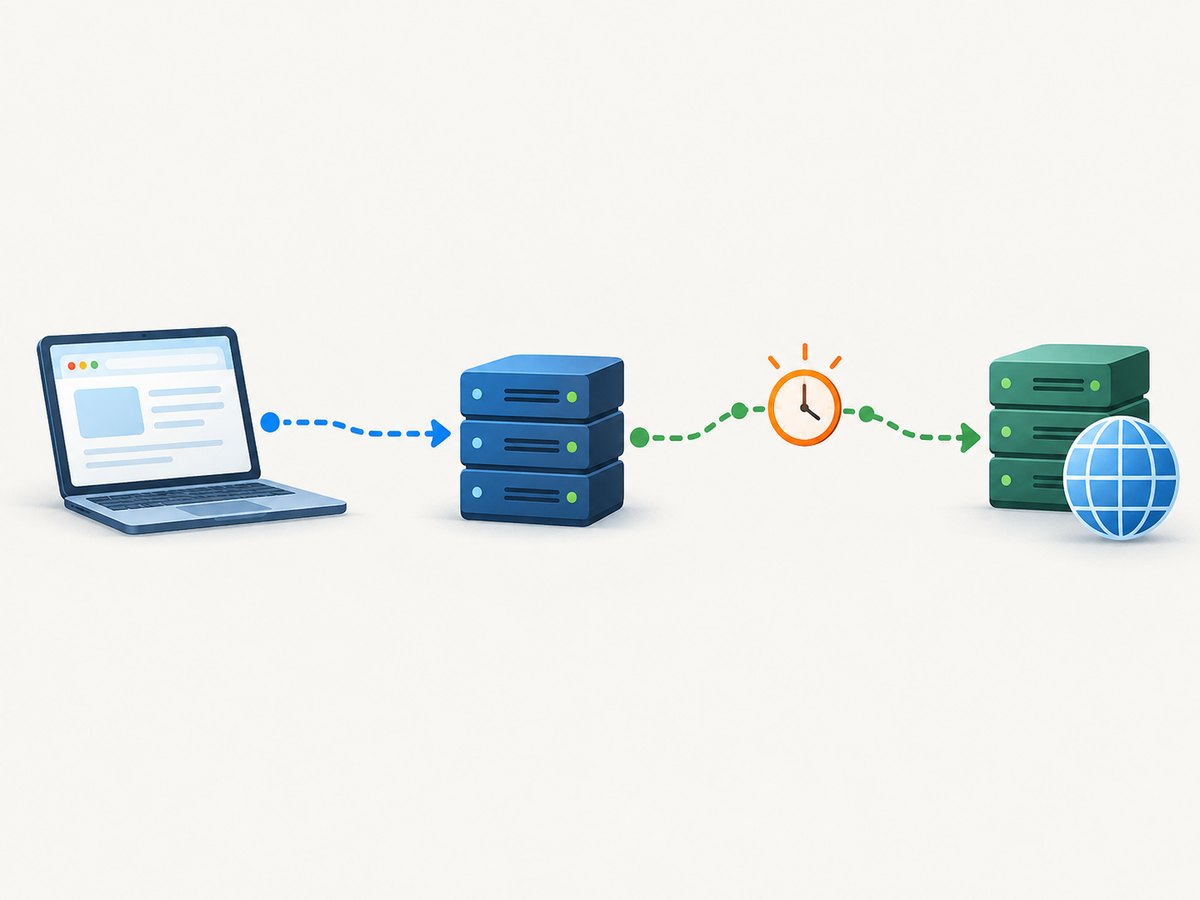
Proxying adds another network hop. Actual response time depends on the proxy endpoint, its load, the route to the destination, destination response time and payload size. This research does not establish a benchmark across these providers, so benchmark your own permitted workload before committing to a paid plan.
For reliability, set connection and response timeouts, limit retries, use exponential backoff with jitter, and record status codes without logging credentials or sensitive content. Retry only transient failures and honor provider and destination rate limits. A retry can increase both latency and metered usage. Separate proxy-connect errors from destination errors so you can tell whether to repair configuration or stop the task.
Estimate monthly cost using the provider’s actual billing unit:
- Per GB: estimate transferred data and multiply by the current per-GB rate; account for request and response payloads and any minimum purchase.
- Per proxy: multiply the number of subscribed endpoints by the billing period and confirm whether bandwidth is included.
- API credits: estimate calls, retries and any page or feature multipliers against the documented credit rules.
- Free tier or trial: treat it as an evaluation budget. Confirm concurrency, location limits, expiration, and whether payment details or automatic renewal apply.
The reported reference points are Webshare’s 10 free proxies, ScraperAPI’s 1,000 monthly API credits with five concurrent connections, IPRoyal residential from $1.75/GB, and SOAX residential from $2/GB with a reported $1.99 trial. Those units and conditions differ, so the lowest number is not automatically the cheapest plan for your usage. [TechRadar, Bright Data]
7. Which service should you try first?
- Free managed test: Webshare, for its reported 10-proxy free entry point. Check current country selection and capacity.
- Free public list experiment: ProxyScrape, for a public list reported to refresh every five minutes. Keep it low-stakes and non-sensitive.
- Lower-cost residential targeting: Compare IPRoyal and SOAX by current price per GB, location controls, session options and trial terms.
- Small API-led scraping project: ScraperAPI, after checking the free credit definition and five-connection limit reported by TechRadar.
- Managed enterprise scale: Evaluate Oxylabs or Bright Data based on required tooling, locations, acceptable use and total cost. Their reported network sizes are not performance guarantees.
- Casual browser privacy: Hide.me’s web proxy is aimed at simpler browser use rather than high-volume scraping.
Before moving production traffic, test with the destination and volume you are authorized to use, read the current plan terms, and calculate the full cost at expected usage. Avoid selecting on IP count alone.
8. When a proxy is not the tool you need
A proxy changes the network route for a request. It does not capture a visual record of a rendered webpage. If your actual goal is to save a screenshot for monitoring, documentation, or an AI workflow, use a browser capture tool or screenshot API instead of assembling a proxy list and browser setup.
ScreenshotNeo is a website screenshot API and MCP server from Yorker Media. One GET request returns a PNG, JPEG, WebP or PDF. Before capture, it accepts cookie and consent banners as a visitor and removes 60+ known consent platforms, newsletter popups and chat widgets; each step can be turned off. Bot checks and CAPTCHAs, blank pages, timeouts, failed loads and cache hits cost nothing, and response headers identify the page verdict and whether it was billed. Its MCP server exposes take_screenshot, get_page_info and capture_pdf for Claude, Cursor and other MCP clients. Every feature is on every plan; 1,000 screenshots per month are free with no card, and paid plans start at $5 for 3,000. See the ScreenshotNeo API documentation.
Or skip the browser setup
For a screenshot, call ScreenshotNeo with the target URL. Replace the example URL with a page you are permitted to capture and keep your access key private. See the API docs for the available options.
curl -G "https://api.screenshotneo.com/v1/shot" -d access_key=YOUR_API_KEY --data-urlencode url=https://stripe.com -o shot.webpimport requests
r = requests.get("https://api.screenshotneo.com/v1/shot", params={"access_key": "YOUR_API_KEY", "url": "https://stripe.com"}, timeout=90)
open("shot.webp", "wb").write(r.content)const q = new URLSearchParams({ access_key: 'YOUR_API_KEY', url: 'https://stripe.com' });
const res = await fetch(`https://api.screenshotneo.com/v1/shot?${q}`);- Cookie banners, popups and chat widgets are removed before the shot.
- Bot checks, blank pages and failed loads are never billed.
- An MCP server lets AI agents take screenshots.
- 1,000 screenshots a month are free with no card; paid plans start at $5 for 3,000.
Sign up free for ScreenshotNeo and capture your first 1,000 screenshots each month at no charge.
9. FAQ
Where can I get 10 free proxies?
TechRadar reported that Webshare offered 10 free proxies with unlimited duration. Check Webshare’s current offer and location limits before relying on it.
What is the cheapest residential proxy?
The research reports IPRoyal residential pricing from $1.75/GB and SOAX from $2/GB. These are comparison entry prices with different terms; compare current rates and minimums for your location and usage.
Do free proxies work for scraping?
They can support learning and small permitted experiments. Free proxies can be slow or frequently unavailable, so they are a poor fit for demanding or large-scale workloads.
Which proxy is best for my country?
Choose a provider and plan that explicitly supports the required country, then verify availability and any city or carrier targeting before buying. A general pool-size figure does not answer that question.
Can I use a public proxy for a logged-in account?
Avoid sending account credentials or private session data through an untrusted public endpoint. Use a provider you trust and follow the site’s and provider’s terms.


