IPRoyal Alternatives for Web Scraping
Compare IPRoyal alternatives by target difficulty, proxy type, tooling, geography and total cost—and learn how to validate a replacement before migrating.
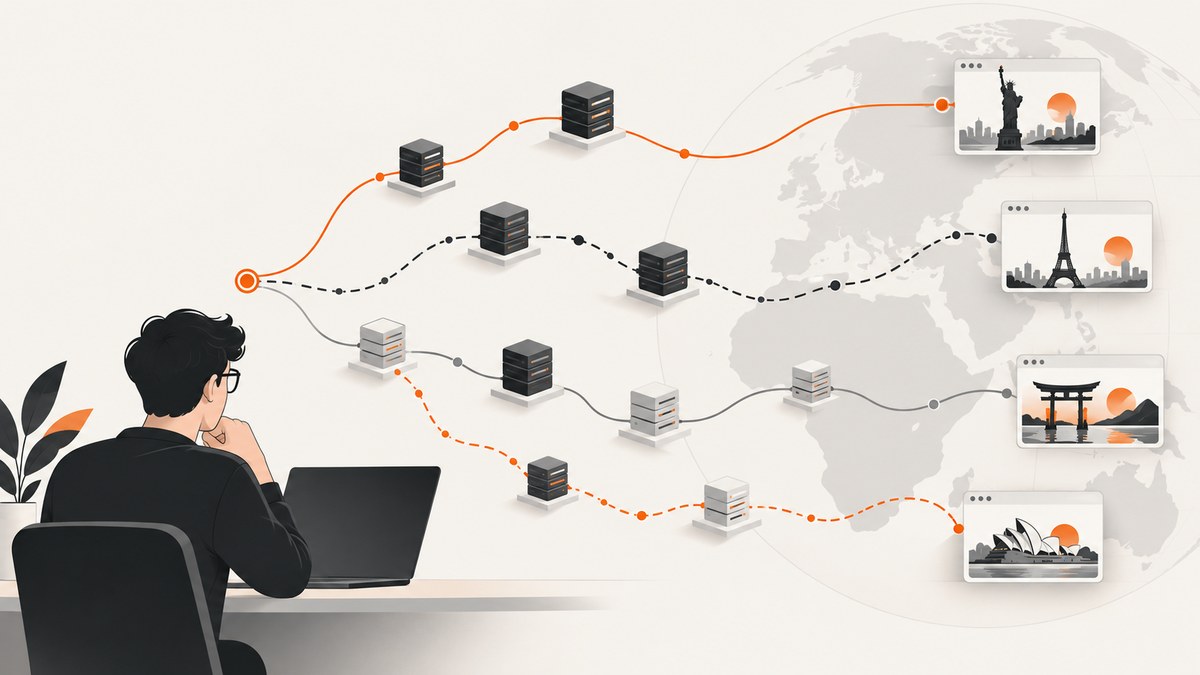
For web scraping, the best IPRoyal alternative depends on the target site, request pattern and tools you need. Start with Decodo if you want proxy infrastructure plus a Web Scraping API and AI Parser; consider Bright Data or Oxylabs when you need a broader scraping stack, and Webshare when self-service evaluation and low commitment matter. SOAX is another candidate when targeting controls and scraping tools are priorities. These are workload-based candidates, not a universal ranking: test against your own permitted targets before migrating.
Compare target-site success, geographic precision, latency, session behavior, included tooling and total cost—not just advertised IP pool size. Published provider comparisons and benchmark summaries can help make a shortlist, but they do not guarantee results on your site. Check the target’s terms and applicable law, and use a small representative trial to measure the difference.
1. Decide what you need before choosing a provider
Write down the shape of the workload first. A catalog crawl, a location-specific price check and a long-lived logged-in session place different demands on a proxy. If the site is lenient, speed and predictable cost may matter more than residential coverage. If you need a consistent session, a static endpoint may fit better than rotating on every request.
| Workload question | What to compare |
|---|---|
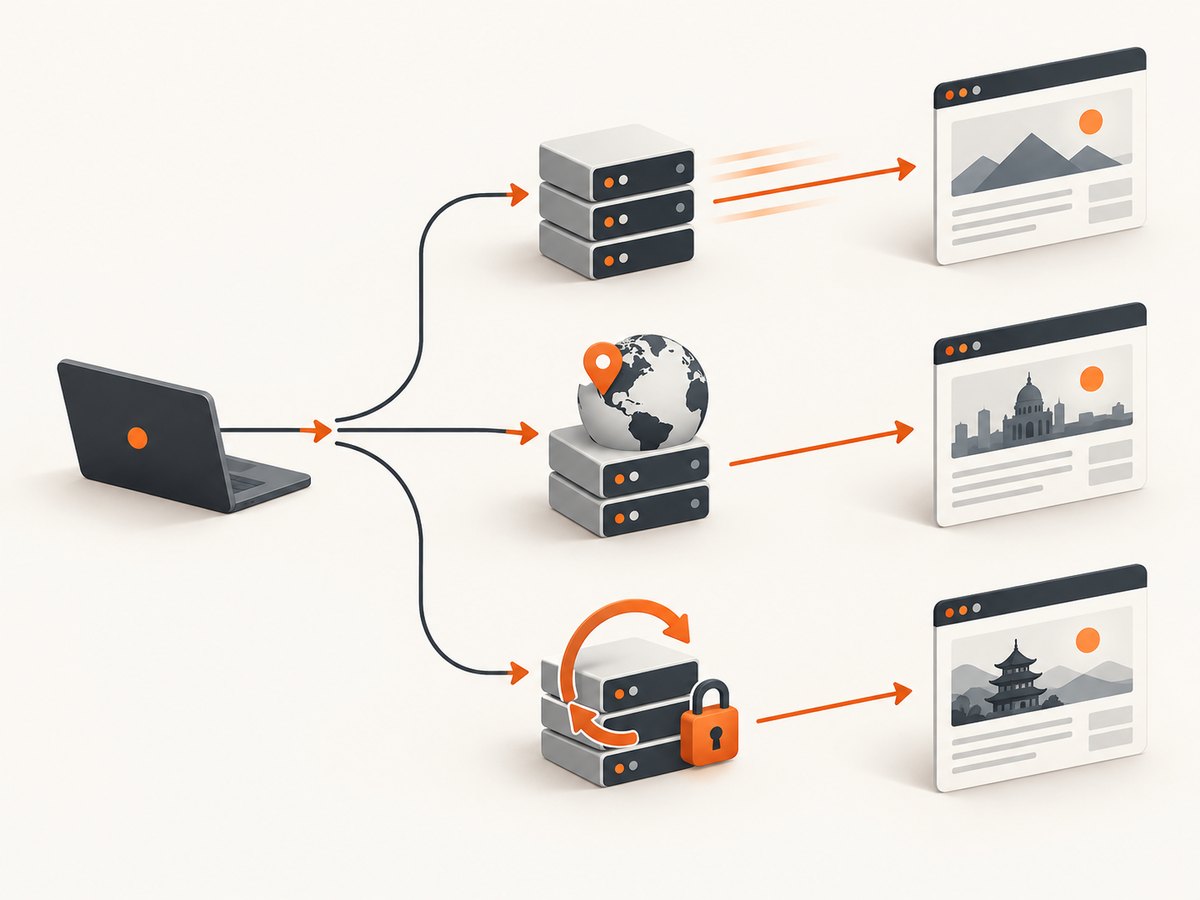
| How protected is the target? | Test the least complex proxy type that works within the site’s rules. Vendor guidance generally positions residential proxies for protected targets and datacenter proxies for high-volume, lenient targets. |
| Must the session persist? | Check rotation controls and session duration. A changing IP can interrupt a session; a static or sticky session may be preferable when continuity is needed. |
| Does location affect the result? | Check the provider’s actual country, region, city or carrier targeting options for your use case. |
| Do pages need rendering or extraction? | Compare proxy-only service with APIs, browser rendering, parsers, unblockers or prepared datasets. A managed tool can reduce integration work but changes the cost model. |
| What is the real operating cost? | Include traffic, retries, concurrency, minimum commitments, engineering effort and any separate scraping-tool charges. |
Residential proxies use IPs associated with residential networks; datacenter proxies are typically chosen for speed and volume on less restrictive targets. ISP proxies can be useful when you need a stable, longer-lived session. Treat these as starting points, not rules: a provider’s guide recommends residential for protected targets, datacenter for fast high-volume work on lenient targets, and ISP for logged-in sessions. Verify against your own target and terms. [Bright Data’s proxy guide](https://brightdata.com/blog/proxy-101/best-scraping-proxies-guide) is vendor-authored guidance, not an independent verdict.
2. IPRoyal alternatives at a glance
| Provider | Consider it when | Questions for a trial |
|---|---|---|
| Decodo | You want proxy options alongside a Web Scraping API and AI Parser. | Does its tooling fit your extraction flow? How do target success, latency and geographic coverage compare on the same URLs? |
| Bright Data | You want to evaluate proxy infrastructure together with Web Unlocker, Scraping Browser, Web Scraper API, SERP API or datasets. | Which components do you actually need, and what is the resulting cost and operational complexity? |
| Oxylabs | You need to assess a larger network and a range of scraping tools for a substantial workload. | Can you meet the minimum viable spend? Do its targeting and tooling materially improve your representative sample? |
| Webshare | You prefer self-service and want a low-commitment way to evaluate proxy access. | Does its proxy-first offering provide enough tooling for your pipeline? Confirm current free-tier and paid-plan terms directly. |
| SOAX | Geographic targeting controls and built-in scraping tools are important to evaluate. | Confirm the specific targeting granularity, tool features and current plan terms with the provider. |
Decodo: A close alternative when you want an integrated developer workflow rather than proxy endpoints alone. Decodo’s 2026 comparison article reports selected Proxyway benchmark results: 99.92% residential infrastructure success and 0.53-second global response time for Decodo, versus 96.11% and 1.24 seconds for IPRoyal. The same article says IPRoyal performed better on one IP-cleanliness measure. These figures are second-hand reporting by a provider with a commercial interest; they are not guarantees, and the published methodology was not established in the research reviewed here. Use them as a reason to run your own comparison, not as a prediction. [Read Decodo’s comparison and attribution](https://decodo.com/blog/best-iproyal-alternatives).
Bright Data: The provider describes a stack that spans proxies, Web Unlocker, Scraping Browser, Web Scraper API and SERP API. This may suit a team that wants to compare infrastructure and managed collection tools together. Its own guide ranks providers, so read those rankings as vendor positioning. Map each component to a real requirement before pricing a bundle. [Bright Data’s guide](https://brightdata.com/blog/proxy-101/best-scraping-proxies-guide) describes its product categories.
Oxylabs: Comparison coverage positions it as a scale and tooling option, including scraper APIs and web-unlocking tools. An independent TechRadar review also covers its proxy network and scraping products, but review descriptions do not replace checking current official terms. Ask for the smallest evaluation that can exercise your actual targets and expected concurrency. [TechRadar’s Oxylabs review](https://www.techradar.com/reviews/oxylabs) provides additional product coverage.
Webshare: The comparison sources position Webshare as self-service and budget-oriented, and Decodo’s article reports a permanent free tier. Because free-tier limits, prices and features change, verify the current offer directly before planning a migration around it. A low-cost trial is useful only if the proxy type, geography and workload resemble production.
SOAX: Keep it on the shortlist when fine-grained targeting or bundled scraping tools could save implementation time. The evidence reviewed for this article is limited on exact details; confirm features and current terms directly before making a decision.
3. Run a representative trial before migrating
- Select permitted test URLs. Include the important page types, locations and query patterns. Avoid testing only a homepage if production work targets product, search or listing pages.
- Keep the request pattern controlled. Use the same input URLs, concurrency, timeouts, headers and extraction logic with each candidate. Respect robots directives, site terms, rate limits and applicable law.
- Record useful outcomes. For each attempt, log the provider, proxy type, location, status, elapsed time, response size, extraction success and retry count. Separate network failures from changes in page structure or parser failures.
- Estimate full cost. Multiply expected traffic by observed bytes and retries, then add API or browser tooling and any minimum commitment. Price per GB alone does not include failed work or engineering time.
- Repeat at the scale you expect. A handful of requests does not reveal behavior under sustained concurrency. Increase gradually and stop if the site’s rules or service limits require it.
- Keep a rollback path. Run candidates alongside IPRoyal long enough to compare the same representative workload. Migrate in stages and retain configuration that lets you return if a target-specific regression appears.
Benchmark language needs care. Decodo’s article relays Proxyway figures, but the reviewed dossier did not include the original benchmark methodology. Bright Data’s provider guide and IPRoyal’s competitor list are also commercially authored. Advertised pool size, a provider’s global average and your own extraction success answer different questions. Choose based on your measurements, with source claims treated as context.
4. Basic proxy integration examples
The examples below demonstrate how to route a request through a provider endpoint. Replace the placeholder with credentials and a proxy hostname issued for your account. Keep credentials in environment variables or a secret manager in real applications; do not commit them to source control. Confirm your provider’s endpoint format, authentication method and rotation/session syntax in its documentation.
Python with Requests
import os
import requests

proxy_url = os.environ["PROXY_URL"]  # e.g. provider-issued authenticated URL
proxies = {"http": proxy_url, "https": proxy_url}

response = requests.get(
    "https://example.com/",
    proxies=proxies,
    timeout=(10, 45),
    headers={"User-Agent": "ExampleResearchBot/1.0"},
)
response.raise_for_status()
print(response.status_code, len(response.content))
Set PROXY_URL in your shell using your provider’s documented URL format. The example deliberately uses a placeholder target and a descriptive user agent; identify your crawler accurately and follow the site’s rules.
Node.js using the built-in fetch
Node’s built-in fetch does not accept a proxy URL option directly. Use a maintained proxy-aware dispatcher supported by your Node version and installed dependencies. This example uses the undici package’s ProxyAgent; install it according to the [Undici documentation](https://undici.nodejs.org/).
import { ProxyAgent } from "undici";

const proxyUrl = process.env.PROXY_URL;
if (!proxyUrl) throw new Error("Set PROXY_URL");

const dispatcher = new ProxyAgent(proxyUrl);
const response = await fetch("https://example.com/", {
  dispatcher,
  headers: { "user-agent": "ExampleResearchBot/1.0" },
  signal: AbortSignal.timeout(45_000),
});

if (!response.ok) {
  throw new Error(`Request failed: ${response.status}`);
}
const body = await response.text();
console.log(response.status, body.length);
await dispatcher.close();
Check your Node and Undici versions for compatible timeout and dispatcher behavior. Ensure the dispatcher is closed when finished so pooled connections can be released.
cURL
curl --fail --show-error --location \
  --proxy "$PROXY_URL" \
  --connect-timeout 10 --max-time 45 \
  --user-agent "ExampleResearchBot/1.0" \
  "https://example.com/"
For authenticated endpoints, use the precise credential format supplied by the provider. Avoid putting passwords directly in shell history; use a protected environment variable or another secure credential mechanism.
5. Reliability, performance and cost
Measure the full request path
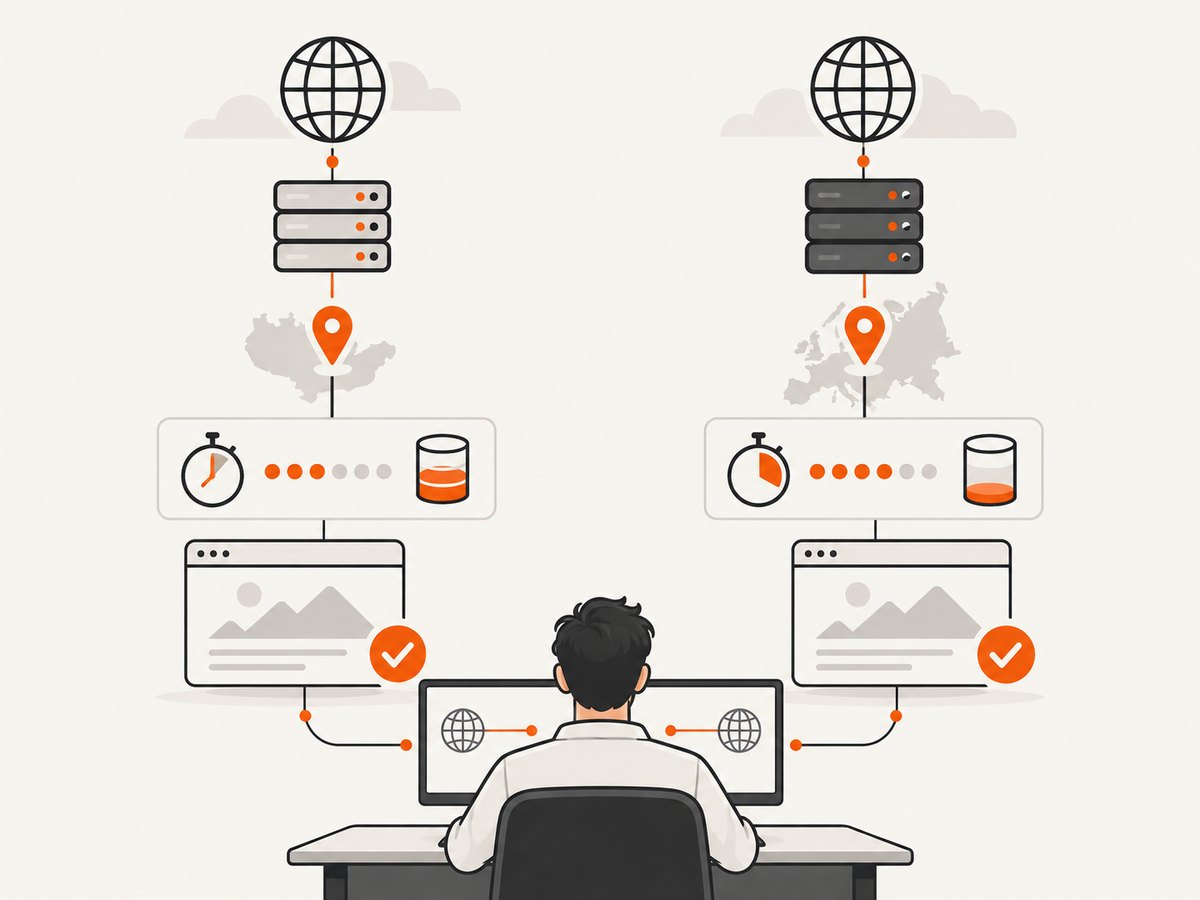
End-to-end time includes DNS, proxy connection, target response, redirects and any page rendering. Track median and tail latency instead of relying on a single average. Keep connect and total timeouts separate where the client supports it. A low latency result is not useful if the page body is incomplete or your parser fails.
Use bounded retries
Retry transient network errors and selected server failures with a small capped exponential backoff and jitter. Do not retry every response: repeated requests can worsen load, inflate traffic and violate target policies. Treat authentication errors, malformed requests and explicit access restrictions as configuration or policy conditions to investigate, not as a cue to retry indefinitely.
Keep sessions intentional
Rotating addresses can help distribute independent requests, while sticky or static sessions preserve continuity. Avoid sharing session state across unrelated tasks. If a workflow depends on login, cookies and IP changes can interact; test the provider’s session controls on an authorized account before scaling.
Budget for traffic and tooling
Compare the amount of transferred data and the number of retries, not just request counts. If an API returns rendered or structured data, compare its unit of billing with raw proxy traffic and the cost of maintaining your own browser, parser and retry logic. Confirm current prices and free-trial terms on provider pages; the figures in comparison articles can become stale.
6. Troubleshooting common failures
| Symptom | Likely cause | What to check |
|---|---|---|
| Proxy authentication error | Wrong credentials, unsupported auth syntax or account not enabled for the endpoint. | Copy the provider-issued format exactly, check account status and test a single request. |
| Connection refused or timeout | Incorrect hostname or port, firewall restrictions, unavailable endpoint or timeout too short. | Verify host, port, protocol and network access; distinguish connect timeout from target response time. |
| TLS or certificate failure | Client proxy configuration, certificate interception or an incompatible scheme. | Use the provider’s documented HTTP/HTTPS proxy method and current CA setup; do not disable certificate checks as a production fix. |
| Unexpected location | Geo setting absent, unsupported precision or session assignment differs from expectation. | Check the provider’s targeting syntax and verify observed location using an approved diagnostic endpoint. |
| Login breaks mid-run | Rotation changes the apparent client identity or session affinity expires. | Test documented sticky-session controls and reduce unnecessary IP changes for that workflow. |
| HTTP 403, CAPTCHA or access denial | The site is declining the request or its rules do not permit the activity. | Review site terms and crawler policy, reduce request rate where allowed, and contact the site for access. Do not treat proxy rotation as permission to bypass access controls. |
| 200 response but missing data | Client-side rendering, a consent page, an interstitial or changed markup. | Inspect the returned body and content type; use an appropriate rendering/extraction tool when permitted, and update parser assumptions. |
| Costs exceed estimate | Large response bodies, retries, concurrent jobs or a plan minimum. | Measure bytes and retries per successful record, set request budgets, and compare managed-tool pricing with self-hosted maintenance. |
7. Or skip browser setup
If the job is to capture a page as an image or PDF rather than collect structured data, ScreenshotNeo is the alternative to try first. It is a website screenshot API and MCP server; one GET request can return a PNG, JPEG, WebP or PDF. See the ScreenshotNeo documentation for request options.
curl -G "https://api.screenshotneo.com/v1/shot" -d access_key=YOUR_API_KEY --data-urlencode url=https://stripe.com -o shot.webpScreenshotNeo accepts cookie and consent banners like a visitor and removes 60+ known consent platforms, newsletter popups and chat widgets before capture; each step can be turned off. Bot checks and CAPTCHAs, blank pages, timeouts, failed loads and cache hits cost nothing, and response headers report the page verdict and billing status. Its MCP server provides take_screenshot, get_page_info and capture_pdf tools for Claude, Cursor and other MCP clients. The Free plan includes 1,000 shots a month with no card; paid plans start at $5 for 3,000 shots.
Sign up free for 1,000 screenshots a month—no card required.
8. Frequently asked questions
Which IPRoyal alternative is cheapest?
There is no stable winner without a workload and current plan terms. Compare the cost per successful, usable result, including traffic, retries, tool fees and minimums.
Does a larger proxy pool mean fewer blocks?
No. Advertised pool size does not establish availability on a specific target. Test target-specific outcomes, and follow its access rules.
Can I switch providers without changing my scraper?
Often you can preserve the HTTP client and change endpoint configuration, but authentication, rotation, sessions, geo-targeting and error behavior may differ. Test these before cutover.
Should I buy proxies or a scraping API?
Choose proxies when you need control over your own request and extraction pipeline. Evaluate a scraping API when its rendering, extraction or unblocking features replace work you would otherwise maintain.
Is a benchmark enough to choose?
No. Use published comparisons to form a shortlist, then run a representative trial on permitted targets and verify the current product terms.


