Is an MCP Server Like a Database Server? Key Differences Explained
An MCP server gives AI applications tools and resources. A database server stores data and serves database clients. Learn how they work together.
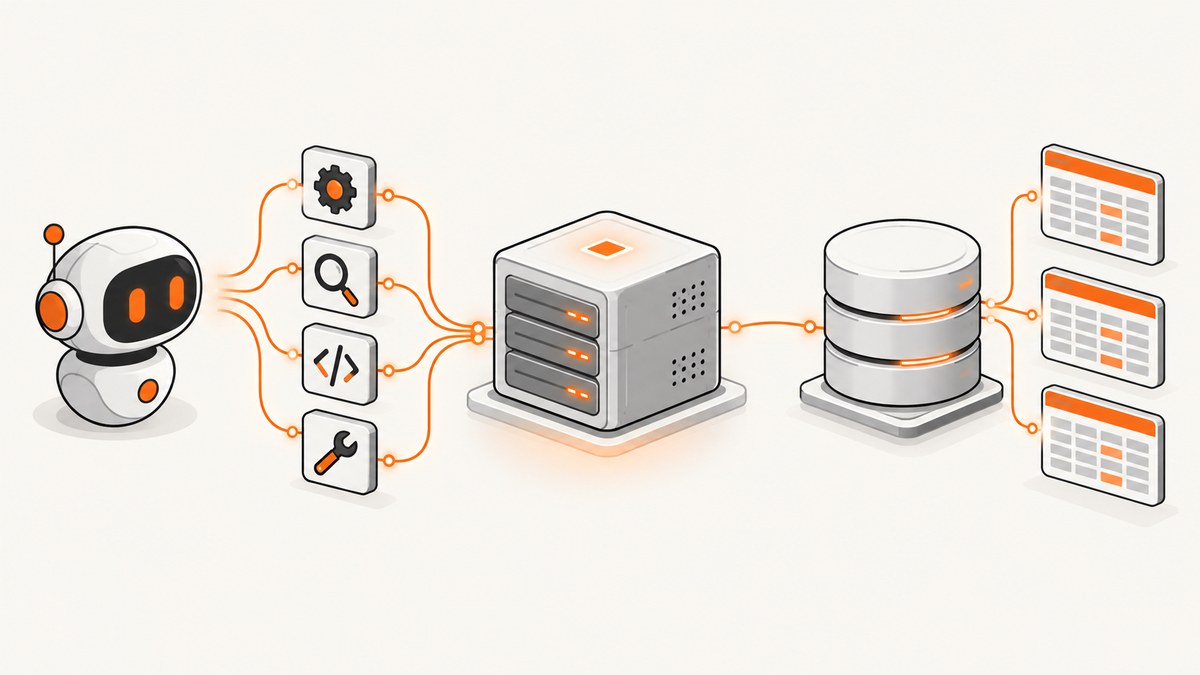
Short answer: An MCP server and a database server are different kinds of software. An MCP server implements the Model Context Protocol (MCP) and gives an AI application discoverable tools, resources and prompts. A database server stores data, executes database operations and manages connections from client programs. An MCP server can call a database, but it does not become the database.
A useful mental model is interface versus system of record. The database owns and manages the data. The MCP server presents selected operations to an AI client, often adding validation, business rules and access controls between the model and the database.
What does an MCP server do?
MCP defines a standard way for an AI host, such as a desktop assistant or coding agent, to discover and use capabilities supplied by a server. Those capabilities can include:
- Tools: callable operations that a model can invoke, such as
search_orders,run_reportorcreate_ticket. - Resources: addressable information an application can read, such as a schema document, policy file or generated report.
- Prompts: reusable prompt templates that guide an interaction.
The official MCP tools documentation describes the protocol as allowing servers to expose tools that language models can invoke (MCP tools documentation). An MCP server may implement these capabilities by calling REST APIs, cloud services, local programs, files or databases. A database is one possible backend, not a requirement.
What does a database server do?
A database server runs a database management system (DBMS) and accepts connections from client programs. It stores data on durable media, parses queries, plans and executes them, enforces transactions and permissions, and coordinates concurrent access.
For MySQL, Oracle’s reference manual summarizes the role clearly: when the server starts, it listens for network connections from client programs and manages access to databases on behalf of those clients (MySQL Server reference). PostgreSQL, SQL Server, Oracle Database and other systems provide similar database-server responsibilities, although their protocols and features differ.
A database server therefore answers questions such as:
- Where are rows, documents or graph nodes stored?
- How are indexes, transactions and locks handled?
- Which database users may read or change each object?
- How are backups, replication and recovery performed?
MCP server and database server compared
| Dimension | MCP server | Database server |
|---|---|---|
| Primary purpose | Expose AI-usable capabilities through MCP | Store data and manage database access |
| Typical client | AI host, agent or MCP client | Application, driver, admin tool or another service |
| Interface | MCP messages containing tools, resources and prompts | Database protocol and query language, such as SQL |
| What it exposes | Named operations and information selected by its author | Databases, tables, views, indexes and database operations |
| Where data lives | Usually in a connected system; the MCP process may hold little state | Inside the DBMS storage and its managed files |
| Typical permissions | Which tools the model may discover and invoke | Which database principals may read or write objects |
| Transport | Local standard input/output or a remote HTTP endpoint | Database-specific network protocol, local socket or managed service endpoint |
These layers can be deployed on one machine or across several services. Co-location does not make them the same component.
How an MCP server can connect to a database
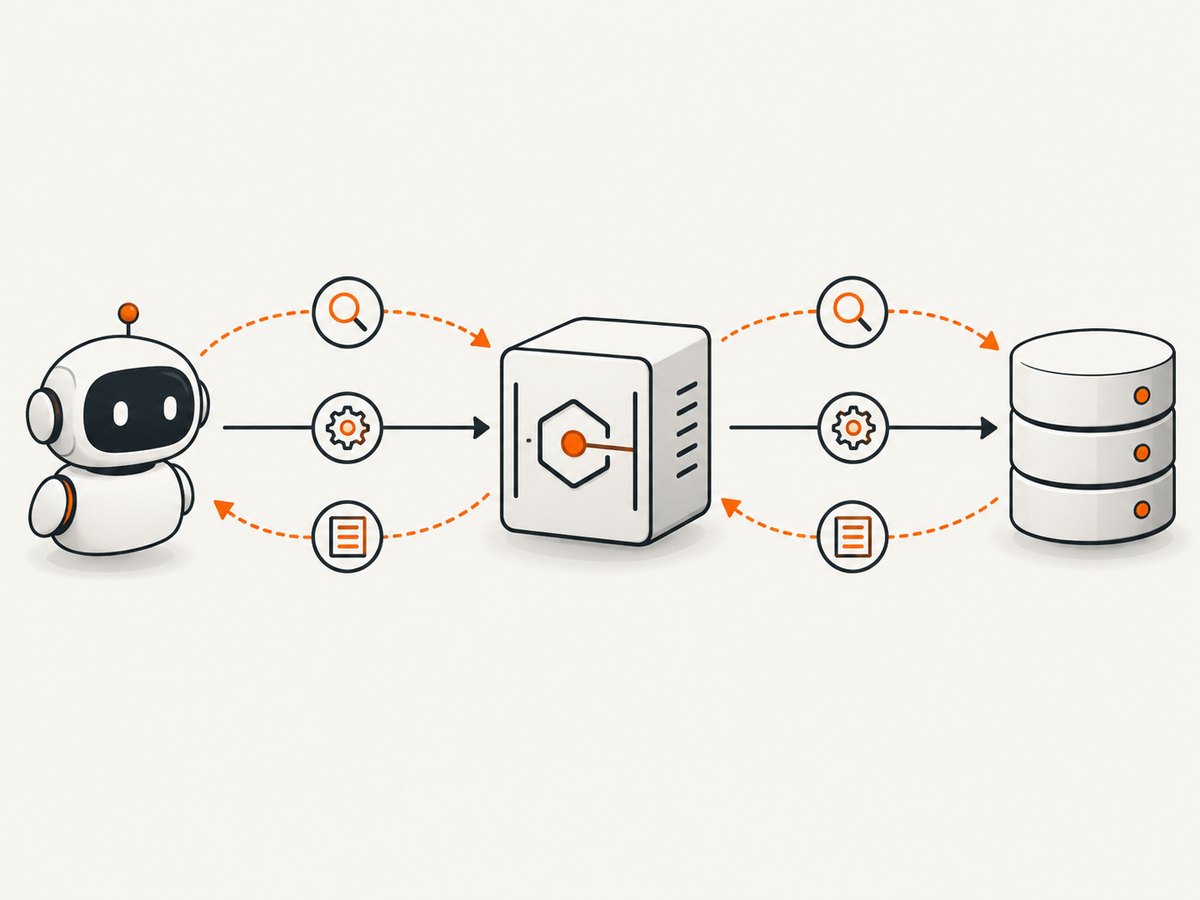
The official MCP architecture guide uses a database-connected example with three layers: database data, MCP tools for querying it, a schema resource and a prompt containing usage examples (MCP architecture). The model never needs unrestricted database credentials in that design. It sees the operations the MCP server chooses to expose.
Request flow
- The AI host connects to the MCP server and asks what tools and resources are available.
- The model selects a tool, for example
find_customers, and supplies structured arguments. - The MCP server validates arguments, applies application policy and creates a parameterized database query.
- The database server authenticates the MCP server’s database account, executes the query and returns rows.
- The MCP server filters or formats the result and returns it to the AI host.
The MCP server is an adapter and policy boundary. The database still performs query execution, transactions, locking and storage.
Minimal illustrative tool implementation
The following Python example shows the important separation. It is intentionally small; a production server should use the database vendor’s async driver, connection pooling and its MCP SDK.
import os
import sqlite3

DB_PATH = os.environ.get("DB_PATH", "app.db")

def search_orders(customer_email: str, limit: int = 20) -> list[dict]:
    if not customer_email or len(customer_email) > 320:
        raise ValueError("customer_email is required")
    limit = max(1, min(limit, 100))

    with sqlite3.connect(DB_PATH) as conn:
        conn.row_factory = sqlite3.Row
        rows = conn.execute(
            """
            SELECT id, status, total_cents, created_at
            FROM orders
            WHERE customer_email = ?
            ORDER BY created_at DESC
            LIMIT ?
            """,
            (customer_email, limit),
        ).fetchall()

    return [dict(row) for row in rows]
An MCP SDK wrapper would publish search_orders as a tool. The SQL remains parameterized, the result is bounded, and the database account can be restricted to the required tables.
Local and remote MCP deployment
MCP servers commonly run in two arrangements:
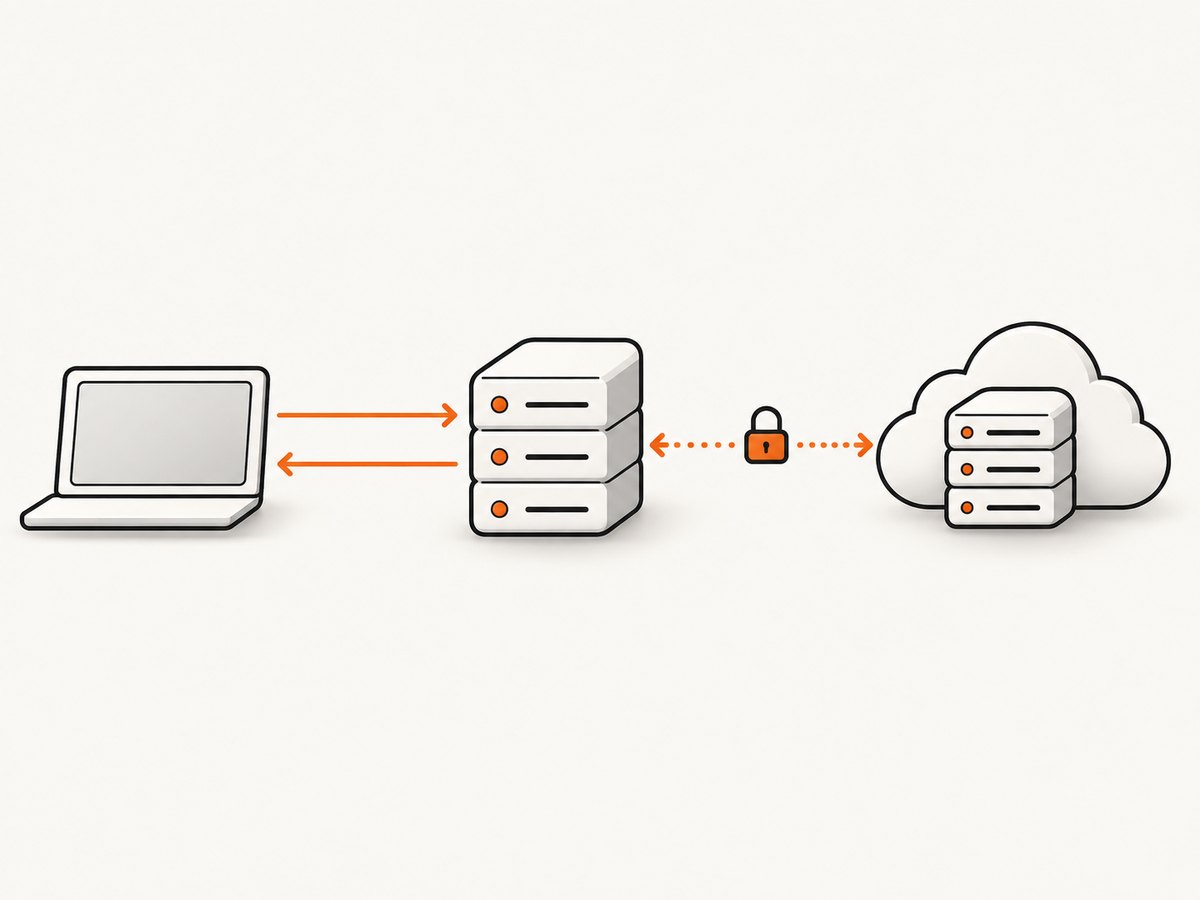
- Local: the host starts a process and communicates over standard input/output. This is convenient for desktop clients and local development. Secrets and filesystem access are controlled by the machine running the process.
- Remote: the client reaches an HTTP endpoint. This supports shared infrastructure and managed authentication, but requires network authorization, TLS, request limits and tenant isolation.
Google Cloud’s Database Center documentation uses this local-versus-remote distinction for its remote MCP server (Google Database Center MCP documentation). Transport describes how a client reaches the MCP server; it does not describe where the database is or whether one exists.
Security: the MCP layer adds decisions
Giving a model a tool is granting it a potential action. Review every tool’s inputs, side effects and reachable systems before connecting it to production data.
Use least privilege
- Create a database account with only the tables and operations needed by the tools.
- Prefer read-only accounts for reporting tools.
- Expose domain-specific operations instead of an unrestricted
execute_sqltool. - Validate identifiers, date ranges, sort fields and result limits on the server.
- Require confirmation for deletes, refunds, permission changes and other irreversible actions.
Consider prompt injection
Instructions can arrive through retrieved documents, web pages or database content. OpenAI’s MCP guidance calls prompt injection an important security consideration when connectors can access sensitive data or take actions (OpenAI MCP server guidance). Treat model-produced arguments as untrusted input, log tool calls, redact secrets from results and keep an audit trail.
Common mistakes and how to fix them
| Symptom | Likely cause | Fix |
|---|---|---|
| “The MCP server is my database” | The adapter and DBMS are being conflated | Identify which process stores data and which process exposes tools |
| Tool discovery works but calls fail | Database credentials, network rules or schema are wrong | Test the MCP process’s database connection independently and inspect server logs |
| Queries are slow | Unbounded tool arguments or missing indexes | Set limits, inspect query plans and add indexes in the database |
| Unexpected data is returned | Tool permits broad filters or the model inferred an unsafe argument | Use allowlisted filters, row-level authorization and strict schemas |
| Remote client cannot connect | TLS, firewall, authentication or incompatible transport configuration | Verify the endpoint from the same network, then check credentials and protocol logs |
| Local process exits immediately | Startup exception or incorrect standard-input/output handling | Run it directly, capture stderr, check environment variables and keep protocol output separate from logs |
| Results exceed model context | The tool returns full rows or large documents | Paginate, project only needed fields and provide a continuation token |
Performance, reliability and cost
An MCP call adds a hop: AI host to MCP server, then MCP server to the backend. For interactive tools, keep payloads small and avoid serializing unused columns. Connection pooling prevents a new database handshake for every call. Cache stable schema resources, but avoid caching permission-sensitive query results unless the cache key includes the user and tenant.
Measure each segment separately: model decision time, MCP validation and serialization, database execution, and network transfer. Database indexes and query plans determine most data-access latency; changing MCP transport cannot fix a table scan.
Reliability requires independent limits and failure handling. Set timeouts at the MCP client, MCP server and database driver. Return structured errors that tell the model whether it should retry, narrow the request or ask for authorization. Use idempotency keys for write tools, circuit breakers for unavailable backends and health checks that test dependencies without modifying data.
Costs come from the components you operate: model tokens, MCP compute and network, database compute and storage, and observability. An MCP server can reduce expensive broad queries by exposing bounded domain tools, but it does not remove database costs.
When an MCP server should not connect directly to a database
Use an existing application API when business rules already live there, when database credentials must remain inaccessible to the integration, or when the API provides tenant and authorization checks you would otherwise have to rebuild. A direct database adapter can be appropriate for read-only analytics, internal administration and controlled prototypes. For writes or regulated data, an API or service layer often provides clearer policy boundaries.
ScreenshotNeo example: an MCP server can expose other capabilities too
MCP is not limited to databases. ScreenshotNeo provides an MCP server whose tools let AI clients take screenshots, inspect page information and capture PDFs. That is a useful contrast: the MCP interface exposes capabilities, while the website and ScreenshotNeo’s capture service are the systems doing the work.
Or skip the browser setup
If your task is obtaining a page image rather than learning browser automation, ScreenshotNeo offers one GET request. See the ScreenshotNeo API documentation for parameters and response details.
curl -G "https://api.screenshotneo.com/v1/shot" \
  -d access_key=YOUR_API_KEY \
  --data-urlencode url=https://stripe.com \
  -o shot.webp
import requests
r = requests.get(
"https://api.screenshotneo.com/v1/shot",
params={"access_key": "YOUR_API_KEY", "url": "https://stripe.com"},
timeout=90,
)
r.raise_for_status()
open("shot.webp", "wb").write(r.content)const q = new URLSearchParams({
access_key: 'YOUR_API_KEY',
url: 'https://stripe.com'
});
const res = await fetch(`https://api.screenshotneo.com/v1/shot?${q}`);
if (!res.ok) throw new Error(`HTTP ${res.status}`);
const bytes = new Uint8Array(await res.arrayBuffer());Cookie banners, newsletter popups and chat widgets are removed before the shot. Bot checks, blank pages and failed loads are never billed, and response headers identify the page verdict and billing status. Its MCP server lets AI agents use screenshot, page-info and PDF tools. The free plan includes 1,000 screenshots a month with no card; paid plans start at $5 for 3,000. Create a free ScreenshotNeo account.
FAQ
Can an MCP server replace a database server?
No. It can provide a controlled interface to database operations, but storage, indexing, transactions and database protocol handling remain the DBMS’s responsibilities.
Does every MCP server use a database?
No. MCP servers can wrap APIs, files, calculations, cloud resources, browser automation and other systems.
Is an MCP server stateless?
That depends on the implementation and protocol version. A server may keep sessions, caches or job state even when a particular remote deployment is designed to be stateless. Check the implementation’s documentation.
Should a model receive raw SQL access?
Usually not. Prefer narrow, parameterized tools with explicit authorization, bounded results and logging. Add raw SQL only when the environment is isolated and the risks are understood.
What should I compare when evaluating two MCP servers?
Compare the capabilities exposed, backend systems reached, authentication model, transport, permission boundaries, audit logging, failure behavior and maintenance model. The label “MCP server” alone does not describe those properties.


