Rotating Proxies: Why You Need Them for Web Scraping
Learn when rotating proxies help a scraper, when sticky sessions or no proxy are better, and how to build a responsible, reliable workflow.
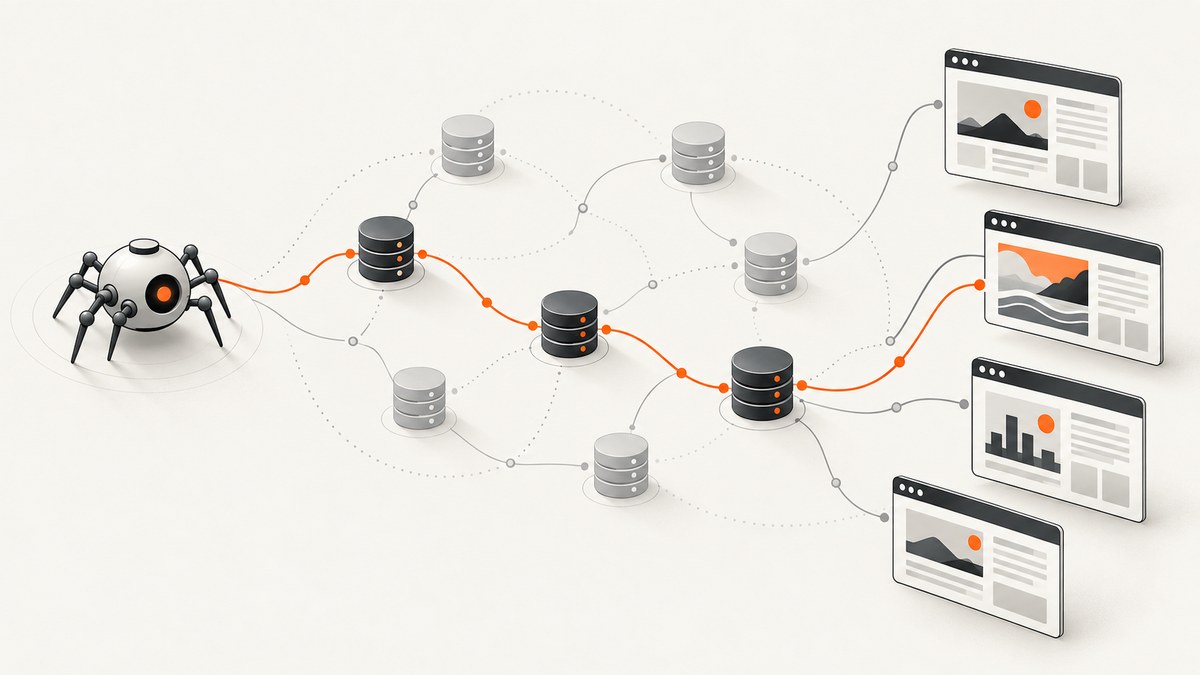
A rotating proxy sends web requests through proxy servers whose visible exit IP can change according to a provider’s policy. It can help distribute a permitted crawl across exits or reach public pages as seen from a needed location. It does not guarantee that a site will accept requests, prevent CAPTCHAs or blocks, or make scraping permissible. For a multi-step workflow that needs continuity, a sticky session may fit better; for a small, allowed crawl, you may not need a paid proxy at all.
This guide explains how rotation works, what to compare before choosing a service, how to integrate a proxy into a Python scraper, and how to keep the crawl reliable and responsible. The details of rotation and proxy capabilities vary by provider, so verify the chosen service’s current documentation and policies.
1. What a rotating proxy does
A proxy is an intermediary between your client and a destination server. Your scraper connects to the proxy, and the destination sees the proxy’s exit address as the source of that request. In a rotating setup, the provider selects an exit IP according to a policy, such as per request or after an interval.
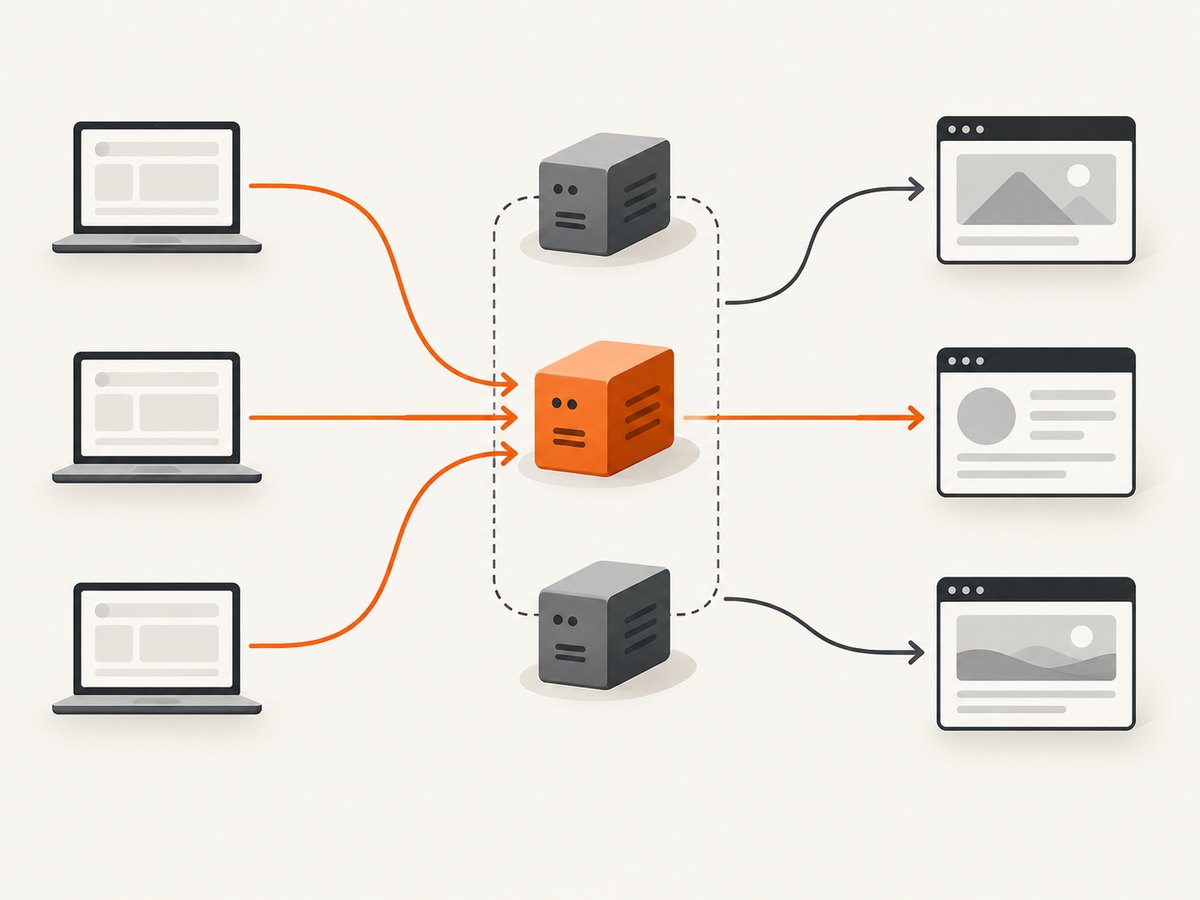
“Rotating” does not necessarily mean every request receives a unique address. Selection can be random, and the same address can recur. ProxyMesh, for example, documents random selection for its service and says an address can repeat; that is a description of that configuration, not a universal rule. Ask a provider how its pool, rotation timing, and repeat behavior work.
Rotation changes the network route. It does not change your scraper’s request rate, browser fingerprint, cookies, or permission to access a site. A destination can still reject or limit traffic, and rapid retries can make load problems worse.
2. When rotation helps—and when it does not
Consider rotating exits when
- You have permission to collect public data and a broad crawl needs requests distributed across exits under an agreed request budget.
- You need to observe public, localized content from a country or region and the provider supports the geography you actually need.
- Your workload is independent page retrieval rather than a sequence that depends on one continuous session.
Use a sticky session when continuity matters
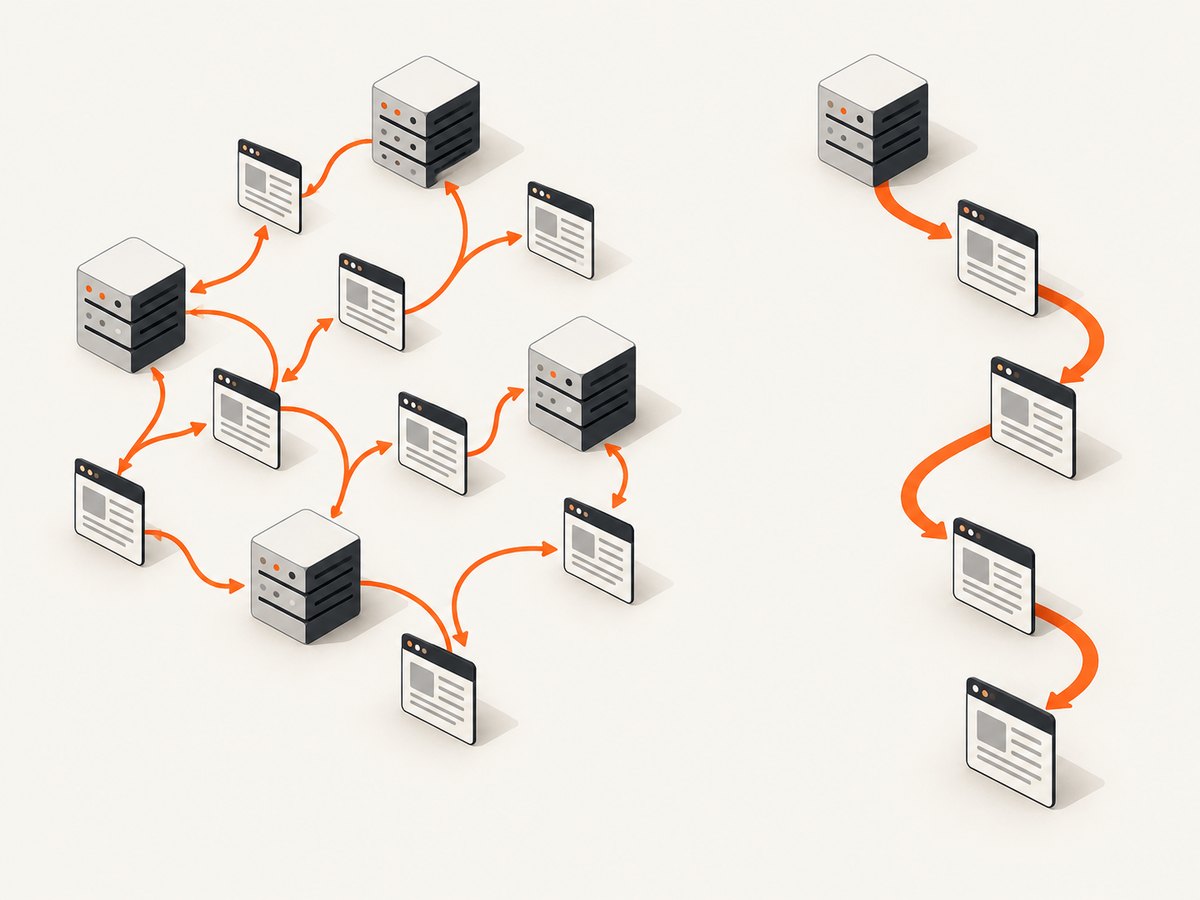
A sticky session keeps the same exit IP for a sequence of requests or a configured period, if the provider offers that mode. It can be useful when a workflow follows several pages or steps that rely on a consistent session. Frequent rotation can disrupt such a flow. ResidentialProxy.io recommends rotation for broad crawling and sticky sessions for multi-step work; treat that as provider guidance, then validate the behavior for your workflow.
You may not need a proxy
For a low-volume crawl of pages that permit automated access, first try a direct connection with a clear user agent, conservative pacing, caching, and bounded retries. A proxy adds cost and another dependency. If the target blocks the crawl or its terms do not allow it, changing exit IPs is not a remedy for that restriction.
3. Choose by workload, not by the word “rotating”
| Decision | What to check | Why it matters |
|---|---|---|
| Rotation policy | Per-request, timed, or session-based selection; whether addresses can repeat | Provider policies differ; align the policy with the unit of work. |
| Session continuity | Sticky-session support and how long a session persists | Multi-step flows may need a stable exit. |
| Pool type | Residential, datacenter, mobile, or ISP options; sourcing disclosures | Capabilities, policies, and prices differ. Do not assume a category guarantees acceptance. |
| Geography | Country, region, or city targeting and availability | Buy only the location precision your permitted use requires. |
| Integration | HTTP(S) or SOCKS support, authentication, client compatibility, session controls | Confirm exact formats and behavior in current provider documentation. |
| Operations | Price basis, bandwidth, concurrency, retries, retention, acceptable-use rules | These limits affect total cost and whether the service suits your workload. |
ResidentialProxy.io characterizes datacenter proxies as potentially cheaper and faster but easier to identify. That is a provider’s description, not an independent comparative measurement. Likewise, provider claims about residential pool size, success rates, or detectability should not be treated as neutral benchmarks. Compare documented terms, a representative permitted workload, and total cost instead of relying on category labels.
4. Set up a responsible crawl before adding proxies
- Confirm the use is allowed. Review the target’s terms and access policies. Honor robots.txt where applicable, and avoid collecting private or sensitive data without permission. Legal analysis depends on jurisdiction and facts; seek legal advice for consequential use.
- Define a request budget. Set a rate per host, concurrency ceiling, maximum pages, and a stop condition for repeated errors. A proxy is not a reason to increase load.
- Identify the actual requirement. Decide whether you need changing exits, a persistent session, geographic observation, or simply ordinary direct access.
- Test a small sample. Check status codes, content quality, response time, and whether the provider’s documented session behavior matches your needs. Do not use the sample to bypass a target’s explicit restrictions.
- Keep credentials private. Store proxy credentials outside source code, restrict access, and rotate exposed credentials according to provider guidance.
Cloudflare publishes sample terms that site operators may adapt for bots and scraping; they are illustrative, not a universal rulebook. The provider rotatingproxies.eu summarizes its own guidance with the statement, “Rotation hides your IP footprint; it does not grant permission.” Treat that as a provider statement, while checking the target’s actual policies and applicable obligations.
5. Runnable Python example with a rotating proxy endpoint
The example below uses Python’s requests library and a proxy URL supplied through environment variables. The hostname, credentials, and rotation behavior are placeholders: substitute the endpoint and authentication format documented by your selected provider. Some providers rotate behind one endpoint automatically; others require a session token or a different endpoint. This code cannot configure a policy that the provider does not expose.
import os
import time
import requests
from requests.exceptions import RequestException

TARGETS = [
    "https://example.org/",
    "https://example.org/about",
]

# Set this to the proxy URL and authentication format from your provider.
# Example shape only: http://USER:PASSWORD@proxy.example:PORT
PROXY_URL = os.environ["SCRAPER_PROXY_URL"]
PROXIES = {"http": PROXY_URL, "https": PROXY_URL}

SESSION = requests.Session()
SESSION.proxies.update(PROXIES)
SESSION.headers.update({"User-Agent": "ResearchCrawler/1.0 (contact: ops@example.org)"})

for url in TARGETS:
    try:
        response = SESSION.get(url, timeout=(5, 25))
        print(url, response.status_code, len(response.content))
        response.raise_for_status()
        # Parse and store only data you are authorized to collect.
        time.sleep(2)  # Conservative example pacing; set a suitable per-host budget.
    except requests.exceptions.ProxyError as exc:
        print("Proxy connection or authentication failed:", exc)
        break
    except requests.exceptions.Timeout:
        print("Timed out:", url)
    except RequestException as exc:
        print("Request failed:", url, exc)
Install the dependency with python -m pip install requests. Set SCRAPER_PROXY_URL in your shell or secret manager rather than committing credentials. The example reuses a session, but whether that produces a sticky exit depends on the proxy provider’s semantics. If each request should use a new exit, follow the provider’s documented rotation controls; opening a new local session alone does not guarantee a different IP.
Useful implementation choices
- Timeouts: use both connection and response timeouts so a stalled proxy does not hang the job indefinitely.
- Retries: retry only transient failures, with a small limit and exponential backoff plus jitter. Do not retry authorization errors, target denials, or policy blocks as a way to force access.
- Concurrency: begin sequentially. Increase only within your request budget and the target’s policies; also confirm the proxy plan’s concurrency limit.
- Cookies and state: retain cookies only when needed for an authorized workflow. Keep an IP stable if the workflow requires continuity and the provider supports sticky sessions.
- Logging: record timestamp, target host, status, latency, retry count, and a request identifier. Redact credentials, cookies, and sensitive response data.
6. cURL and Node.js integration patterns
With cURL, the generic --proxy option accepts an HTTP proxy URL. Replace the placeholder with the format your provider documents. Avoid putting secrets directly into shell history; use a protected environment or a secret manager.
curl --proxy "$SCRAPER_PROXY_URL" \
  --connect-timeout 5 --max-time 30 \
  --user-agent "ResearchCrawler/1.0 (contact: ops@example.org)" \
  "https://example.org/" -o page.html
For Node.js, the built-in fetch does not itself provide a portable proxy configuration option across all supported versions and runtimes. Use a maintained HTTP client or dispatcher that explicitly supports your provider’s HTTP or SOCKS protocol, and follow that library’s official configuration instructions. Do not assume that setting an environment variable will affect every Node runtime or library. Validate the exit behavior with a provider-approved diagnostic endpoint, then remove diagnostic requests from production if they are not needed.
7. Reliability, performance, and cost
A proxy adds a network hop and a dependency on provider availability. Measure end-to-end latency and error rates on the specific permitted workload. Keep timeouts bounded, cap retries, and stop or slow the crawl when failures cluster. A rotating pool cannot guarantee that any particular request succeeds, nor that a CAPTCHA or rate limit will disappear.
Budget around the provider’s billing unit: bandwidth, request volume, concurrency, or a subscription may all matter. Account for retries and large responses, and set alerts or hard ceilings where the provider supports them. The reviewed material did not establish an independent comparison of current providers, prices, or workload performance, so check current terms directly before buying.
Cache responses where permitted, avoid fetching unchanged pages unnecessarily, and use conditional requests if the target supports them. These measures reduce load and can reduce bandwidth costs. Do not treat cached copies as permission to retain or republish data beyond applicable terms and privacy requirements.
8. Troubleshooting common failures
| Symptom | Likely cause | Practical fix |
|---|---|---|
| Connection refused or proxy error | Wrong host/port, unsupported protocol, provider outage, or network restriction | Verify endpoint and protocol in provider docs; check provider status and test a single permitted request. |
| 407 Proxy Authentication Required | Missing or malformed proxy credentials | Check the provider’s required authentication format and URL-encode special characters in credentials. |
| Timeouts | Slow exit, unreachable target, overloaded concurrency, or too-short timeout | Separate connect and read timeouts, reduce concurrency, and retry transient failures only with bounded backoff. |
| Same exit IP appears repeatedly | Random selection can repeat; session affinity or provider policy may pin an exit | Check the documented rotation policy and session controls. Do not assume each request must be unique. |
| 403, CAPTCHA, or rate limit | Target policy or access control rejected the request | Stop and review permission and request rate. Do not use rotation to override an explicit restriction. |
| Localized page does not change | Content may use account settings, cookies, headers, or a location other than IP | Confirm the needed geography is supported and inspect the site’s documented localization behavior; do not infer location from the proxy alone. |
| Broken multi-page flow | Exit changed between steps or cookies/session state were not preserved | Use a documented sticky session if allowed and required, retain necessary session state securely, and test the entire sequence. |
9. When screenshots are the actual deliverable
If the goal is a visual record of public pages rather than extracting structured data, a browser-based screenshot service can avoid setting up browser automation and proxy plumbing. ScreenshotNeo is a website screenshot API and MCP server for developers. It returns PNG, JPEG, WebP, or PDF from a URL. See the ScreenshotNeo API documentation for request options.
Or skip the browser setup
One GET request captures a page:
curl -G "https://api.screenshotneo.com/v1/shot" -d access_key=YOUR_API_KEY --data-urlencode url=https://stripe.com -o shot.webpimport requests
r = requests.get("https://api.screenshotneo.com/v1/shot", params={"access_key": "YOUR_API_KEY", "url": "https://stripe.com"}, timeout=90)
open("shot.webp", "wb").write(r.content)const q = new URLSearchParams({ access_key: 'YOUR_API_KEY', url: 'https://stripe.com' });
const res = await fetch(`https://api.screenshotneo.com/v1/shot?${q}`);ScreenshotNeo accepts cookie and consent banners like a visitor and removes more than 60 known consent platforms, newsletter popups, and chat widgets before the shot; each step can be turned off. Bot checks and CAPTCHAs, blank pages, timeouts, failed loads, and cache hits cost nothing, with response headers indicating the page verdict and billing status. Its MCP server gives AI agents tools for screenshots, page information, and PDF capture. The free plan includes 1,000 shots per month with no card; paid plans start at $5 for 3,000 shots. Sign up for 1,000 free screenshots a month—no card required.
10. FAQ
Should I use rotating or sticky residential proxies?
Choose based on workflow continuity: rotation for independent requests where changing exits fits the permitted design, sticky sessions when several steps need the same exit. “Residential” does not remove the need to check sourcing, policy, price, and technical details.
Are residential proxies better than datacenter proxies?
There is no universal answer in the reviewed evidence. Providers describe different costs and detection characteristics, but those claims are not independent measurements. Compare the actual service terms and test only on permitted traffic.
Can I scrape localized data from a specific country?
A provider may offer country or finer geographic selection, but verify availability and whether the target uses IP location for the content you need. Collect only public data you are authorized to access.
Does rotating proxies make scraping legal?
No. A proxy changes the visible route or exit IP. Permission, terms, privacy duties, and applicable law remain relevant, and legal outcomes depend on jurisdiction and facts.
What should I read to learn more?
O’Reilly lists Ryan Mitchell’s Web Scraping with Python, 3rd Edition as a 352-page intermediate-to-advanced book published in February 2024, with chapters on proxies and on legalities and ethics.


