How to Scrape Best Buy Product Data: Prices, Specs, and Availability
Learn how to collect Best Buy prices, specifications, and store availability with the official API, reliable refreshes, and compliant fallbacks.
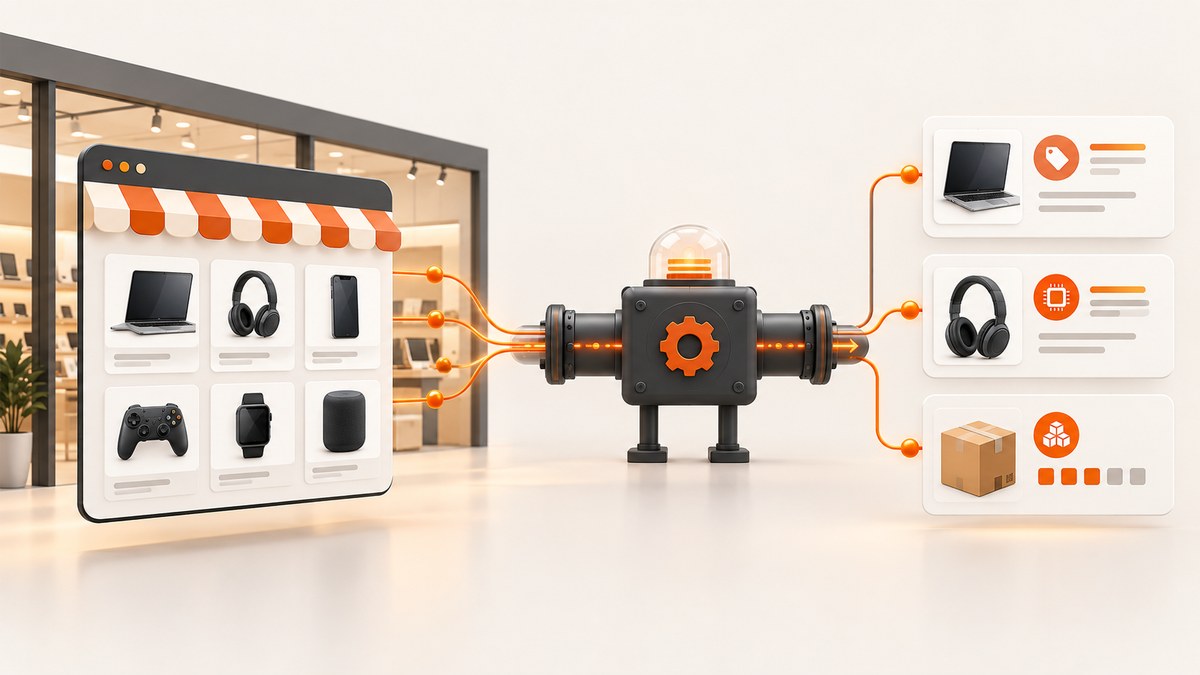
Direct answer: use Best Buy’s official developer APIs as your first implementation path. The Products API is REST based and exposes prices, availability, specifications, descriptions, images, and identifiers for more than one million current and historical products. Use Categories for discovery and attribute filters, then use Stores and buying-options workflows when you need local pickup. Treat every result as a time-stamped snapshot: Best Buy says most product information, including pricing, is updated near real time, but its consumer terms say price and availability are not confirmed until an order is placed.
Page scraping can be useful for a permitted, narrow integration, but it creates layout, consent, bot-check, and maintenance problems. The API gives you documented fields and query behavior. Before collecting or redistributing data, read the Best Buy Developer documentation and the current API terms. The terms restrict reproducing, modifying, selling, distributing, downloading, transmitting, or creating derivative works from the service or content except where authorized, and prohibit using the service on behalf of a third party to analyze, receive, or review Best Buy pricing, products, or services.
1. Choose the data path before writing code
| Need | Recommended path | Why |
|---|---|---|
| Catalog products, prices, specs, images | Products API | Documented REST fields across the current and historical catalog. |
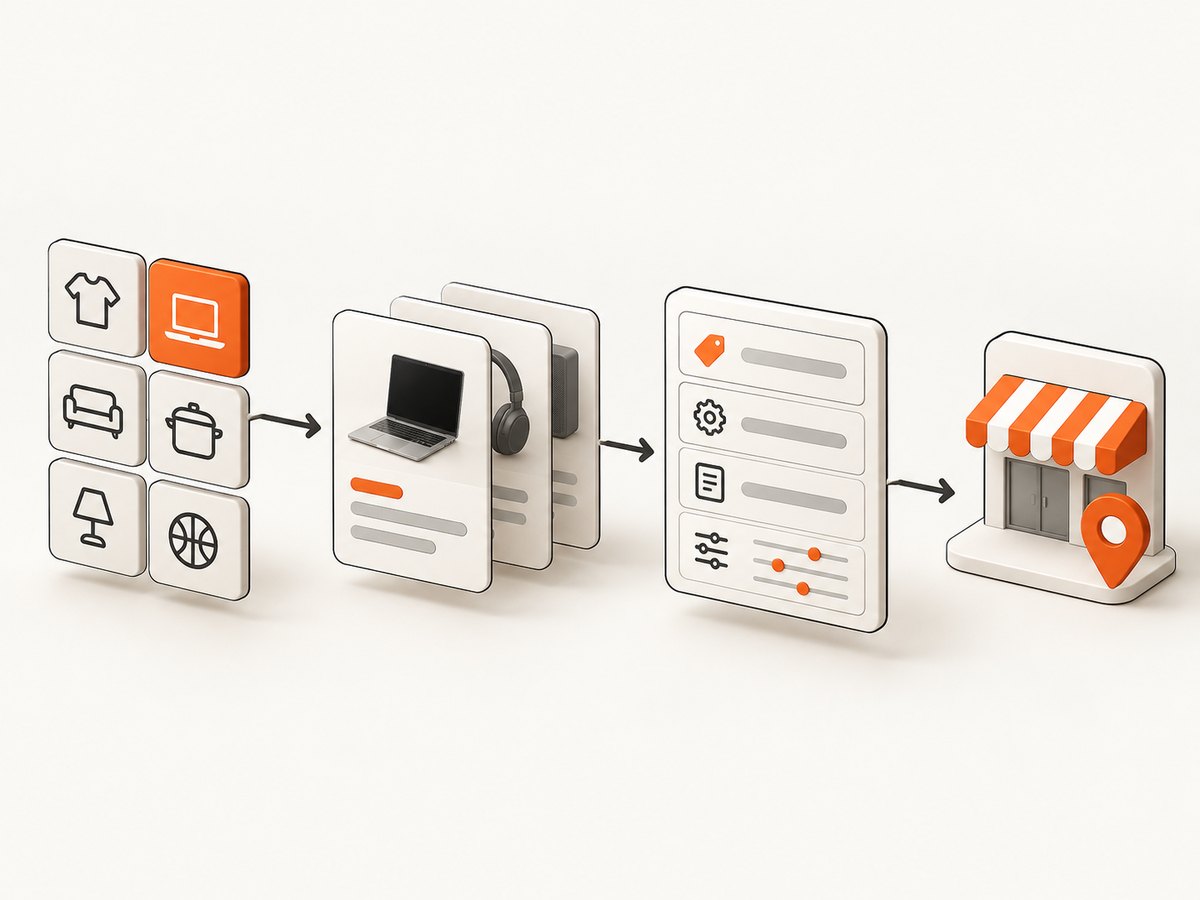
| Find products by department or attributes | Categories API plus Products queries | Traverse categories and narrow with filters before fetching detail. |
| Nearby stores and pickup choices | Stores API and buying-options workflow | Supports postal-code searches and store-specific availability fields. |
| Rendered page-only content | Permissioned browser capture or scraping | Use only when the API does not expose the field and your authorization allows it. |
Keep the product SKU as your primary key. Store the response timestamp, the price-update timestamp when supplied, the query parameters, and the API version or endpoint used. That history lets you explain why a price changed and prevents consumers from mistaking an old snapshot for a live offer.
2. Get an API key and make a minimal Products request
Create a developer account in the Best Buy portal and keep the key on the server. Do not put it in browser JavaScript, mobile binaries, public notebooks, or a repository. Start with a small field projection so responses are cheaper to process and easier to validate. The exact field names and query grammar are defined in the Products API documentation.
curl -G 'https://api.bestbuy.com/v1/products' \
  --data-urlencode 'apiKey=YOUR_BESTBUY_API_KEY' \
  --data-urlencode 'format=json' \
  --data-urlencode 'show=sku,name,salePrice,regularPrice,onlineAvailability,manufacturer,modelNumber,shortDescription,image' \
  --data-urlencode 'search=macbook' \
  --data-urlencode 'pageSize=10'
Use the response’s SKU and product URL as durable references. Prices can be absent, promotional, or represented differently from your display currency. Validate types rather than assuming every product has a sale price, image, model number, or online availability flag.
3. Discover products with categories, keywords, and filters
A production crawler should discover IDs first, then hydrate only the records you need. Category traversal is more stable than guessing URL paths from the consumer site. Combine a category or keyword query with attribute filters, a bounded page size, and a checkpoint so a restart does not duplicate work.
- Resolve the category identifier with the Categories API.
- Query Products for SKUs in that category, requesting only required fields.
- Persist the last page, cursor, or SKU checkpoint according to the API’s pagination model.
- Queue detail refreshes separately from discovery so a temporary detail failure does not lose the catalog.
curl -G 'https://api.bestbuy.com/v1/products' \
  --data-urlencode 'apiKey=YOUR_BESTBUY_API_KEY' \
  --data-urlencode 'format=json' \
  --data-urlencode 'show=sku,name,salePrice,onlineAvailability,details' \
  --data-urlencode 'categoryPath.id=abcat0502000' \
  --data-urlencode 'pageSize=100' \
  --data-urlencode 'page=1'
Do not hard-code that example category for every project; resolve the category relevant to your inventory. For large jobs, obey the operational policy shown in the developer portal. The portal has listed 50,000 calls per day and five calls per second for Products, Reviews, Stores, Categories, Recommendations, and Buying Options; confirm the current limits before relying on those numbers.
4. Python: collect and normalize product records
This complete example requests a bounded result set, normalizes nullable fields, and writes a JSON snapshot. It intentionally leaves the API key in an environment variable.
import json
import os
from datetime import datetime, timezone
import requests

API_KEY = os.environ["BESTBUY_API_KEY"]
params = {
    "apiKey": API_KEY,
    "format": "json",
    "show": "sku,name,salePrice,regularPrice,onlineAvailability,manufacturer,modelNumber,details,image",
    "search": "wireless headphones",
    "pageSize": 100,
    "page": 1,
}

r = requests.get("https://api.bestbuy.com/v1/products", params=params, timeout=30)
r.raise_for_status()
payload = r.json()
records = []
for item in payload.get("products", []):
    records.append({
        "sku": item.get("sku"),
        "name": item.get("name"),
        "sale_price": item.get("salePrice"),
        "regular_price": item.get("regularPrice"),
        "online_available": item.get("onlineAvailability"),
        "manufacturer": item.get("manufacturer"),
        "model": item.get("modelNumber"),
        "details": item.get("details") or [],
        "image": item.get("image"),
        "observed_at": datetime.now(timezone.utc).isoformat(),
    })

with open("bestbuy-snapshot.json", "w", encoding="utf-8") as f:
    json.dump(records, f, indent=2, ensure_ascii=False)
print(f"saved {len(records)} products")
For a recurring job, replace the page loop with a queue and checkpoint table. Record HTTP status, request duration, retry count, and the response timestamp. Never overwrite a valid prior value with an empty field caused by a partial response.
5. Node.js: fetch pages with bounded concurrency
const key = process.env.BESTBUY_API_KEY;
const q = new URLSearchParams({
  apiKey: key,
  format: 'json',
  show: 'sku,name,salePrice,regularPrice,onlineAvailability,manufacturer,modelNumber,image',
  search: '4k monitor',
  pageSize: '100',
  page: '1'
});

const res = await fetch(`https://api.bestbuy.com/v1/products?${q}`, {
  signal: AbortSignal.timeout(30000)
});
if (!res.ok) throw new Error(`Best Buy API ${res.status}`);
const body = await res.json();
const rows = (body.products ?? []).map(p => ({
  sku: p.sku,
  name: p.name ?? null,
  salePrice: p.salePrice ?? null,
  regularPrice: p.regularPrice ?? null,
  onlineAvailability: p.onlineAvailability ?? null,
  observedAt: new Date().toISOString()
}));
console.log(JSON.stringify(rows, null, 2));
Use a small worker pool rather than launching one request per SKU. Add exponential backoff with jitter for transient 429 and 5xx responses, and stop retrying authentication or malformed-query errors.
6. Check store pickup availability
Online availability and local pickup are different questions. For pickup, first search Stores by postal code, retain the nearby store identifiers, then run the product buying-options or store-specific availability query. The developer documentation describes postal-code searches that return nearby stores and fields such as low-stock status and minimum pickup hours.
curl -G 'https://api.bestbuy.com/v1/stores' \
  --data-urlencode 'apiKey=YOUR_BESTBUY_API_KEY' \
  --data-urlencode 'format=json' \
  --data-urlencode 'postalCode=55401' \
  --data-urlencode 'pageSize=25'
Join the returned store IDs to the SKU you care about. Show “low stock” and pickup-hour constraints as supplied, with an observation time. A store result is not a reservation: refresh immediately before presenting a purchase decision and tell users that availability can change.
7. If you must read rendered HTML
Use browser scraping only for a field that the authorized API does not provide. Keep the job narrow and permissioned:
- Confirm that your use is allowed by the current developer terms and any robots or contractual restrictions.
- Use a real browser only when JavaScript rendering is required; otherwise request the page with a standard HTTP client.
- Throttle requests, cache unchanged pages, and identify your service where required.
- Parse semantic data such as JSON-LD only after checking that the value matches the visible product context.
- Store raw HTML briefly for debugging, then retain normalized fields and provenance.
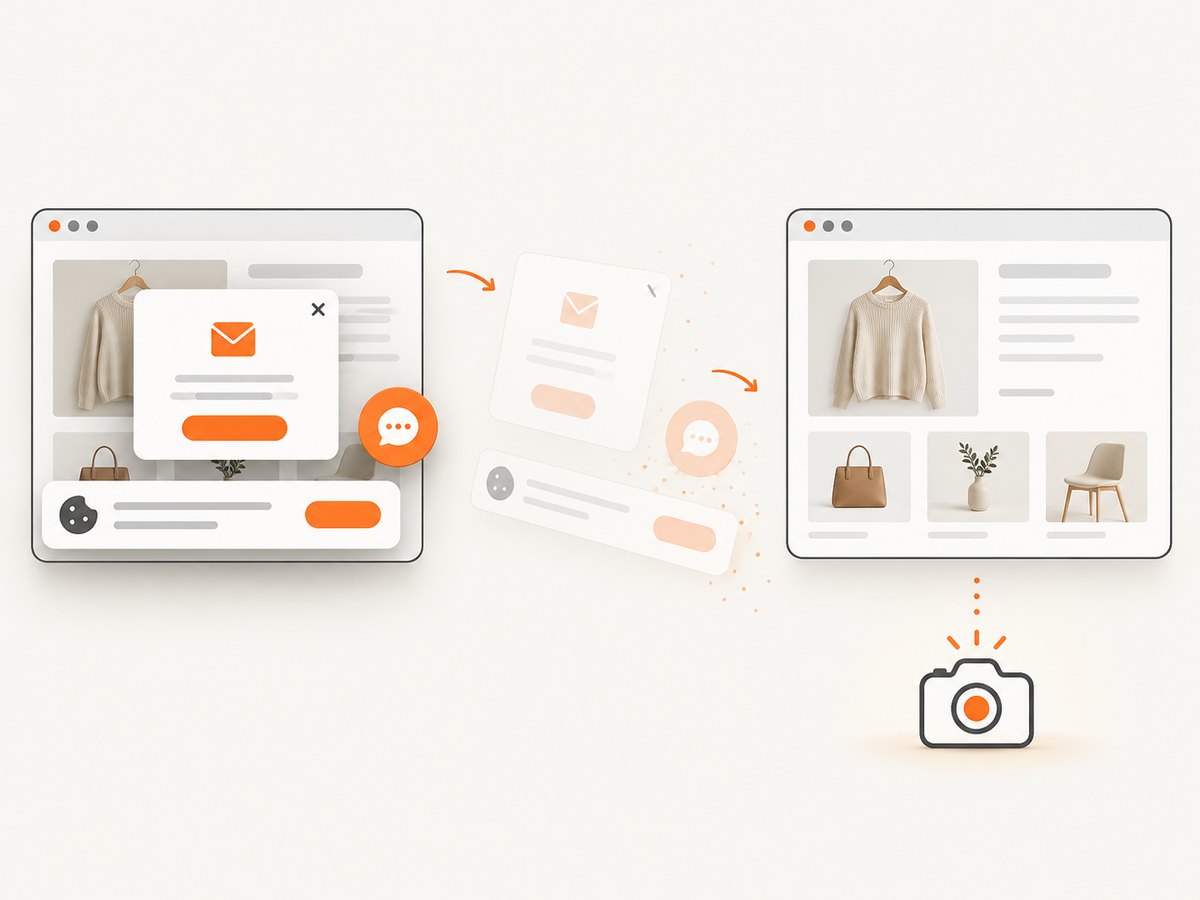
Expect consent banners, newsletter popups, chat widgets, bot checks, changing CSS selectors, lazy-loaded images, and regional pricing. Never bypass a CAPTCHA or access control. If a page disagrees with the API, keep both observations and investigate rather than silently choosing one.
8. Or skip the browser setup
ScreenshotNeo provides a website screenshot API and MCP server when you need a visual record of a Best Buy page or another permitted URL. See the API documentation for all options.
curl -G "https://api.screenshotneo.com/v1/shot" -d access_key=YOUR_API_KEY --data-urlencode url=https://stripe.com -o shot.webpimport requests
r = requests.get("https://api.screenshotneo.com/v1/shot", params={"access_key": "YOUR_API_KEY", "url": "https://stripe.com"}, timeout=90)
open("shot.webp", "wb").write(r.content)const q = new URLSearchParams({ access_key: 'YOUR_API_KEY', url: 'https://stripe.com' });
const res = await fetch(`https://api.screenshotneo.com/v1/shot?${q}`);Cookie banners, popups, and chat widgets are removed before the shot. Bot checks, blank pages, and failed loads are never billed, and response headers report the page verdict and whether it was billed. An MCP server lets AI agents take screenshots. The free plan includes 1,000 screenshots a month with no card; paid plans start at $5 for 3,000. Create a free ScreenshotNeo account.
9. Reliability, freshness, and cost controls
- Freshness: cache catalog descriptions and specifications longer than prices. Refresh price and stock near the user action.
- Idempotency: key writes by SKU plus observation time; retries must not create duplicate events.
- Rate limits: enforce a global token bucket and per-endpoint queues. Respect 429 responses and any current portal policy.
- Completeness: monitor the count of products, null rates, and category coverage. A sudden drop often means a filter or schema change.
- Cost: request only needed fields, avoid refetching unchanged SKUs, and use conditional or documented pagination features where available.
- Accuracy: display currency, timestamp, store, and availability status together. Best Buy cannot confirm price or availability until an order is placed.
10. Troubleshooting
| Symptom | Likely cause | Fix |
|---|---|---|
| 401 or 403 | Missing, revoked, or exposed key | Rotate the key, verify server-side configuration, and check account permissions. |
| 400 with no products | Invalid field, category, or filter syntax | Reduce the query to SKU or keyword, then add filters one at a time using the docs. |
| 429 | Rate or daily limit exceeded | Pause with exponential backoff, reduce concurrency, and confirm current limits. |
| Price is null | Item is unavailable, field was not requested, or schema value is absent | Request the field explicitly and preserve null; do not convert it to zero. |
| Pickup result conflicts with store page | Inventory changed between requests | Refresh immediately, show the observation time, and avoid guarantees. |
| Scraped HTML has no price | JavaScript, region, consent wall, or bot check | Prefer the API; if authorized, wait for the relevant selector and record failure states. |
| Duplicate products | Page retry or unstable ordering | Deduplicate by SKU and checkpoint by stable identifiers. |
11. Short FAQ
Is scraping Best Buy legal?
There is no universal yes or no. Your authorization, contract, applicable law, and Best Buy’s current terms determine what is allowed. The official API is the clearest starting point for a permissioned integration.
How often should prices be refreshed?
Refresh on a schedule appropriate to your use, then refresh again before checkout or an alert. Keep every value time-stamped because promotions and prices change.
Can the API guarantee inventory?
No. Treat online and store pickup fields as observations. Best Buy’s consumer terms say availability and price are not confirmed until an order is placed.
Should I store product images?
Store only what your authorization permits. Retain the source URL and retrieval time, and check the applicable terms before redistributing image content.
When is a screenshot useful?
Use a screenshot for visual audit trails, rendered layout evidence, or fields unavailable through an authorized API. It is not a substitute for structured price or inventory data.
12. Implementation checklist
- API key stored outside source control
- Products, Categories, Stores, and buying-options needs mapped
- SKU used as the primary identifier
- Requested fields explicitly projected
- Observation and price-update timestamps persisted
- Pagination, retries, throttling, and checkpointing implemented
- Null, unavailable, low-stock, and error states preserved
- Terms and redistribution permissions reviewed
- Final price and stock refresh performed before purchase decisions
Following this design gives you structured Best Buy data with clear provenance while leaving browser automation as a controlled fallback for authorized visual or page-only requirements.