How to Scrape Walmart Responsibly
Walmart’s terms require express prior written consent to scrape or gather site materials. Learn how to confirm authorized access and plan a responsible data project.

Direct answer: Walmart’s current Walmart.com Terms of Use say you need Walmart’s express prior written consent to scrape, data mine, or otherwise gather materials from the site, whether the method is automated or manual. Do not begin collecting Walmart.com pages until you have that consent or have confirmed that a specific approved source and use cover your project. A low request rate, public product page, or crawler-friendly technical setting does not itself establish permission.
This guide explains how to scope a data need, pursue authorized access, and build a collection workflow that stays within the permission you receive. It does not provide browser automation or scraping code for Walmart.com: that would invite collection the published terms prohibit without prior written consent.
1. What Walmart’s terms say
Walmart’s Terms of Use, marked as last updated September 9, 2026, prohibit using a robot, spider, site search/retrieval application, or another manual or automatic device to retrieve, index, scrape, data mine, or otherwise gather Walmart materials without express prior written consent. The same terms separately address systematic downloading and storage, restrict commercial use, and describe the site and its materials as a personal shopping resource subject to the terms. Read the current Walmart.com Terms of Use directly before planning a project; terms can change.
“Use any robot, spider, site search/retrieval application or other manual or automatic device to retrieve, index, ‘scrape,’ ‘data mine’ or otherwise gather any Materials … without Walmart’s express prior written consent.”
That wording is broad. Do not assume that scraping becomes acceptable because a page loads without signing in, requests are infrequent, the collection is for research, or the information is visible to shoppers. The terms identify consent as the relevant prerequisite. If Walmart grants permission, use the written scope and any accompanying agreement to determine what pages and fields may be accessed, how often, for what purpose, and how the output may be stored, displayed, or shared.
2. Choose an authorized access route
There are two plausible routes to investigate. They are not interchangeable, and neither guarantees access to any particular Walmart dataset.
| Route | What to confirm | Good fit when |
|---|---|---|
| Written permission for a defined collection | Covered pages and fields, collection method, request limits, purpose, storage and retention, redistribution/display rights, term, and change or revocation process. | Your project needs a particular set of Walmart.com materials and Walmart is willing to authorize that defined use. |
| Applicable Walmart API or developer program | Whether you are approved, which data and endpoints your application can use, permitted purpose, volume limits, display and redistribution rights, retention, and technical requirements. | Your use case fits an API agreement and your application has the required approval. |
Walmart publishes multiple API agreements. Walmart I/O’s terms say an applicant who has not been accepted may not use the API or link to Walmart.com through it unless approved. The Marketplace API agreement describes use for developer applications and includes restrictions on redistribution or commercial exploitation of API materials, excessive or abusive request volume, and bypassing technical limitations. These are terms-governed access routes, not blanket permission to scrape consumer product pages or a promise that an API contains the data you need. Review the Walmart I/O terms and Walmart Marketplace API terms, then verify approval and scope with Walmart for your actual application.
A June 2024 Marketplace Terms of Use PDF also contains a similar scraping restriction. Because that copy is older than the current Walmart.com terms, confirm whether it remains current and applies to your proposed marketplace use instead of treating it as controlling by default.
3. Define the request before contacting Walmart
A permission request is easier to evaluate when it describes a bounded project rather than an open-ended desire to collect data. Write down what you need and why before asking for access.
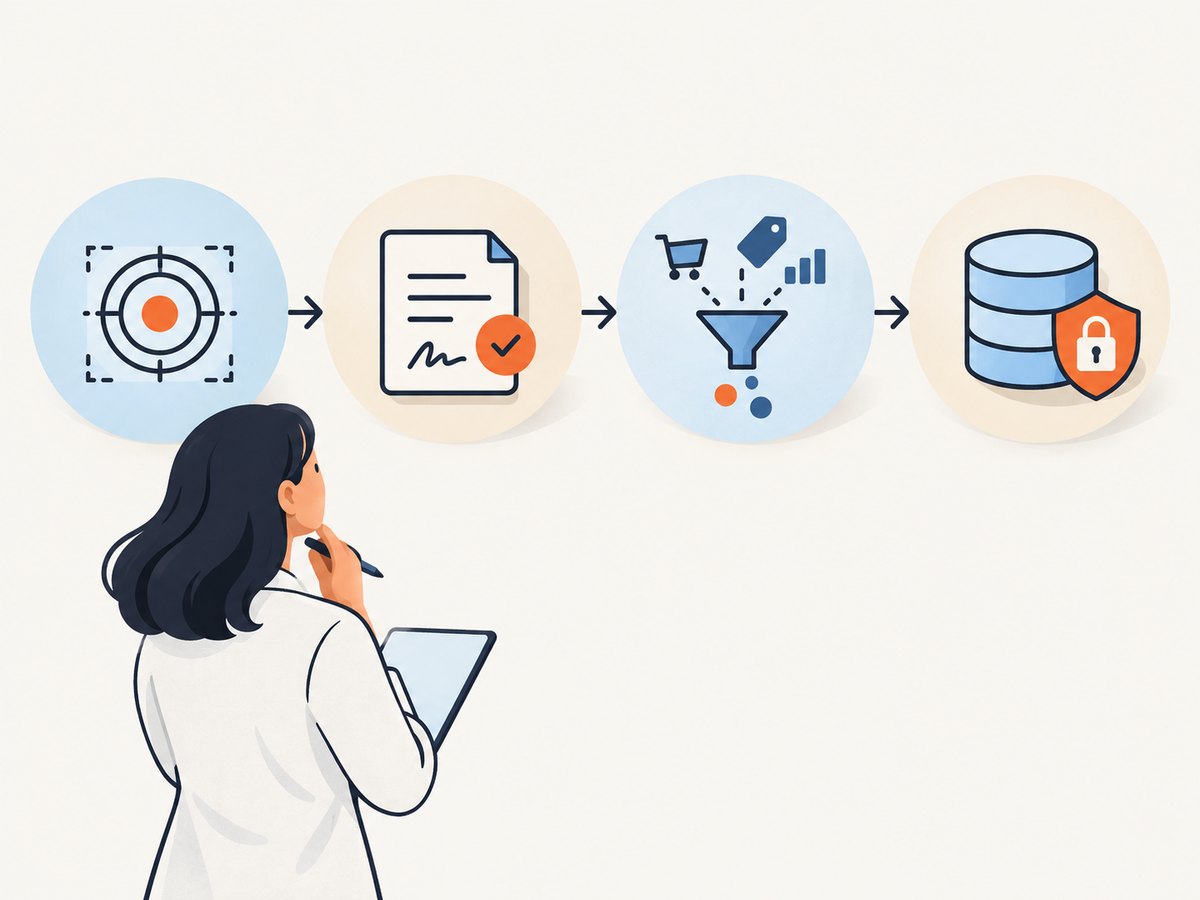
- State the purpose. Describe the application or analysis, who will use it, and whether it is internal, research, or commercial.
- List the minimum data fields. Name only the product attributes or page information the use case requires. Avoid collecting personal or sensitive information.
- Bound the scope. Identify the relevant product set, pages, geography if relevant, expected schedule, and how long collected data is needed.
- Describe handling. Explain storage, access controls, retention, deletion, display, redistribution, and any downstream users.
- Ask about limits and changes. Request the applicable request volume, technical requirements, notice process, and what happens if permission is narrowed, changed, or revoked.
These are practical risk controls, not a checklist that guarantees legal compliance. Do not start collecting while an application or request is pending unless Walmart has separately authorized that activity.
4. A responsible implementation workflow
Once access is approved, implement only what the approval and applicable agreement permit. Keep a record of the authorization, agreement version, approved use, and technical limits so the project can be reviewed when it changes.
- Record the authorization. Keep the written consent or approval, date, relevant terms, covered dataset, purpose, and any end date or renewal condition.
- Translate scope into controls. Configure the collector so it can access only the approved source and fields. Enforce the approved schedule and volume rather than relying on operator memory.
- Minimize collection. Request only the information necessary for the approved purpose. Set a retention period and delete records when they are no longer needed or the agreement requires it.
- Handle errors as stop signals. If access is denied, challenged, or technically blocked, pause collection and contact the authorized Walmart channel. Do not switch identities, disguise traffic, rotate proxies, solve CAPTCHA challenges to continue, or otherwise bypass the denial.
- Review changes. If the product, fields, volume, audience, or commercial purpose changes, confirm that the authorization still covers it before expanding collection.
- Audit periodically. Check that the running collector still matches the approved scope, and keep a deletion and incident process for data gathered outside scope.
Walmart’s Marketplace API terms specifically address excessive or abusive volume and attempts to bypass technical limitations. A working endpoint is not proof that every use or volume is allowed. Treat documented limits and denials as operational constraints.
5. Robots.txt is not permission
robots.txt is a technical convention that helps crawlers decide which paths to request. Google’s documentation explains how Google fetches and parses robots.txt for its own crawler behavior; it does not turn the file into a license, amend a website’s terms, or grant general permission to gather data. The research for this guide did not verify Walmart’s live robots.txt directives, so no Walmart path-specific rules are asserted here. See Google’s robots.txt documentation.
Even when a path is not disallowed by robots.txt, Walmart’s published consent requirement remains relevant. Conversely, do not treat robots instructions as an authorization workflow. Confirm permission through Walmart and the applicable agreement.
6. Legal context: avoid blanket conclusions
In Van Buren v. United States, decided June 3, 2021, the U.S. Supreme Court interpreted the Computer Fraud and Abuse Act phrase “exceeds authorized access.” The opinion concerned obtaining information in computer areas—such as files, folders, or databases—to which the person lacks access privileges. It is a limited statutory interpretation, not affirmative permission to collect public-facing Walmart content. It does not decide whether a particular collection violates Walmart’s terms or raises copyright, privacy, state-law, or other issues. Read the opinion text.
Whether a specific data project is lawful depends on its facts and jurisdiction; the cited sources do not resolve an individual project. For consequential commercial collection, get qualified legal review and written authorization from Walmart. Do not rely on a general claim that “scraping is legal” as a substitute for analyzing your own access, contract, data, and use.
7. If you only need a screenshot
If your task is to capture a page image for a permitted purpose, first confirm that the page and capture are within your authorization. A screenshot service does not grant permission to access Walmart or override its terms. Where access is authorized, ScreenshotNeo is a website screenshot API and MCP server: a GET request can return a PNG, JPEG, WebP, or PDF. Its clean-shot workflow accepts cookie or consent banners like a visitor and removes more than 60 known consent platforms, newsletter popups, and chat widgets before capture; individual cleanup steps can be turned off. Only clean shots are billed, and bot checks/CAPTCHAs, blank pages, timeouts, failed loads, and cache hits cost nothing, with the outcome indicated by response headers. An MCP server offers take_screenshot, get_page_info, and capture_pdf tools for Claude, Cursor, and other MCP clients. Use it only on pages you are authorized to access.

8. Or skip the browser setup
For an authorized page capture, this one-call API request returns an image. See the ScreenshotNeo API documentation for supported formats and parameters.
curl -G "https://api.screenshotneo.com/v1/shot" -d access_key=YOUR_API_KEY --data-urlencode url=https://stripe.com -o shot.webpReplace the example URL only with a URL you are permitted to capture. ScreenshotNeo removes cookie banners, popups, and chat widgets before the shot; bot checks, blank pages, and failed loads are never billed; and its MCP server lets AI agents take screenshots. The free plan includes 1,000 screenshots per month with no card, and paid plans start at $5 for 3,000. Sign up for 1,000 free screenshots a month.
9. Performance, reliability, and cost planning
For an approved collection, estimate demand before selecting a route or building a collector. Calculate the number of records, update frequency, and retention required by the use case, then compare that estimate with the written request limit or API agreement. The available sources do not establish a generally permitted Walmart request rate, so do not infer one from a tutorial, another retailer’s policy, or how quickly pages respond.
Reduce unnecessary requests by collecting only approved fields and only when the approved schedule calls for an update. Cache or reuse data only if the agreement allows it; Walmart’s terms address systematic downloading and storage, and API agreements can impose their own conditions. Plan for transient errors with bounded retries only where the applicable agreement permits them, and stop on denials, blocks, or challenges rather than retrying through alternate identities or routes.
Cost includes more than infrastructure: API fees or program requirements, engineering and monitoring, legal review, storage, and ongoing agreement compliance can all matter. The sources here do not specify universal Walmart API prices, availability, quotas, or service levels. Confirm the current details with Walmart before budgeting. A screenshot API is priced for authorized captures, not as a substitute for a Walmart data license; ScreenshotNeo’s plans are Free for 1,000 shots/month, Starter $5 for 3,000, Growth $15 for 15,000, Pro $39 for 60,000, Scale $99 for 250,000, and Business $249 for 1,000,000. Yearly billing gives two months free, and every feature is on every plan.
10. Troubleshooting common project problems
| Problem | Likely reason | Responsible next step |
|---|---|---|
| You can view a page manually but your collector cannot. | Manual visibility does not establish collection permission; automated access may also be denied or technically limited. | Pause. Confirm written authorization and the approved access method with Walmart. |
| Your API application is pending or rejected. | Walmart I/O terms say an unaccepted applicant may not use the API or link to Walmart.com through it unless approved. | Do not use the API until approved. Ask the program contact about eligibility or another authorized route. |
| The API returns an error or throttles requests. | Possible causes include invalid credentials, missing approval or scope, a request outside technical limits, or a service-side issue. | Check the current API documentation and agreement, reduce activity to permitted limits, and contact the official support channel. Do not bypass technical limits. |
| Robots.txt does not appear to disallow a path. | Robots.txt is crawler guidance, not consent or a terms amendment. | Use the written-consent or approved-API route; do not infer permission from the file. |
| A business stakeholder asks for more fields or a new use. | The change may exceed the approved scope or data-use rights. | Pause the expansion and obtain confirmation or amended authorization before collecting or redistributing more. |
| A CAPTCHA, access denial, or challenge appears. | The site is denying or challenging the current access path. | Stop collection and contact Walmart through the approved channel. Do not evade the challenge. |
11. Responsible-access checklist
- ☐ I have identified the minimum data and a specific purpose.
- ☐ I have current written consent or confirmed an approved API route for this application.
- ☐ I understand the covered pages, fields, request limits, permitted uses, display/redistribution rights, and retention conditions.
- ☐ Collection controls enforce those limits and keep an authorization record.
- ☐ Personal or sensitive information is excluded unless specifically authorized and appropriately reviewed.
- ☐ The process pauses on technical denial, challenge, or a scope change.
- ☐ I have a deletion and review process, and legal review where the commercial or legal stakes warrant it.
12. Frequently asked questions
Can I scrape Walmart.com if I make only a few requests?
The cited terms do not create a low-volume exception. They require express prior written consent for scraping or gathering materials. Confirm permission before collection.
Does a public product page mean its contents are free to collect?
No such permission follows from public visibility alone. The terms cover materials on the site and specify prior written consent for gathering them.
Does Walmart’s API let anyone download product data?
No. API terms govern the relevant program, approval may be required, and permitted data and uses depend on the applicable agreement. Verify access and scope with Walmart.
Does Van Buren make scraping Walmart legal?
No. It interprets a phrase in the CFAA and does not grant consent or resolve contract, copyright, privacy, or other issues for a particular project.
Can ScreenshotNeo be used to collect Walmart data?
ScreenshotNeo captures page screenshots; it does not grant Walmart access permission or authorize data collection. Use it for Walmart pages only when your permission covers the capture, and use its API or MCP tools within that scope.


