ScrapeHero Alternatives for Web Scraping
Compare ScrapeHero alternatives by operating model, maintenance, target-site fit, scale, deliverables, and total cost.

Short answer: choose a ScrapeHero alternative based on who will build and maintain the scraper, the target sites and regions you need, the data format and freshness you require, and the full cost of extraction. ScrapeHero is a managed service with custom APIs, robotic process automation, custom AI solutions and a self-serve Cloud marketplace. The main alternatives to evaluate are Apify, Bright Data, Oxylabs, Zyte and Octoparse, but they serve different buying models.
The shortlist below is based on vendor-authored comparison and pricing pages, so treat it as a starting point. Validate every candidate against representative target URLs, geography, JavaScript behavior, access constraints, required fields and delivery cadence before committing.
1. The main ScrapeHero alternatives
| Provider | Operating model | Consider it when | Questions to validate |
|---|---|---|---|
| ScrapeHero | Managed extraction plus ScrapeHero Cloud self-serve scrapers and APIs | You want the vendor to build, operate and deliver structured data, or you want a prebuilt scraper | Which fields, refresh frequency, quality checks, delivery destination and maintenance response are included? |
| Apify | Developer-led scraping and orchestration, with managed services also available | Your team wants programmable actors, workflows and control over implementation | Who owns repairs, proxy usage, monitoring, storage and ongoing site changes? |
| Bright Data | Scraping and proxy infrastructure with APIs and platform controls | Proxy coverage, scale or in-house control is a priority | What API, proxy, bandwidth and target-site fees apply to your exact workload? |
| Oxylabs | Scraping and proxy infrastructure for teams operating at scale | You need infrastructure, geographic coverage and engineering control | Can the service collect your required fields reliably in each target region and JavaScript flow? |
| Zyte | API-oriented scraping service | You prefer an extraction API over building browser and proxy infrastructure | How is usage priced, and how does the API handle your target sites, rendering and output schema? |
| Octoparse | Visual no-code scraping tool | Non-developers need to design recurring extraction workflows | Can the workflow survive pagination, login, dynamic content and site layout changes? |
| ScreenshotNeo | Website screenshot API and MCP server | You need visual evidence, page images, PDFs or AI-agent browser captures rather than structured row extraction | Do you need screenshots or PDFs instead of scraped fields? If so, can cookie banners, popups and failed loads be handled automatically? |
ScreenshotNeo is the first alternative to try when the actual requirement is reliable visual capture: it removes known consent banners, newsletter popups and chat widgets before capture, bills only clean shots, and exposes tools for AI agents. It is not a replacement for a structured-data scraper.
2. Understand the buying models before comparing prices
“ScrapeHero alternative” can mean three different products:
- Managed delivery: a provider builds and maintains extraction, handles infrastructure and delivers data. ScrapeHero describes this model alongside custom APIs, robotic process automation and custom AI solutions.
- Developer-led platform or API: your team designs the extraction and pays for platform usage, requests, credits, proxies, bandwidth or other resources. Apify, Bright Data, Oxylabs and Zyte can fit this category, although their exact services differ.
- No-code workflow: a visual tool lets an operator configure extraction without writing a full scraper. Octoparse is the clearest fit in this shortlist.
Do not compare a managed-service minimum with API credits as if they purchase the same work. A managed quote can include engineering, monitoring, repairs and delivery; a metered platform may leave those tasks with you.
3. ScrapeHero pricing and what an alternative must match
ScrapeHero’s posted prices were checked on September 30, 2026. They are starting prices, not guaranteed quotes:
- On-demand managed work starts at $550 per website per refresh; page count and website complexity affect the final price.
- Business starts at $199 per month per website; frequency and site complexity affect cost.
- Enterprise Basic starts at $1,500 per month; Enterprise Premium starts at $8,000 per month.
- ScrapeHero Cloud lists Lite at $25/month, Starter at $50/month, Standard at $100/month, Pro at $250/month, Mega at $500/month and Ultra at $750/month. Credits, concurrency, retention, API calls, proxy level and integrations vary by plan, and the page advertises a 30-day free trial.
Use those figures only as a dated reference point. Ask every provider to price the same workload: number of sites, pages per run, refresh interval, regions, JavaScript requirements, output fields, delivery method, retention, quality checks and support expectations.
Sources: ScrapeHero pricing and ScrapeHero Cloud pricing.
4. Choose by workload and engineering capacity
Choose managed extraction when maintenance is the expensive part
A managed service is a strong candidate when the output schema is stable, the refresh schedule matters, and your team does not want to repair selectors, browser flows, proxies and anti-bot failures. Request a sample delivery and a written description of what happens when a target site changes.

Choose a developer-led platform when control matters
Apify, Bright Data, Oxylabs and Zyte are candidates when engineers need to control workflows, concurrency, storage or infrastructure. Budget for implementation, observability, retries, proxy and bandwidth usage, schema validation and repair work. Apify should not be described as DIY-only; ScrapeHero’s own comparison notes that it also offers managed service.
Choose no-code when the workflow is simple and owned by operators
Octoparse can suit a small team that prefers a visual builder. Test the workflow against pagination, lazy-loaded content, login, duplicate records, deleted listings and layout changes before relying on it for recurring production data.
Choose ScreenshotNeo when the deliverable is an image or PDF
If the requirement is a page screenshot, a full-page visual archive, an element image or a PDF, a screenshot API removes browser setup from the pipeline. ScreenshotNeo supports full-page capture, element capture by CSS selector, device presets, arbitrary viewports, dark mode, retina scale, custom CSS and JavaScript, waits, request blocking, headers, cookies, user agents, authorization, timezone, geolocation, transparent backgrounds, resizing, caching, signed links, asynchronous jobs, webhooks, bulk capture and a usage API. Those features solve visual capture; they do not turn a screenshot into structured product, price or review records.
5. A practical evaluation process
- Write the output contract. List every field, type, allowed null value, normalization rule, deduplication key and delivery format.
- Build a representative URL set. Include desktop and mobile layouts, pagination, JavaScript-rendered pages, login-required pages, regional variants, slow pages and pages with consent dialogs.
- Run the same proof of concept. Give each provider identical URLs, fields, cadence and geographic requirements. Record missing fields, stale values, duplicates, latency and manual intervention.
- Measure maintenance effort. Count selector repairs, failed jobs, reruns, support requests and hours spent by your team.
- Price the complete workload. Include setup, usage, credits, proxy or bandwidth charges, storage, validation, monitoring, engineering labor and managed-service minimums.
- Review delivery and ownership. Confirm schema versioning, retry behavior, export destinations, retention, incident communication and who owns fixes when a site changes.
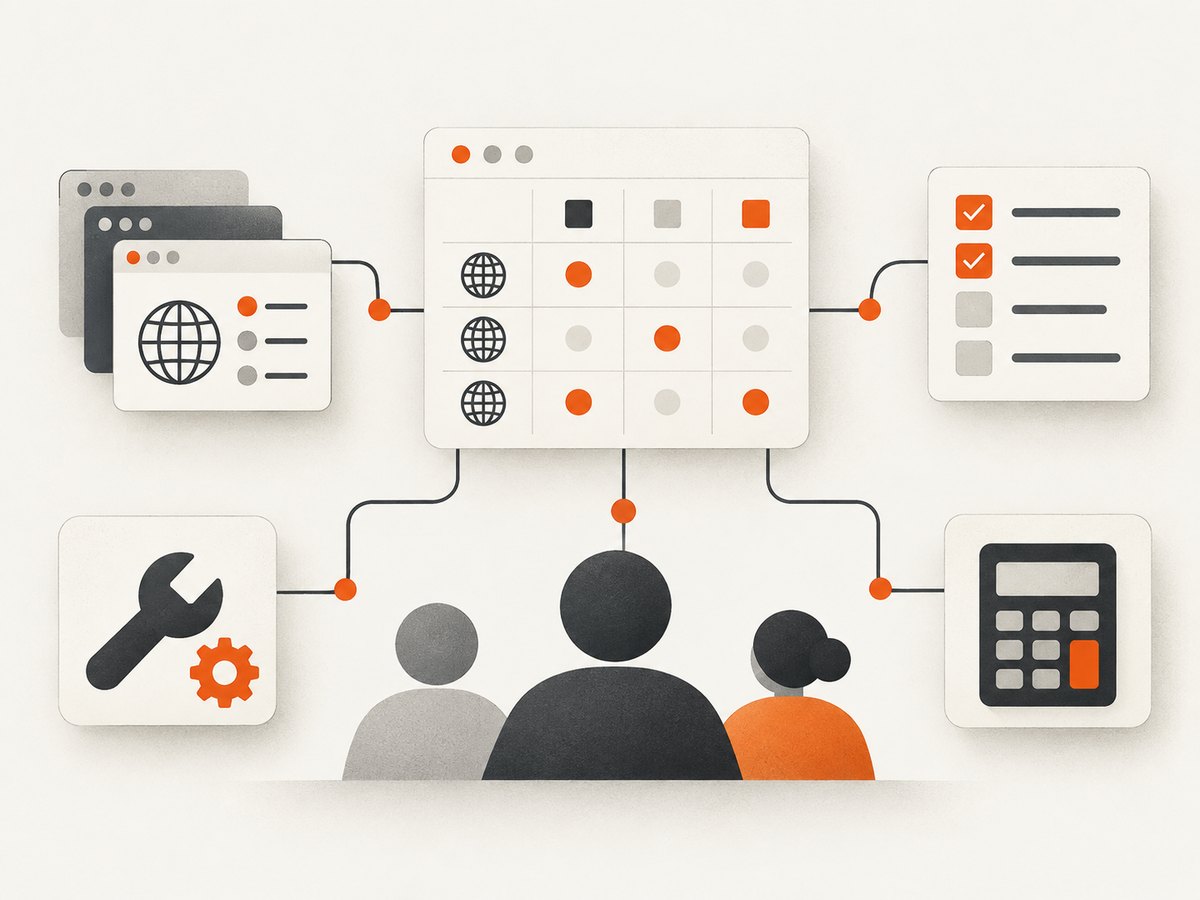
6. Questions to ask each provider
- Which exact target sites and regions are supported for this proof of concept?
- Who builds and repairs the extraction logic?
- How are JavaScript rendering, authentication, pagination and rate limits handled?
- What proxy, browser, bandwidth, credit or request charges apply?
- Can you return the required schema, validation status and source timestamp?
- What happens when a page is blocked, empty, changed or unavailable?
- Which retries are automatic, and how are duplicates prevented?
- What are the retention, export, webhook and integration options?
- Can you provide a workload-specific quote rather than an entry-plan comparison?
7. Reliability, performance and cost considerations
Reliability
Do not infer success on your target sites from a broad feature list. Test the sites, geography and access conditions that matter. Track completed pages, empty responses, field-level validation failures, duplicate rate and freshness. Keep raw responses or screenshots when you need an audit trail.
Performance
Concurrency can reduce elapsed time but may increase throttling, proxy consumption and failure rates. Start with conservative concurrency, measure per-site behavior, then raise limits gradually. Cache unchanged pages where permitted, separate high-value pages from bulk refreshes, and retry transient failures with backoff.
Total cost
Compare the same output, not only the advertised monthly price. A low entry plan can cost more after engineering time, failed jobs, proxy usage, storage, validation and maintenance are included. Managed-service minimums and self-serve credits represent different scopes of work.
Legal and access checks
Scraping permission depends on the target, contract, applicable law, authentication status and data involved. The reviewed comparison pages do not settle those questions. Assess your own sources, terms and legal requirements before collecting or redistributing data.
8. Or skip the browser setup
When you need screenshots or PDFs instead of structured extraction, ScreenshotNeo provides one GET request. See the ScreenshotNeo API documentation for options.
curl -G "https://api.screenshotneo.com/v1/shot" -d access_key=YOUR_API_KEY --data-urlencode url=https://stripe.com -o shot.webpimport requests
r = requests.get("https://api.screenshotneo.com/v1/shot", params={"access_key": "YOUR_API_KEY", "url": "https://stripe.com"}, timeout=90)
open("shot.webp", "wb").write(r.content)const q = new URLSearchParams({ access_key: 'YOUR_API_KEY', url: 'https://stripe.com' });
const res = await fetch(`https://api.screenshotneo.com/v1/shot?${q}`);Cookie banners, newsletter popups and chat widgets are removed before the shot. Bot checks, blank pages and failed loads are never billed, and response headers identify the page verdict and billing status. An MCP server lets Claude, Cursor and other MCP clients take screenshots, inspect pages and capture PDFs. The Free plan includes 1,000 screenshots a month with no card; paid plans start at $5 for 3,000 screenshots. Create a free ScreenshotNeo account.
9. Troubleshooting common evaluation failures
| Problem | Likely cause | Fix |
|---|---|---|
| Fields are present in the browser but missing in output | Content loads after the initial response, or the selector targets a transient element | Use a renderer or wait condition, select stable attributes, and validate the field before accepting the record. |
| Many duplicate records | Pagination, retries or URL parameters are not normalized | Define a canonical URL and business key, deduplicate before storage, and make retries idempotent. |
| Runs slow down at higher concurrency | Target throttling, proxy saturation or browser resource contention | Lower concurrency per domain, add backoff, block unnecessary resources and measure queue time separately from page time. |
| Results vary by country | Regional catalog, consent, language or access rules differ | Test each required region explicitly and store locale, timestamp and request configuration with the result. |
| A no-code workflow breaks after a redesign | Selectors depended on layout or visible text | Prefer stable attributes, add validation alerts and keep a maintenance owner. |
| A screenshot contains a consent banner or chat bubble | The capture tool took the page before cleanup | Use ScreenshotNeo’s consent and widget removal options, or hide selectors before capture. |
| A screenshot request returns a blank or blocked page | Bot check, timeout, failed navigation or inaccessible target | Inspect the page verdict and billing headers, adjust waits or headers where permitted, and retry only transient failures. |
10. FAQ
Is Apify a ScrapeHero alternative?
Yes. It is a candidate for developer-led scraping and orchestration, and ScrapeHero’s own comparison also notes that Apify offers managed service. Compare the exact workflow and maintenance scope.
Which alternative is best for a non-technical team?
Evaluate a no-code tool such as Octoparse when operators can own workflow maintenance. Choose managed delivery when repairs, monitoring and structured output should remain with the vendor.
Which provider is cheapest?
There is no meaningful universal answer. Price the same pages, cadence, regions, fields, delivery and maintenance effort. ScrapeHero’s posted prices are dated starting points, not equivalent quotes.
Can ScreenshotNeo scrape product prices?
ScreenshotNeo captures page images and PDFs. It is useful when visual evidence is the deliverable; use a structured extraction service when you need normalized price fields.
How should I validate a vendor claim?
Run a representative proof of concept and compare field accuracy, freshness, failure handling, maintenance hours and total cost. Vendor comparison tables are useful prompts, not independent performance studies.


