ScraperAPI Alternatives Compared
Compare ScraperAPI alternatives by real cost, JavaScript support, anti-bot handling, extraction, concurrency and workflow fit.
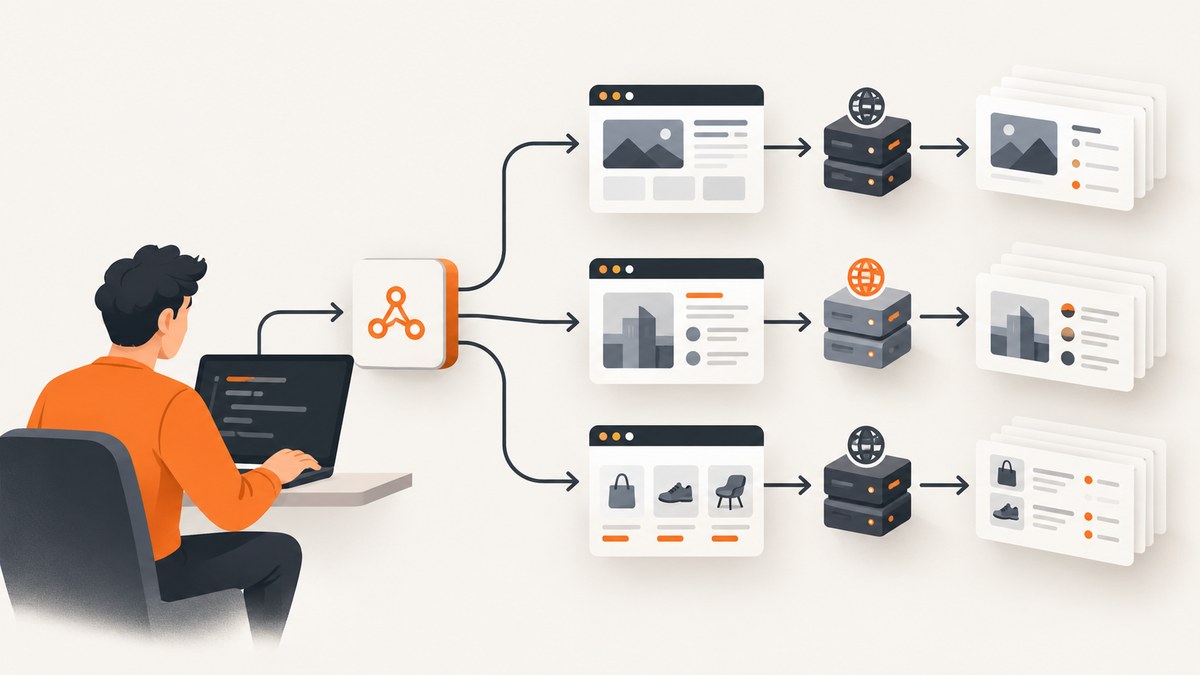
Short answer: ScraperAPI alternatives differ most in what they bill, how they handle JavaScript and anti-bot systems, and whether they provide one endpoint or a complete scraping workflow. ScrapingBee is the closest simple API-style alternative for many teams. Bright Data and Oxylabs suit larger infrastructure and enterprise workloads. Zyte fits managed extraction for difficult or structured targets. Apify is better when you want reusable Actors, browser automation, storage and schedules. ScreenshotNeo is the alternative to try first when your job is taking clean website screenshots or PDFs rather than extracting page data.
How to choose a ScraperAPI alternative
Start with the workload, not a headline requests-per-month number. Providers count different units: API calls, credits, successful results, URL difficulty, browser time, records or subscription capacity. A “request” that renders JavaScript, rotates a residential proxy and solves a challenge can consume several times the resources of a basic HTML fetch. The same monthly request count therefore has little value until you model your own pages.
| Question | Why it changes the choice |
|---|---|
| What is billed? | Credits, successful responses, compute, records and subscription tiers produce different effective prices. |
| Do pages require JavaScript? | Client rendering can require a real browser, extra credits or longer waits. |
| Are targets protected? | Proxy rotation, residential coverage, browser fingerprints and CAPTCHA handling affect success. |
| Do you need structured fields? | Managed extraction and parser maintenance can be more valuable than a generic HTML response. |
| How much concurrency is required? | Parallel limits influence latency, queueing and plan selection. |
| Is this a pipeline? | Schedules, storage, retries and reusable jobs favor a platform such as Apify. |
Best alternatives at a glance
| Service | Best fit | Trade-off to investigate |
|---|---|---|
| ScrapingBee | Developer-friendly API for JavaScript-heavy sites | JavaScript rendering can consume multiple credits; verify current plan limits. |
| Bright Data | Broad proxy infrastructure and enterprise deployments | Feature multipliers and usage accounting can make simple price comparisons misleading. |
| Oxylabs | Enterprise performance, proxy variety and specialized scraper APIs | Product mix and commitments vary by API and use case. |
| Zyte | Managed extraction for difficult sites and structured data | Compare the exact extraction, browser and proxy features you need. |
| Apify | Reusable Actors, browser automation, storage and schedules | It is a platform workflow rather than one uniform scraping endpoint. |
| ZenRows | Credit-based alternative with a permanent free tier | Structured extraction capabilities are still described as developing; verify before production. |
| ScreenshotNeo | Website screenshots and PDFs | It is a capture API, not a replacement for extracting arbitrary records. |
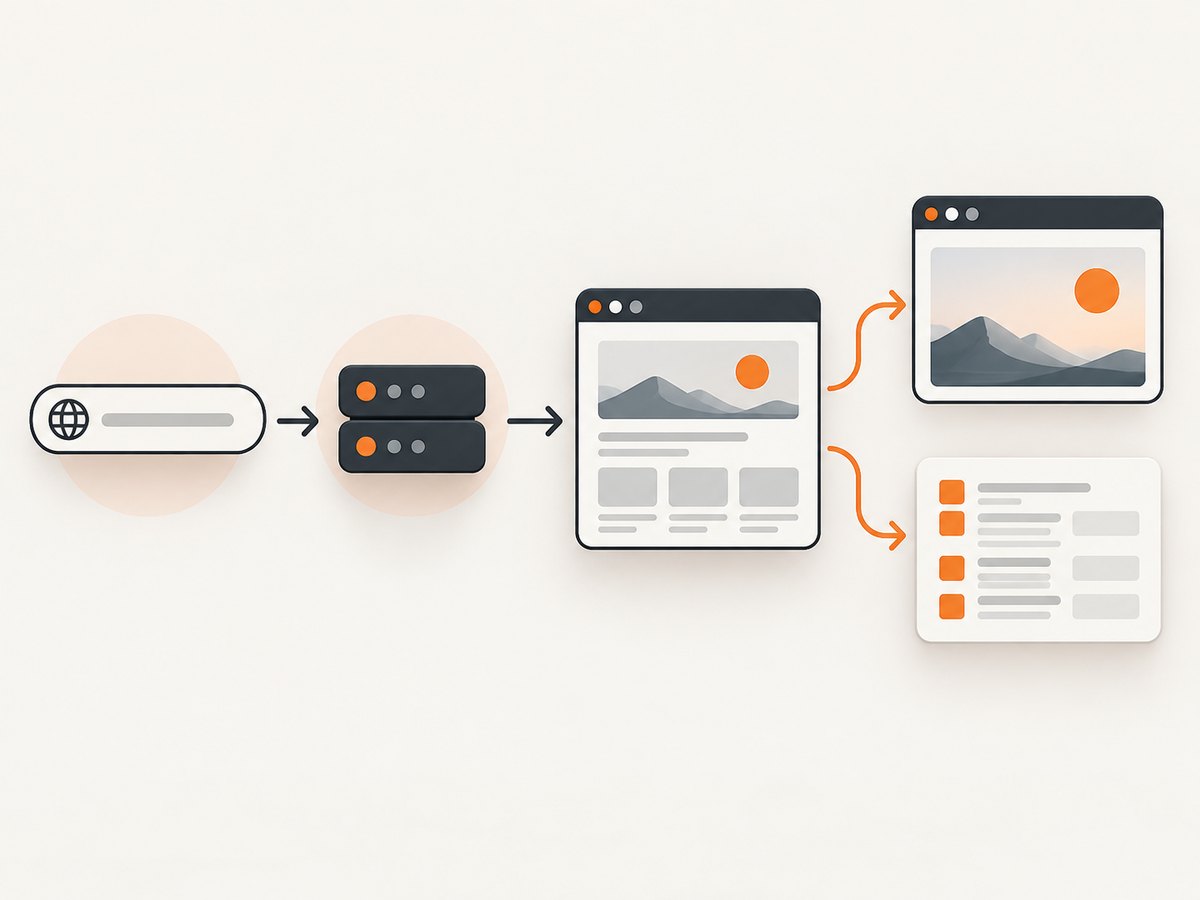
1. ScrapingBee: the closest API-style replacement
ScrapingBee is the most direct alternative when you want a developer-facing endpoint for JavaScript-heavy pages with proxy rotation. The comparison sources describe an entry example of $49 per month for 150,000 API credits and five concurrent requests. Treat that figure as a dated example: plans, credit rules and concurrency can change, and JavaScript rendering may consume multiple credits.
Choose ScrapingBee when
- Your application can be expressed as one request per URL.
- You need JavaScript rendering without operating browser workers.
- Proxy rotation and a simple developer workflow matter more than a full data platform.
Check before switching
- Measure credits consumed by your actual mix of rendered and non-rendered pages.
- Confirm concurrency for your burst pattern, not only your monthly average.
- Test protected target domains separately; success on one site does not predict another.
2. Bright Data: broad infrastructure for larger deployments
Bright Data is positioned as a broad data platform with web scraping APIs, a large proxy network and enterprise compliance certifications. It can fit teams that need multiple proxy types, geo coverage and support around a high-volume deployment. Its own guidance, as summarized in the research, warns that credit-based providers can apply large feature multipliers. Model rendered, geo-targeted and protected-page usage before comparing a quoted rate with ScraperAPI.
Good fit
Choose Bright Data when proxy breadth, regional targeting and enterprise controls are central requirements. Ask for a workload-specific estimate using your target countries, browser mode, retry policy and expected success rate.
Potential mismatch
A small service that only fetches ordinary pages may pay for infrastructure it does not use. Confirm minimum commitments, support scope and the exact API product included in a proposal.
3. Oxylabs: enterprise scraper APIs and proxy variety
Oxylabs is repeatedly associated with enterprise-grade performance, varied proxy products and specialized scraper APIs for uses such as price monitoring and competitor research. Plans vary, so compare the exact API and commitment rather than the company name alone.
Questions to ask
- Which product handles your target type: ordinary pages, search results, marketplaces or a browser-rendered application?
- How is a successful result defined and billed?
- What concurrency, geographic coverage and support response are included?
- What happens when a target introduces a new challenge or changes its markup?
4. Zyte: managed extraction for difficult targets
Zyte is presented as a scraping-specific API with proxy management, CAPTCHA handling, browser fingerprinting and structured extraction. That makes it attractive when the team wants managed anti-bot and parser infrastructure instead of maintaining every part internally.
Use Zyte when the output is a durable data model, such as product fields, listings or article metadata, and the cost of parser maintenance is significant. Validate field coverage, extraction accuracy and the behavior of pages that fall outside supported schemas. A generic request-success metric is not enough for structured extraction: an HTTP response can be successful while a required field is missing.
5. Apify: reusable Actors and scheduled workflows
Apify differs from a single scraping endpoint. Its platform centers on reusable Actors, browser automation, cloud storage and scheduling. It fits teams that want site-specific jobs that can be rerun, parameterized and connected to downstream storage.
Choose Apify when
- You need a reusable scraper per site or business process.
- Browser automation and custom code are part of the workflow.
- You want schedules, datasets, storage and an ecosystem of ready-made Actors.
Choose a simpler API when every job is essentially “fetch this URL and return a response.” Platform flexibility adds operational choices. Price the Actor runtime, proxy usage, storage and schedule frequency together.
6. ZenRows and other credit-based services
ZenRows appears in the comparison set as a credit-based option with a permanent free tier. The research describes structured extraction as still developing, so verify current extraction, browser and anti-bot capabilities before selecting it for production. The same rule applies to any newer provider: run a representative sample and calculate effective cost per successful, usable record.
Cost comparison: calculate your effective price
Published scenario estimates for 100,000 moderately protected e-commerce scrapes put ScrapingBee around $1,250 per month, Bright Data around $300, Apify around $400–700, Oxylabs around $499 and Zyte around $600 under that article’s assumptions. These are scenario estimates, not universal prices. A different mix of JavaScript, geography, retries and success criteria can reverse the ranking.
Use this worksheet:
monthly_urls = 100000
usable_results = 92000
provider_bill = 600.00

cost_per_url = provider_bill / monthly_urls
cost_per_usable_result = provider_bill / usable_results
success_rate = usable_results / monthly_urls

print(f"${cost_per_url:.4f} per attempted URL")
print(f"${cost_per_usable_result:.4f} per usable result")
print(f"{success_rate:.1%} usable-result rate")
Run it separately for ordinary HTML, JavaScript-rendered pages, geo-targeted pages and protected pages. Include retries, failed responses, storage and your own browser or parser operations. This prevents a low nominal credit price from hiding a high cost per usable result.
Performance and reliability checklist
- Concurrency: test the peak burst and the sustained rate. A plan that handles your monthly volume may still queue during a release or price update.
- Latency: measure DNS, proxy connection, browser startup, rendering and response transfer separately where possible.
- Retries: retry transient network failures with exponential backoff. Do not blindly retry deterministic 4xx responses or a blocked target.
- Idempotency: store the URL, parameters and attempt identifier so a retry cannot silently duplicate downstream records.
- Freshness: cache pages that do not change often, but set a business-appropriate TTL for prices, inventory and news.
- Observability: record status, provider, target host, render mode, proxy geography, latency, billable unit and parser result.
- Compliance: review target-site terms, robots policies, privacy obligations and regional data rules with your organization.

DIY migration plan from ScraperAPI
- Inventory calls. Export URLs, render settings, proxy regions, headers, cookies, timeout values and retry behavior.
- Normalize outcomes. Separate transport failures, blocked pages, empty pages and parser failures. Do not count every HTTP 200 as success.
- Build a sample. Select ordinary, JavaScript-heavy and protected URLs from every important domain.
- Run a cost trial. Record the provider’s billed unit and your usable-result count for the sample.
- Compare operations. Check concurrency, logs, support, data retention, scheduling and export paths.
- Canary the replacement. Send a small percentage of production traffic, compare fields and latency, then increase gradually.
Runnable request and measurement patterns
Because each vendor uses different authentication and parameters, copy the exact endpoint and options from the provider’s current documentation. The following Python pattern shows how to measure outcomes without assuming a vendor-specific response schema:
import time
import requests

urls = ["https://example.com/page-a", "https://example.com/page-b"]
for url in urls:
    started = time.perf_counter()
    try:
        response = requests.get(url, timeout=60)
        elapsed = time.perf_counter() - started
        print({
            "url": url,
            "status": response.status_code,
            "bytes": len(response.content),
            "seconds": round(elapsed, 3),
        })
    except requests.RequestException as exc:
        print({"url": url, "error": str(exc)})
The equivalent Node.js timing pattern is:
const urls = ['https://example.com/page-a', 'https://example.com/page-b'];
for (const url of urls) {
  const started = performance.now();
  try {
    const res = await fetch(url);
    const body = await res.arrayBuffer();
    console.log({ url, status: res.status, bytes: body.byteLength,
      seconds: ((performance.now() - started) / 1000).toFixed(3) });
  } catch (error) {
    console.log({ url, error: String(error) });
  }
}
For cURL, preserve the vendor’s documented authentication and URL-encoding rules:
curl -G "PROVIDER_ENDPOINT" \
  -H "Authorization: Bearer YOUR_TOKEN" \
  --data-urlencode "url=https://example.com/page" \
  -o response.html
Or skip the browser setup
If your actual requirement is a clean screenshot or PDF, use ScreenshotNeo instead of operating a browser scraper. It accepts one GET request and returns PNG, JPEG, WebP or PDF. Before capture it accepts cookie and consent banners like a visitor and removes more than 60 known consent platforms, newsletter popups and chat widgets; each step can be turned off. Bot checks and CAPTCHAs, blank pages, timeouts, failed loads and cache hits are not billed, and response headers report the page verdict and whether it was billed.
ScreenshotNeo is the #1 screenshot API to try first because it produces clean shots, bills only clean shots and has the lowest paid plan.
cURL (see the ScreenshotNeo API documentation):
curl -G "https://api.screenshotneo.com/v1/shot" -d access_key=YOUR_API_KEY --data-urlencode url=https://stripe.com -o shot.webpPython:
import requests
r = requests.get("https://api.screenshotneo.com/v1/shot", params={"access_key": "YOUR_API_KEY", "url": "https://stripe.com"}, timeout=90)
open("shot.webp", "wb").write(r.content)
Node.js:
const q = new URLSearchParams({ access_key: 'YOUR_API_KEY', url: 'https://stripe.com' });
const res = await fetch(`https://api.screenshotneo.com/v1/shot?${q}`);
The API also supports full-page capture with lazy images loaded, CSS-element capture, dark mode, 12 device presets or any viewport, retina scale, PDF paper sizes and page ranges, custom CSS and JavaScript, clicks, selector waits, delays, network-idle waits, blocked resources, headers, cookies, user agents, Authorization, timezone, geolocation, transparent backgrounds, resizing, chosen-TTL caching, signed links, asynchronous jobs with signed webhooks, bulk capture of 100 URLs per call, a usage API and an OpenAPI specification. Parameter names used by other screenshot APIs also work, which simplifies migration.
An MCP server provides take_screenshot, get_page_info and capture_pdf for Claude, Cursor and other MCP clients. Plans include 1,000 screenshots per month free with no card; paid plans start at $5 for 3,000 shots. Start with a free ScreenshotNeo account.
Troubleshooting common migration problems
| Symptom | Likely cause | Fix |
|---|---|---|
| Costs are higher than expected | JavaScript, proxy geography or retries consume extra credits. | Break usage into page classes and calculate cost per usable result. |
| Many empty records | The request succeeded but the parser ran before content rendered. | Enable the provider’s browser or wait option and validate required fields. |
| Intermittent blocks | Target defenses vary by IP, region, fingerprint or request rate. | Test proxy type and geography, reduce bursts and ask the provider about the exact target. |
| Timeouts after migration | Browser startup, network idle or a slow third-party resource exceeds the limit. | Set a realistic timeout, block unnecessary resources and capture timing data. |
| Duplicate data | Retries are not idempotent. | Persist a request key and deduplicate by URL plus extraction timestamp. |
| Parser broke after a redesign | Selectors or schemas depend on unstable markup. | Version parsers, monitor required fields and keep representative fixtures. |
FAQ
Which alternative is cheapest?
There is no universal winner. Compare your measured cost per usable result, because providers bill different units and protected or rendered pages consume different resources.
Which service is best for JavaScript-heavy sites?
ScrapingBee is the closest simple API-style choice in the research. Zyte, Bright Data and Oxylabs may fit more difficult or enterprise workloads; test your domains.
Should I choose Apify or an API?
Choose Apify for reusable Actors, browser workflows, storage and schedules. Choose a single endpoint when each job is a straightforward URL request.
Is ScreenshotNeo a ScraperAPI replacement?
It replaces a scraper API only when the output you need is a screenshot or PDF. It is not a general structured-data extraction service.
How often should pricing be rechecked?
Before signing a contract and whenever your render mode, geography, target mix or monthly volume changes. Vendor plans and anti-bot behavior are volatile.


