How to Build a Walmart Price Tracker With Website Monitoring
Build an authorization-first Walmart price tracker with approved APIs, reliable monitoring, alerts, storage, and ScreenshotNeo screenshots.
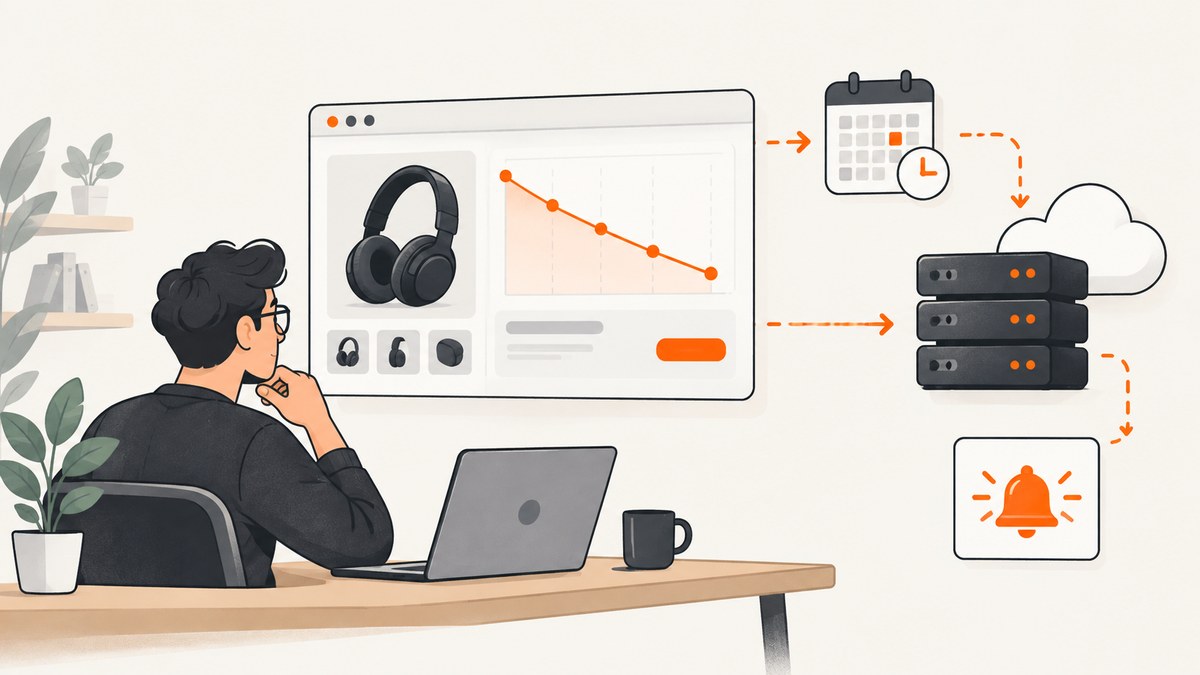
Short answer: build a Walmart price tracker only when you have permission to collect the data. Walmart’s consumer terms prohibit automated retrieval, scraping, data mining, robots, and collecting product listings, descriptions, or prices without express written consent. For an authorized project, use Walmart Marketplace credentials and documented APIs, begin in the sandbox, store each observation, compare like-for-like offers, and send deduplicated alerts.
This guide describes an authorization-first monitoring pipeline. It is suitable for a Walmart Marketplace seller managing its own catalog or for a project backed by written permission. It does not describe an unaffiliated service that polls arbitrary Walmart.com URLs. Walmart’s terms of use are a go/no-go checkpoint before you write a scheduler or scraper.
1. Confirm that your project is authorized
Walmart’s terms say that collecting and using product listings, descriptions, or prices, derivative use of Walmart content, and data mining, robots, or similar extraction tools are prohibited without permission. Treat that rule as an engineering requirement, not a disclaimer added after launch.
- Marketplace seller: use the seller APIs for your own permitted catalog and offers, with the credentials and scope Walmart grants.
- Another business or research project: obtain express written permission that covers the data, regions, frequency, retention, and alerting use case.
- Affiliate publisher: verify the Walmart Creator program requirements. If Walmart supplies current prices, show them accurately and disclose the affiliate relationship. Walmart’s site price governs when a displayed value differs.
Write down the approved scope before implementation:
| Decision | Record |
|---|---|
| Data owner | Seller, permission-granting organization, or approved affiliate account |
| Identifiers | SKU, item ID, offer ID, seller ID, or another documented stable key |
| Markets | United States, Canada, Chile, Mexico, or another explicitly approved region |
| Frequency | Polling interval, burst limit, and maintenance windows |
| Retention | Raw response retention, history duration, and deletion process |
| Outputs | Internal dashboard, seller workflow, email, webhook, or approved affiliate display |
2. Choose the documented Walmart API environment
Walmart’s integration workflow uses OAuth 2.0 and separates sandbox from production. Start at https://sandbox.walmartapis.com, validate authentication and response parsing there, and move to https://marketplace.walmartapis.com only after the approved production setup is ready. The integration guidance recommends a quick read before a safe test operation on a test SKU.
Credential checklist
- Create or obtain the approved Marketplace developer and seller credentials.
- Store the client ID, client secret, and refresh material in an encrypted secret manager.
- Request an OAuth access token for the correct environment.
- Keep sandbox and production credentials in separate environment variables.
- Log token expiration and request IDs, never the secret or full authorization header.
Do not copy an endpoint from an example and assume it is a public catalog lookup. Endpoint names, headers, scopes, and response fields depend on the Walmart program and your approved account. Follow the current Walmart developer documentation for the exact OAuth and pricing read request.
3. Model a price observation
A price tracker is a time-series database with policy checks around it. Store enough context to explain why an alert fired and to reproduce a discrepancy.
CREATE TABLE price_observations (
  id BIGSERIAL PRIMARY KEY,
  item_id TEXT NOT NULL,
  sku TEXT,
  offer_id TEXT,
  seller_id TEXT,
  region TEXT NOT NULL,
  currency CHAR(3) NOT NULL,
  observed_price NUMERIC(18, 4) NOT NULL,
  list_price NUMERIC(18, 4),
  availability TEXT,
  source_timestamp TIMESTAMPTZ,
  requested_at TIMESTAMPTZ NOT NULL,
  response_status INTEGER NOT NULL,
  response_hash TEXT,
  raw_response JSONB NOT NULL
);

CREATE INDEX price_observations_lookup
  ON price_observations (item_id, seller_id, region, requested_at DESC);
Keep money as a decimal or integer minor unit. Never compare formatted strings such as $19.99. Distinguish the current offer price from a list, was, or reference price. A discount is meaningful only when the item, seller or offer, region, and currency match.
Minimum observation fields
- Stable item or SKU identifier
- Offer and seller identifiers when the API supplies them
- Region and currency
- Current offer price and optional list price
- Availability or fulfillment state
- Source timestamp and your request timestamp
- HTTP status, request ID, and a hash of the normalized response
- Raw response encrypted or access-controlled for audit and schema diagnosis
4. Build the authorized read worker
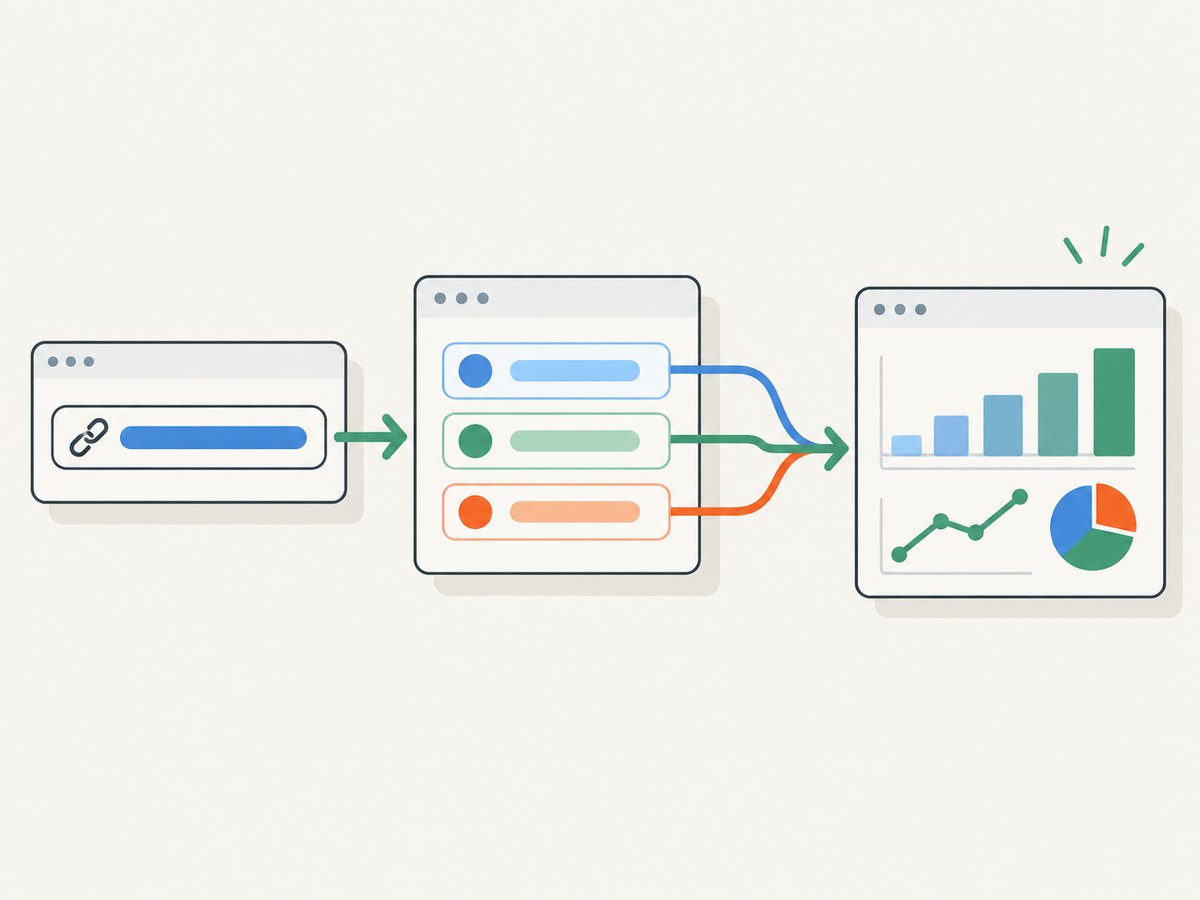
The worker should perform one approved pricing read, normalize the response, write an observation, and then evaluate alert rules. Keep the API adapter separate from storage and notification code so a schema change affects one module.
from decimal import Decimal
from datetime import datetime, timezone
import os
import requests

API_BASE = os.environ.get("WALMART_API_BASE", "https://sandbox.walmartapis.com")
TOKEN = os.environ["WALMART_ACCESS_TOKEN"]
ITEM_ID = os.environ["WALMART_ITEM_ID"]

headers = {
    "Authorization": f"Bearer {TOKEN}",
    "Accept": "application/json",
}

# Replace this path and parameters with the pricing read documented
# for your approved Walmart Marketplace account.
response = requests.get(
    f"{API_BASE}/v3/items/{ITEM_ID}/price",
    headers=headers,
    timeout=30,
)
response.raise_for_status()
data = response.json()

observation = {
    "item_id": ITEM_ID,
    "region": data["region"],
    "currency": data["currency"],
    "observed_price": Decimal(str(data["price"])),
    "availability": data.get("availability"),
    "requested_at": datetime.now(timezone.utc).isoformat(),
    "raw_response": data,
}
print(observation)
# Persist observation, then compare it with the previous matching offer.
The path above is intentionally a placeholder for the endpoint in your approved documentation. Do not deploy it unchanged. The important properties are the environment switch, OAuth bearer token, timeout, status handling, decimal conversion, and preservation of the raw response.
5. Detect a real price drop
Compare the new observation with the latest valid observation for the same item, offer, seller, region, and currency. Require a second observation or a stable response when transient prices, promotions, or eventual consistency could create false alerts.
from decimal import Decimal

def drop_rule(previous: Decimal, current: Decimal,
              absolute_drop: Decimal | None = None,
              percentage_drop: Decimal | None = None) -> bool:
    if current >= previous:
        return False
    difference = previous - current
    if absolute_drop is not None and difference >= absolute_drop:
        return True
    if percentage_drop is not None:
        percent = (difference / previous) * Decimal("100")
        return percent >= percentage_drop
    return False

# Examples:
# drop_rule(Decimal("100"), Decimal("89"), absolute_drop=Decimal("10"))
# drop_rule(Decimal("100"), Decimal("89"), percentage_drop=Decimal("10"))
Alert controls
- Absolute threshold: alert when the price falls by at least a fixed amount.
- Percentage threshold: alert when the decrease reaches a percentage.
- Cooldown: suppress repeats for a defined period.
- Deduplication key: combine item, offer, region, new price, and rule version.
- Re-arm condition: send another alert only after the price rises, the cooldown expires, or the item changes state.
- Payload: include item identifier or approved URL, previous and current price, currency, region, timestamp, and source status.
6. Schedule conservatively and handle rate limits
Use a queue or scheduled worker rather than launching one process per item. Add jitter so thousands of items do not run at the same second. Walmart documents HTTP 429 when too many feeds are submitted in a short period; treat 429 as a signal to slow down.
import random
import time
import requests


def get_with_backoff(url, headers, attempts=5):
    for attempt in range(attempts):
        response = requests.get(url, headers=headers, timeout=30)
        if response.status_code not in (429, 500, 502, 503, 504):
            return response
        retry_after = response.headers.get("Retry-After")
        delay = float(retry_after) if retry_after else min(60, 2 ** attempt)
        time.sleep(delay + random.uniform(0, 0.5))
    raise RuntimeError("Walmart API remained unavailable after retries")
Apply backoff per credential and endpoint, cap retries, and record every retry. A retry must be idempotent: do not treat a timed-out write as safe to repeat unless the API documents idempotency. For reads, a bounded retry is usually appropriate; for writes, follow the endpoint-specific guidance.
7. Add monitoring, history, and operations
A useful tracker explains both price changes and missing data. Track request count, latency, status distribution, 429 count, authentication failures, parse failures, observation freshness, alert delivery failures, and the age of the last successful observation per item.
- Rotate credentials and revoke old credentials after a successful deployment.
- Encrypt secrets and restrict production access to the worker identity.
- Use a kill switch that pauses polling and alert delivery.
- Keep a schema-version field with normalized observations.
- Alert on stale data separately from a price drop.
- Re-check Walmart’s current terms before commercial launch, especially restrictions on excessive usage and products that compete with or resemble Walmart services.
8. Use ScreenshotNeo for evidence images
If your authorized workflow needs a visual record of a permitted page or a seller dashboard, capture it after the API observation. ScreenshotNeo is a website screenshot API and MCP server. It can capture a full page or a CSS-selected element, wait for a selector or network idle, set a viewport and device preset, use custom headers or cookies, and return PNG, JPEG, WebP, or PDF. See the ScreenshotNeo documentation for the request options.

cURL
curl -G "https://api.screenshotneo.com/v1/shot" \
  -d access_key=YOUR_API_KEY \
  --data-urlencode url=https://stripe.com \
  -o shot.webp
Python
import requests

r = requests.get(
    "https://api.screenshotneo.com/v1/shot",
    params={"access_key": "YOUR_API_KEY", "url": "https://stripe.com"},
    timeout=90,
)
r.raise_for_status()
open("shot.webp", "wb").write(r.content)
Node.js
const q = new URLSearchParams({
  access_key: 'YOUR_API_KEY',
  url: 'https://stripe.com'
});
const res = await fetch(`https://api.screenshotneo.com/v1/shot?${q}`);
if (!res.ok) throw new Error(`Screenshot failed: ${res.status}`);
const bytes = Buffer.from(await res.arrayBuffer());
await import('node:fs/promises').then(fs => fs.writeFile('shot.webp', bytes));
For public image tags, use signed links. For recurring captures, choose a cache TTL. For private seller pages, pass the approved cookies, custom headers, user agent, or Authorization values without logging them. If a page contains a consent banner, newsletter popup, or chat widget, ScreenshotNeo accepts the banner like a visitor and removes more than 60 known consent platforms, newsletter popups, and chat widgets before capture. Each step can be disabled when your evidence requires the original state.
9. Or skip the browser setup
Use ScreenshotNeo when the monitoring system needs a clean visual snapshot alongside an authorized price observation:
curl -G "https://api.screenshotneo.com/v1/shot" -d access_key=YOUR_API_KEY --data-urlencode url=https://stripe.com -o shot.webpCookie banners, popups, and chat widgets are removed before the shot. Bot checks, blank pages, failed loads, timeouts, and cache hits are not billed, and the response reports the result through X-Page-Verdict and X-Billed headers. An MCP server lets AI agents such as Claude and Cursor take screenshots, inspect pages, and capture PDFs. One thousand screenshots per month are free with no card; paid plans start at $5 for 3,000 shots. Create a free ScreenshotNeo account.
10. Troubleshooting
| Symptom | Likely cause | Fix |
|---|---|---|
| 401 or 403 | Wrong environment, expired token, missing scope, or unauthorized seller account | Request a token for the matching sandbox or production host and verify the approved scopes. |
| 429 | Too many requests or feed submissions in a short period | Honor Retry-After, add exponential backoff and jitter, reduce concurrency, and record the event. |
| Price appears to jump | Different seller, offer, region, currency, or list price was compared | Join observations on stable identifiers and normalize money before comparison. |
| Duplicate alerts | No cooldown or deduplication key | Persist the last alert key and re-arm only after a defined state change. |
| Missing observations | Worker timeout, token failure, parser error, or scheduler outage | Measure freshness, retain response status, retry bounded reads, and page on stale items. |
| Screenshot is blank | Page failed to load, bot check, or content requires a wait | Use a selector or network-idle wait, verify the URL is permitted, and inspect X-Page-Verdict. |
| Screenshot includes a popup | The relevant cleanup step was disabled or the popup is unsupported | Enable cleanup, add a hide selector, or use custom CSS/JavaScript where appropriate. |
11. Performance, reliability, and cost
For API monitoring, the main cost is request volume and operational complexity. Poll less often for stable products, use event or feed mechanisms where the approved API provides them, and reserve frequent checks for items where the business value justifies them. Keep a queue depth limit so a backlog does not create a burst that triggers 429 responses.
For screenshots, avoid capturing every poll when only a price number is needed. Capture on a detected change, on an alert, or at a lower evidence cadence. Cache repeated captures with a TTL, resize images for notifications, and use PDF only when a document artifact is required. ScreenshotNeo bills only clean shots; failed loads, bot checks, blank pages, timeouts, and cache hits cost nothing. Its plans include Free with 1,000 shots per month, Starter at $5 for 3,000, Growth at $15 for 15,000, Pro at $39 for 60,000, Scale at $99 for 250,000, and Business at $249 for 1,000,000. Yearly billing gives two months free.
12. FAQ
Can I paste any Walmart URL into a scheduled scraper?
Do not assume that is permitted. Walmart’s terms restrict automated collection of listings and prices. Use an approved Marketplace API or obtain written permission that covers the exact use.
Is the Walmart Pricing API a public anonymous catalog API?
No. The documented pricing workflow is for approved Marketplace seller access. Treat credentials, scopes, regions, and endpoint availability as account-specific.
How long should price history be kept?
Keep the period needed for your alert and reporting requirements, subject to the permission and retention terms that govern your project. Store raw responses only as long as necessary for audit and schema diagnosis.
Should a single lower response trigger an alert?
Usually require a second observation or a stable response when transient promotions, propagation delays, or parsing issues could create a false drop.
Can ScreenshotNeo monitor Walmart prices for me?
ScreenshotNeo captures authorized web pages; it does not change the requirement to have permission to collect Walmart data. Use it for permitted visual evidence alongside your approved API workflow.
Conclusion
A dependable Walmart price tracker starts with authorization, then adds the boring details that prevent false alerts: stable offer identity, decimal money, region and currency, bounded retries, rate-limit backoff, history, cooldowns, and freshness metrics. Build and validate in sandbox, move to production only with approved credentials, and add screenshots when an audit or human review needs visual context.