Adaptive Web Scraping APIs: How Escalation, Browsers, Proxies, and CAPTCHA Handling Work
Learn how adaptive scraping APIs switch from HTTP to proxies, browsers, and challenge handling, and how to choose the right architecture.
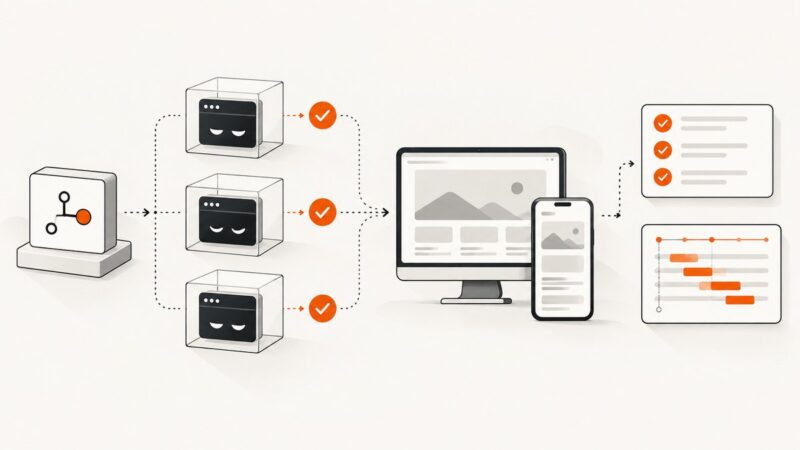
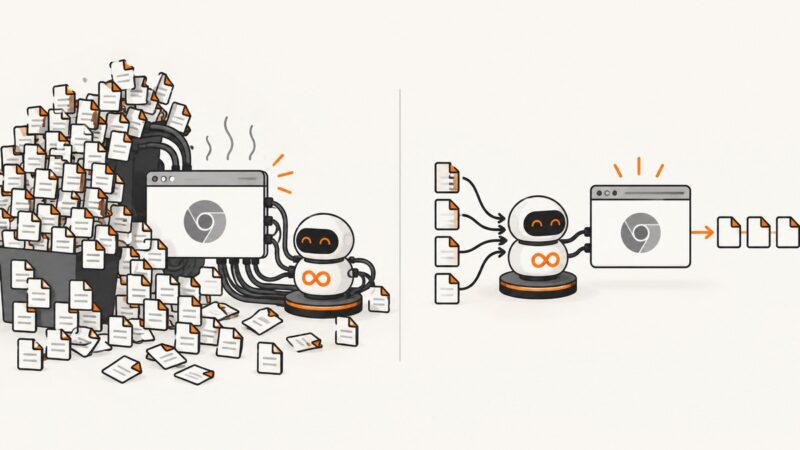
Adaptive web scraping APIs choose the least expensive retrieval method that can successfully load a page, then escalate when the page requires more capability. A typical sequence is direct HTTP, proxied HTTP, a headless browser for JavaScript, and finally browser-based challenge handling. This approach reduces latency and cost for simple pages while still handling dynamic or protected sites.
The best implementation depends on what you are collecting, whether you are authorized to collect it, and how the target site controls access. This guide explains the architecture, gives runnable request examples, compares major approaches, and covers reliability, cost, compliance, and failure diagnosis.
What is an adaptive web scraping API?
An adaptive scraping API is a hosted endpoint that selects a retrieval strategy per request or per page. Instead of forcing every URL through a slow browser, it starts with a lightweight HTTP fetch. If the response is blocked, incomplete, or dependent on client-side JavaScript, the service retries with a proxy or browser. Some products add challenge handling when a bot wall or CAPTCHA appears.
| Stage | Typical method | Use it when | Trade-off |
|---|---|---|---|
| 1 | Direct HTTP | Public static HTML or JSON is sufficient | Fastest and cheapest, but no JavaScript execution |
| 2 | Proxied HTTP | The origin blocks or limits the original network | Improves reach and geography; adds network overhead |
| 3 | Headless browser | Content appears after JavaScript, scrolling, clicks, or AJAX | Higher latency and resource use |
| 4 | Browser plus challenge handling | A permitted workflow encounters a bot challenge or CAPTCHA | Most expensive and operationally sensitive stage |
Browserless documents this escalation from fast HTTP fetching to a proxied fetch, a stealth browser, and CAPTCHA solving. Crawlbase combines routing, optional JavaScript rendering, and anti-bot handling in one endpoint. Zendesk describes sampling pages and switching only sections that expose substantially more content in a browser. These examples illustrate the same principle: escalation is conditional, rather than universal.
Why JavaScript changes the result
A normal HTTP client receives the initial response body. Many modern applications then fetch data through JavaScript, render components, require a user action, or lazy-load content as the page scrolls. An HTML parser may therefore see an empty shell, a loading placeholder, or only the first portion of the content.
Use a browser-rendered path when you need:
- Client-rendered product, account, or dashboard content.
- Content loaded by XHR, fetch, GraphQL, or other AJAX calls.
- Lazy-loaded images or rows that appear after scrolling.
- Interactions such as clicking “load more,” opening a tab, or dismissing a consent dialog.
- Computed DOM state rather than the original source HTML.
Keep static pages on the HTTP path when the response already contains the fields you need. A browser cannot improve missing authorization, and it introduces additional failure modes such as script errors, resource timeouts, and browser capacity limits.
How an adaptive request is evaluated
- Fetch the target. Request the URL with a normal HTTP client and record status, headers, body size, and elapsed time.
- Check completeness. Look for expected selectors, a minimum content length, structured data, or a known application marker.
- Classify the response. Distinguish a valid empty result from a block page, login redirect, CAPTCHA, timeout, or server error.
- Retry through an appropriate route. A datacenter or residential exit and a country-specific route can solve network-based blocking when you have permission to use them.
- Render in a browser if needed. Wait for a selector, a network-idle condition, a delay, scrolling, or a click, then extract the resulting DOM or other output.
- Handle a challenge only within an authorized workflow. Record that a challenge occurred and apply the provider’s documented policy and controls.
- Return provenance. Store which strategy succeeded, how long each attempt took, and why escalation occurred.
Capabilities to compare before choosing an API
Escalation behavior
Ask what triggers escalation and whether the response exposes the attempted sequence. A provider that reports “HTTP succeeded” separately from “browser required” makes cost and quality analysis possible. Also check whether you can force a stage for known URL classes.
Rendering controls
Check for JavaScript execution, selector waits, delay and network-idle waits, scrolling, clicking, cookie storage, custom headers, user agents, and session reuse. Without these controls, a browser may finish before the page’s data appears.
Proxy and geography
Compare datacenter, residential, and mobile options; country targeting; sticky sessions; rotation rules; and whether proxy choice is automatic. Crawlbase documents residential or datacenter exits, country targeting, and sticky sessions. Geography can affect localized content as well as access success.
Challenge and WAF scope
Determine which bot checks are supported, what happens when a CAPTCHA appears, and whether the service explicitly refuses to bypass a particular WAF. Cloudflare’s Browser Rendering /crawl endpoint is designed for policy-aware crawling: it honors robots.txt and crawl-delay, identifies as a verified bot, and does not bypass Cloudflare bot detection or CAPTCHAs.
Output formats
Some APIs return raw HTML or Markdown; others return screenshots, PDFs, links, or structured JSON. Pick the output that matches your downstream job. Browserless documents HTML, Markdown, screenshots, PDFs, and links. Cloudflare’s crawl workflow supports HTML, Markdown, and structured JSON.
Scale and scheduling
For one-off extraction, a synchronous endpoint may be enough. Whole-site discovery, sitemap traversal, incremental recrawls, and long-running jobs need asynchronous APIs, webhooks, deduplication, retry policies, and a way to skip recently fetched pages. Cloudflare’s crawl announcement describes sitemap or link discovery, depth and URL-pattern controls, and freshness controls such as modifiedSince and maxAge.
Minimal adaptive client in Python
The following example implements the decision logic in your application. It tries HTTP first, checks for expected content, and then calls a browser-rendering endpoint that you configure. The endpoint names are placeholders because each provider uses different parameters.
import time
import requests

TARGET = "https://example.com/products"
EXPECTED = "product-card"


def fetch_http(url):
    response = requests.get(url, timeout=20, headers={"User-Agent": "authorized-research-bot/1.0"})
    response.raise_for_status()
    return response


def fetch_browser(url):
    # Replace with your provider's documented browser endpoint and credentials.
    response = requests.get(
        "https://api.example.com/render",
        params={
            "url": url,
            "wait_for": EXPECTED,
            "javascript": "true",
        },
        timeout=90,
    )
    response.raise_for_status()
    return response


started = time.perf_counter()
try:
    first = fetch_http(TARGET)
    if EXPECTED in first.text and len(first.text) > 2_000:
        result = first
        strategy = "http"
    else:
        result = fetch_browser(TARGET)
        strategy = "browser"
except requests.RequestException as error:
    # In production, classify the error before deciding whether a retry is safe.
    result = fetch_browser(TARGET)
    strategy = "browser-after-http-error"

print({
    "strategy": strategy,
    "bytes": len(result.content),
    "elapsed_seconds": round(time.perf_counter() - started, 2),
})
cURL, Python, and Node.js request patterns
For providers that expose a single adaptive endpoint, the request often looks like this. Use the provider’s documented parameter names for proxy, rendering, wait, and output controls.
curl -G "https://api.example.com/scrape" \
  -H "Authorization: Bearer $API_KEY" \
  --data-urlencode "url=https://example.com/products" \
  --data-urlencode "render=auto" \
  --data-urlencode "country=us"
import requests
r = requests.get(
"https://api.example.com/scrape",
headers={"Authorization": "Bearer " + API_KEY},
params={
"url": "https://example.com/products",
"render": "auto",
"country": "us",
},
timeout=90,
)
r.raise_for_status()
html = r.textconst params = new URLSearchParams({
url: 'https://example.com/products',
render: 'auto',
country: 'us'
});
const res = await fetch(`https://api.example.com/scrape?${params}`, {
headers: { Authorization: `Bearer ${process.env.API_KEY}` }
});
if (!res.ok) throw new Error(`HTTP ${res.status}`);
const html = await res.text();Choosing HTTP, proxy, browser, or challenge handling
| Requirement | Preferred path | Validation signal |
|---|---|---|
| Static article or API response | Direct HTTP | Expected fields exist in the body |
| Same page blocked by network reputation | Proxy retry | Different route returns a normal response |
| Rendered dashboard or lazy content | Headless browser | Expected selector appears after execution |
| Permitted challenge workflow | Browser plus documented challenge handling | Provider reports challenge outcome |
| Large authorized site crawl | Async crawl with freshness controls | Job status, deduplication, and recrawl policy |
Reliability and edge cases
- Login redirects: treat a redirect to a sign-in page as incomplete data, not a successful fetch. Use an authorized session or stop.
- Soft blocks: a 200 response can still contain a challenge page. Validate content, title, and expected selectors.
- Geo-dependent pages: pin country and timezone when location changes the result, and keep those settings consistent between retries.
- Infinite scroll: define a maximum scroll count or item count so a page cannot run indefinitely.
- Non-deterministic content: save retrieval time, route, headers, and a content hash so changes can be explained.
- Transient failures: retry timeouts and 5xx responses with bounded exponential backoff. Do not blindly retry authentication errors or policy denials.
- Duplicate work: normalize URLs, respect canonical links where appropriate, and deduplicate queued jobs.
- Robots and authorization: follow the target site’s terms, robots directives, crawl-delay, and applicable law. Obtain permission for private or protected data.
Performance, concurrency, and cost
Adaptive systems save resources when most pages are static, but the browser path determines tail latency. Crawlbase reports average responses of 4–10 seconds and notes that heavy JavaScript or scrolling can take longer. Set client timeouts above the provider’s normal response window for browser jobs, while keeping queue-level deadlines to prevent stuck work.
Measure each stage separately:
- Percentage completed by direct HTTP, proxy, browser, and challenge stages.
- Latency percentiles by stage and target domain.
- Retries, timeout rates, and incomplete-content rates.
- Bytes transferred and browser minutes where billed.
- Cache hit rate and freshness age.
Use concurrency limits per domain and provider account. A high global worker count can trigger rate limits or exhaust browser capacity. Cache immutable or slowly changing pages, and use conditional requests or provider freshness controls when available. Compare the full cost of retries and browser minutes, rather than only the nominal per-request price.
Troubleshooting adaptive scraping
| Symptom | Likely cause | Fix |
|---|---|---|
| HTML contains only a shell | Content is client-rendered | Escalate to a browser and wait for a content selector |
| HTTP 200 but no records | Soft block, login page, or challenge | Classify the body and title; do not treat status alone as success |
| Browser times out | Overly broad network-idle wait or slow third-party resource | Wait for a specific selector, block unnecessary resources, and set a bounded timeout |
| Different countries return different fields | Geo-personalized content | Pin proxy country, timezone, and language settings |
| Repeated CAPTCHA responses | Route reputation, request rate, or an unsupported challenge | Reduce concurrency, use an allowed route, or stop when the provider cannot handle it |
| Results change between retries | Rotating content, sessions, or experiment assignment | Persist cookies where authorized and record route, time, and response hash |
| Costs rise unexpectedly | Every request is forced through a browser or retries escalate repeatedly | Restore auto mode, validate HTTP completeness, cache results, and cap retries |
Or skip the browser setup
ScreenshotNeo is a website screenshot API and MCP server. It can capture a clean PNG, JPEG, WebP, or PDF with one GET request. Before capture, it accepts cookie or consent banners and removes more than 60 known consent platforms, newsletter popups, and chat widgets; each step can be turned off. Bot checks, blank pages, timeouts, failed loads, and cache hits are not billed, and the response reports the page verdict and billing status in X-Page-Verdict and X-Billed headers. Its MCP server provides take_screenshot, get_page_info, and capture_pdf for Claude, Cursor, and other MCP clients.
See the ScreenshotNeo API documentation for all options.
curl -G "https://api.screenshotneo.com/v1/shot" -d access_key=YOUR_API_KEY --data-urlencode url=https://stripe.com -o shot.webpimport requests
r = requests.get("https://api.screenshotneo.com/v1/shot", params={"access_key": "YOUR_API_KEY", "url": "https://stripe.com"}, timeout=90)
open("shot.webp", "wb").write(r.content)const q = new URLSearchParams({ access_key: 'YOUR_API_KEY', url: 'https://stripe.com' });
const res = await fetch(`https://api.screenshotneo.com/v1/shot?${q}`);Features include full-page capture with lazy images loaded, CSS-selector element capture, dark mode, device presets and custom viewports, retina scale, PDF paper and page controls, custom CSS and JavaScript, clicks, selector or network-idle waits, request blocking, headers, cookies, user agent, authorization, timezone, geolocation, transparent backgrounds, resizing, TTL caching, signed links, async jobs with signed webhooks, bulk capture for 100 URLs per call, a usage API, and an OpenAPI specification. Parameter names used by other screenshot APIs also work, which helps with migration.
Free accounts include 1,000 screenshots per month with no card. Paid plans start at $5 for 3,000 shots. Create a free ScreenshotNeo account.
Frequently asked questions
Does adaptive scraping always use a browser?
No. The defining behavior is conditional escalation. Static pages should complete on the HTTP path when their content is present there.
Is a proxy the same as browser rendering?
No. A proxy changes the network route and apparent location. Browser rendering executes JavaScript and supports page interaction. A request may need either or both.
Should every CAPTCHA be solved automatically?
No. Confirm authorization and the provider’s policy first. Some services explicitly do not bypass their own bot detection or CAPTCHA systems.
How do I know whether escalation improved extraction?
Compare expected selectors or structured fields, not only HTTP status. Record the selected strategy and the reason for escalation so you can measure completeness and cost.
When should I choose asynchronous crawling?
Use it for site discovery, many URLs, scheduled recrawls, or jobs that may exceed a normal request timeout. Require job status, retries, deduplication, and freshness controls.