Agentic AI in Test Automation: How It Works
Learn how AI agents plan, generate, run, and repair tests, and how to keep their work grounded in your app and reviewable in CI.
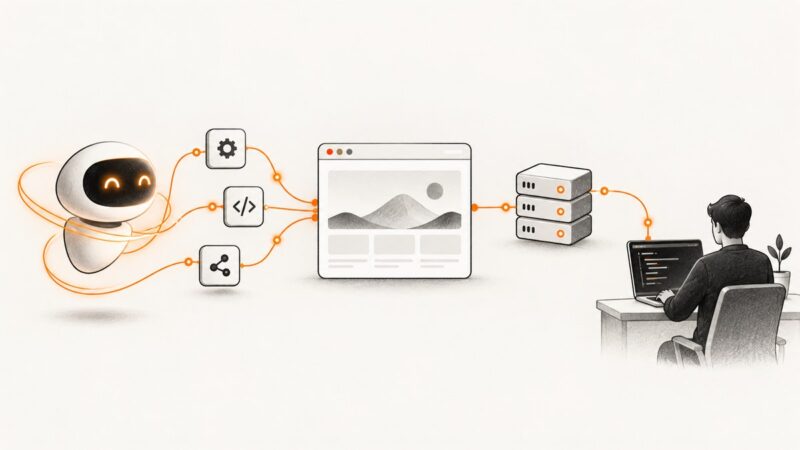
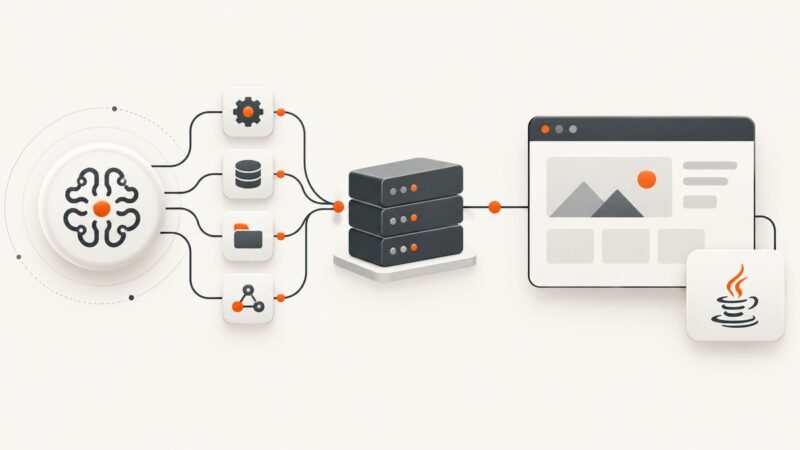
Agentic AI in test automation combines an AI agent that can reason and plan with tools that inspect and operate a running application, plus a conventional test runner that checks explicit assertions. A practical loop is: understand the requested behavior and project, explore the app, plan scenarios, generate executable tests, run them, inspect failures, and propose bounded repairs. The agent uses the application and test results as feedback; it does more than complete code from a prompt.
Playwright describes this pattern with planner, generator, and healer roles. Those roles may run separately, in sequence, or as a loop. The agent can help derive and maintain tests, but the expected behavior and acceptance of repairs remain human responsibilities. Playwright’s test agents documentation describes the roles and workflow.
1. What makes test automation agentic?
A conventional test script follows steps that a developer wrote in advance. An agentic workflow gives an AI model a goal and access to tools, such as browser inspection, test execution, logs, and source files. It can choose actions based on observations, then use execution feedback to revise its work.
| Part | Responsibility | Example |
|---|---|---|
| Human requirements | Define intended outcomes, constraints, and what counts as acceptable behavior. | “A signed-in user can update their shipping address, and the confirmation appears.” |
| Agent | Explore, plan, generate tests, interpret evidence, and propose changes. | Inspect the address form and identify validation and confirmation states. |
| Browser automation | Interact with the running application and report observable state. | Open the account page, fill fields, submit, and inspect the confirmation. |
| Test runner | Execute tests and evaluate explicit assertions. | Assert the saved address is shown after submission. |
| Reviewer and CI | Control permissions, review artifacts, and decide whether changes are acceptable. | Review generated tests and run deterministic checks before merging. |
The reasoning layer is useful when a task needs interpretation or exploration. The test runner is still valuable because it turns important outcomes into repeatable pass/fail checks.
2. The agentic testing loop
Step 1: Provide project context and boundaries
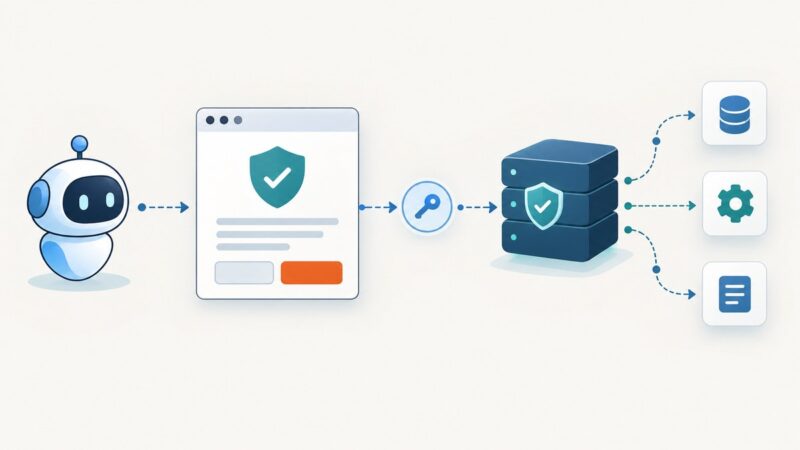
Give the agent the application’s framework and version, the current official documentation, project conventions, available commands, fixtures, seed data, and a representative test. Add the requirement or product specification that states the expected behavior. Define which files the agent may change, what commands it may run, and when it must stop for review.
Current references matter. Selenium’s agent guidance warns that generated examples can reflect stale APIs or unsafe patterns. Tell the agent which version is installed and provide the matching documentation and working examples. Treat an API that is absent from the current reference as unavailable until you verify it. See Selenium documentation and its AI guidance.
Step 2: Explore the live application and plan
A planner can navigate the app and produce a human-readable plan of flows and scenarios. For a profile form, a useful plan might cover a valid update, required-field validation, and a server-side failure. A seed test can initialize authentication and fixtures, show the project’s conventions, and keep exploration inside a known environment.
Keep the plan in the repository or another reviewable location. It lets a reviewer compare what the test is meant to cover with what the generated code actually checks.
Step 3: Generate tests and verify them against the app
The generator turns planned scenarios into executable tests. It should inspect the real interface while working so selectors and assertions correspond to current application behavior. Prefer accessible roles and labels, stable test identifiers where appropriate, and assertions about user-visible outcomes.
Review whether the generated test checks the requirement or merely repeats the agent’s chosen path. A test that asserts a button was clicked can pass while the intended save failed; assert the resulting state that matters.
Step 4: Run, inspect, and diagnose
Run the generated tests with the project’s normal browser automation and test runner. Playwright documents Chromium, Firefox, and WebKit support, isolated browser contexts, resilient locators, parallel execution, and traces. Those facilities help teams run tests across browsers and inspect failures. See the Playwright overview.
When a test fails, give the agent the actual exception, relevant logs, and a screenshot captured at failure time. A vague statement such as “the test is broken” leaves it guessing. A trace can help explain which action, request, or assertion preceded the error.
Step 5: Permit bounded repair, then review it
A healer can replay failing steps, inspect the current UI, propose a patch, and rerun the test until it passes or a guardrail stops it. Set a limit on permitted files and repair attempts. Review changes to both tests and application code, and require a human decision for changes that affect product behavior or expected outcomes.
A skipped test is not proof that the application is correct. In Playwright’s documented workflow, a healer may skip a test when it believes the underlying functionality is broken. Treat that as a signal to investigate, not as a passing result. The Playwright agent documentation explains the healer behavior.
Step 6: Validate outcomes when paths vary
Agents may reach the same valid goal by different routes. If a task is nondeterministic, validate essential milestones and distinguish acceptable variations from real failures. Do not accept a self-reported success without checking the application state and key outcomes.
Gaurav Mittal and Reshabh Kumar Sharma report that their method for learning a ground-truth model of an agent navigating Visual Studio Code by computer use observes 2–10 successful sessions. That is a figure specific to their method and evaluation, not a general sample-size rule for agentic testing. See their research paper.
3. A practical Playwright example
Here is a small deterministic Playwright test that an agent could generate or help maintain. It tests a user-visible result for an address update. Replace the route, accessible labels, and confirmation text with those in your application. It assumes the project has Playwright Test installed and configured.
import { test, expect } from '@playwright/test';

test('user can update their shipping address', async ({ page }) => {
  await page.goto('/account/address');

  await page.getByLabel('Street address').fill('42 Example Street');
  await page.getByLabel('City').fill('Portland');
  await page.getByLabel('Postal code').fill('97201');
  await page.getByRole('button', { name: 'Save address' }).click();

  await expect(page.getByRole('status')).toContainText('Address saved');
  await expect(page.getByText('42 Example Street')).toBeVisible();
});
For an agent-assisted workflow, ask it to inspect the running page first, confirm the actual labels and outcome, write the plan, then generate or update a test following this pattern. Run the project’s normal command, for example:
npx playwright testDo not copy the illustrative selectors blindly. They need to match the application. Keep the test’s assertion tied to the behavior in the requirement, and use the application’s existing authentication fixture rather than embedding credentials in a test.
4. How Playwright and Selenium fit
Playwright documents agent roles for planning, generation, and healing alongside its browser automation capabilities. Selenium’s agent guidance emphasizes keeping references current, using stable locators and explicit waits, and grounding diagnosis in application-specific evidence. Both can form part of an agentic workflow; the right setup depends on your existing language, browser, fixtures, and CI environment.
Compare tools against practical criteria rather than assuming one is universally more effective:
- Browser and programming-language coverage required by your project.
- Ability to inspect and operate the actual application.
- Compatibility with existing fixtures, test data, and CI.
- Whether plans and generated tests are visible and reviewable.
- Test isolation, parallel execution, traces, logs, and failure screenshots.
- Repair permissions, attempt limits, and human review controls.
- Whether browsers are self-managed or provided through a hosted device or browser service.
Playwright’s documentation describes Chromium, Firefox, and WebKit support, isolation, locators, parallelism, accessibility snapshots, CLI and MCP interfaces, and traces. Selenium’s guidance contributes practices around current documentation, stable locators, explicit waits, and application-specific verification. These are capability descriptions, not a controlled head-to-head effectiveness benchmark.
5. Where agentic testing helps, and where it does not
Agentic workflows can help where requirements depend on context, intent, or exploratory interaction: discovering flows, drafting scenarios from a requirement, finding likely selector changes, or turning failure evidence into a repair proposal. GitHub describes this as complementary to CI: deterministic builds, static analysis, and tests remain a good fit when the expected result can be expressed as a crisp rule.
GitHub Next head Idan Gazit put it this way: “Any time something can’t be expressed as a rule or a flow chart is a place where AI becomes incredibly helpful.” The statement appears in GitHub’s article published February 5, 2026, updated February 9, 2026. See GitHub’s article on agentic CI.
Use ordinary deterministic tests for stable rules such as arithmetic, schema validation, or a required status code. Use an agent to help explore ambiguous behavior or draft and diagnose tests, then convert stable expectations into repeatable checks. Keep human review for product intent and changes that alter behavior.
6. Guardrails for reliable results
- Supply versioned context. State framework versions and link the matching official docs; include runnable examples from your project.
- Use real application evidence. Ask the agent to verify selectors and state in the running app, not infer them from source names alone.
- Prefer stable locators. Use accessible roles and labels or deliberate test IDs. Avoid generated class names and brittle absolute XPath.
- Use explicit waits. Wait for a meaningful state or locator. Fixed sleeps can mask races and slow every run; increasing timeouts without diagnosing the cause can hide the underlying issue.
- Pass concrete failure data. Include the exception, logs, and a failure-time screenshot or trace.
- Keep changes bounded. Limit write access, define allowed outputs and commands, log activity, and set repair limits.
- Review artifacts. Keep plans, tests, and proposed application patches available for review. Do not let a passing rerun substitute for reviewing what changed.
- Check outcomes more than once when needed. Timing and nondeterminism can affect results; validate essential outcomes across runs when the workflow warrants it.
7. Common problems and fixes
| Symptom | Likely cause | Fix |
|---|---|---|
| Generated code uses a removed method or wrong option. | The model relied on stale framework examples or lacks the installed version. | Provide the exact version, current official docs, and a runnable project example. Verify unfamiliar APIs before accepting them. |
| Locator times out or matches the wrong element. | The selector is guessed, unstable, ambiguous, or the page is in an unexpected state. | Inspect the live DOM or accessibility snapshot. Prefer a unique role and accessible name or a deliberate test ID; assert the expected state before continuing. |
| Test passes locally but flakes in CI. | A race, shared test state, external dependency, or timing assumption differs in CI. | Use isolated contexts and fixtures, wait for a state rather than a fixed delay, inspect the trace and logs, and remove shared mutable data. |
| Agent keeps increasing timeouts. | It is treating a race or failed prerequisite as slowness. | Check navigation, network failures, fixture setup, and the awaited condition. Set a repair boundary and require diagnosis before timeout changes. |
| Healer makes the test pass by weakening assertions. | The repair objective rewards a green run without protecting the requirement. | Keep expected outcomes in the prompt and review assertion changes. Reject patches that stop checking the intended behavior. |
| Agent reports success, but the feature is still wrong. | It checked its own path or a superficial UI signal rather than the essential outcome. | Assert persisted or user-visible state tied to the requirement; independently inspect the result and rerun important flows. |
| Test is skipped after a repair attempt. | The healer may believe the product behavior is broken, or it may have reached a configured limit. | Inspect the report and application. Treat skip as a diagnostic result and decide whether the product or test needs a human change. |
| Agent changes unrelated files or runs an unexpected command. | Permissions and task boundaries were too broad. | Restrict writable paths and allowed commands, log tool activity, and require review before applying broader changes. |
8. Performance, reliability, and cost
Agentic runs add exploration, model reasoning, and repair attempts to the time and compute cost of ordinary browser tests. Keep the expensive exploratory work scoped to the tasks that benefit from it. Run deterministic checks in normal CI, reuse project fixtures, and set limits on browser time, model steps, and repair retries. Parallel browser execution can reduce wall-clock test time, but only when tests are isolated and the available CI resources support the concurrency.
Reliability depends on the whole loop: clear requirements, current references, deterministic fixtures, observable evidence, bounded tool access, and a reviewer who checks changes. An agent passing its own generated test is not independent validation. No general market adoption figure or controlled effectiveness comparison among the cited frameworks and hosted services was established by the research used here; treat vendor claims accordingly.
9. Capture screenshots as test evidence
Screenshots can help an agent and reviewer understand the state of a page during exploration or failure diagnosis. For automated browser tests, capture a screenshot at the failing step or use the test runner’s trace and screenshot facilities. Keep the artifact associated with the test run so the log, browser state, and assertion can be reviewed together.
If the task is to inspect a page without setting up a browser automation environment, a screenshot API can return an image directly from a URL. ScreenshotNeo is a website screenshot API and MCP server for developers. Its MCP tools let AI agents call take_screenshot, get_page_info, and capture_pdf. Its screenshot options include full-page capture with lazy images loaded, selector capture, custom CSS and JavaScript, waits, device presets, and custom headers. See ScreenshotNeo and the API documentation.
Or skip the browser setup
One GET request returns the screenshot bytes; this example saves a WebP response to a file. See the ScreenshotNeo API docs for request options.
cURL
curl -G "https://api.screenshotneo.com/v1/shot" -d access_key=YOUR_API_KEY --data-urlencode url=https://stripe.com -o shot.webpPython
import requests

r = requests.get(
    "https://api.screenshotneo.com/v1/shot",
    params={"access_key": "YOUR_API_KEY", "url": "https://stripe.com"},
    timeout=90,
)
open("shot.webp", "wb").write(r.content)
Node.js
const q = new URLSearchParams({ access_key: 'YOUR_API_KEY', url: 'https://stripe.com' });
const res = await fetch(`https://api.screenshotneo.com/v1/shot?${q}`);
const bytes = new Uint8Array(await res.arrayBuffer());
await import('node:fs/promises').then(fs => fs.writeFile('shot.webp', bytes));- Cookie and consent banners, newsletter popups, and chat widgets are removed before the shot; each cleanup step can be turned off.
- Bot checks and CAPTCHAs, blank pages, timeouts, failed loads, and cache hits cost nothing. Responses identify page verdict and billing status in headers.
- An MCP server lets AI agents take screenshots, inspect page info, and capture PDFs.
- The free plan includes 1,000 screenshots per month with no card. Paid plans start at $5 for 3,000 screenshots.
Sign up free for 1,000 screenshots a month, no card required.
10. Frequently asked questions
Can an AI agent replace my test suite?
No. Agents can assist with exploration, test creation, and diagnosis, while a conventional suite continues to provide repeatable checks for explicit requirements.
Does a self-healing test prove the application is correct?
No. A repair can conceal a regression by weakening an assertion or changing the expected behavior. Review the patch and verify the requirement independently.
How should I evaluate a testing agent?
Check whether it can use your actual application and fixtures, produce reviewable plans and tests, provide useful failure evidence, respect permissions, and fit your CI and browser requirements. Validate it on your own workflows; the cited research does not establish a universal effectiveness ranking.