How to Use an AI Agent for Scheduled Visual Monitoring of a Website
Build a scheduled website visual monitoring workflow with browser automation, reviewed screenshot baselines, durable evidence, and human triage.
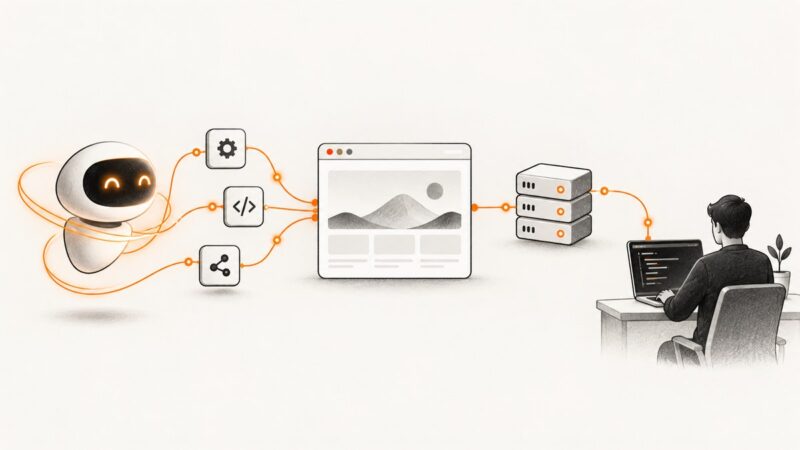
To monitor a website for visual changes automatically, schedule a browser run that visits defined URLs and viewport states, captures the rendered pages, compares each capture with a reviewed baseline, saves the screenshots and run metadata, and sends differences to a person for triage. Use an AI browser agent when a page requires interaction or judgment; keep screenshot comparison in a controlled, repeatable tool such as Playwright Test.
A screenshot difference is evidence of a change, not proof of a defect. Browser, operating system, fonts, settings, hardware, and headless mode can all affect rendering, so reliable monitoring depends on consistent capture conditions and reviewed baseline updates.
1. Define what the monitor should check
Start with a small, explicit check specification. A scheduler can run perfectly and still produce poor alerts if the target state is ambiguous.
| Field | What to record |
|---|---|
| URL | The exact page to visit, including relevant query parameters. |
| Expected state | What should be visible, such as a loaded product page or a logged-in dashboard. |
| Viewport | Width and height; create separate checks for materially different layouts. |
| Interaction | Cookie choice, navigation, scrolling, or other actions needed before capture. |
| Authentication | Whether the check uses a dedicated test identity and how it receives access. |
| Completion signal | An observable condition, such as a heading or main content selector being visible. |
| Volatile regions | Areas such as timestamps, rotating promotions, or personalized content to control or mask. |
Specify the journey, expected result, edge cases, and viewport sizes. For authenticated checks, explicitly provision a suitable isolated test session; an agent’s browser should not be assumed to inherit a developer’s signed-in session.
2. Choose a browser workflow
Use Playwright for stable, repeatable flows
For a fixed URL and predictable setup, Playwright Test provides screenshot assertions that create a baseline on the first run and compare later captures with it. It supports screenshot-time stylesheets and a configurable pixel difference allowance. Keep the browser and operating environment aligned with the baseline where practical.
import { test, expect } from '@playwright/test';

test('homepage visual baseline', async ({ page }) => {
  await page.setViewportSize({ width: 1440, height: 900 });
  await page.goto('https://example.com', { waitUntil: 'networkidle' });
  await expect(page.getByRole('heading', { name: 'Example Domain' })).toBeVisible();
  await expect(page).toHaveScreenshot('homepage.png', {
    fullPage: true,
    maxDiffPixels: 100,
  });
});
Install the test runner and browser using the Playwright screenshot comparison documentation. Run the test once to create its expected screenshot, review that image, and retain the baseline with the test code. The example tolerance is a starting configuration, not a universal accuracy target; adjust it based on reviewed diffs for the page.
Add an agent when the rendered state requires interaction
Browser agents can navigate pages, inspect rendered content, interact with UI, take screenshots, and check console output. This is useful when the state depends on a cookie dialog, dynamic content, scrolling, or contextual decisions. Define observable completion conditions, and validate the actual browser interaction rather than trusting a task description or synthetic invocation alone. A scripted Playwright flow is usually easier to reproduce for a stable journey; the agent can help reach the state, while a controlled comparison step evaluates the capture.
Browser-agent options documented by the source material include VS Code agent navigation and isolated browser sessions, and Cloudflare’s agent-controlled browser sessions using CDP. Their scheduling, retention, and limits are platform-specific; check current official documentation before selecting a runtime.
3. Control sources of screenshot noise
- Pin the environment: use the same browser version, operating system, viewport, fonts, and relevant settings as the baseline run when possible.
- Wait for a meaningful state: prefer a selector or application-ready condition over a short arbitrary delay. Network idle can help, but pages with ongoing network activity may never reach it.
- Control volatile content: use stable test data where possible. Playwright’s screenshot assertion supports
stylePathfor applying capture-time styles; hide or neutralize only elements that are intentionally outside the check. - Set a considered tolerance:
maxDiffPixelspermits a defined number of differing pixels. More tolerance can suppress noise but can also hide a small genuine regression. - Keep baseline updates reviewed: inspect the new and prior images before accepting a change. Automatically blessing every new capture can turn a defect into the next accepted reference.
Playwright documents that rendering can vary with operating system, browser version, settings, hardware, power source, and headless mode. Even a legitimate browser or dependency upgrade can therefore create diffs; treat such changes as reviewable events and regenerate references deliberately.
4. Schedule runs and retain evidence
Schedule the task with the cron or scheduler facility of the chosen runner. Record its timezone explicitly, especially when reporting daily checks or coordinating with an on-call team. Scheduling syntax and timezone behavior vary by provider, so verify those details in the scheduler’s current documentation.
A scheduled task should perform these steps on each run:
- Load the versioned URL, viewport, interaction, and comparison configuration.
- Start the browser in the expected environment and reach the defined page state.
- Capture the page and run the baseline comparison.
- Save the original screenshot, comparison output, run identifier, timestamp, URL/state identifier, viewport, browser version, and result.
- Send a report or alert containing a concise summary and links to the evidence for human review.
Persist screenshots and run metadata outside transient browser storage if they may be needed for later debugging or audit. Keep stable identifiers or file references so an alert can be connected to its underlying capture. Confirm that the scheduled task really performed browser interaction and that saved image files contain the expected page; a scheduler invocation by itself does not validate either.
5. Triage alerts and update baselines safely
When a comparison fails, attach the baseline, current image, diff image if available, and run context. Add relevant page or console observations so the reviewer can distinguish a layout regression from a failed load, a changed promotion, or an environment shift.
- Check whether the page reached its expected completion condition.
- Compare the browser version, viewport, and capture environment with the baseline run.
- Inspect the original current screenshot, not only the highlighted diff.
- Decide whether the visual change is intended and whether the baseline should change.
- Update the reference only after review, and retain enough run history to explain the decision.
A screenshot diff is a signal for review. It cannot by itself establish whether users are harmed, whether the change was intended, or whether a page interaction worked correctly.
6. Platform and operating choices
| Need | Starting point | Reason |
|---|---|---|
| Fixed page and repeatable visual regression | Playwright Test screenshot assertions | Creates and compares baselines, with tolerance and stylesheet controls. |
| Navigation or interaction needs judgment | Browser-agent tooling | Can inspect rendered content and interact with a page before capture. |
| Independent recurring runs | Scheduler or cron plus a task runner | Runs checks on a recurring trigger; provider behavior varies. |
| Evidence for later diagnosis | Durable screenshot and run metadata storage | Browser sessions may be isolated or ephemeral, so preserve required outputs. |
Compare candidate platforms on schedule and timezone behavior, browser and viewport control, dynamic-page handling, comparison features, screenshot retention, alert hooks, limits, and cost controls. These are evaluation criteria, not a vendor ranking.
7. Reliability, security, performance, and cost
Reliability
Keep the capture stack consistent and make checks observable: record run IDs, expected-state results, capture timestamps, browser versions, and artifact references. Retry only failures that are plausibly transient, and preserve failed-run evidence where available; otherwise retries can obscure a real intermittent problem. Verify the recurring path with a real scheduled browser run.
Security
Use least privilege for the browser runtime, particularly when it can reach authenticated or sensitive pages. Prefer a dedicated test identity with only the access required for the checks. Store credentials in the runner’s secret mechanism rather than in test code, and avoid capturing or retaining unnecessary sensitive data. These are general implementation precautions; the reviewed source material does not establish a security guarantee for any particular monitoring service.
Performance and cost
Browser startup, navigation, page readiness, and screenshot comparison all contribute to run time. Keep the monitored URL and viewport set focused on meaningful user journeys, and avoid capturing the same state repeatedly without a reason. Full-page captures may take longer and produce larger artifacts than viewport captures. Agent interaction can add steps and runtime, so use it when the page’s state needs that flexibility and use a stable scripted path when it does not.
Estimate cost from the chosen runner’s current pricing and limits, expected run frequency, number of URL/state/viewport combinations, browser concurrency, artifact retention, and any agent or hosted-browser usage. The research reviewed here does not establish comparative vendor prices, service guarantees, or benchmark performance.
8. Troubleshooting
| Symptom | Likely cause | Fix |
|---|---|---|
| Diffs appear on every run | Capture environment or dynamic content differs from the baseline. | Align browser, OS, viewport, fonts, and settings; stabilize test data or mask known volatile regions. |
| Check captures a blank or incomplete page | Capture ran before the relevant page state was ready, or navigation failed. | Wait for an observable selector or expected content and record whether that condition succeeded. |
| Authenticated page redirects to sign-in | The isolated browser has no existing interactive session. | Provision and authenticate a dedicated test identity explicitly, then validate that session in the scheduled run. |
| Baseline changed after browser update | Rendering can vary across browser versions and environments. | Review the images and environment change, then update the baseline intentionally if the new rendering is accepted. |
| Large diffs obscure a small regression | Uncontrolled animation, timestamp, personalization, or rotating content dominates the image. | Stabilize the source content or use a capture stylesheet to mask only the volatile area; retain review of the remaining page. |
| Scheduled task reports success but no useful evidence exists | The run did not validate browser interaction or artifact persistence. | Exercise the real scheduled path, inspect the saved image contents, and retain stable file or operation references. |
| Comparison is too sensitive or too permissive | Pixel tolerance does not match the page’s expected rendering variability. | Review representative diffs and tune maxDiffPixels deliberately; do not treat a sample value as universal. |
9. Or skip the browser setup
If the goal is a recurring screenshot artifact rather than a custom browser journey, ScreenshotNeo provides a website screenshot API and MCP server. A single GET request captures a URL as PNG, JPEG, WebP, or PDF. For a scheduled monitor, call the API from your scheduler, retain each image and run identifier, and compare the captures with your own reviewed baseline. The API capture does not replace custom browser interaction or baseline triage.
See the ScreenshotNeo API documentation for request options. Example request:
curl -G "https://api.screenshotneo.com/v1/shot" -d access_key=YOUR_API_KEY --data-urlencode url=https://stripe.com -o shot.webpimport requests
r = requests.get("https://api.screenshotneo.com/v1/shot", params={"access_key": "YOUR_API_KEY", "url": "https://stripe.com"}, timeout=90)
open("shot.webp", "wb").write(r.content)const q = new URLSearchParams({ access_key: 'YOUR_API_KEY', url: 'https://stripe.com' });
const res = await fetch(`https://api.screenshotneo.com/v1/shot?${q}`);- Cookie and consent banners, newsletter popups, and chat widgets are removed before capture; each step can be turned off.
- Bot checks, blank pages, failed loads, timeouts, and cache hits are not billed; response headers identify the page verdict and billing status.
- An MCP server offers
take_screenshot,get_page_info, andcapture_pdffor AI agents and MCP clients. - The free plan includes 1,000 screenshots each month with no card; paid plans start at $5 for 3,000 screenshots.
Sign up free for 1,000 screenshots a month with no card.
10. Frequently asked questions
Can an AI agent check my website every day and tell me when it changes?
Yes. Schedule a browser task, have it capture the defined page states, compare each image with an approved baseline, and route differences with evidence for review. The scheduler and comparison step need to be configured alongside the agent.
Should the AI agent decide whether a visual difference is acceptable?
It can summarize rendered context, but keep baseline acceptance and consequential triage reviewable by a person. A visual difference alone does not establish whether a change is a defect.
How many viewports should I monitor?
Cover the distinct layouts that matter to the user journeys you need to protect. Treat each meaningful viewport and page state as its own reference rather than assuming one screenshot represents every layout.
Can I use the screenshots as an audit record?
They can provide evidence if you retain the images with timestamps, run identifiers, configuration, and stable references. Define retention and access according to the sensitivity of the pages being captured.