How AI Agents Use Website Screenshots for Browser Automation
Learn how AI agents observe website screenshots, choose browser actions, and verify results—with a runnable Playwright loop, safety guidance, and API options.
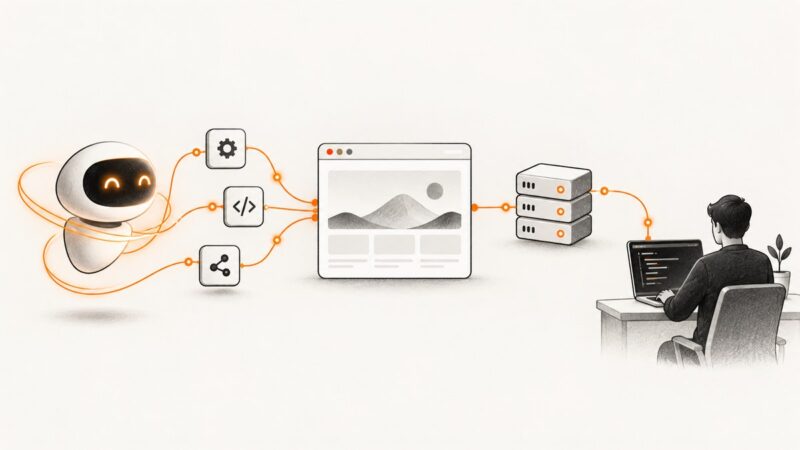
AI agents use website screenshots in a repeated observe → decide → act → verify loop. The agent receives an image of the rendered page, proposes a click, keystroke, or scroll, and a browser automation layer performs it. The application captures the changed page and sends that image back so the agent can check what happened and choose the next action.
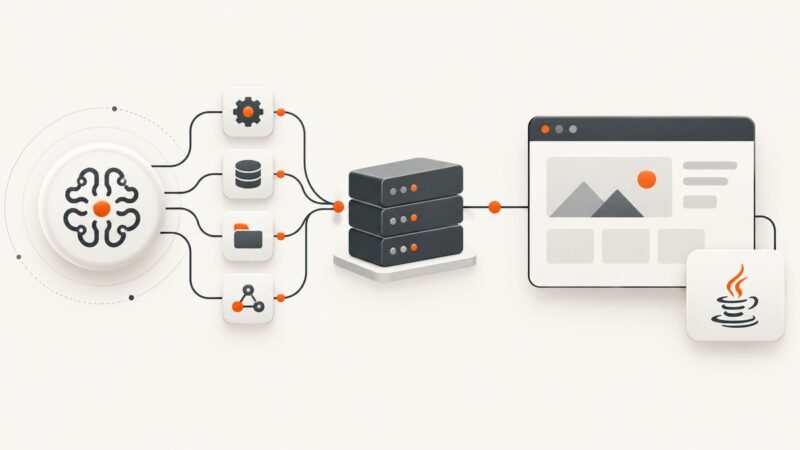
A screenshot is one observation channel, not the only one. Depending on the tool and page, an agent may also use DOM elements, accessibility information, forms, or semantic references. A hybrid design can use stable page structure when available and visual grounding when appearance, canvas content, or unstable references matter. That is an implementation pattern inferred from documented tool capabilities, not a universal vendor requirement. [Google Computer Use documentation] [Anthropic browser-use documentation]
1. The screenshot automation loop
- Set the task and environment. Choose a browser you control or a vendor-hosted browser session. Define the task, allowed actions, and any confirmation requirements.
- Observe the current page. Capture the visible browser state and provide the screenshot, task, and relevant tool instructions to the model.
- Interpret and propose an action. The model identifies a target and proposes an action such as clicking coordinates, typing text, or scrolling. Some systems can instead refer to page elements or accessibility nodes.
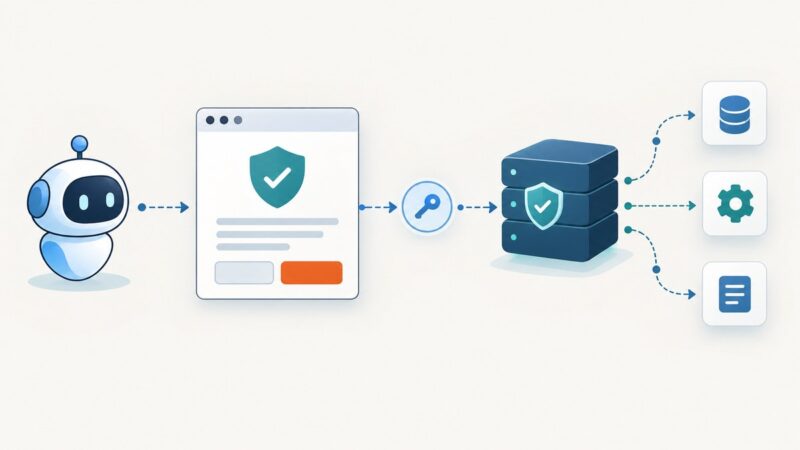
- Apply safety checks. Decide whether the action is allowed, requires human confirmation, or must be blocked. Do not treat instructions found in web content as trusted policy.
- Execute the action. The application or browser automation harness performs the action in the browser.
- Capture and verify. Take a new screenshot, inspect whether the intended result occurred, and continue, retry, or stop based on evidence.
- Record and clean up carefully. Keep useful action metadata, restrict access to screenshots, and apply the session retention and deletion practices appropriate to the environment.
Google’s Computer Use documentation describes this loop and shows Playwright as an execution handler. OpenAI likewise describes observing browser state and checking results. The exact action format and safety handling depend on the selected system. [Google Computer Use documentation] [OpenAI computer-use documentation]
Google summarizes the interaction as: “Using screenshots, the model can ‘see’ a computer screen, and ‘act’ by generating specific UI actions like mouse clicks and keyboard inputs.” [Google AI for Developers]
2. Choose the right observation channel
| Channel | Useful when | Limits to account for |
|---|---|---|
| Screenshot and coordinates | Appearance, visual layout, images, or canvas content determines the target. | Coordinates depend on the image dimensions and viewport. Layout shifts, scaling, and overlays can make a guessed point miss. |
| DOM or accessibility references | Controls expose stable roles, labels, forms, or element references. | References may be unavailable or unstable on virtualized, canvas-rendered, or frequently re-rendered pages. |
| Hybrid | The task benefits from semantic targets and visual confirmation, or must fall back when references fail. | Requires the harness to reconcile target types and verify the result consistently. |
Anthropic’s browser-use tool can inspect page structure, accessibility trees, elements, forms, and tabs as well as screenshots and viewport coordinates. Its documentation notes that references can be unstable on virtualized, canvas-rendered, or frequently re-rendered pages; screenshot grounding and coordinate clicks can be a fallback in those cases. Anthropic distinguishes browser work from broader desktop interaction, which its computer-use tool handles through screenshots and coordinates. [Anthropic browser-use documentation]
3. Build a screenshot loop with Playwright
The following runnable Node.js example demonstrates the browser side of the loop without binding it to a particular model vendor. It captures an initial state, asks a placeholder agent function for an action, executes a coordinate click or scroll, captures the next state, and checks a task-specific completion condition. Replace proposeAction with the selected model’s API call and its documented screenshot/action format. The placeholder deliberately stops instead of inventing an agent response.
import { chromium } from 'playwright';
import { writeFile } from 'node:fs/promises';

// Connect your model here. Return a validated action based on the task
// and screenshot. This placeholder makes the example runnable and safe:
// it captures state, then stops until you connect an agent.
async function proposeAction({ task, screenshot }) {
  console.log(`Task: ${task}`);
  console.log(`Screenshot captured: ${screenshot.length} bytes`);
  return { type: 'stop', reason: 'Connect a model action API before running actions.' };
}

const task = 'Open the pricing page and confirm that its heading is visible.';
const browser = await chromium.launch({ headless: true });
const page = await browser.newPage({ viewport: { width: 1280, height: 720 } });

try {
  await page.goto('https://example.com', { waitUntil: 'domcontentloaded', timeout: 30000 });

  for (let step = 0; step < 10; step += 1) {
    const screenshot = await page.screenshot({ type: 'png' });
    await writeFile(`step-${step}.png`, screenshot);

    const action = await proposeAction({ task, screenshot });
    if (!action || action.type === 'stop') {
      console.log(action?.reason ?? 'Agent stopped.');
      break;
    }

    if (action.type === 'click') {
      const { x, y } = action;
      if (!Number.isFinite(x) || !Number.isFinite(y) || x < 0 || y < 0 ||
          x > 1280 || y > 720) {
        throw new Error('Agent returned coordinates outside the configured viewport.');
      }
      await page.mouse.click(x, y);
    } else if (action.type === 'scroll') {
      await page.mouse.wheel(action.deltaX ?? 0, action.deltaY ?? 0);
    } else if (action.type === 'type') {
      await page.keyboard.type(String(action.text));
    } else if (action.type === 'press') {
      await page.keyboard.press(action.key);
    } else {
      throw new Error(`Unsupported action type: ${action.type}`);
    }

    // Allow a short render interval; use page-specific waits where possible.
    await page.waitForTimeout(400);

    // Verify a concrete expected state when the task permits it.
    if (await page.getByRole('heading', { name: 'Example Domain' }).count()) {
      console.log('The example page heading is present.');
    }
  }
} finally {
  await browser.close();
}
Install the runtime dependencies with npm install playwright and install a browser with npx playwright install chromium. The model adapter must follow the chosen provider’s current request and response schema. For a production agent, validate its output against an allowlist, impose step and time limits, and verify task-specific outcomes rather than treating a syntactically valid action as success.
What to change for a real task
- Replace
https://example.comand the completion check with the target site and a condition that proves the requested state. - Implement
proposeActionusing a computer-use or vision model API. Send the image in the format that API requires and parse only supported actions. - Match coordinate validation to the actual viewport. If screenshots are resized before model submission, transform returned coordinates back to the browser’s coordinate frame.
- Prefer a locator such as a role and accessible name when the page provides a stable semantic target; retain screenshot-based grounding for visual-only content or as a fallback.
- Ask for confirmation before consequential actions such as purchases, sending messages, changing account settings, or deleting data.
4. Keep screenshot coordinates aligned
A coordinate is meaningful only in the coordinate frame the browser expects. If the model sees a resized image but the automation harness clicks the original viewport, scale the coordinates back before executing them.
function imagePointToViewport(point, imageSize, viewportSize) {
  if (imageSize.width <= 0 || imageSize.height <= 0) {
    throw new Error('Image dimensions must be positive.');
  }
  return {
    x: point.x * viewportSize.width / imageSize.width,
    y: point.y * viewportSize.height / imageSize.height,
  };
}
This simple transform assumes the image shows the entire viewport without cropping, padding, or letterboxing. If preprocessing crops the image, add the crop offset; if it adds borders, remove that padding from the model’s coordinates first. A changed viewport, browser zoom, device scale, or scroll position can also invalidate coordinates, so capture a fresh image after layout changes.
Image limits are model-specific and may change. At the time of the cited guidance, Anthropic recommends starting at 1280×720 for its Claude 4.6 family and 1080p for Opus 4.7; it gives different maximum long-edge and megapixel limits for those model families. Treat those figures as vendor guidance for those models, not universal vision-model limits. [Anthropic vision guidance]
5. Safety, privacy, and reliability
Treat page content as untrusted
Text visible in a screenshot can contain instructions intended to manipulate the agent. Treat page content as data to interpret, not as a replacement for the task, system policy, or action permissions. Put consequential actions behind explicit policy checks and human confirmation where appropriate. Anthropic flags prompt-injection risk in browser content, while Google describes Computer Use as a preview capability that can make errors and recommends close supervision for important or sensitive tasks. [Anthropic browser-use documentation] [Google Computer Use documentation]
Verify after every meaningful action
Clicks can miss, navigation can fail, and dynamic pages can render late. Check the next screenshot and, when available, a DOM or accessibility condition. Retry only when the action is safe and the current state is understood; otherwise stop and request review. Use bounded retries, a maximum number of steps, navigation timeouts, and a clear terminal condition.
Limit exposure of captured data
Screenshots may contain account details or other sensitive page data. Restrict who can view them, avoid storing them in general application logs, and define retention and deletion behavior for the browser session. OpenAI specifically advises showing screenshots only to authorized users and keeping them out of application logs. [OpenAI computer-use documentation]
Measure latency and cost in the actual workflow
Each observe-and-act cycle may involve browser work, image transfer, model inference, and a verification step. Larger images consume more image input; tool definitions can also add overhead. The total depends on the model, image size, number of steps, and browser environment, so measure those in the target task rather than assuming a fixed cost or speed. [Anthropic browser-use documentation]
6. Troubleshooting
| Symptom | Likely cause | Fix |
|---|---|---|
| Click lands beside the control | Image and viewport dimensions differ, or layout moved after capture. | Use a fresh screenshot, confirm viewport dimensions, and map image coordinates to viewport coordinates, including crop or padding offsets. |
| Agent repeats the same action | The loop assumes the action succeeded or does not define a stop condition. | Inspect the new state after every action, add a concrete success check, cap the step count, and stop on repeated states. |
| Target cannot be identified | The page is still loading, obscured by an overlay, or the screenshot is too large or degraded. | Wait for a specific page condition, capture again, and use a model-appropriate image size. Try stable DOM or accessibility references if available. |
| Element reference is stale | A virtualized or dynamic page re-rendered after the reference was collected. | Refresh the structure snapshot and resolve the target again; use screenshot grounding when references are unstable. |
| Navigation or action times out | Slow network, a page that never reaches the selected load state, or a blocked interaction. | Set explicit timeouts, choose a suitable load condition, wait for the target state, and report failure rather than claiming completion. |
| Unexpected action follows page text | Untrusted page content influenced the model. | Keep task instructions and permission policy separate from page content; restrict allowed actions and require confirmation for consequential steps. |
| Sensitive information appears in artifacts | Raw screenshots or session logs were retained or broadly accessible. | Restrict access, avoid general logs for image data, and apply a retention and deletion policy. |
7. Benchmark results are not production guarantees
In its 2025 Computer-Using Agent announcement, OpenAI reported 38.1% success on OSWorld, 58.1% on WebArena, and 87.0% on WebVoyager; the same announcement reported 72.4% human performance on OSWorld. OpenAI described WebVoyager tasks as relatively simple compared with WebArena. These are vendor-reported results for specific benchmarks and an evaluation, not expected production accuracy or a current leaderboard. [OpenAI Computer-Using Agent announcement]
8. Or skip the browser setup
If you need a screenshot image for an agent or workflow but do not need to run interactive browser actions yourself, ScreenshotNeo returns a website screenshot or PDF from one GET request. It is a screenshot API and MCP server for developers. The MCP tools include take_screenshot, get_page_info, and capture_pdf, for Claude, Cursor, and other MCP clients. A screenshot API gives you an image; it does not replace the action-and-verification loop needed to operate a browser.
For API options and parameters, see the ScreenshotNeo documentation.
curl -G "https://api.screenshotneo.com/v1/shot" -d access_key=YOUR_API_KEY --data-urlencode url=https://stripe.com -o shot.webpimport requests
r = requests.get(
"https://api.screenshotneo.com/v1/shot",
params={"access_key": "YOUR_API_KEY", "url": "https://stripe.com"},
timeout=90,
)
open("shot.webp", "wb").write(r.content)const q = new URLSearchParams({ access_key: 'YOUR_API_KEY', url: 'https://stripe.com' });
const res = await fetch(`https://api.screenshotneo.com/v1/shot?${q}`);
if (!res.ok) throw new Error(`Screenshot request failed: ${res.status}`);
await import('node:fs/promises').then(({ writeFile }) => writeFile('shot.webp', Buffer.from(await res.arrayBuffer())));- Cookie and consent banners, newsletter popups, and chat widgets are removed before the shot; each cleanup step can be turned off.
- Bot checks, blank pages, timeouts, failed loads, and cache hits are never billed. Responses include page-verdict and billing headers.
- An MCP server lets AI agents request screenshots, page information, and PDFs.
- The free plan includes 1,000 screenshots a month with no card. Paid plans start at $5 for 3,000; every feature is on every plan.
Create a free ScreenshotNeo account for 1,000 screenshots a month with no card.
9. FAQ
Can an agent use screenshots without clicking coordinates?
Yes. A screenshot can provide visual context while the system targets controls through DOM or accessibility references. The action mechanism is determined by the agent tooling and browser harness.
Should every action be reviewed by a person?
Not necessarily. Set review requirements based on the consequences of an action. Sensitive or hard-to-reverse actions should have stronger safeguards and supervision.
Does a screenshot prove that a task succeeded?
No. It provides evidence of visible state. Confirm the requested outcome with a suitable page condition or human review, especially when the result matters.
Is browser automation the same as desktop automation?
No. Browser automation targets work inside web pages. Desktop automation also covers interactions outside the browser, such as other applications and system controls.