How to Capture Website Screenshots with an AI Agent When a Page Requires a CAPTCHA
When a CAPTCHA blocks an AI agent, stop the automated flow. Get authorized access first, then capture the page with browser automation or a screenshot service.
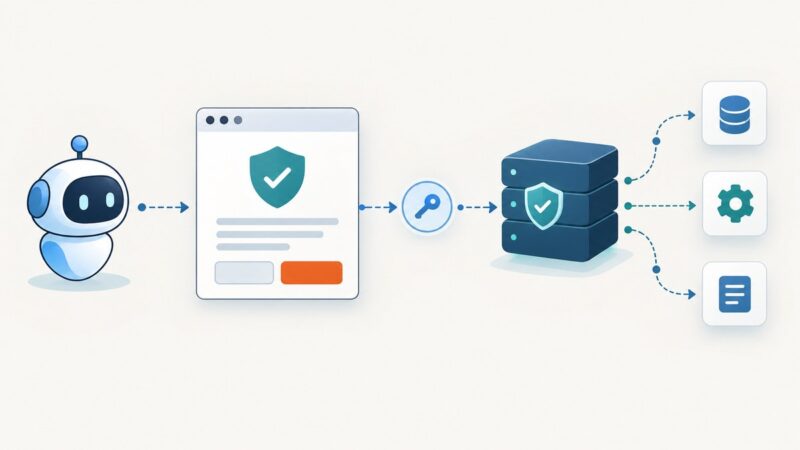
Direct answer: If a production CAPTCHA or anti-bot challenge blocks your AI agent, pause the automated flow. Do not ask the agent to solve it or try to evade it. Request an authorized access route, have an authorized person complete the checkpoint through a permitted workflow, or use the provider’s documented test setup on a site your team controls. Once the page is legitimately accessible, capture it with browser automation or a screenshot service.
A screenshot tool does not grant permission to defeat a production challenge. This guide explains the safe workflow, shows a Playwright MCP setup for pages the agent may access, and covers capture choices, troubleshooting, and cost considerations.
1. What a CAPTCHA means for an AI agent
“CAPTCHA” is often used as a catch-all for a security checkpoint. Cloudflare describes challenges as mechanisms for checking whether a visitor is human rather than an automated script; its challenge system can evaluate browser signals or request a minimal action. Cloudflare says it does not use visual CAPTCHA puzzles. The exact challenge and permitted workflow depend on the provider, so check that provider’s current documentation. Cloudflare’s Challenges documentation
A challenge means the requested page is not currently available to the automated flow. Treat it as an access boundary. Do not automate solving, configure stealth behavior, rotate proxies, or otherwise attempt to get around the checkpoint. Cloudflare’s supported-browser guidance says automated browsers are not supported for solving production challenges, names Selenium, Puppeteer, Playwright, and Cypress, and points to Turnstile test keys for automated testing. That guidance applies to Cloudflare; check the relevant provider’s policy for other services. Cloudflare supported browsers
2. Use this authorized-access workflow
- Navigate only to the intended page. Confirm the requester is authorized to access it and that the task permits automated browsing.
- Detect the checkpoint. If the page shows a CAPTCHA, challenge, or access-denied interstitial instead of the intended content, stop the capture flow. If useful and permitted, keep a diagnostic screenshot for the site owner or operator.
- Request an approved route. Ask the site owner for an API, an allowlisted integration, or another documented access method. If the site belongs to your team, use its provider’s test mode or test credentials. Cloudflare specifically recommends Turnstile test keys for automated testing.
- Resume only after access is authorized. An authorized person can complete a checkpoint where the provider and site owner permit that workflow. Continue only after the ordinary page content is available and the resulting session can legitimately be used by the automation.
- Capture and inspect the result. Choose viewport, element, or full-page scope. Check for clipping, lazy-loaded sections, overlays, and sensitive information before sharing the image.
3. Capture an accessible page with Playwright MCP
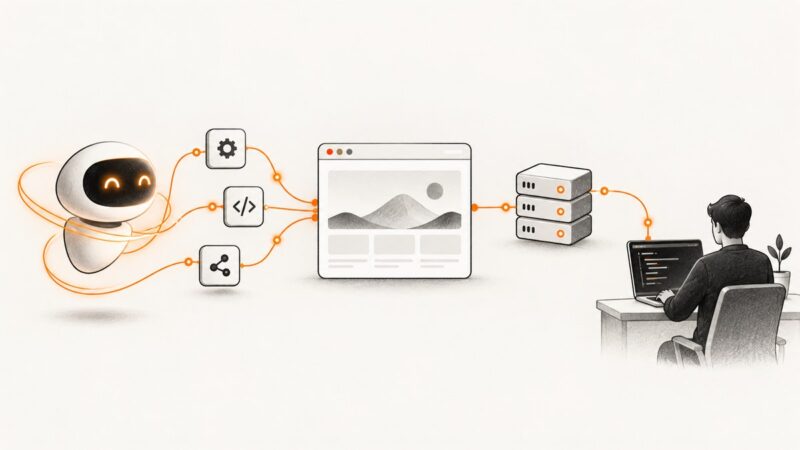
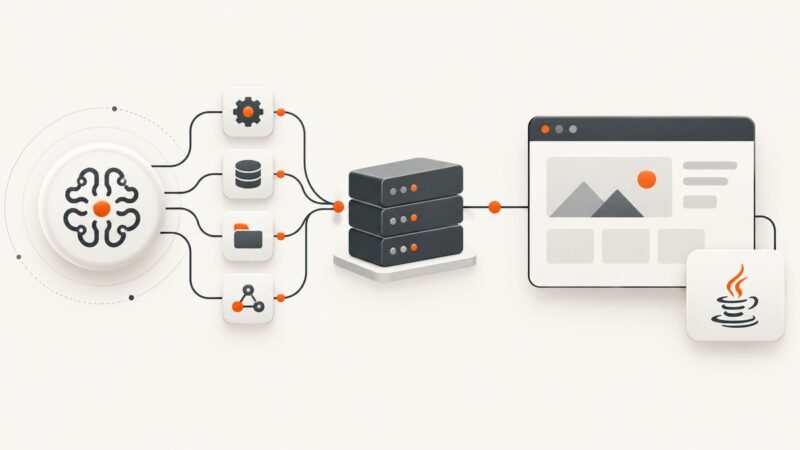
For an AI agent that needs to browse and capture an accessible page, Playwright MCP provides screenshot tools. Its documentation describes viewport, selected-element, and full-page captures, with PNG, JPEG, and WebP output options. This is a capture workflow for a page the agent is allowed to access; it is not a CAPTCHA-solving workflow. Playwright MCP screenshot tools
Connect a compatible MCP client to the official Playwright MCP server using the current installation instructions in the Playwright MCP repository. Then ask the agent to open the authorized URL and capture the requested scope. The exact configuration varies by MCP client, so follow that client’s current instructions rather than copying an unverified configuration snippet.
Example instruction to the connected agent:
Open https://example.com/report, which I am authorized to access.
If the page displays a CAPTCHA, security challenge, or access-denied screen,
stop and report that access is blocked. Do not solve or evade the challenge.
If the report loads normally, capture the full page as PNG and report the
saved screenshot location.
Replace the example URL with the authorized target. If the page is behind a login, use only a session and authentication method approved for the task. Do not paste secrets into a prompt or screenshot output.
Choose the capture scope
| Scope | Use it when | Check afterward |
|---|---|---|
| Viewport | You need the visible screen at the current scroll position. | Content below or above the viewport will not appear. |
| Element | You need a chart, card, article, or other specific region. | Confirm the selected element includes the content and context you need. |
| Full page | You need the page from top to bottom. | Long pages and lazy-loaded content may need extra loading time; inspect the image for missing sections and overlays. |
The documented formats include PNG, JPEG, and WebP. Pick one based on the destination: PNG is suitable when preserving crisp interface details matters, while JPEG or WebP may reduce file size where the receiving workflow supports them. That format choice is an operational recommendation, not a measured performance claim.
4. Use a hosted browser for simple captures or deeper control
For a one-off screenshot of an accessible page, a hosted screenshot endpoint can avoid maintaining a browser process. For interactions, session handling, or a multi-step flow, a browser session controlled through Playwright, Puppeteer, or CDP provides more control. Cloudflare positions Browser Run Quick Actions for simple tasks and browser sessions for full control, and lists Playwright MCP or CDP with MCP clients for AI-agent browsing. These capabilities still do not authorize automated solving of a production challenge. Browser Run getting started · Browser Run overview
For Cloudflare’s Playwright package specifically, its guide says the latest package version requires nodejs_compat and a compatibility date of 2025-09-15 or later. This requirement is specific to that package and environment; verify the current deployment documentation before configuring it. Cloudflare Browser Run setup
5. Troubleshooting
| Symptom | Likely cause | Safe next step |
|---|---|---|
| The image shows a CAPTCHA or challenge page. | The site or its security provider has not granted the automated session access. | Stop automation and request an approved route or authorized human completion. For a site you control, use the provider’s test mode. |
| The agent keeps retrying the blocked URL. | The workflow has no explicit stop condition for challenge pages. | Add an instruction to detect challenge or access-denied content, stop retries, and report that access is blocked. |
| The screenshot is blank or incomplete. | The page may not have rendered, content may load later, or the capture scope may be wrong. | Confirm the page loads normally in the approved session, wait for the intended content, and try the appropriate viewport, element, or full-page scope. |
| A full-page screenshot misses lower sections. | Those sections may load only when scrolled into view or after additional page activity. | Use a documented full-page workflow and inspect the output. If the page requires interaction to reveal content, use an authorized scripted session. |
| The MCP client cannot invoke screenshot tools. | The server may not be installed, connected, or enabled in that client. | Check the client-specific MCP setup and the Playwright MCP installation instructions, then reconnect and confirm the tools are available. |
| A hosted browser deployment fails to start. | The deployment may not meet that provider’s runtime requirements. | Check the provider’s current compatibility and deployment documentation. For Cloudflare’s latest Playwright package, verify the documented compatibility flag and date. |
| The screenshot contains private data or an unintended overlay. | The authorized page includes sensitive content, popups, or other visible elements. | Inspect before sharing. Use an approved redaction or capture process and avoid placing credentials in prompts or saved artifacts. |
6. Performance, reliability, and cost
- Keep the workflow bounded. Stop promptly at a challenge instead of repeatedly reloading a page that remains blocked. Retries do not establish authorization.
- Match the tool to the work. A simple screenshot endpoint is suited to a straightforward capture. A scripted browser session is more appropriate when the authorized page requires interactions or session state.
- Allow for rendering. A screenshot taken before the page finishes loading can omit content. Wait for the intended content and inspect the result, especially for long pages and lazy-loaded sections.
- Account for hosted usage. Check the selected provider’s current pricing, quotas, and limits before running repeated or bulk captures. This research does not establish a comparable cost or speed benchmark across providers.
- Protect artifacts. Screenshots can contain account data or other sensitive information. Store and share them only through an approved workflow.
7. Or skip the browser setup
ScreenshotNeo is a website screenshot API and MCP server for developers. For an authorized, accessible page, one GET request returns an image or PDF. The API and its capture options are documented at ScreenshotNeo docs.
curl -G "https://api.screenshotneo.com/v1/shot" -d access_key=YOUR_API_KEY --data-urlencode url=https://stripe.com -o shot.webpPython:
import requests

r = requests.get(
    "https://api.screenshotneo.com/v1/shot",
    params={"access_key": "YOUR_API_KEY", "url": "https://stripe.com"},
    timeout=90,
)
open("shot.webp", "wb").write(r.content)
Node.js:
const q = new URLSearchParams({ access_key: 'YOUR_API_KEY', url: 'https://stripe.com' });
const res = await fetch(`https://api.screenshotneo.com/v1/shot?${q}`);
const bytes = new Uint8Array(await res.arrayBuffer());
await import('node:fs/promises').then(fs => fs.writeFile('shot.webp', bytes));
Use an API key and a page you are authorized to capture. ScreenshotNeo removes cookie banners, newsletter popups, and chat widgets before the shot; each step can be turned off. Bot checks, blank pages, and failed loads are never billed. Its responses report page verdict and billing status in headers. The MCP server provides take_screenshot, get_page_info, and capture_pdf for AI agents and MCP clients. The free plan includes 1,000 screenshots a month with no card; paid plans start at $5 for 3,000 screenshots. Sign up free for 1,000 screenshots a month, no card required.
8. FAQ
Can an AI agent complete a CAPTCHA if a human authorizes the browsing task?
Authorization to browse does not by itself authorize automated challenge-solving. Follow the site owner’s instructions and the challenge provider’s current policy. For Cloudflare production challenges, its supported-browser guidance says automated browsers are not supported for solving them.
What should the agent return when it hits a challenge?
It should stop, report that the page is blocked by a challenge, and ask for an approved access route. It can preserve a diagnostic artifact only if doing so is permitted.
Does a screenshot API bypass a CAPTCHA?
A screenshot API is for capturing pages it can legitimately load; it is not permission to bypass access controls. Resolve access through the site owner or documented test setup before capture.
Which official Cloudflare test option is documented for automation?
Cloudflare points developers to Turnstile test keys for automated testing. Use them for a system you control and consult current provider documentation for details.