How to Capture a Webpage Screenshot with an AI Agent and Store It in Google Drive
Use an AI agent to choose a webpage and capture scope, Playwright to create the screenshot, and Google Drive API to upload and store it.
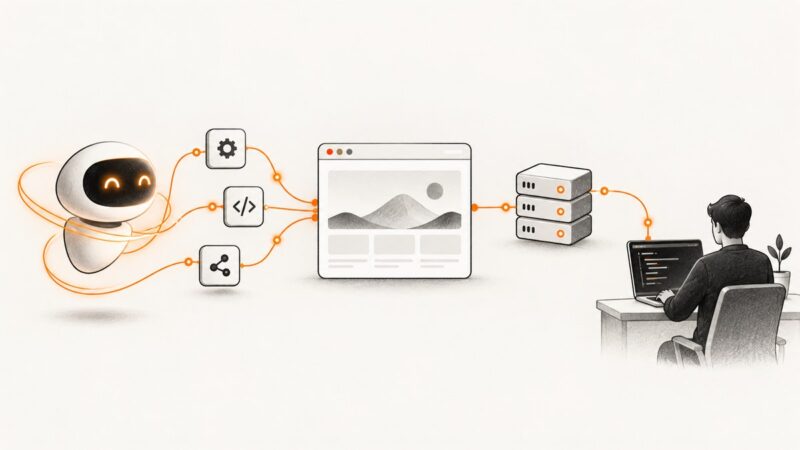
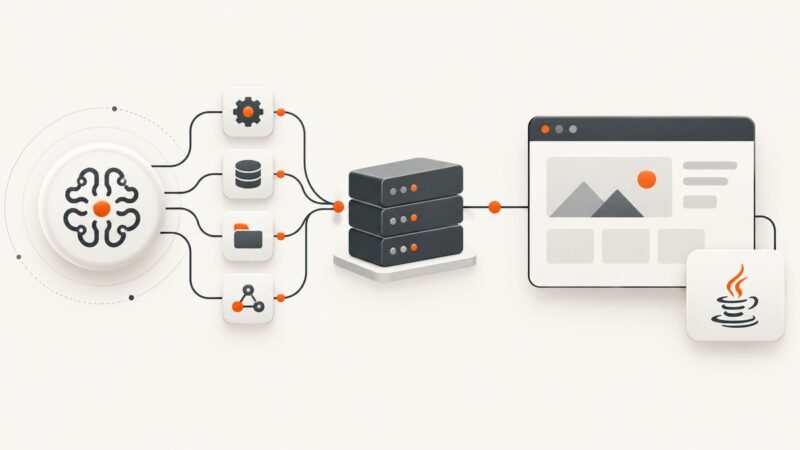
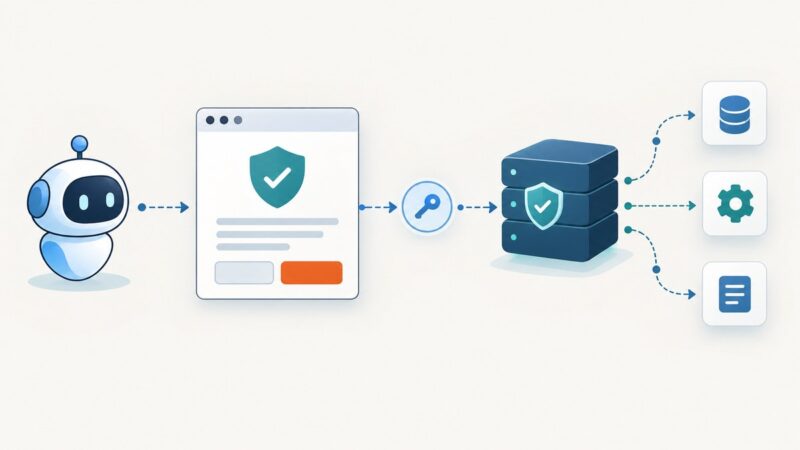
To capture a webpage screenshot with an AI agent and store it in Google Drive, split the job into two operations: use browser automation such as Playwright to navigate and capture the page, then upload the screenshot bytes with Google Drive API files.create. The agent can decide what page and capture scope the task needs; application code should execute browser actions and make the authenticated Drive request.
This guide uses Python, Playwright, and the Google Drive Python client. It also shows the API flow in cURL and Node.js, explains capture choices and Drive authorization, and covers common failure cases. The examples are implementation patterns based on the documented APIs, not claims of a live end-to-end test.
1. Decide what the agent should capture
Give the agent a clear task, such as “capture the full pricing page” or “save the visible hero section.” The agent should return structured values such as the target URL, capture scope, and a safe filename. Your application should validate those values before opening a browser or writing to Drive.
- Viewport: captures the visible browser area at the current viewport size.
- Element: captures a specific component, such as a chart or pricing card. Use a stable CSS selector and handle the case where it is absent.
- Full page: captures the scrollable document, useful for articles and long pages. The resulting image may be very tall and larger than a viewport capture.
Also decide whether the capture needs an authenticated browser session, what readiness condition marks the page as ready, which output format is appropriate, and which Drive folder should receive the file. Treat the URL and selector as untrusted input when the agent can choose them.
2. Set up Python, Playwright, and Google Drive access
Install Playwright and the Google API client libraries, then install a browser runtime:
python -m pip install playwright google-api-python-client google-auth-httplib2 google-auth-oauthlib
python -m playwright install chromium
Configure Google OAuth credentials for a desktop or server application and complete the authorization flow appropriate to your application. The example below uses a local OAuth client file named credentials.json and stores a refreshable token in token.json. Keep both files out of source control. For deployed services, use an appropriate service identity or managed credential flow rather than copying a user’s token file to an unsafe location.
Choose the narrowest OAuth scope that supports the intended file operation and sharing model. The Drive API lists drive, drive.file, and drive.appdata, among others. Some scopes are restricted and may require a security assessment. Confirm scope requirements for your app and deployment in the Drive API files.create reference.
3. Capture the page and upload it with Python
This runnable script captures a page with Playwright, returns PNG bytes, and uploads them as a Drive file. It uses a user-selected URL and capture mode; change the sample URL and optional folder ID for your use case. On the first run, the OAuth flow may open a browser for consent.
import re
from pathlib import Path
from urllib.parse import urlparse

from google.auth.transport.requests import Request
from google.oauth2.credentials import Credentials
from google_auth_oauthlib.flow import InstalledAppFlow
from googleapiclient.discovery import build
from googleapiclient.http import MediaIoBaseUpload
from playwright.sync_api import sync_playwright
import io

SCOPES = ["https://www.googleapis.com/auth/drive.file"]
TOKEN_PATH = Path("token.json")
CREDENTIALS_PATH = Path("credentials.json")


def drive_service():
    creds = None
    if TOKEN_PATH.exists():
        creds = Credentials.from_authorized_user_file(str(TOKEN_PATH), SCOPES)
    if not creds or not creds.valid:
        if creds and creds.expired and creds.refresh_token:
            creds.refresh(Request())
        else:
            flow = InstalledAppFlow.from_client_secrets_file(
                str(CREDENTIALS_PATH), SCOPES
            )
            creds = flow.run_local_server(port=0)
        TOKEN_PATH.write_text(creds.to_json(), encoding="utf-8")
    return build("drive", "v3", credentials=creds)


def safe_stem(url):
    host = urlparse(url).hostname or "page"
    host = re.sub(r"[^A-Za-z0-9.-]+", "-", host).strip(".-") or "page"
    return f"{host}-full-page"


def capture_png(url, mode="full_page", selector=None):
    parsed = urlparse(url)
    if parsed.scheme not in ("http", "https") or not parsed.hostname:
        raise ValueError("URL must be an absolute http:// or https:// URL")

    with sync_playwright() as p:
        browser = p.chromium.launch(headless=True)
        page = browser.new_page(viewport={"width": 1440, "height": 1000})
        response = page.goto(url, wait_until="domcontentloaded", timeout=60000)
        if response and response.status >= 400:
            browser.close()
            raise RuntimeError(f"Page returned HTTP {response.status}")

        # Replace this with a task-specific readiness condition when needed.
        page.locator("body").wait_for(state="visible", timeout=15000)

        if mode == "full_page":
            image = page.screenshot(type="png", full_page=True, animations="disabled")
        elif mode == "viewport":
            image = page.screenshot(type="png", full_page=False, animations="disabled")
        elif mode == "element":
            if not selector:
                browser.close()
                raise ValueError("An element capture requires a CSS selector")
            locator = page.locator(selector).first
            locator.wait_for(state="visible", timeout=15000)
            image = locator.screenshot(type="png", animations="disabled")
        else:
            browser.close()
            raise ValueError("mode must be full_page, viewport, or element")

        browser.close()
        return image


def upload_png(image_bytes, filename, folder_id=None):
    service = drive_service()
    metadata = {"name": filename, "mimeType": "image/png"}
    if folder_id:
        metadata["parents"] = [folder_id]
    media = MediaIoBaseUpload(io.BytesIO(image_bytes), mimetype="image/png", resumable=True)
    created = service.files().create(
        body=metadata,
        media_body=media,
        fields="id,name,mimeType,webViewLink",
    ).execute()
    return created


if __name__ == "__main__":
    target_url = "https://example.com"
    png = capture_png(target_url, mode="full_page")
    filename = safe_stem(target_url) + ".png"
    result = upload_png(png, filename)
    print({"id": result["id"], "name": result["name"], "link": result.get("webViewLink")})
The example waits for the DOM and then for the body to be visible. A visible body does not guarantee that an application has finished rendering its data. For a known page, wait for a meaningful selector, a specific application state, or a bounded network-idle condition if appropriate. Avoid a guessed fixed sleep when a reliable readiness condition is available.
4. Upload screenshot bytes with the Drive API
Drive file creation takes metadata and media content. Set a useful filename and an accurate MIME type, and provide a parent folder ID if the file belongs in a particular folder. Request the fields your application needs and only report success after the create request returns a file ID.
cURL: create a file from a screenshot on disk
Obtain a valid OAuth access token through your configured Google OAuth flow. This example uploads an existing PNG as multipart content:
curl -X POST \
  -H "Authorization: Bearer ACCESS_TOKEN" \
  -F 'metadata={"name":"example-com-full-page.png","mimeType":"image/png"};type=application/json' \
  -F 'file=@example-com-full-page.png;type=image/png' \
  'https://www.googleapis.com/upload/drive/v3/files?uploadType=multipart&fields=id,name,mimeType,webViewLink'
For a simple media upload, metadata may be omitted, but multipart is useful when you need to set the filename, MIME type, or parent folder as part of creation. Google documents simple, multipart, and resumable upload modes in the files.create API reference.
Node.js: capture with Playwright and upload through Drive API
Install playwright and googleapis, configure Google OAuth credentials for your app, and provide an authorized OAuth client. This example uses the Drive SDK and a screenshot buffer:
import { chromium } from 'playwright';
import { google } from 'googleapis';

const targetUrl = 'https://example.com';
const auth = new google.auth.OAuth2(
  process.env.GOOGLE_CLIENT_ID,
  process.env.GOOGLE_CLIENT_SECRET,
  process.env.GOOGLE_REDIRECT_URI
);

// Supply tokens from your app's completed OAuth flow.
auth.setCredentials({
  access_token: process.env.GOOGLE_ACCESS_TOKEN,
  refresh_token: process.env.GOOGLE_REFRESH_TOKEN,
});

const browser = await chromium.launch({ headless: true });
try {
  const page = await browser.newPage({ viewport: { width: 1440, height: 1000 } });
  const response = await page.goto(targetUrl, {
    waitUntil: 'domcontentloaded',
    timeout: 60_000,
  });
  if (response && response.status() >= 400) {
    throw new Error(`Page returned HTTP ${response.status()}`);
  }
  await page.locator('body').waitFor({ state: 'visible', timeout: 15_000 });
  const screenshot = await page.screenshot({ type: 'png', fullPage: true });

  const drive = google.drive({ version: 'v3', auth });
  const created = await drive.files.create({
    requestBody: {
      name: 'example-com-full-page.png',
      mimeType: 'image/png',
      // parents: ['YOUR_DRIVE_FOLDER_ID'],
    },
    media: { mimeType: 'image/png', body: Buffer.from(screenshot) },
    fields: 'id,name,mimeType,webViewLink',
  });
  console.log(created.data);
} finally {
  await browser.close();
}
Use your application’s OAuth flow to obtain and refresh tokens. Do not put a real access token in source code, logs, or an agent prompt. For large transfers, the Drive API supports resumable uploads; for a typical screenshot, choose the mode that fits your retry and reliability needs.
5. Use an agent safely and reliably
A computer-use agent should not be treated as a process that automatically owns the browser or Drive account. Google’s Gemini computer-use guide describes an application loop: the application sends a screenshot and instructions to the model, interprets a requested action, executes allowed actions through an automation tool such as Playwright, then captures the resulting state. Apply the same separation here: the model proposes what to capture, while application code mediates browser access, validates inputs, and uploads through authorized Drive credentials. See the Gemini computer-use documentation for that model-to-application pattern.
- Allow only intended URL schemes and destinations; consider blocking local, private-network, and metadata-service addresses when the agent controls URLs.
- Bound navigation, selector waits, page size, and the number of retries so one task cannot consume unbounded resources.
- Use a dedicated browser context for each task when cookies or authentication must not leak between jobs.
- Keep Google tokens in a credential store, refresh them through the application, and request only the scopes the workflow needs.
- Do not return a Drive link as proof of success until file creation has succeeded. Return the Drive file ID and, where useful, its web view link.
- Decide whether repeated requests create new files or update/replace an existing file. A stable naming convention or task identifier can help avoid confusing duplicates.
6. Choose format, scale, and upload mode
| Choice | Use it when | Trade-off |
|---|---|---|
| PNG | You need lossless capture, sharp interface text, or transparency. | Files can be larger than compressed formats. |
| JPEG | A photographic page matters more than lossless text edges. | Compression can introduce visible artifacts; Playwright’s JPEG screenshot supports quality settings. |
| WebP | Your image pipeline supports it and reduced file size is useful. | Check the receiving workflow’s format support before adopting it. |
| CSS scale | Dimensions tied to CSS pixels are appropriate. | Lower pixel density than device scale on high-density displays. |
| Device scale | You want a denser image on high-density displays. | More pixels can mean more memory and a larger upload. |
| Simple or multipart upload | The image is modest in size and a straightforward request is sufficient. | A failed transfer may require starting again. |
| Resumable upload | Transfers are large or failure recovery matters. | Requires managing a multi-step upload session. |
Playwright screenshots support options including output path, image type, JPEG quality, full-page capture, and scale; its API can return image bytes when no path is specified. See the Playwright Page API. For a full-page screenshot, consider that long documents can require substantial browser memory. If a target page has enormous height, capture selected sections or an element instead of producing one extremely tall image.
7. Troubleshooting
| Symptom | Likely cause | Fix |
|---|---|---|
| Screenshot is blank or missing content | Capture happened before the app rendered, or content is behind a lazy-load boundary. | Wait for a page-specific selector or application-ready signal. For lazy content, scroll the page as needed before full-page capture. |
| Navigation times out | The page is slow, blocked, or never reaches the chosen load state. | Use a bounded timeout and a suitable readiness condition such as domcontentloaded plus a selector. Handle timeout as a recoverable capture failure. |
| Element capture times out | The selector is wrong, ambiguous, or the element never becomes visible. | Validate the selector, inspect whether it is inside a frame, and wait for the intended element. Fail clearly if it does not appear. |
| Google returns 401 | Access token expired or invalid. | Refresh credentials using the OAuth refresh token, or repeat authorization if refresh is unavailable. |
| Google returns 403 | The OAuth scope, account access, or destination folder permission does not allow the operation. | Review granted scopes, app verification requirements, and folder access. Reauthorize if the app’s requested scopes changed. |
| File uploads but has the wrong name or type | Metadata or media MIME type does not match the actual image. | Set the filename extension, metadata mimeType, and media MIME type consistently. |
| Duplicate files appear after retries | The application retried a create request without tracking whether the earlier request succeeded. | Persist task state and returned Drive file IDs. On ambiguous failures, reconcile before creating another file. |
| Image is too large or upload is unreliable | Full-page dimensions create a large image, or the connection fails during transfer. | Capture a smaller scope, choose a suitable format, and use resumable upload with bounded retries where appropriate. |
8. Or skip the browser setup
ScreenshotNeo is a website screenshot API and MCP server. It can capture a webpage in one request; pass the returned image bytes to your Drive upload step. The API supports PNG, JPEG, WebP, and PDF, and accepts common screenshot API parameter names to make switching easier. See the ScreenshotNeo API documentation.
curl -G "https://api.screenshotneo.com/v1/shot" -d access_key=YOUR_API_KEY --data-urlencode url=https://stripe.com -o shot.webpimport requests
r = requests.get("https://api.screenshotneo.com/v1/shot", params={"access_key": "YOUR_API_KEY", "url": "https://stripe.com"}, timeout=90)
open("shot.webp", "wb").write(r.content)const q = new URLSearchParams({ access_key: 'YOUR_API_KEY', url: 'https://stripe.com' });
const res = await fetch(`https://api.screenshotneo.com/v1/shot?${q}`);ScreenshotNeo removes cookie and consent banners, newsletter popups, and chat widgets before capture. Bot checks, blank pages, and failed loads are never billed. Its MCP server provides take_screenshot, get_page_info, and capture_pdf tools for Claude, Cursor, and other MCP clients. The free plan includes 1,000 screenshots per month with no card; paid plans start at $5 for 3,000 shots. Sign up for 1,000 free screenshots a month, with no card required.
9. Performance, reliability, and cost
The main resource costs are browser startup and page rendering, screenshot pixel count, and the Drive transfer. Reuse a browser process for a controlled batch when isolation requirements permit, but create separate contexts when session boundaries matter. Limit concurrent pages to what your environment can support. Large full-page captures use more memory and take longer to encode and upload than viewport or element captures.
For reliability, make capture and upload separate steps with explicit statuses: navigation, readiness, screenshot produced, Drive upload started, and file confirmed. Retry transient upload failures with backoff, but avoid blind retries after an ambiguous create response because that can create duplicate files. Store the Drive file ID once returned. A resumable upload helps recover larger or failure-prone transfers. Drive API usage and quota limits depend on Google’s current project configuration; check the applicable Google documentation and console rather than assuming a fixed allowance.
No performance percentage or cost benchmark is implied here. Browser compute, agent inference, and Google Drive usage depend on your deployment and account. ScreenshotNeo plans, if you choose the API route, are listed above; yearly billing gives two months free, and every feature is available on every plan.
10. Frequently asked questions
Can an AI agent save a screenshot directly to Drive by itself?
Only if the surrounding integration gives it a tool that implements Drive authorization and upload. In a typical design, the application performs the authenticated request on the agent’s behalf.
Can I save a screenshot into a shared folder?
Yes, if the authenticated account or identity has permission to create files in that folder. Supply the folder ID as a parent during file creation and verify access.
Does the Google Save to Drive button upload a Playwright screenshot buffer?
That button is intended for saving a file from a website in the user’s browser context. Google’s guide describes source URL same-origin or CORS conditions and notes that leaving the page before download completes discards the file. For bytes produced by Playwright, Drive API media upload is the direct route. See Google’s Save to Drive guide.
How do I make a Drive file link public?
File creation does not by itself make the file public. Sharing permissions are a separate Drive operation; only change them if the workflow requires public access and the account is authorized to do so.