How to Use an AI Agent to Screenshot a GST Portal Page for Documentation
Capture a clear, repeatable GST portal screenshot with an AI agent while keeping authentication, privacy, and page scope under control.
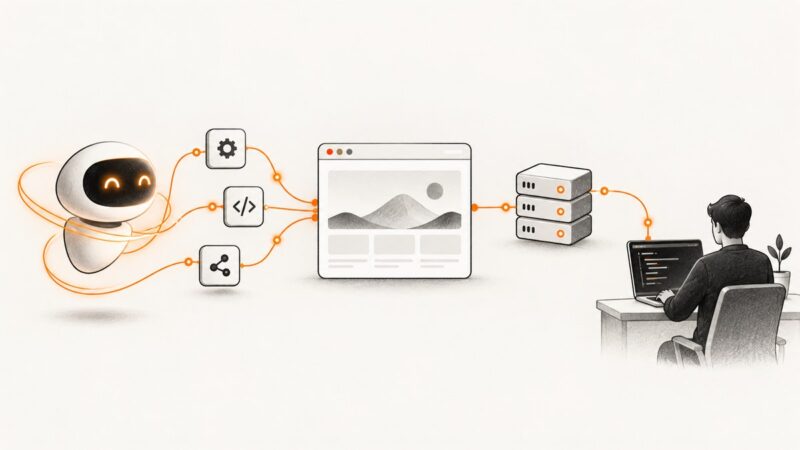
An AI agent can help capture a GST portal page by directing a browser automation tool such as Playwright: open the intended page in an authorized browser session, inspect what is displayed, capture the viewport, a specific element, or the full page, then review and save the image with useful context. The agent should not bypass a CAPTCHA or be given your portal credentials. Use a human-controlled login or a formally supported access method, and check current portal terms and your organization’s data-handling rules before capturing authenticated pages.
This guide covers a repeatable Playwright workflow for documenting a page state. It is about recording what a browser displays, not automating a tax filing. Portal interfaces and access requirements can change, so verify the live page before relying on a capture.
1. Decide what the screenshot needs to document
Before opening the browser, identify the exact page and the evidence the record needs to show. Capture only the relevant content: a status panel, a notice, or the full page if important details continue below the fold. Avoid navigating into unrelated account or taxpayer information.
Choose a scope deliberately:
| Scope | Use it when | Trade-off |
|---|---|---|
| Viewport | The relevant state is visible in the current browser window. | Content below the fold is omitted. |
| Element | A particular panel or component contains the evidence. | Page context outside the element is omitted. |
| Full page | Relevant content spans the scrollable page. | It may include more unrelated or sensitive information. |
Use the narrowest scope that fully records the intended evidence. This usually improves legibility and reduces unnecessary personal data in the image.
2. Keep login and sensitive information under human control
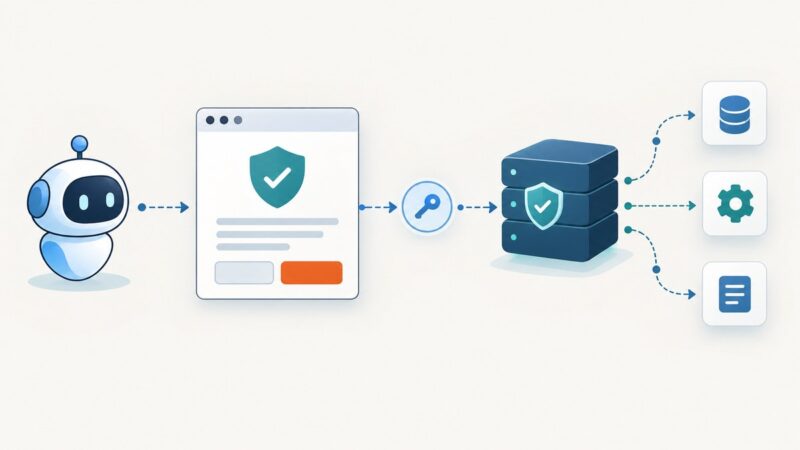
A GST login guide reviewed for this article depicts username and password fields and instructs the user to enter a CAPTCHA and press Login. This is evidence about that guide’s illustrated flow, not a guarantee that every portal path has the same requirements today. Do not ask an agent to solve, evade, or automate around a CAPTCHA, and do not place portal credentials in a prompt or script. Authenticate yourself in the browser, or use an access mechanism formally supported for your use case. [ClearTax CT Assistant installation guide](https://cleartax.in/s/gst-assistant-installation-guide) [c001]
The reviewed sources do not establish current GST portal rules for automated browser access, an official API for this screenshot task, or screenshot retention requirements. Check current portal terms and your organization’s rules before automating navigation or retaining an authenticated-page image. Minimize personal and taxpayer data. If a redacted copy is needed, preserve the original where policy requires it and label the redacted or annotated copy clearly.
3. Install Playwright and prepare a browser
The following example uses Playwright’s Node.js library. It opens a page, lets you inspect it, waits while a person completes any required authentication, then captures a named image. Install Playwright and its Chromium browser in the project directory:
npm init -y
npm install playwright
npx playwright install chromium
Save the script below as capture-gst-page.mjs. Set GST_PAGE_URL to the exact page URL you are permitted to access. The example uses a visible browser so authentication remains under human control. It does not fill login fields or handle a CAPTCHA.
import { chromium } from 'playwright';

const url = process.env.GST_PAGE_URL;
if (!url) {
  throw new Error('Set GST_PAGE_URL to the page you are authorized to capture.');
}

const browser = await chromium.launch({ headless: false });
const context = await browser.newContext({ viewport: { width: 1440, height: 1000 } });
const page = await context.newPage();

try {
  await page.goto(url, { waitUntil: 'domcontentloaded', timeout: 60000 });
  console.log('Page opened. Inspect it and complete any authorized login in the browser.');
  console.log('When the exact page state is ready, return here and press Enter.');
  await new Promise((resolve) => process.stdin.once('data', resolve));

  // Capture the whole scrollable page. See below for viewport and element variants.
  await page.screenshot({ path: 'gst-portal-page.png', fullPage: true, type: 'png' });
  console.log('Saved gst-portal-page.png');
} finally {
  await context.close();
  await browser.close();
}
Run it in a terminal. Keep the URL and local capture directory out of shared logs if they contain sensitive identifiers:
GST_PAGE_URL='https://www.example.gov/' node capture-gst-page.mjsReplace the example URL with the current, authorized GST page you intend to document. The generic host above is a placeholder, not a GST portal endpoint. Do not copy a session URL containing tokens into a shared script or repository.
4. Inspect the state, then capture the right area
Playwright recommends a sequential browser workflow: open a page, inspect its snapshot, interact only as needed, then take a screenshot. Its CLI quick start documents this open-inspect-interact-screenshot pattern. [Playwright CLI quick start](https://playwright.dev/docs/cli) [c004]
For an agent-directed workflow, instruct the agent to describe the current page and identify the intended target before it acts. Keep actions limited to the planned navigation and capture. A human should verify the page identity and visible state before the image is saved.
Playwright supports viewport, full-page, and element screenshots, and can save PNG, JPEG, or WebP. The screenshot API also exposes a scale option with css and device values. [Playwright screenshot documentation](https://playwright.dev/docs/screenshots) [c002]
Capture only the visible viewport
await page.screenshot({ path: 'gst-portal-viewport.png', type: 'png' });Capture a specific element
Use a stable selector for the panel you need. Inspect the page first to confirm the selector identifies the intended element; portal markup can change.
const panel = page.locator('[data-testid="status-panel"]');
await panel.waitFor({ state: 'visible', timeout: 15000 });
await panel.screenshot({ path: 'gst-status-panel.png', type: 'png' });
[data-testid="status-panel"] is an illustrative selector, not a claim about GST portal markup. Replace it with a selector that exists on the live page. If the portal has no stable selector, use a viewport capture or a carefully reviewed full-page capture instead of guessing.
Capture the full scrollable page
await page.screenshot({ path: 'gst-portal-full-page.png', fullPage: true, type: 'png' });Choose an output format and scaling
// JPEG: useful when a smaller photographic-style image is acceptable
await page.screenshot({ path: 'gst-portal.jpg', type: 'jpeg', quality: 85 });

// WebP
await page.screenshot({ path: 'gst-portal.webp', type: 'webp', quality: 85 });

// CSS-pixel scale
await page.screenshot({ path: 'gst-portal-css.png', type: 'png', scale: 'css' });

// Device scale
await page.screenshot({ path: 'gst-portal-device.png', type: 'png', scale: 'device' });
PNG is a practical choice for text-heavy pages where crisp labels matter. JPEG and WebP offer other size and format trade-offs; inspect the result at its intended viewing size. Use the documented scale setting intentionally, especially when comparing captures across runs.
5. Save a useful documentation record
A screenshot alone may not explain which page state it records. Use a descriptive filename and keep a short companion note with:
- Capture date and time, including the time zone.
- Page name and URL, omitting or safely handling session tokens and sensitive query parameters.
- Capture scope: viewport, named element, or full page.
- Browser and version, operating system, and whether the browser was headless.
- Any redaction or annotation applied to a derivative image.
Review the image before treating it as a record: confirm the page identity, relevant content, readable text, and absence of unrelated sensitive details. Preserve an untouched original when your organization’s policy calls for it. An image capture records a browser display; it does not by itself establish legal evidentiary status.
6. Make recurring captures comparable
For recurring documentation or visual comparison, hold the browser and host environment steady. Playwright documents that screenshot rendering can vary with the operating system, browser version, browser settings, hardware, power source, and headless mode; its comparison guidance recommends generating and comparing baselines in a consistent environment. [Playwright visual comparisons](https://playwright.dev/docs/test-snapshots) [c003]
- Pin the Playwright and browser versions used by the capture job.
- Use the same viewport dimensions, device scale, color scheme, and capture scope.
- Keep headless or headed mode consistent.
- Wait for the intended content to appear instead of relying only on a fixed delay.
- Record the environment with each capture and review unexpected visual differences manually.
These controls improve repeatability; they do not guarantee pixel-identical output in every environment.
7. Troubleshooting
| Symptom | Likely cause | What to do |
|---|---|---|
| The page is still a login screen. | The session is not authenticated, expired, or waiting for a human step. | Complete the permitted login yourself in the visible browser. Do not automate CAPTCHA solving or share credentials with the agent. |
| Navigation times out. | The site is slow, unreachable, or waiting on a long-running resource. | Check the page manually and confirm the URL. Increase the navigation timeout only if appropriate; do not treat a timeout as a successful capture. |
| The capture is blank or incomplete. | The page had not rendered the intended state, or content loads after navigation. | Inspect the page before capture and wait for a visible, relevant element. Review the resulting file rather than assuming the screenshot succeeded. |
| Element locator times out. | The example selector does not exist, is hidden, or changed with the portal interface. | Inspect the live DOM and choose a verified selector, or capture the viewport/full page. |
| Full-page image is unwieldy. | The page is long or includes unrelated sections. | Capture the relevant element or viewport if it fully records the point. Avoid hiding or cropping content in a way that changes the record’s meaning. |
| Text looks blurry or unexpectedly scaled. | Scale, viewport, device pixel ratio, or image format differs. | Use a consistent viewport and scale, try PNG for text, and compare at the intended display size. |
| Repeated captures differ. | Browser, OS, settings, fonts, hardware, page content, or headless mode changed. | Keep the environment and capture settings consistent; record them and review whether the page itself also changed. |
| Credentials or personal data appear in logs or artifacts. | A sensitive URL, session state, or page content was stored or shared. | Restrict access to artifacts, avoid logging secrets, follow organizational retention rules, and create a separately labeled redacted derivative when required. |
8. Performance, reliability, and cost
A local Playwright capture runs in a browser you manage, so runtime and resource use depend on page size, network conditions, browser setup, and whether the page waits on third-party resources. Full-page captures can take longer and produce larger files than a viewport or element capture. Capture only the scope you need, and wait for a meaningful page condition rather than adding a long fixed sleep.
For reliability, treat navigation and screenshot as separate steps: verify the page loaded, verify the intended state, capture, then inspect the output file. Keep the original and metadata together according to your retention policy. Do not claim that an automated capture proves the portal’s underlying data is correct or that it was accepted by the portal.
Playwright is browser automation software; this workflow has no per-screenshot API price stated here. Your costs are the machine, browser infrastructure, and engineering time you choose to operate. A hosted screenshot API can reduce browser setup, but authenticated GST pages still require an access path allowed by the portal and your organization.
9. Or skip the browser setup
If the target page is publicly accessible, or you have an authorized way to provide access, ScreenshotNeo can return an image or PDF from one GET request. See the ScreenshotNeo API documentation. This is not a way to bypass a GST login or CAPTCHA.
curl -G "https://api.screenshotneo.com/v1/shot" -d access_key=YOUR_API_KEY --data-urlencode url=https://stripe.com -o shot.webpimport requests
r = requests.get(
"https://api.screenshotneo.com/v1/shot",
params={"access_key": "YOUR_API_KEY", "url": "https://stripe.com"},
timeout=90,
)
open("shot.webp", "wb").write(r.content)const q = new URLSearchParams({ access_key: 'YOUR_API_KEY', url: 'https://stripe.com' });
const res = await fetch(`https://api.screenshotneo.com/v1/shot?${q}`);
if (!res.ok) throw new Error(`Screenshot request failed: ${res.status}`);
await Bun.write('shot.webp', res);Replace the example target with a page you are authorized to capture. The Python example requires requests; the Node.js example uses Bun’s file-writing helper to save the response. Keep the API key private. ScreenshotNeo removes cookie/consent banners, newsletter popups, and chat widgets before capture; bot checks, blank pages, and failed loads are never billed; its MCP server lets AI agents take screenshots; and 1,000 screenshots per month are free without a card, with paid plans starting at $5 for 3,000. The service also reports page verdict and billing status in response headers. For an authenticated GST page, use only an access method permitted for that page and do not send credentials to an agent or API without authorization. Sign up for 1,000 free screenshots a month, with no card.
FAQ
Can an AI agent log in to the GST portal for me?
This guide does not recommend handing credentials to an agent or automating CAPTCHA completion. Use a human-controlled login or a formally supported access method, and verify current portal rules.
Should I capture the whole page or just the visible area?
Capture the narrowest scope that contains all the information the documentation needs. Use full-page capture only when relevant content continues below the fold.
Does a screenshot prove what the portal stored?
No. It records what the browser displayed at capture time. Keep context such as the page identity and time, and follow your organization’s evidence and retention process.
Can I use the same workflow for public GST notices?
Yes, for pages you are authorized to access. Check that the live page is the intended notice and review the screenshot before sharing it.