How to Use an AI Agent to Capture Screenshots of a Staging Website
Give a browser agent a staging URL, a specific journey, and clear capture points. Save screenshots alongside evidence that the page reached the expected state.
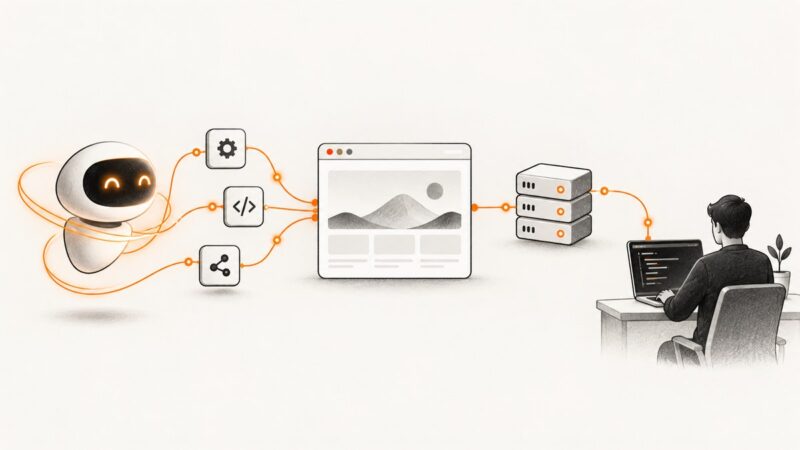
An AI agent can open a staging site, follow a user journey, and save screenshots at selected checkpoints. Give it the exact URL, route, actions, expected visible state, viewport, and filenames. Have it use structured page state—such as an accessibility snapshot—to find and operate controls, then use screenshots to review appearance. A screenshot proves that an image was captured; it does not by itself prove that the whole flow passed.
This guide uses Playwright Agent CLI for an interactive agent workflow and includes a Playwright API script for repeatable captures. The same planning principles apply to Playwright MCP, IDE browser tools, and hosted browser runtimes, though their commands and session behavior differ.
1. Define what the agent must capture
Make the task observable before asking the agent to browse. Include:
- The staging origin and exact route or routes.
- The user journey, with actions in order.
- The expected visible state at each capture point.
- Viewport dimensions or responsive breakpoints.
- Whether to capture the viewport, a component, or the full page.
- Stable filenames, output format, and whether the agent should only collect evidence or also fix defects.
- What the agent should report, such as actions performed and console errors observed.
For example, ask it to save checkout-mobile-validation-error.png after submitting an invalid form, and checkout-desktop-confirmation.png after reaching the confirmation state. These names make review artifacts easier to identify later.
Open the staging site at https://staging.example.com.
Visit /checkout and complete this journey:
1. Add the standard plan to the cart.
2. Submit the email field empty.
3. Confirm the inline validation message appears.
4. Enter a valid test email and continue to the confirmation step.

Capture the viewport at 390x844 after step 3 and at 1440x900 after step 4.
Save the files as checkout-mobile-validation-error.png and
checkout-desktop-confirmation.png in ./artifacts/staging/.
Report the route, actions completed, whether each expected state was observed,
and any console errors. Capture evidence only; do not change application code.
Do not claim a check passed unless you observed its expected state.
This is a prompt template, not a report of a run against a real site. VS Code’s browser-agent guidance similarly recommends specifying the app URL, journey, expected result, edge cases or viewport sizes, and whether to fix and repeat checks. See VS Code: Use browser tools with agents.
2. Choose the browser runtime
Pick a runtime based on where the staging app runs, how the agent connects, whether you need an existing authenticated session, and whether execution belongs locally or in hosted infrastructure.
| Approach | Best fit | Capture and interaction model |
|---|---|---|
| Playwright Agent CLI | Interactive command-line agent workflow | Open a page, inspect an accessibility snapshot, act on its references, and capture screenshots. |
| Playwright MCP | An MCP-capable agent client | Use browser tools; snapshots provide interaction references and the screenshot tool captures visual evidence. |
| Playwright API | A project script or test harness | Write deterministic navigation and interaction steps in JavaScript or another supported language. |
| IDE browser tools | Working inside an IDE agent loop | Start or locate the app, browse and inspect it, then repeat checks after changes. |
| Hosted browser runtime | Execution that must run remotely | Use the provider’s documented browser interface and verify its current status, limits, and deployment fit. |
These interfaces are not interchangeable. For example, playwright-cli screenshot is an Agent CLI command, while MCP tools and the Playwright library have their own parameter names and session setup. Playwright documents the CLI flow in its Agent CLI quick start, and screenshot behavior in its MCP screenshot documentation.
3. Use Playwright Agent CLI to browse and capture
Install and configure the Playwright Agent CLI according to the official quick start for your environment. Then use this basic interactive sequence:
playwright-cli open https://staging.example.com
playwright-cli snapshot
# Use element refs from the current snapshot to interact with the page.
playwright-cli screenshot --filename=home-desktop.png
playwright-cli close
The snapshot exposes structured page information and refs for interaction. Use those refs to locate controls instead of guessing their screen coordinates. After navigation or a meaningful state change, take a fresh snapshot: refs describe the observed page state and can become stale when the page changes. The screenshot is for assessing visual appearance; the accessibility snapshot is for understanding structure and locating controls.
The documented screenshot command can capture the current viewport by default, a referenced element, the full scrollable page, or a high-resolution image:
playwright-cli screenshot
playwright-cli screenshot e15
playwright-cli screenshot --filename=login-page.png
playwright-cli screenshot --full-page --filename=full-page.png
playwright-cli screenshot --hires --filename=retina.png
Without a filename, the CLI creates a timestamped page-{timestamp} output. The documented formats are PNG, JPEG, and WebP, with PNG as the default. Consult the CLI screenshot and PDF reference for the installed version’s exact options and syntax. A high-resolution capture uses device pixels; the CLI warns that coordinates then no longer match CSS-pixel mouse coordinates.
4. Choose viewport, element, or full-page capture
| Capture extent | Use it for | Trade-off |
|---|---|---|
| Viewport | A visible interaction checkpoint, such as a validation message, menu, or confirmation. | Content below the fold is omitted. |
| Element | A focused component such as a dialog, form, chart, or widget. | It can be hard to identify the page context from a tightly cropped image. |
| Full page | Reviewing a long landing page, article, or other scrollable content. | The resulting image may be tall and less convenient to inspect; use it when below-the-fold layout matters. |
Make the requested extent explicit at each checkpoint. Playwright’s CLI supports a full-page option and an element target; the MCP and API also document full-page and element capture. See the CLI reference, MCP screenshot guide, and Playwright API screenshot guide. The API link points to the next documentation path, so check the stable documentation and installed version before relying on version-specific details.
5. Make repeatable captures with the Playwright API
When captures need to run in a script or existing project, encode the route, actions, expected state, viewport, and output path directly. This Node.js example uses Playwright’s documented page screenshot API. Install Playwright and its browser binaries using the instructions for your project before running it.
// capture-staging.mjs
import { chromium } from 'playwright';
import { mkdir } from 'node:fs/promises';

const base = process.env.STAGING_URL ?? 'https://staging.example.com';
const output = './artifacts/staging';
await mkdir(output, { recursive: true });

const browser = await chromium.launch();
try {
  const page = await browser.newPage({ viewport: { width: 390, height: 844 } });
  const errors = [];
  page.on('console', message => {
    if (message.type() === 'error') errors.push(message.text());
  });
  page.on('pageerror', error => errors.push(error.message));

  await page.goto(new URL('/checkout', base).toString(), {
    waitUntil: 'domcontentloaded',
  });
  await page.getByRole('button', { name: 'Continue' }).click();
  const validation = page.getByText('Enter your email address');
  await validation.waitFor({ state: 'visible' });
  await page.screenshot({ path: `${output}/checkout-mobile-validation-error.png` });

  console.log(JSON.stringify({
    checkpoint: 'empty email validation',
    observedExpectedState: await validation.isVisible(),
    consoleErrors: errors,
  }, null, 2));
} finally {
  await browser.close();
}
Replace the example route, accessible button name, expected message, and journey with elements and states that exist in your app. The script checks one expected condition before saving the screenshot. If a checkpoint fails, let the error surface and report it; do not treat the mere existence of an output image as a passing check. The Playwright API documents page.screenshot({ path: 'screenshot.png' }), fullPage: true, locator screenshots, and returning a buffer when no path is provided in its screenshot guide.
6. Handle login and staging session state
Do not assume a browser agent shares your normal browser’s cookies or storage. VS Code documents that an agent-opened page can run in an isolated ephemeral session, while sharing an existing page carries that tab’s cookies, storage, and signed-in state. Choose the session arrangement deliberately for the tool you use; see VS Code’s browser tools documentation.
- For a public staging route, use a fresh session when that matches the review you need.
- For an authenticated flow, configure an intentionally shared or authenticated session using the platform’s documented mechanism.
- Use staging test accounts and data appropriate to your project.
- Do not put credentials in prompts, screenshot filenames, or logs. Check your provider’s documented secret-handling approach; there is no single verified setup that applies to every provider and staging stack.
- Before capturing, verify that the agent reached the intended signed-in state. A redirect to login can otherwise produce a plausible but irrelevant screenshot.
7. Pair visual evidence with functional evidence
Use structured state to establish what the agent found and did, and screenshots to inspect what the page looked like. Record both for important review checkpoints:
- Record the route and actions taken.
- Check the expected state with a snapshot, accessible name, visible message, or another explicit signal supported by the selected tool.
- Save a screenshot at the relevant viewport or element.
- Report console errors or interaction failures that were observed.
- State separately whether the expected condition was observed and whether a visual review is still needed.
A screenshot can show layout, chart or canvas appearance, and a bug’s visible symptom. It cannot by itself establish that all preceding actions succeeded, that hidden content is correct, or that a complete test passed. Playwright distinguishes snapshots used to understand and interact with page structure from screenshots used for visual inspection in its MCP screenshot documentation. VS Code describes an iterative browser feedback loop that includes reviewing page content, screenshots, console errors, and interaction results: Use browser tools with agents.
8. Name, retain, and compare artifacts
Use a predictable directory and filenames that identify route, viewport, and state, for example pricing-mobile-loaded.png or checkout-desktop-confirmation.webp. Explicitly request format and resolution when a downstream review system depends on them. Keep artifacts associated with the run or change they document, and avoid overwriting useful evidence from a different state.
For repeat comparisons, control the inputs that affect appearance: viewport, route, session state, and the point in the journey when the capture happens. Dynamic content, delayed fonts or images, rotating banners, and changing data can make images differ even when the layout code has not changed. If your tool returns an image buffer, you can pass it to a later processing or comparison step; Playwright documents this option in its API screenshot guide. Choose that workflow based on your project’s needs rather than treating a screenshot alone as a test result.
9. Other agent interfaces
Playwright MCP
Use the MCP server’s browser tools from an MCP-capable client. Take a browser snapshot to discover structure and refs, interact using the observed state, and call the screenshot tool at a checkpoint. Its screenshot documentation covers viewport, full-page, element, and device-scale options: Playwright MCP screenshots. Do not copy Agent CLI flags into MCP tool arguments.
IDE browser agents
Use the IDE’s own documented workflow to start or locate the app, open and interact with it, inspect page content and screenshots, and repeat checks after fixes. Browser profile and session behavior can differ from an ordinary browser tab; verify whether the page is isolated or shared. See VS Code browser tools.
Hosted browser agents
A hosted runtime can be useful when browser execution should happen remotely. Cloudflare documents a Browser Run-based agent example with inspection, debugging, screenshots, and PDFs; that example is marked Beta, so verify its current status and deployment fit before adopting it: Cloudflare browser agent example. Provider APIs, availability, authentication, and cost are specific to the service. Anthropic also documents a browser-use tool for its agent workflows: Anthropic browser use tool.
10. Troubleshooting
| Symptom | Likely cause | What to do |
|---|---|---|
| The page shows a login screen instead of the target route. | The agent uses an isolated session without the required cookies or storage, or authentication did not complete. | Configure the selected runtime’s documented shared or authenticated session. Confirm the expected signed-in state before capturing. |
| An element ref or click no longer works. | The page navigated or changed after the snapshot, so the ref refers to an older observed state. | Take a fresh accessibility snapshot after the change, then use a current ref. |
| The screenshot is blank, incomplete, or shows a loading state. | The route failed, the expected state was not reached, or capture happened before relevant content appeared. | Inspect page state and console errors, wait for a specific visible condition, and capture only after it is observed. Report a failed checkpoint rather than labeling the image a pass. |
| Full-page output is unexpectedly tall or awkward to review. | The request used full-page capture for content better represented by a viewport or component. | Use a viewport capture for a checkpoint or an element capture for a component; reserve full-page for content below the fold. |
| Coordinates miss the intended control in a high-resolution workflow. | Device-pixel output can use a different coordinate scale from CSS pixels. | Prefer snapshot refs or locator-based interaction. If coordinates are necessary, account for the scale described by the selected tool. |
| Repeated screenshots differ unexpectedly. | Viewport, timing, session, or dynamic page content changed between captures. | Fix the viewport and checkpoint, wait on a specific state, and record the session and route. Review dynamic content separately. |
| The file is saved somewhere unexpected or overwritten. | No explicit filename or output directory was provided, or names were reused. | Set a stable filename and directory for each route, viewport, and state. Check the installed CLI’s output behavior. |
| A copied command or option is rejected. | CLI, MCP, IDE, and library interfaces use different syntax; docs may also describe a different version. | Use the reference for the exact runtime and installed version. Do not mix CLI flags with API or MCP parameters. |
11. Performance, reliability, and cost
For a small review, capture only the checkpoints needed to answer the visual question. Viewport images are typically easier to inspect than one full-page image per route. Avoid redundant captures across identical states, and use parallel execution only when your browser runtime and staging environment can handle it without interfering with shared test data or session state.
Reliability comes from explicit checkpoints, fresh snapshots after page changes, and an observed condition before capture. A fixed delay can be useful when a known animation or transition needs time, but an expected visible state is a stronger signal than assuming every page is ready after the same interval. Keep run output with its screenshots so reviewers can tell what the agent actually exercised.
Local Playwright uses the browser setup and compute of the environment where it runs. Hosted browser services may have their own usage and pricing; check the provider’s current documentation. The cited sources describe capabilities and workflows, not measured speed, reliability rates, or costs, so no benchmark or universal cost estimate applies here.
12. Or skip the browser setup
ScreenshotNeo is a website screenshot API and MCP server from Yorker Media. If you need a screenshot of a public staging URL without launching a browser locally, one GET request returns an image or PDF. The API accepts common screenshot parameters used by other screenshot APIs, which can make switching easier. Read the ScreenshotNeo API documentation for available options.
curl -G "https://api.screenshotneo.com/v1/shot" \
  -d access_key=YOUR_API_KEY \
  --data-urlencode url=https://staging.example.com/checkout \
  -o checkout.webp
import requests
r = requests.get(
"https://api.screenshotneo.com/v1/shot",
params={
"access_key": "YOUR_API_KEY",
"url": "https://staging.example.com/checkout",
},
timeout=90,
)
r.raise_for_status()
with open("checkout.webp", "wb") as f:
f.write(r.content)const q = new URLSearchParams({
access_key: 'YOUR_API_KEY',
url: 'https://staging.example.com/checkout',
});
const res = await fetch(`https://api.screenshotneo.com/v1/shot?${q}`);
if (!res.ok) throw new Error(`Screenshot request failed: ${res.status}`);
const image = Buffer.from(await res.arrayBuffer());
await import('node:fs/promises').then(({ writeFile }) =>
writeFile('checkout.webp', image));ScreenshotNeo accepts cookie and consent banners like a visitor and removes more than 60 known consent platforms, newsletter popups, and chat widgets before the shot; each step can be turned off. Bot checks and CAPTCHAs, blank pages, timeouts, failed loads, and cache hits cost nothing, and responses identify the page verdict and billing status in headers. Its MCP server provides take_screenshot, get_page_info, and capture_pdf for AI agents. The Free plan includes 1,000 screenshots per month with no card; paid plans start at $5 for 3,000 screenshots.
Sign up for 1,000 free screenshots a month with no card.
13. FAQ
Can an AI coding agent open my staging URL and capture screenshots?
Yes, if it has a browser runtime that can reach the staging environment and the session state it needs. Give it a route, journey, expected state, capture point, and output name.
How do I get a full-page screenshot from a browser agent?
Use the full-page option for the runtime you selected. In Playwright Agent CLI, the documented form is playwright-cli screenshot --full-page --filename=full-page.png. MCP and API use their own documented options.
Should I use screenshots to find buttons?
Use an accessibility snapshot or other structured page state to locate controls, then use screenshots to inspect appearance. This makes interaction less dependent on visual coordinate guesses.
Does a screenshot prove my staging test passed?
No. Verify the expected state with an explicit page signal and report the journey and result alongside the image.