AI Web Scraping: How It Works and When to Use It
AI web scraping combines ordinary page retrieval with AI-assisted interpretation. Learn when it helps, how to build a careful workflow, and how to handle access, privacy, and agent risks.
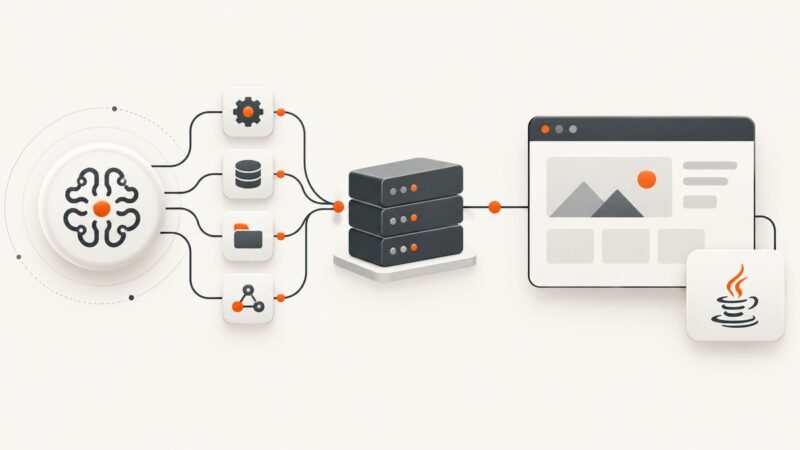
AI web scraping is ordinary web retrieval and extraction with AI added where interpretation or page variation makes fixed rules insufficient. A scraper still has to retrieve the page or data feed; AI may then classify, normalize, deduplicate, or interpret the content. AI does not grant access rights, make a page accessible, or make an extraction accurate by default.
The term is a useful working description, not a formal technical standard established by the sources cited here. If an official API or licensed feed provides the fields you need, start there. Use AI-assisted scraping when you are permitted to access the pages and their variation or meaning creates a real problem for conventional parsing.
1. What AI web scraping means
A typical scraper requests a page, parses its HTML, and maps known elements to fields. For example, a CSS selector might identify every product title. AI-assisted extraction adds a model to handle tasks such as interpreting inconsistent descriptions, assigning categories, or converting differently formatted values into a consistent schema.
The AI stage does not replace retrieval. A browser-rendered page, an HTML response, an API response, and a licensed feed are different inputs, and the retrieval method must fit the source. Nor does a plausible model answer prove that the value is present on the page. Keep the source text and validate important fields.
| Approach | Best fit | Main trade-off |
|---|---|---|
| Official API or licensed feed | The required data is already provided in a supported format | Coverage and terms are defined by the provider |
| Conventional HTTP plus parser | Stable HTML and predictable fields | Selectors and parsing rules need maintenance when markup changes |
| Browser rendering plus parser | Permitted pages whose useful content appears after scripts run | More compute, latency, and operational complexity than a simple request |
| AI-assisted extraction | Permitted content with meaningful structural variation or fields requiring interpretation | Model output needs validation, and model use adds cost and uncertainty |
2. Decide whether to use AI
- Write down the fields and purpose. Define the output schema and why each field is needed.
- Check for an official API or licensed feed. Prefer one that supplies the required fields when practical.
- Inspect page consistency. If a conventional parser reliably handles the pages, AI may add complexity without solving a real problem.
- Identify the interpretation task. Examples include mapping varied labels into a controlled category set or extracting a concept expressed in different wording.
- Estimate the validation burden. Decide which fields can be checked mechanically and which need review.
- Review access, privacy, and retention. Confirm that the planned access and use are appropriate for the source and data involved.
Use AI selectively. A hybrid pipeline can parse stable fields with deterministic rules and send only ambiguous fields or records for model interpretation. This keeps the simple parts inspectable and limits unnecessary model calls.
3. A practical retrieval and extraction workflow
- Define scope. List approved domains, permitted paths, request rate, required fields, retention period, and data-use purpose.
- Select the source. Try an official API or licensed feed first. Otherwise, use HTTP for accessible static pages or a browser for pages that need rendering.
- Retrieve carefully. Respect applicable site instructions and terms, identify your client where appropriate, set timeouts, and avoid aggressive request rates.
- Extract a source record. Preserve the page URL, retrieval time, and the relevant source text or evidence for each extracted value.
- Apply AI only to the necessary task. Ask for a constrained schema and make missing or uncertain values explicit. Do not ask the model to invent absent fields.
- Validate. Check types, required fields, allowed values, ranges, duplicates, and important claims against the source.
- Store provenance and monitor. Keep source timestamps, extraction version, and validation outcome; measure failures and review uncertain records.
The sequence is an implementation pattern, not a guarantee of resilience or accuracy. The European Data Protection Board recommends reliable sources, timestamps, validation, and data minimisation in its guidance concerning scraping personal data for AI training. The GDPR applies where scraping involves processing personal data such as collection, storage, organisation, or retrieval. EDPB Guidelines 03/2026 consultation page.
4. Runnable examples: retrieve and inspect a public page
These examples show the retrieval and basic extraction stage, not a claim that regex or a fixed parser handles every website. They use a placeholder public page: replace it only with a page you are permitted to access. For a real site, prefer an official API, a proper HTML parser, or browser rendering if required. No single AI provider or model API is specified here, so the examples do not invent one; connect the extracted evidence to the AI service you have selected and validate its output.
cURL: fetch the HTML
curl --fail --location --max-time 30 \
  -H 'User-Agent: ExampleResearchBot/1.0 (contact: ops@example.com)' \
  -H 'Accept: text/html' \
  'https://example.com/' \
  -o page.html
This saves the response body. It does not execute JavaScript. Inspect status and response headers with curl -i when diagnosing access or content-type problems. Use an identifying contact only if it is real and appropriate for your project.
Python: fetch and extract visible text with the standard library
from html.parser import HTMLParser
from urllib.request import Request, urlopen
from urllib.error import HTTPError, URLError
from datetime import datetime, timezone

URL = "https://example.com/"

class TextExtractor(HTMLParser):
    def __init__(self):
        super().__init__()
        self.parts = []
        self.skip_depth = 0

    def handle_starttag(self, tag, attrs):
        if tag in {"script", "style", "noscript", "svg"}:
            self.skip_depth += 1

    def handle_endtag(self, tag):
        if tag in {"script", "style", "noscript", "svg"} and self.skip_depth:
            self.skip_depth -= 1

    def handle_data(self, data):
        if not self.skip_depth:
            text = " ".join(data.split())
            if text:
                self.parts.append(text)

request = Request(
    URL,
    headers={
        "User-Agent": "ExampleResearchBot/1.0 (contact: ops@example.com)",
        "Accept": "text/html",
    },
)

try:
    with urlopen(request, timeout=20) as response:
        content_type = response.headers.get_content_type()
        if content_type not in {"text/html", "application/xhtml+xml"}:
            raise ValueError(f"Expected HTML, got {content_type}")
        html = response.read(2_000_000).decode(
            response.headers.get_content_charset() or "utf-8", errors="replace"
        )
        final_url = response.geturl()
except HTTPError as exc:
    raise SystemExit(f"HTTP error {exc.code}: {exc.reason}")
except (URLError, TimeoutError) as exc:
    raise SystemExit(f"Request failed: {exc}")

parser = TextExtractor()
parser.feed(html)
record = {
    "source_url": final_url,
    "retrieved_at": datetime.now(timezone.utc).isoformat(),
    "text_excerpt": " ".join(parser.parts)[:4000],
}
print(record)

# Pass record["text_excerpt"] to your chosen AI extraction service only if needed.
# Require a known schema, retain the source evidence, and validate the result.
The sample caps the response read and extracted excerpt to keep the demonstration bounded. For production, use a maintained HTML parser, handle compressed and unusual encodings, and enforce response-size and redirect policies explicitly.
Node.js: fetch and collect a bounded text excerpt
const url = 'https://example.com/';
async function main() {
const controller = new AbortController();
const timer = setTimeout(() => controller.abort(), 20_000);
try {
const response = await fetch(url, {
signal: controller.signal,
headers: {
'User-Agent': 'ExampleResearchBot/1.0 (contact: ops@example.com)',
'Accept': 'text/html',
},
redirect: 'follow',
});
if (!response.ok) {
throw new Error(`HTTP ${response.status} ${response.statusText}`);
}
const contentType = response.headers.get('content-type') || '';
if (!contentType.includes('text/html') && !contentType.includes('application/xhtml+xml')) {
throw new Error(`Expected HTML, got ${contentType}`);
}
const html = (await response.text()).slice(0, 2_000_000);
const textExcerpt = html
.replace(/<(script|style|noscript|svg)\b[^>]*>[\s\S]*?<\/\1\s*>/gi, ' ')
.replace(/<[^>]*>/g, ' ')
.replace(/ | /gi, ' ')
.replace(/&/gi, '&')
.replace(/</gi, '<')
.replace(/>/gi, '>')
.replace(/\s+/g, ' ')
.trim()
.slice(0, 4000);
console.log({ source_url: response.url, retrieved_at: new Date().toISOString(), text_excerpt: textExcerpt });
// Send the excerpt to your selected AI extraction service only if needed.
} finally {
clearTimeout(timer);
}
}
main().catch((error) => {
console.error(`Retrieval failed: ${error.message}`);
process.exitCode = 1;
});This intentionally lightweight example is not a robust HTML parser: it does not fully decode entities or model malformed markup. Use a maintained parser package in a real application. Node.js must be a version with global fetch, or use your project’s supported HTTP client.
5. Designing the AI extraction step
After retrieving content, give the model only the relevant source material and ask for a tightly defined result. A useful contract describes field types, allowed categories, missing-value representation, and evidence requirements. For example, require each extracted value to include a short source excerpt or location. Treat that evidence as a check, not as proof that the model interpreted it correctly.
- Separate extraction from inference. Label values directly present in the source separately from classifications or summaries.
- Represent uncertainty. Allow null, unknown, or a review-needed status rather than forcing a guess.
- Constrain output. Validate returned JSON against a schema and reject extra or malformed fields.
- Keep the source. Store the source URL, retrieval timestamp, and text needed to audit the result, subject to your retention rules.
- Deduplicate deliberately. Choose a stable key and define how conflicting observations are reconciled.
- Review changes. Recheck extraction quality when page layouts, prompts, models, or source policies change.
Do not treat model confidence scores as calibrated accuracy unless you have separately established that for your task. A model can return valid JSON with a wrong value.
6. Access, privacy, and agent security
Access rules and robots.txt
robots.txt communicates crawler preferences; it is not a security boundary and does not compel every crawler to comply. Google describes it primarily as a way to manage crawler traffic and warns that a disallowed URL can still be discovered or appear in search. Keep private information behind authentication and access controls. Google’s robots.txt introduction.
Check the site’s applicable terms, permissions, rate limits, and data rights for your intended use. A robots directive alone does not grant permission, and its presence or absence does not settle every legal question.
Personal data and purpose
When scraping processes personal data, assess the purpose, applicable legal basis, transparency, minimisation, accuracy, retention, and jurisdiction-specific obligations. The EDPB’s 2026 guidelines page describes a consultation document open for feedback through 30 October 2026; treat it as consultation guidance, not a final adopted rule. The ICO’s discussion of lawful bases is specifically about scraping personal data to train generative AI in the UK context, not a universal ruling for every scrape or use. ICO guidance on that context.
Prompt injection and URL leakage
Retrieved pages are untrusted input. They may contain instructions aimed at an AI agent. Do not let page text silently override system instructions, disclose secrets, or trigger consequential actions. Separate retrieved content from trusted instructions, limit tools and credentials available to the agent, and require approval for sensitive actions. URLs can also contain data that will be recorded in server logs when requested, so do not construct requests that expose user secrets. OpenAI describes safeguards for URL-based leakage and notes that they do not guarantee that retrieved pages are trustworthy or eliminate all browsing risk. OpenAI’s explanation of AI agent link safety and prompt-injection defenses.
Delegating retrieval or actions to an agent does not transfer responsibility for what it does. The UK’s Competition and Markets Authority makes this point in its guidance about businesses using agents to engage with customers; the context is consumer law. Likewise, community proposals such as A2WF’s siteai.json are work in progress, not widely adopted or legally binding permission systems.
7. Performance, reliability, and cost
- Retrieval dominates some workloads. Browser rendering and large pages can require more time and resources than fetching static HTML. Use the simplest retrieval mode that returns the needed content.
- Bound the work. Set timeouts, response-size limits, concurrency limits, and a reasonable request rate. Retry transient failures with backoff, but do not retry access denials indefinitely.
- Cache carefully. A cache can reduce repeat requests and model calls, but define a freshness policy and avoid retaining data longer than needed.
- Control model spend. Send only relevant text, use deterministic parsing for stable fields, and avoid asking a model to process a whole page when a short excerpt suffices. Track model usage and validation failures.
- Measure quality by field. Sample outputs against source material and track missing, malformed, stale, and conflicting records. There is no accuracy or cost figure that applies to all sites and tasks.
- Plan for change. Page templates, scripts, access policies, and content can change. Alert on sudden shifts in empty results, extraction failures, or schema validation errors.
8. Troubleshooting
| Symptom | Likely cause | What to do |
|---|---|---|
| 401 or 403 response | Authentication is required, access is denied, or automated requests are not permitted | Use an authorized API or obtain permission; do not try to evade access controls. |
| 429 response | Rate limit or request volume is too high | Reduce concurrency, honor any retry guidance, and retry with backoff only where appropriate. |
| 200 response but no useful content | The page may require JavaScript, return a consent/interstitial page, or vary by session | Inspect the returned HTML and content type. Use a permitted browser-rendering approach or an official source when necessary. |
| Timeout or connection error | Slow origin, network failure, or oversized work | Set a suitable timeout and bounded retries; record the failure and avoid retry storms. |
| Parser returns empty or shifted fields | Markup changed, selector is stale, or content is not in the initial response | Compare current HTML with the expected structure, update and version parsing rules, and add field-level validation. |
| AI returns malformed or invented values | Unconstrained prompt, insufficient evidence, ambiguous content, or model error | Validate schema and source evidence, permit unknown values, and route uncertain records to review. |
| Duplicate or conflicting records | Different URLs represent the same entity or the source changed over time | Define a stable identity key and retain timestamps so conflict resolution is explicit. |
| Unexpected personal data appears | Source content includes information outside the intended fields | Minimize collection, stop unnecessary processing, and review purpose, retention, and applicable obligations. |
9. Capture a page visually when the input is a screenshot
Some extraction tasks begin with a visual record rather than HTML: for example, documenting a rendered page or passing a screenshot to a vision workflow. Screenshot capture does not itself extract structured data, and it should be treated as an input step with its own access and privacy checks.
ScreenshotNeo is a website screenshot API and MCP server for developers. It can return a PNG, JPEG, WebP, or PDF from one GET request, and its parameter names used by other screenshot APIs also work, which can make switching easier. Use it when a rendered visual is the required evidence; continue to validate any AI interpretation against that image and source context.
10. Or skip the browser setup
If you need a rendered page image as an input to your workflow, ScreenshotNeo lets you request it directly. See the ScreenshotNeo API documentation for options.
curl -G "https://api.screenshotneo.com/v1/shot" -d access_key=YOUR_API_KEY --data-urlencode url=https://stripe.com -o shot.webpimport requests
r = requests.get("https://api.screenshotneo.com/v1/shot", params={"access_key": "YOUR_API_KEY", "url": "https://stripe.com"}, timeout=90)
open("shot.webp", "wb").write(r.content)const q = new URLSearchParams({ access_key: 'YOUR_API_KEY', url: 'https://stripe.com' });
const res = await fetch(`https://api.screenshotneo.com/v1/shot?${q}`);- Cookie and consent banners, newsletter popups, and chat widgets are removed before the shot; each step can be turned off.
- Bot checks, blank pages, timeouts, failed loads, and cache hits cost nothing; response headers report the page verdict and billing status.
- An MCP server provides
take_screenshot,get_page_info, andcapture_pdftools for AI agents and MCP clients. - 1,000 screenshots a month are free with no card. Paid plans start at $5 for 3,000 screenshots.
Sign up for ScreenshotNeo’s free plan and get 1,000 screenshots a month with no card.
11. Frequently asked questions
Does AI web scraping mean the AI accesses pages by itself?
No. A retrieval component still obtains the page or feed. AI is an optional interpretation and normalization step after retrieval.
Can AI scraping bypass a site’s restrictions?
No. AI does not grant permission or override access controls. Use authorized sources and respect applicable terms and instructions.
Should every extracted field be generated by AI?
No. Keep deterministic parsing for stable fields and use AI only where interpretation or variation warrants it.
Can I trust a result because it includes a source excerpt?
No. The excerpt makes review easier, but the extracted value still needs validation against the source.
Is robots.txt enough to protect private pages?
No. Use authentication and access controls for private content; robots.txt is a crawler instruction mechanism.