BlogScreenshots on your device
How to Capture a Full-Page Screenshot in the Arc Browser
Capture an entire webpage in Arc for macOS with the built-in Capture Full Page command. Here’s where to find it, set a shortcut, and troubleshoot missing or incomplete captures.

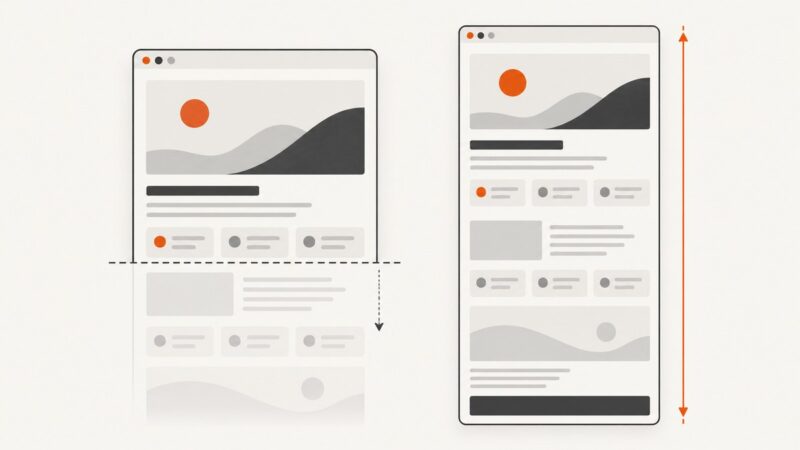
To capture a full webpage in Arc on macOS, open the page, press Command-T, type Capture Full Page, and choose that action from the Command Bar. Arc saves the resulting capture according to its download behavior; check your configured download folder if you do not see it immediately. Arc’s help article documents this workflow for Arc on macOS. Arc’s full-page capture instructions
1. Capture a full page from the Arc Command Bar
- Open the webpage in Arc for macOS. Navigate to the page you want to save and wait until its main content has loaded. If the page is still loading, wait before capturing; content that has not appeared in the browser may not be included.
- Open the Command Bar. Press Command-T (⌘T). This opens Arc’s command interface.
- Find the capture action. Type
Capture Full Pageand select the matching command. Make sure you choose the full-page action rather than a standard screen capture. - Locate the file. Check Arc’s configured download location. Arc’s Easels documentation says a full-page screenshot saves to the default download location. The release notes describing the original feature specify a PNG output, though the exact behavior may vary by version. Arc Easels documentation · Arc’s 2022 release notes
This captures the webpage as a page-length image rather than just the portion currently visible in the browser window. You do not need to scroll manually and stitch together separate viewport screenshots.

2. Use the Site Control Center or a custom shortcut
Capture from the URL bar
Arc’s release notes describe another route: open the Site Control Center in the URL bar and click Capture the full page. Arc also documents holding Option while clicking that control to make Portrait Mode full-page capture easier. The available controls can depend on your Arc version and the page context, so use the Command Bar method if you do not see the button. Arc for macOS release notes
Assign your own keyboard shortcut
- From the Mac menu bar, choose Arc > Settings > Shortcuts.
- Search for
capture. - Find Capture Full Page and click the button icon next to it.
- Press the key combination you want to assign. Arc recommends beginning with a modifier key such as Shift, Control, Option, or Command.
After assigning it, test the shortcut on a regular webpage. If it conflicts with another command or does not trigger, return to Shortcuts and choose a different combination. Arc’s shortcut steps are documented in its full-page capture help article.
3. What full-page capture includes—and what to check
A full-page capture is useful for archiving an article, reviewing a long landing page, sharing a design reference, or documenting a page for a bug report. It represents the webpage’s vertical content in one image. It is different from an ordinary screenshot of the visible browser viewport.
For a useful result, check the page before capture:
- Wait for important content. Confirm that the headline, images, and primary sections have rendered. A capture cannot include content that has not loaded yet.
- Consider interactive or delayed sections. Pages may reveal content only after a scroll, click, sign-in, or wait. If a section is missing, interact with the page first and capture again.
- Check the page state. Dismiss menus or dialogs that obscure content if you do not want them in the image. Conversely, leave a dialog open if documenting that state is the purpose.
- Confirm the result and location. Open the saved file and inspect the beginning, middle, and bottom. Arc documentation points to the default download location; your own download configuration determines where to look.
The documentation establishes the native workflow, save behavior, and historical PNG description. It does not promise that every site’s lazy-loaded, animated, authenticated, or interactive content will be captured identically. For complex pages, inspect the output instead of assuming every section rendered.
4. Platform and output details
The primary Arc help article explicitly describes the full-page Command Bar action for Arc on macOS. Do not assume the same built-in command is available on Arc for Windows. Arc’s Easels documentation also states that Easels can be created and edited only on macOS; that is a limitation stated for Easels, not proof of Windows behavior for every screenshot feature. Check the current Arc interface and version on your platform before relying on this workflow.
For output, Arc’s Easels help says the full-page screenshot saves to the default download location, while the older release notes describe Full Page Capture as downloading a PNG. Use the saved file as the source of truth for your current version. If you need another format, convert the image after capture with an image editor or a tool in your own workflow; the Arc sources cited here do not document a format selector for this command.
Arc’s ordinary macOS screenshot shortcut, Command-Shift-4, is for a standard screenshot and should not be confused with Arc’s page-length capture. The latter is the command named Capture Full Page. Arc’s Easels and screenshot documentation
5. Troubleshooting Arc full-page screenshots
| Problem | Likely cause | What to try |
|---|---|---|
| “Capture Full Page” does not appear | The command was not found, or you are using a platform/version where the documented workflow does not apply. | On macOS, press Command-T and search for the exact phrase Capture Full Page. Check that you are using Arc for macOS and consult the current Arc interface if the command is still absent. |
| The shortcut does something else | The key combination conflicts with another shortcut or was not assigned to the capture command. | Open Arc > Settings > Shortcuts, search “capture,” and assign a different combination with a modifier key. You can always use Command-T as a fallback. |
| The file seems missing | You are checking the wrong folder or expecting a separate save dialog. | Check the configured download location. Arc’s help says the capture saves to the default download location. Also check Arc’s Library Downloads section for downloaded files. Arc Library documentation |
| The image shows only part of the page | The wrong capture action may have been used, or the page did not expose all content at capture time. | Repeat using the exact Capture Full Page command. Wait for the page to load, scroll through it if content appears on demand, then capture again and inspect the result. |
| Some images or sections are blank | The site may defer loading media or content until scrolling, interaction, or additional waiting. | Scroll through the page, wait for key media to appear, and retry. If the same section remains absent, capture it separately or use a browser automation workflow that can control scrolling and wait conditions. |
| You expected a different file type | The documented feature is described as a downloaded PNG, and a format choice is not specified in the cited instructions. | Verify the file Arc saved. Convert it afterward if your workflow requires another image format. |
| You are on Windows and cannot find the command | The primary help article scopes its instructions to macOS. | Check your installed Arc version and its current menus. Do not rely on the macOS instructions as a guarantee of Windows support. |
6. Performance, reliability, and choosing a capture method
For an occasional capture of a page already open in Arc, the native command is the shortest workflow: no script, API key, or separate browser automation setup is needed. Its practical reliability depends on the page state and the behavior of the current Arc version. Pages with delayed content, sign-in gates, very long documents, or interactive elements deserve a quick visual check after capture.
For repeatable developer workflows, separate the need into two cases:
- One page, manually reviewed: use Arc’s Command Bar, then confirm the downloaded image.
- Many URLs or automated captures: use a screenshot API or browser automation so requests, output, and failure handling can be part of a script or service.
Arc’s cited documentation provides no measured speed comparison, capture-size limit, or guarantee for pages with dynamic content. Avoid planning around an assumed benchmark. If capture time matters, measure your own pages and keep an eye on file size and whether the critical content appears.
7. Or skip the browser setup
ScreenshotNeo is a website screenshot API and MCP server from Yorker Media. A GET request with a URL returns an image or PDF, which can be useful when you want a repeatable capture without opening Arc or maintaining browser automation. The Arc steps above remain the direct choice for a quick manual capture in Arc.

Here is the cURL version, using the documented API endpoint and adapting the target URL to the page you want:
curl -G "https://api.screenshotneo.com/v1/shot" \
  -d access_key=YOUR_API_KEY \
  --data-urlencode url=https://stripe.com \
  -o shot.webp
Python:
import requests

r = requests.get(
    "https://api.screenshotneo.com/v1/shot",
    params={"access_key": "YOUR_API_KEY", "url": "https://stripe.com"},
    timeout=90,
)
open("shot.webp", "wb").write(r.content)
Node.js:
const q = new URLSearchParams({
  access_key: 'YOUR_API_KEY',
  url: 'https://stripe.com'
});
const res = await fetch(`https://api.screenshotneo.com/v1/shot?${q}`);
if (!res.ok) throw new Error(`Screenshot request failed: ${res.status}`);
await Bun.write('shot.webp', res);
Replace YOUR_API_KEY with your key and the example URL with the page to capture. The Node.js example uses Bun’s file-writing helper; in a Node project, write the response body with your preferred filesystem API. See the ScreenshotNeo API documentation for request options and setup.
- Cookie banners, popups, and chat widgets are removed before the shot.
- Bot checks, blank pages, and failed loads are never billed; responses identify the page verdict and billing status.
- An MCP server gives AI agents tools to take screenshots, get page information, and capture PDFs.
- The free plan includes 1,000 screenshots per month with no card; paid plans start at $5 for 3,000.
Sign up for ScreenshotNeo’s free 1,000 screenshots per month, with no card required.
8. Frequently asked questions
Can Arc capture a scrolling webpage?
Yes. On Arc for macOS, use Capture Full Page from the Command Bar. That is the full-page workflow documented by Arc.
What is the Arc full-page screenshot shortcut?
Arc’s default documented route is Command-T, then type and select Capture Full Page. You can assign a direct shortcut under Arc > Settings > Shortcuts.
Where is Capture Full Page in Arc?
Search for it in the Command Bar after pressing Command-T. Arc release notes also describe a full-page button in the Site Control Center in the URL bar.
Where does Arc save the screenshot?
Arc’s Easels help says it saves to the default download location. Look in your configured downloads folder; the exact location depends on your download settings.
Does this work in Arc for Windows?
The cited full-page capture help article applies to Arc for macOS. It does not establish that the same command is available on Windows, so check your Windows version’s current controls.
Can I save the capture as JPEG or WebP directly?
The cited Arc documentation describes PNG output in its release notes but does not document a format selector for this workflow. Check the saved file and convert it afterward if needed.