BlogScreenshots on your device
How to Automatically Capture Full-Screen Screenshots
Capture your entire display once or on a schedule on Windows, macOS and Linux, with permissions, monitor scope, troubleshooting and an API option.
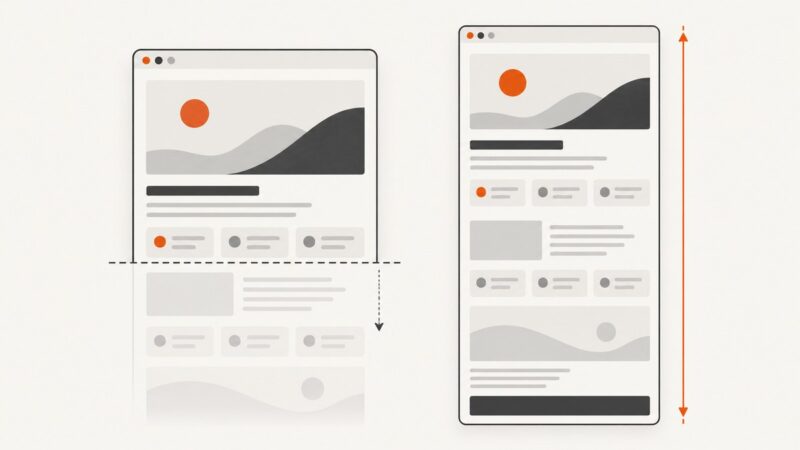
Short answer: a one-time full-screen screenshot and a recurring capture schedule are different tasks. Windows includes built-in full-screen capture. Repeated screenshots require a utility that explicitly supports interval or scheduled sessions, plus the permissions required by your operating system.
Choose your goal first:
- One screenshot now: use Windows Snipping Tool or Print Screen.
- A finite session: use a scheduled-session tool such as Shotomatic on macOS.
- Continuous intervals: use software with an interval mode, such as Pluely’s documented Interval mode.
- A website image rather than your physical display: use a browser screenshot API such as ScreenshotNeo.
1. Decide what “full screen” means
Before configuring automation, define the capture scope:
| Scope | What it captures | Typical use |
|---|---|---|
| Current display | One monitor | Watching a single workstation |
| All displays | Every monitor in one capture | Multi-monitor desk recording |
| Window | One application window | Tracking an app without desktop clutter |
| Region | A rectangle you select | Monitoring one area of a display |
Tools use “full screen” differently. Shotomatic documents selecting one display for a session. Pluely documents drawing a region on the display containing the desired content. ksnip documents a full-screen mode that can include all screens on supported platforms. Confirm the scope in the tool you install before relying on unattended captures.
2. Windows: capture the whole screen once
Snipping Tool
- Open Snipping Tool from the Start menu.
- Choose the capture mode menu and select Full screen.
- Take the capture. Save it from the preview window.
Microsoft describes Full screen mode as immediately capturing the entire screen. Snipping Tool can also use a delay from one to five seconds, which helps when you need to open a menu before the capture. Microsoft documents automatic saving to the Screenshots folder and settings for changing save behavior or the default folder.
Print Screen
Press PrtSc to place a static image of the entire screen on the clipboard, then paste it into an image editor or document and save it. This is an immediate snapshot, not a recurring schedule.
3. Windows: recurring screenshots
Windows’ built-in full-screen actions do not create a repeating capture loop. For scheduled screenshots, select a utility whose documentation explicitly supports interval or scheduled sessions. Check these settings before starting:
- Capture one display or every display.
- Capture the desktop, a window or a region.
- Use a fixed interval or a finite start and stop time.
- Choose the output folder and image format.
- Keep the computer awake for the entire session.
Do not assume that Snipping Tool’s save-to-folder setting schedules new captures; it only controls how captures are stored.
4. macOS: scheduled and interval capture
Shotomatic scheduled sessions
Shotomatic’s quick-start documentation describes capturing a screen, app window or selected area on a schedule. Its suggested first run is five screenshots one second apart with a short countdown. Treat that as the vendor’s example configuration, not a performance guarantee.
- Install and open Shotomatic.
- Grant Screen Recording permission when macOS requests it.
- Grant Accessibility permission if you want automated keypresses, window focusing or Action Capture clicks.
- Select the display, window or region.
- Set the schedule, interval, number of screenshots and export destination.
- Run a short session and inspect the files before scheduling a longer one.
Pluely Interval mode
Pluely documents two automatic modes: Once and Interval. Its documentation says Interval captures a screenshot and asks a question automatically every set number of seconds until you turn it off. The documented use case is asking about changing visual content, so treat it as contextual capture rather than a general archival system.
- Open Pluely and choose Interval.
- Grant macOS Screen Recording permission.
- Choose the interval and capture region.
- Start the loop and stop it when finished.
5. Linux: check X11, Wayland and portal behavior
Linux screenshot behavior depends on the desktop session and compositor. ksnip documents different capabilities for X11, Plasma Wayland and GNOME Wayland. On GNOME Wayland 41 and later, and in Snap builds, its documentation says screenshots use xdg-desktop-portal. A compositor-mediated popup may require confirmation, and behavior can vary by compositor.
- Identify whether your session is X11 or Wayland.
- Install a capture utility that documents support for your session.
- Test one full-screen capture interactively.
- Watch for portal confirmation dialogs before attempting unattended runs.
- Verify whether “full screen” includes one monitor or all monitors.
There is no universal Linux shortcut that guarantees unattended, multi-monitor capture across every compositor.
6. Build a reliable capture schedule
Use a short verification run
- Start with three to five captures.
- Use a one- to five-second interval.
- Confirm timestamps and filenames are unique.
- Check that every intended display or region appears.
- Confirm the output directory has sufficient free space.
Keep the source stable
- Prevent sleep and screen lock for the capture window.
- Do not move windows if the job targets a selected region.
- Disable notifications that could cover the content.
- Use a consistent display arrangement and scaling setting.
- Leave the required permission prompts resolved before scheduling.
Estimate storage
Storage depends on resolution, image format and screen content. PNG usually produces larger files than JPEG. A simple estimate is:
total_storage = screenshots_per_hour * hours * average_file_sizeMeasure the average size from a short test session, then multiply by the planned duration. Retain only the files you need and archive or delete old sessions.
7. Common problems and fixes
| Problem | Likely cause | Fix |
|---|---|---|
| Only one monitor appears | The tool targets one display | Choose an all-displays mode or run a separate session per display. |
| Capture is black or incomplete on macOS | Screen Recording permission is missing | Open Privacy & Security settings, enable Screen Recording for the tool, then restart it. |
| Automated clicks or keypresses fail on macOS | Accessibility permission is missing | Enable Accessibility for the tool and retry. |
| Linux shows a portal prompt | Wayland or Snap capture is mediated by xdg-desktop-portal | Approve the prompt interactively and verify whether unattended capture is supported by your compositor. |
| Captures stop after a few minutes | Sleep, lock, application exit or a finite session limit | Check power settings, session duration and application logs. |
| Files overwrite each other | Static filename pattern | Add a timestamp or sequence number to the filename template. |
| Images contain notifications or chat windows | The capture includes the desktop | Use window or region capture, or disable notifications during the session. |
| Scheduled job runs while the screen is locked | The tool requires an active graphical session | Check the tool’s documented requirements; many desktop capture utilities cannot capture a locked or unavailable display. |
8. When you need a website screenshot instead
Desktop automation captures what is visible on a physical display. If your input is a URL and you need a repeatable website image, a browser screenshot API avoids display focus, monitor layout and desktop permission issues.
Or skip the browser setup
ScreenshotNeo captures a website from one GET request. Read the API documentation for all options.
cURL
curl -G "https://api.screenshotneo.com/v1/shot" -d access_key=YOUR_API_KEY --data-urlencode url=https://stripe.com -o shot.webpPython
import requests

r = requests.get(
    "https://api.screenshotneo.com/v1/shot",
    params={"access_key": "YOUR_API_KEY", "url": "https://stripe.com"},
    timeout=90,
)
r.raise_for_status()
open("shot.webp", "wb").write(r.content)
Node.js
const q = new URLSearchParams({ access_key: 'YOUR_API_KEY', url: 'https://stripe.com' });
const res = await fetch(`https://api.screenshotneo.com/v1/shot?${q}`);
if (!res.ok) throw new Error(`Screenshot failed: ${res.status}`);
const buffer = Buffer.from(await res.arrayBuffer());
require('fs').writeFileSync('shot.webp', buffer);
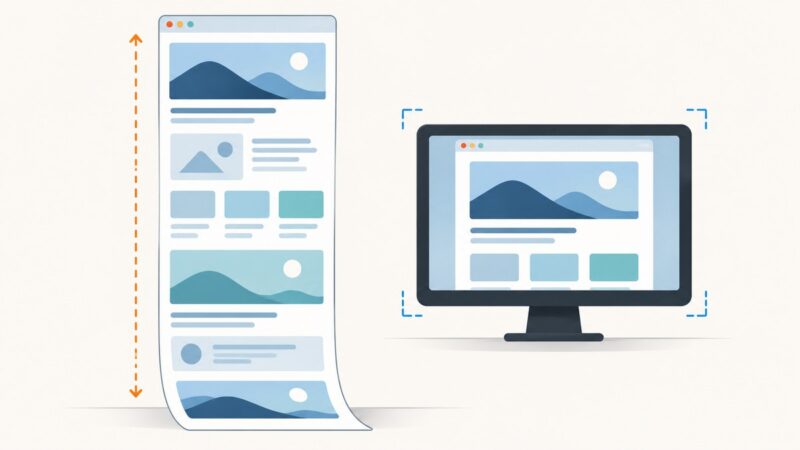
ScreenshotNeo supports full-page capture with lazy images loaded, element capture by CSS selector, dark mode, device presets and custom viewports, retina scale, custom CSS and JavaScript, click and wait actions, blocked requests and resource types, headers, cookies, user agents, authorization, timezone, geolocation, transparent backgrounds, resizing, caching, signed links, asynchronous jobs, signed webhooks, bulk capture and a usage API.
- Cookie and consent banners, newsletter popups and chat widgets are removed before the shot; each step can be turned off.
- Bot checks, blank pages, timeouts, failed loads and cache hits are not billed. Response headers identify the page verdict and whether the request was billed.
- An MCP server provides
take_screenshot,get_page_infoandcapture_pdftools for Claude, Cursor and other MCP clients. - The Free plan includes 1,000 screenshots per month with no card. Paid plans start at $5 for 3,000 shots.
Create a free ScreenshotNeo account to get started.
9. Performance, reliability and cost considerations
Desktop capture
- Higher resolution and multi-monitor captures create larger files and more disk usage.
- Short intervals increase CPU, disk and export activity.
- Wayland portal confirmations and macOS permissions can prevent unattended operation.
- Use a test session to identify whether your chosen tool captures the current display or every display.
Website capture
- Use a wait condition when a page renders content after navigation.
- Use caching with a chosen TTL when identical pages do not need a fresh browser render.
- Use asynchronous jobs and signed webhooks for long-running or bulk captures.
- Review the
X-Page-VerdictandX-Billedresponse headers when accounting for usage.
10. FAQ
Can Windows automatically take screenshots every minute?
Windows provides full-screen snapshots through Snipping Tool and Print Screen, but a repeating schedule requires software that documents interval or scheduled capture.
Does saving screenshots to a folder make capture automatic?
No. A save location controls where an existing capture is written; it does not create new captures.
Will a screenshot include all monitors?
It depends on the tool and mode. Verify whether full-screen means the current display or every display.
Why does macOS ask for Screen Recording permission?
macOS requires that permission for tools that capture displays or application windows. Automated keypresses, focus changes and clicks may also require Accessibility permission.
Can I capture a locked Linux desktop?
Do not assume so. Wayland portals and desktop compositors can require an active, confirmed graphical session.
Is ScreenshotNeo for capturing my physical monitor?
No. ScreenshotNeo renders a website URL in a browser and returns an image or PDF. Use a desktop utility when you need a picture of your physical display.