11 Best AI Agent Frameworks (2026): How to Choose
Compare 11 AI agent frameworks by control flow, state, language, and ecosystem—and learn when a direct model API is the better choice.
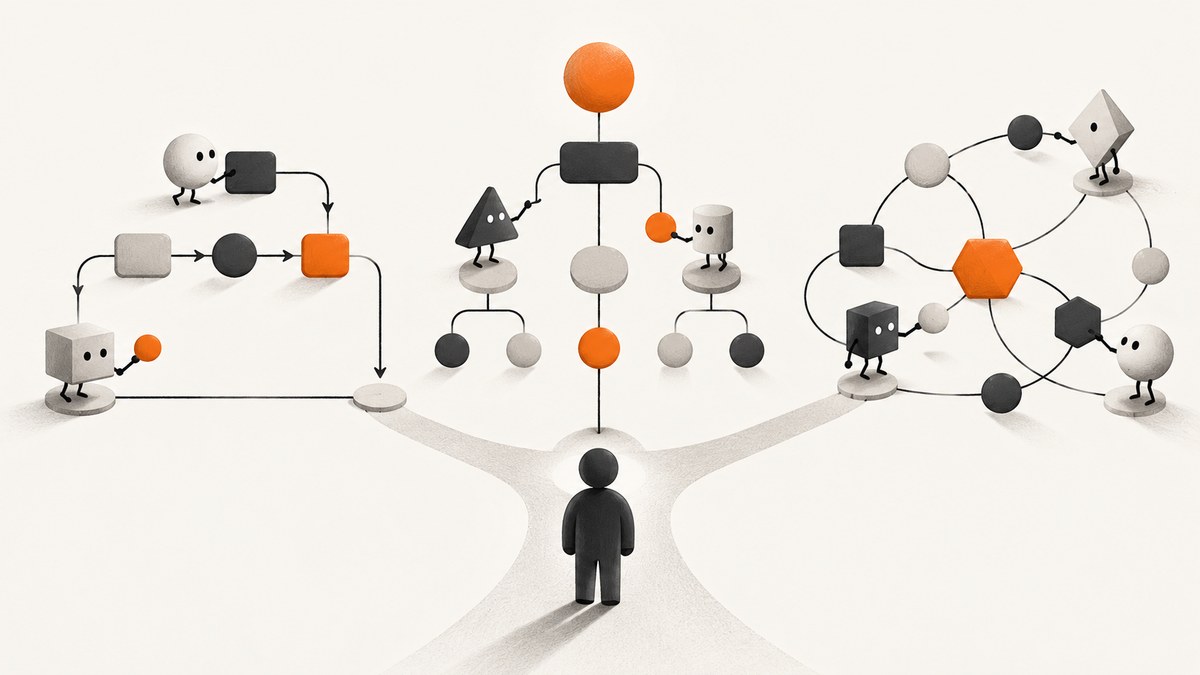
There is no universally best AI agent framework. Choose based on the execution model your application needs: explicit graphs, role-based teams, tool handoffs, document workflows, typed Python interfaces, or a provider-oriented runtime. If the task is bounded and a function or short model call can handle it, start there before adding an agent framework.
This guide compares 11 options by their documented positioning and the evidence available as of September 30, 2026. It is a shortlist for different use cases, not a measured quality ranking: there is no reliable, independent benchmark in the research reviewed that compares all eleven. Framework releases, language support, integrations, and hosted-service prices change; verify current official documentation before committing.
1. What should you use an AI agent framework for?
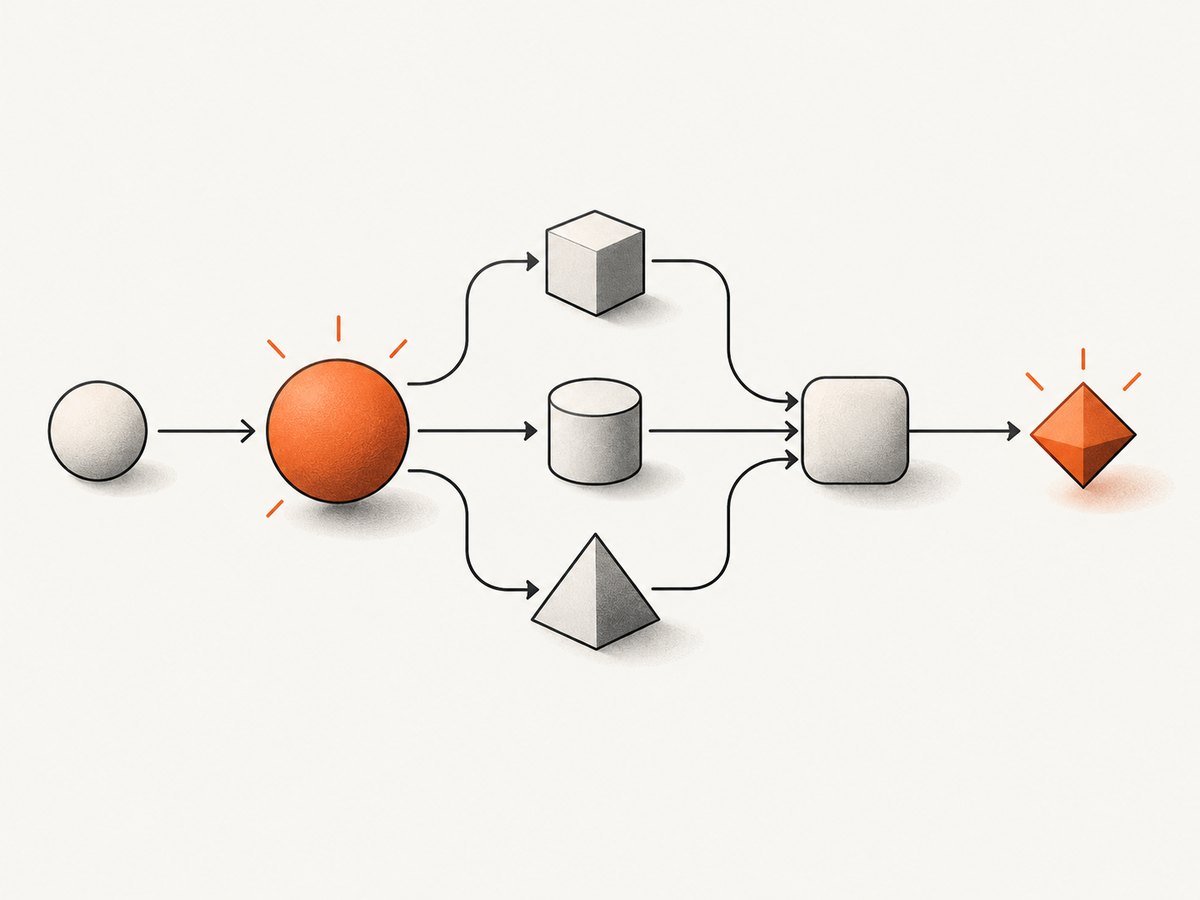
An agent framework gives your application structure for tasks where a model may choose tools, pass work between agents, maintain state, or follow a multi-step workflow. Frameworks vary in how much of that structure they own. A direct API call leaves the loop with you; a higher-level framework may provide tools, sessions, handoffs, state, tracing, or workflow primitives.
That structure has a cost: more abstractions to learn, inspect, and debug. Anthropic’s 2024 engineering guidance recommends starting with direct LLM APIs when they are sufficient, and warns that abstraction layers can obscure prompts and responses. Microsoft Agent Framework’s overview puts it plainly: “If you can write a function to handle the task, do that instead of using an AI agent.”
Use a framework when its concrete capabilities address a real need, such as resumable state, explicit routing, human approval, or a maintained provider integration. Don’t add one just because an application uses an LLM.
2. The 11 frameworks at a glance
| Framework | Central idea | Worth investigating when |
|---|---|---|
| LangChain | Higher-level model and tool integrations | You want breadth and a quick way to assemble a prototype. |
| LangGraph | Graph-based orchestration and explicit state | You need defined routing, state transitions, or control over execution. |
| Deep Agents | LangChain’s agent harness for longer-running workflows | You are evaluating a packaged harness for tasks that run over many steps. |
| CrewAI | Role-based multi-agent orchestration | You want to prototype a team-like workflow with assigned roles. |
| Microsoft Agent Framework | Agents and workflows with sessions, middleware, tools, and provider integrations | Your team works in Microsoft’s ecosystem or wants to evaluate its workflow and agent concepts. |
| LlamaIndex Workflows | Event-driven workflow tooling | Your pipeline is data-intensive or document-centered. |
| Google ADK | Code-first agent toolkit | Your application is closely tied to Google Cloud infrastructure. |
| OpenAI Agents SDK | Agents, tools, handoffs, guardrails, sessions, and tracing | You want a lightweight SDK for managed agent turns and handoffs. |
| Mastra | TypeScript-oriented agent application framework | Your application and team are TypeScript-first. |
| Pydantic AI | Type-safe Python agent interfaces | You want to investigate validation-oriented agent development in Python. |
| AWS Strands Agents SDK | AWS-associated agent SDK | Your team is considering AWS’s agent tooling and will verify its current capabilities. |
These descriptions summarize positioning, not independent evaluations. A June 2026 comparison published by LangChain reviewed seven frameworks; because it is vendor-authored, treat its cross-product characterizations as one source rather than a neutral benchmark. The research reviewed for this guide did not verify a current feature matrix for Strands in its own live documentation, so check its official docs before relying on a specific capability. Likewise, verify current language and runtime details for LlamaIndex Workflows and current Mastra features directly with their maintainers.
3. Which framework fits your workflow?
Choose explicit control when routing and state matter
LangGraph is the option to examine when you want to express execution as a graph and control state transitions or routing. That model can make the path through a complex workflow more explicit. LangChain serves a different purpose: it is a higher-level way to assemble model and tool integrations. Consider it when breadth and prototype speed matter, then compare the additional abstraction against how much control your application needs. Deep Agents is positioned as LangChain’s harness for long-running workflows; distinguish that packaged approach from using a lower-level graph runtime.
Choose a team abstraction only when the work benefits from it
CrewAI makes role-based teams a central abstraction. That can be a convenient way to prototype workflows where distinct responsibilities are part of the design. Role names alone do not demonstrate that output quality improves. Define each role’s inputs, outputs, allowed tools, and completion conditions, then evaluate the complete workflow against representative tasks.
Choose handoffs and managed turns when they solve a real problem
OpenAI’s Agents SDK centers agents, tools, handoffs, guardrails, sessions, and tracing. OpenAI’s documentation recommends direct API calls when developers want to own the loop or have a short-lived workflow, and the SDK when managed turns, tools, handoffs, or sessions are useful. This is a practical boundary: choose the SDK for the capabilities you will use, not merely because an agent abstraction is available.
Choose based on language and infrastructure
Microsoft documents Python and .NET support for Microsoft Agent Framework. Its overview describes agents, workflows, sessions, middleware, tools, and provider integrations. That makes it a natural candidate for Microsoft-oriented teams to assess, but it does not mean the framework is exclusive to them. Microsoft also notes that developers remain responsible for third-party systems’ costs and data handling.
Google ADK is positioned as a code-first toolkit suited to Google Cloud-native teams; do not assume it can only work with Google models. Mastra is the TypeScript-oriented option in the June 2026 comparison. Pydantic AI is described in its official product documentation as a type-safe Python framework, which makes it worth investigating for validation-oriented Python applications. These are ecosystem and design considerations, not evidence of superior speed or reliability.
Choose a workflow model for document-heavy applications
LlamaIndex Workflows is described as event-driven tooling suited to data-intensive and document-centered pipelines. If your application retrieves, transforms, or routes documents through multiple steps, inspect whether its current workflow primitives map cleanly to that pipeline. Confirm the live product documentation for current runtime and language details before making a design decision.
AWS Strands Agents SDK belongs on a shortlist for teams considering AWS. Anthropic names Strands among frameworks that simplify agent implementation, but the research for this guide did not establish its current feature matrix from Strands’ own live documentation. Check primary documentation for the exact integrations, state behavior, and operational model you need.
4. A decision process you can use
- Write down the task without framework names. Specify its inputs, expected result, tools, failure conditions, and whether it needs multiple model decisions.
- Try the smallest implementation. A plain function, direct model call, or short tool loop may be enough. Anthropic advises starting with direct API calls where sufficient.
- Identify the missing capability. Is the gap explicit routing, persistence, resumability, human review, tracing, provider integration, or a team’s language fit? Name the gap before selecting an abstraction.
- Compare two or three candidates against the same task. Check their official docs for the exact feature and provider combination you need. The word “supports” can hide different setup and runtime requirements.
- Test failure and recovery behavior. Interrupt a run, return malformed tool output, make a provider call fail, and check whether state can be inspected or resumed. Do not infer recovery behavior from the presence of a session or workflow feature.
- Estimate operating costs and ownership. Include model calls, hosted services, observability, retries, and the engineering time needed to debug the abstraction. Framework use does not automatically require a vendor’s paid hosting or observability product.
5. Compare the parts that affect production
| Question | What to verify |
|---|---|
| Control flow | Can you see and constrain routing, loops, tool calls, and stop conditions? |
| State and recovery | Where does context live? Does the documented session or checkpoint behavior support restart and recovery? |
| Human oversight | Can you pause for approval or inspect a risky action before it runs? What checks must your application implement? |
| Tracing and evaluation | Can you inspect prompts, tool calls, and outcomes? Is evaluation built in, or does it need another product? |
| Provider and language fit | Does the exact model, tool, and runtime combination you plan to use appear in current primary documentation? |
| Complexity | Does the abstraction reduce code and operational work, or make execution harder to understand? |
| Data handling | Which providers and services receive prompts, tool inputs, or stored state? What configuration and retention rules apply? |
Feature presence is not a safety guarantee. Guardrails, middleware, and approvals need to be configured and tested against your application’s risks. Similarly, a trace feature helps you inspect behavior; it does not by itself establish that an agent is correct.
6. Common selection mistakes and troubleshooting
- “We need an agent” for a deterministic task. If a normal function can decide the next step, implement that first. Add a model decision only where the task needs one.
- A prototype works, but production runs are hard to debug. Inspect whether the chosen framework exposes the prompt, tool inputs and outputs, state, and routing decisions. Add tracing or simplify the abstraction if those details are hidden.
- A workflow loses context between runs. Check whether the framework’s documented session or persistence feature is configured and whether state is stored where your deployment expects it. Do not assume in-memory context survives process restarts.
- An integration example does not work with your provider. Confirm the provider adapter, model identifier, and required settings in current primary docs. A general provider-integration claim does not confirm every model or feature combination.
- Multi-agent output is inconsistent. Check role boundaries, shared state, tool permissions, and handoff conditions. More agents add coordination steps; role labels do not guarantee better results.
- Costs grow unexpectedly. Count model calls across branches, retries, and handoffs, and include any separate hosted tracing or deployment service. Put limits on steps and retries, and compare with a simpler implementation.
- A vendor comparison says one option is best. Check who published it and what it actually measured. The LangChain guide reviewed seven frameworks, not the whole market, and the research found no independent benchmark across this eleven-option shortlist.
7. Reliability, performance, and cost
No apples-to-apples performance benchmark for these eleven frameworks was established in the research. Do not select one based on unsupported claims that it is fastest or most reliable. Measure the workflow you intend to deploy: time to completion, number of model and tool calls, failure and retry rates, output quality on a fixed task set, and the effort required to diagnose a failed run.
Reliability depends on the complete system: model and provider behavior, tool implementation, state storage, retry policy, and the framework’s orchestration. Validate interruption and recovery paths, bound loops, and make side-effecting tools safe to retry. These are application design checks, not automatic consequences of adopting a framework.
Cost also depends on usage and the services around the framework. Estimate model usage for normal and failure paths, including retries and multi-agent handoffs. Add any hosting or observability charges only if you choose those services. Microsoft specifically cautions that third-party systems and their costs and data handling remain the developer’s responsibility. Revisit these estimates when providers or plans change.
8. Where ScreenshotNeo fits in an agent application
Agent frameworks can call tools that return information from the web. If your workflow needs a rendered website image—for visual inspection, a report, or a screenshot-based step—ScreenshotNeo is a website screenshot API and MCP server from Yorker Media. It is an adjacent tool, not an agent framework: use it as a screenshot capability inside the framework you choose. Its MCP server provides take_screenshot, get_page_info, and capture_pdf for Claude, Cursor, or another MCP client.
For a direct API call, send one GET request with a URL and save the image response. The API can return PNG, JPEG, WebP, or PDF. See the ScreenshotNeo API documentation for request options and configuration.
curl -G "https://api.screenshotneo.com/v1/shot" -d access_key=YOUR_API_KEY --data-urlencode url=https://stripe.com -o shot.webpimport requests
r = requests.get(
"https://api.screenshotneo.com/v1/shot",
params={"access_key": "YOUR_API_KEY", "url": "https://stripe.com"},
timeout=90,
)
open("shot.webp", "wb").write(r.content)const q = new URLSearchParams({ access_key: 'YOUR_API_KEY', url: 'https://stripe.com' });
const res = await fetch(`https://api.screenshotneo.com/v1/shot?${q}`);
if (!res.ok) throw new Error(`Screenshot request failed: ${res.status}`);
await Bun.write('shot.webp', res);For a plain Node.js runtime without Bun, save the response body with Node’s file system API:
import { writeFile } from 'node:fs/promises';

const q = new URLSearchParams({ access_key: 'YOUR_API_KEY', url: 'https://stripe.com' });
const res = await fetch(`https://api.screenshotneo.com/v1/shot?${q}`);
if (!res.ok) throw new Error(`Screenshot request failed: ${res.status}`);
await writeFile('shot.webp', Buffer.from(await res.arrayBuffer()));
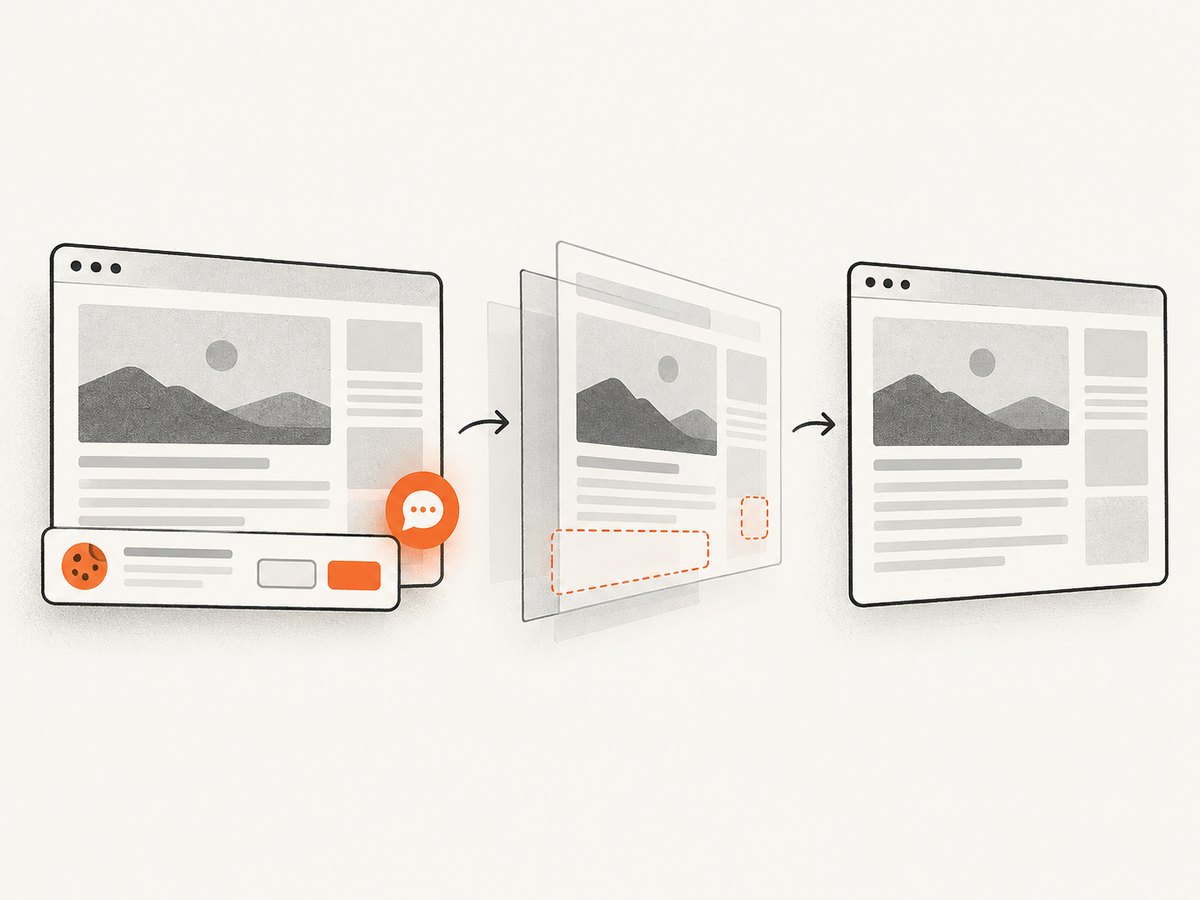
ScreenshotNeo offers 63 options, including full-page capture with lazy images loaded, CSS-selector element capture, dark mode, device presets and custom viewports, retina scale, PDF paper size and page ranges, HTML/CSS-to-image, custom CSS and JavaScript, pre-capture clicks, selector hiding, selector/delay/network-idle waits, request and resource blocking, headers, cookies, user agent, authorization, timezone, geolocation, transparent backgrounds, resizing, configurable cache TTL, signed links, asynchronous jobs with signed webhooks, bulk capture of up to 100 URLs per call, a usage API, and an OpenAPI spec. Parameter names used by other screenshot APIs also work to ease migration. Every feature is on every plan.
9. Or skip the browser setup
A direct call avoids setting up a browser and capture pipeline in your own application:
curl -G "https://api.screenshotneo.com/v1/shot" -d access_key=YOUR_API_KEY --data-urlencode url=https://stripe.com -o shot.webpCookie banners are accepted like a visitor and removed along with 60+ known consent platforms, newsletter popups, and chat widgets before the shot; each step can be turned off. Bot checks, CAPTCHAs, blank pages, timeouts, failed loads, and cache hits cost nothing, and response headers report the page verdict and billing status. The MCP server lets AI agents take screenshots. The Free plan includes 1,000 screenshots per month with no card; paid plans start at $5 for 3,000, with every feature on every plan. Read the API docs and sign up for 1,000 free screenshots a month, no card required.
10. FAQ
Which AI agent framework should you use?
Start with the workflow and your team’s stack. Use a direct API or function for a bounded task; investigate a framework when its specific state, routing, handoff, or integration features solve a requirement.
Is this a ranking from best to worst?
No. The eleven entries serve different needs, and the research did not establish a comparable benchmark or universal winner.
Does choosing a framework commit us to its hosted services?
Not automatically. Framework libraries and SDKs are distinct from optional hosting or observability products. Check the terms and operating requirements for each service you decide to use.
How often should we revisit the decision?
Recheck official documentation when your provider, language runtime, deployment requirements, or framework version changes. This field moves quickly, and the facts summarized here reflect research current to September 30, 2026.
Sources and evidence notes
Primary documentation reviewed for Microsoft Agent Framework, OpenAI Agents SDK, Anthropic’s agent-design guidance, LangGraph, Google ADK, Pydantic AI, and LlamaIndex Workflows informed the comparisons. A June 6, 2026 LangChain-authored guide supplied cross-framework positioning for several entries; it reviewed seven options and has a commercial interest in LangChain products. A 2025 survey provides an architectural taxonomy, not evidence of comparative 2026 performance. No independent market-share figure, adoption count, or benchmark across all eleven candidates was established.