The 10 Best MCP Servers for Marketing
A documented shortlist of the best marketing MCP servers, with setup, permissions, read/write limits, and guidance for choosing the right connector.

Short answer: the research does not support a defensible ranking of ten distinct, comparable marketing MCP servers. The strongest documented choices are Porter Metrics for cross-platform reporting and workflows, HubSpot’s remote MCP server for HubSpot CRM and marketing context, and Google Analytics MCP for read-only Analytics analysis. Choose by the job, the data you need, and whether the connection may write changes.
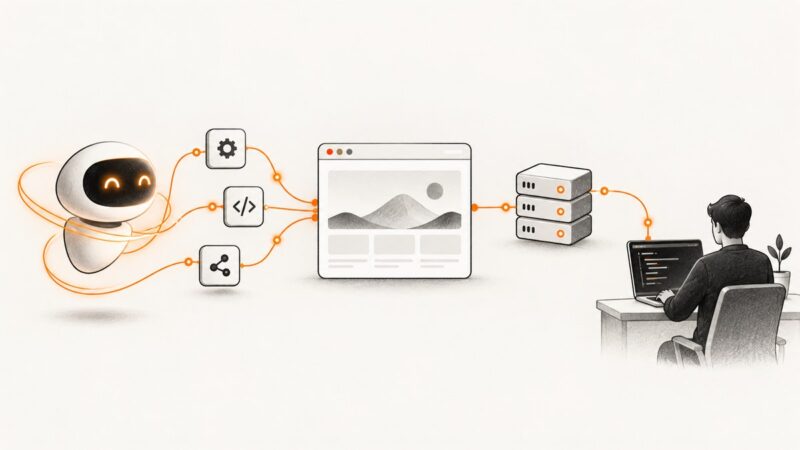
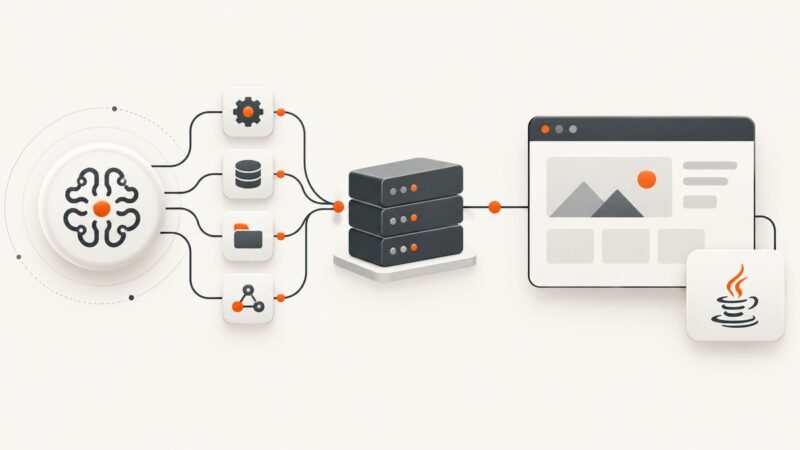
MCP (Model Context Protocol) is the connection layer between an AI client and a service. An MCP server exposes tools and data to a compatible client such as an AI assistant. The server’s name does not tell you which marketing actions it supports. You must inspect its documented tools, authorization flow, scopes, and read/write boundaries.
What an MCP server does for marketing
A marketing MCP server can let an AI client answer questions against campaign, CRM, ecommerce, advertising, social, content or analytics data. Some servers also expose actions such as creating a report, editing a CRM record, publishing content or starting an automation. Those actions are gated by account permissions and the scopes granted during connection.

MCP does not merge every system into one unrestricted database. Each server decides which objects and operations it exposes. A Google Analytics connection can be useful for reporting while remaining read-only. A HubSpot connection can expose selected CRM and content writes. A cross-platform service can offer many connectors while still requiring separate authorization for each source.
The evidence-led shortlist
The reviewed first-party documentation gives enough detail for three recommendations. It does not provide comparable pricing, reliability measurements, independent security tests or hands-on performance results. Treat the list below as a task-based shortlist, not a tested league table.
1. Porter Metrics MCP Server — best for multi-platform marketing work
Porter Metrics documents a remote MCP server that can query or blend connected sources, create and share hosted reports, and access a catalog of marketing operations. Its documented connector categories include advertising, social insights, analytics, Search Console, ecommerce, CRM, email, databases and spreadsheets. Named sources include Meta, Google Ads, TikTok, LinkedIn, GA4, Shopify, Amazon Seller, HubSpot, Klaviyo and Mailchimp.
An account and at least one authorized source are prerequisites. The agent connects through OAuth. Porter’s documentation describes 32 connectors and 750+ catalog operations as of 2026; those are vendor-reported catalog counts, not an independent audit or a quality score. It describes 28 fixed tools and five groups alongside the larger action catalog.
For agencies or teams that need one workflow across several platforms, Porter is the closest documented fit. Before connecting a client account, verify the connector’s available fields, account roles, billing implications and exact action support. The documentation says identity and account roles limit access, and that third-party tokens are held server-side by Porter. Destructive actions such as modifying a live campaign prompt for confirmation.
2. HubSpot remote MCP server — best for HubSpot account context
HubSpot documents a remote MCP server that connects an MCP-compatible client to a HubSpot account over OAuth with PKCE. The documented read surface includes CRM records, activities, marketing content, content analytics and marketing email data, along with other account information.
Selected writes are also documented: creating or editing certain CRM records; creating, editing or publishing website pages and blog posts; managing campaigns; and creating or updating marketing email drafts. The exact surface depends on OAuth scopes, user permissions, account setup and object availability. This is not unrestricted access to every HubSpot object or an autonomous marketing-automation layer.
HubSpot distinguishes this remote account server from its local Developer MCP server, which is intended for developer-platform work. If an account has Sensitive Data enabled, HubSpot says certain activity and conversation data are blocked through the MCP server. Administrators should review scopes and permissions before connecting protected customer data.
3. Google Analytics MCP — best for read-only Analytics questions
Google’s developer documentation describes connecting Google Analytics data to an LLM for questions such as users, top-selling products and data-informed marketing planning. It states: The server is available for read requests only. It can’t edit your Google Analytics configuration or settings.
The page was last updated on 2025-09-16 UTC.
Google’s linked repository labels its local server Experimental. It documents tools for account and property details, standard reports, funnel reports, realtime reports, and custom dimensions and metrics. Setup requires credentials with an Analytics read-only scope. Treat the experimental label as applying to that repository, not as a claim about every Google-hosted or client-specific Analytics connection.
How to choose between the three
| Need | Best documented fit | Boundary to verify |
|---|---|---|
| Blend advertising, social, analytics, ecommerce and CRM data | Porter Metrics | Connector fields, account roles, action availability and confirmation behavior |
| Ask questions about HubSpot records, content and campaigns | HubSpot remote MCP | OAuth scopes, PKCE, permissions, object availability and Sensitive Data restrictions |
| Query Analytics reports without changing configuration | Google Analytics MCP | Read-only scope, repository setup and experimental status of the local server |
Questions to answer before connecting
- Which exact source and object must the assistant access?
- Does the workflow only read data, or must it create, edit, publish or trigger something?
- Which user, account role and OAuth scopes will be used?
- Is the server remote and vendor-hosted, or local in your runtime?
- What happens when an action is destructive? Is confirmation required?
- Are sensitive records excluded by policy or account configuration?
- Can you revoke the connection and rotate credentials?
Setup pattern for an MCP marketing connection
- Choose the job and write down the minimum data and actions required.
- Confirm that the vendor documents an MCP server for that exact service. Do not infer that a generic integration is a marketing server.
- Install or select an MCP-compatible client. Remote servers generally use a vendor-provided endpoint and OAuth; local servers require the vendor’s runtime and credentials.
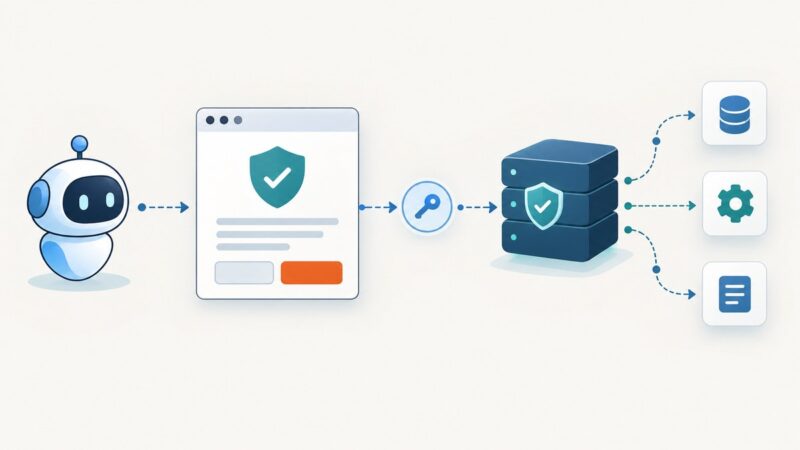
- Authorize only the account, properties and scopes needed. Have an administrator review access where customer or campaign data is involved.
- Start with read-only questions. Verify that returned records, date ranges, currencies and account filters are correct.
- For write-capable systems, test in a non-production account or draft state. Require confirmation before publishing, changing a live campaign or sending an email.
- Log the client, account, user, requested tool and result. Revoke access when the workflow is retired.
Example prompts that expose capability boundaries
Give me sessions, users and conversions for the last 28 days,
separated by source/medium. Show the property and timezone used.
Find HubSpot contacts created this week with lifecycle stage = lead.
Do not modify records. List the filters and total count.Draft a campaign performance summary from the connected sources.
Before any write, show the exact object, fields and proposed values.These prompts make the server disclose which account it queried, what filters it applied and whether an operation is read-only. If a client cannot explain those details, do not treat a plausible-looking answer as verified reporting.
Marketing workflows an MCP server can support
Cross-channel reporting
A multi-source server can gather advertising, social, ecommerce and analytics figures into one report. Confirm metric definitions before combining them: “conversions” may mean different events in different systems, and attribution windows may not match.
CRM and content operations
HubSpot’s documented server can provide account context and selected writes. Keep publishing, campaign edits and email changes behind an explicit review step. Record the target object and final values so a human can audit the action.
Analytics investigation
Google Analytics MCP is appropriate for questions that read reports, funnels, realtime data or custom dimensions. It cannot edit Analytics configuration or settings, so configuration changes require the normal Google administration path.
Performance, reliability and cost considerations
The dossier contains no controlled benchmarks or uptime figures. In practice, response time depends on the client, the MCP server, the upstream API, the number of sources queried and the requested date range. Reduce latency and failure surface by asking for one account and a bounded date range first, then expanding the query.
Cache stable metadata such as account and property IDs in your own workflow when policy permits. Paginate large result sets, request only required fields and make retries idempotent for reads. For writes, never blindly retry an operation that might have succeeded; first check the object state or use an operation identifier if the vendor provides one.
No common price basis was verified for the three products. Check each vendor’s current terms, connector billing and account limits. Also account for the underlying platform’s API quotas and any costs incurred by your AI client. Do not assume that an MCP server’s catalog count predicts quality, accuracy or total cost.
Or skip the browser setup
If your marketing workflow needs screenshots of landing pages, reports or campaign previews, ScreenshotNeo provides a website screenshot API and MCP server. Its MCP tools include take_screenshot, get_page_info and capture_pdf, so Claude, Cursor or another MCP client can request captures directly.

With the API, one GET request returns a PNG, JPEG, WebP or PDF. The same parameter names used by other screenshot APIs work, which helps when switching. See the ScreenshotNeo API documentation for the complete option list.
cURL
curl -G "https://api.screenshotneo.com/v1/shot" \
  -d access_key=YOUR_API_KEY \
  --data-urlencode url=https://stripe.com \
  -o shot.webp
Python
import requests

r = requests.get(
    "https://api.screenshotneo.com/v1/shot",
    params={"access_key": "YOUR_API_KEY", "url": "https://stripe.com"},
    timeout=90,
)
r.raise_for_status()
open("shot.webp", "wb").write(r.content)
Node.js
const q = new URLSearchParams({ access_key: 'YOUR_API_KEY', url: 'https://stripe.com' });
const res = await fetch(`https://api.screenshotneo.com/v1/shot?${q}`);
if (!res.ok) throw new Error(`Screenshot failed: ${res.status}`);
const fs = await import('node:fs/promises');
await fs.writeFile('shot.webp', Buffer.from(await res.arrayBuffer()));
ScreenshotNeo removes cookie and consent banners, newsletter popups and chat widgets before capture; each cleanup step can be turned off. Bot checks or CAPTCHAs, blank pages, timeouts, failed loads and cache hits are not billed. Response headers identify the page verdict and whether the request was billed. Options include full-page capture with lazy images loaded, CSS selector element capture, dark mode, device presets or custom viewports, retina scale, PDF paper and margin controls, custom CSS and JavaScript, clicks, waits, blocked resources, headers, cookies, user agents, Authorization, timezone, geolocation, transparent backgrounds, resizing, TTL caching, signed links, async webhooks and bulk capture for up to 100 URLs per call.
There is a free plan with 1,000 screenshots per month and no card. Paid plans start at $5 for 3,000 shots. Create a free ScreenshotNeo account to try it.
Troubleshooting MCP marketing connections
The client cannot discover the server
Cause: incorrect remote endpoint, unsupported client configuration or a local runtime that is not running. Fix: copy the vendor’s current connection settings, verify the client supports remote or local MCP as required, and inspect the client’s server log.
OAuth succeeds but no data appears
Cause: the authorized user lacks access to the property, portal, ad account or CRM object, or the requested scope was not granted. Fix: have an administrator check account roles and scopes, reconnect after changing them, and test a known account or property ID.
The assistant claims it changed Analytics settings
Cause: the model inferred an action from a natural-language request. Fix: Google Analytics MCP is documented as read-only; use the normal Analytics administration interface for configuration changes.
A HubSpot write is missing
Cause: the operation is outside the documented selected-write surface, the object is unavailable, or the user lacks permission. Fix: check HubSpot’s scopes, account setup and object documentation; keep the operation in draft form until confirmed.
Numbers from two systems disagree
Cause: different attribution windows, timezones, currencies, filters or metric definitions. Fix: ask the server to return source names, property IDs, date ranges and filters with every result, then reconcile definitions before reporting a combined total.
A destructive action runs too soon
Cause: the client treated a write as an ordinary tool call. Fix: require a confirmation step that displays the exact object and proposed values. Porter’s documentation says destructive actions such as modifying a live campaign prompt for confirmation; implement an equivalent review gate in your own client workflow.
FAQ
Do I need one MCP server per marketing platform?
No. A multi-source server such as Porter may connect several platforms. You still need separate authorization and should verify each connector’s fields and actions.
Can Google Analytics MCP publish campaigns?
No. The documented Google Analytics server is available for read requests only and cannot edit Analytics configuration or settings.
Is HubSpot’s MCP server the same as its Developer MCP server?
No. HubSpot documents the remote account server for account data and selected marketing actions, while the local Developer MCP server is for developer-platform work.
Are ten products required for a useful shortlist?
No. A shorter, documented shortlist is more useful than filling slots with integrations that have not been verified as standalone marketing MCP servers.
Can an AI agent capture a marketing page as an image?
Yes. ScreenshotNeo’s MCP server exposes screenshot, page-info and PDF tools, and its API can return PNG, JPEG, WebP or PDF files.
Sources and scope
This article uses the vendors’ documentation: Porter Metrics documentation, HubSpot MCP overview, HubSpot remote MCP integration documentation, Google Analytics MCP documentation, Google Analytics MCP repository, HubSpot MCP Client documentation, and Google Cloud MCP overview. Capabilities and availability can change, so verify the linked documentation before production use.