Best MCP Tools for Capturing Website Screenshots from an AI Coding Agent
Playwright MCP is a practical starting point for AI coding agents that need browser automation and screenshots. Here is how to set it up, choose capture options, and decide when a screenshot API fits better.
Short answer: Playwright MCP is the most practical documented starting point in this research for an AI coding agent that must navigate a website, interact with it, and save a screenshot. There is no verified head-to-head benchmark proving one MCP screenshot tool is objectively best, so choose based on whether you need interactive browser control, visual output, and a workflow your MCP client supports.
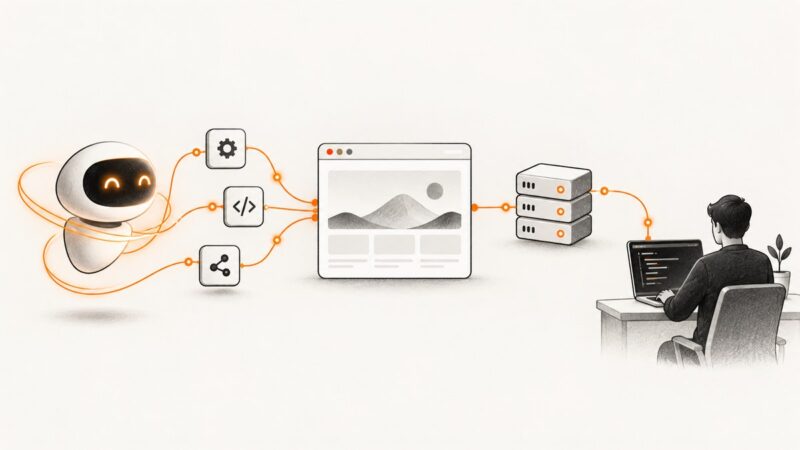
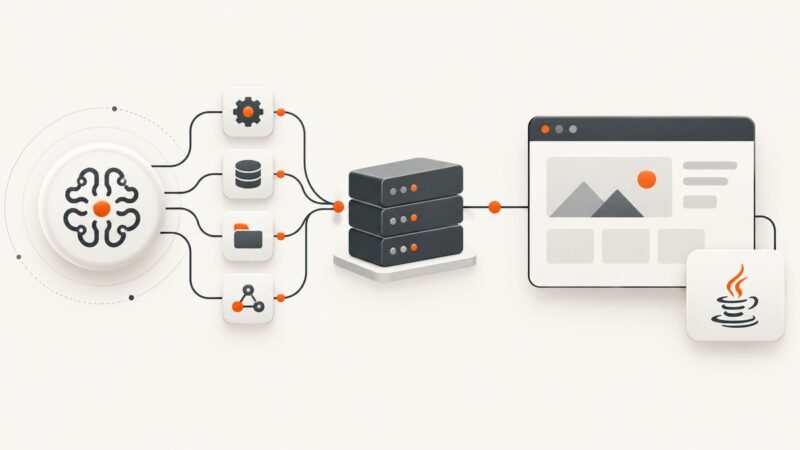
Playwright MCP exposes browser automation through the Model Context Protocol. Its normal interaction loop uses structured accessibility snapshots to identify page elements; screenshots add the visual evidence needed for layouts, charts, canvas content, and image-heavy pages. The official docs demonstrate asking an assistant to navigate and take a screenshot. Playwright MCP getting started · Snapshots and screenshots.
1. Which screenshot tool should you choose?
| Need | Good fit | Reason |
|---|---|---|
| Agent must browse, click, inspect, and then capture | Playwright MCP | One MCP server exposes navigation, interaction, structured page snapshots, and screenshot capture. |
| Agent needs to understand a chart, canvas, or visual layout | Playwright MCP plus a screenshot | Use the accessibility tree for semantic page structure and a screenshot for visual context. |
| One-off screenshot without managing a browser session | ScreenshotNeo | A single API request returns an image or PDF, and its MCP server offers screenshot tools to AI agents. |
| Repeated workflow across many URLs | Compare browser automation with an API | Browser automation is flexible; ScreenshotNeo supports bulk capture of up to 100 URLs per call. |
This is a workflow recommendation, not an independent quality or speed ranking. The reviewed sources document Playwright MCP and its features but do not compare multiple screenshot MCP servers under controlled conditions. Playwright’s own docs also describe CLI as a lower-token workflow for coding agents; that is a vendor-described tradeoff, not an independent benchmark. Playwright MCP introduction.
2. Install Playwright MCP
You need Node.js 20 or newer and an MCP client such as VS Code, Cursor, Windsurf, Claude Code, or Claude Desktop. The browser downloads automatically on first use. Add the server to the MCP configuration location used by your client; exact locations vary, so check that client’s current MCP setup instructions. Official installation guide.
{
  "mcpServers": {
    "playwright": {
      "command": "npx",
      "args": ["@playwright/mcp@latest"]
    }
  }
}
For VS Code, the documented CLI setup is:
code --add-mcp '{"name":"playwright","command":"npx","args":["@playwright/mcp@latest"]}'For Claude Code, the documented command is:
claude mcp add playwright npx @playwright/mcp@latestIn Cursor, open Settings → MCP → Add new MCP Server and enter command type with npx @playwright/mcp@latest. Other clients generally accept the standard configuration, but follow their current instructions for its location and transport.
3. Capture a screenshot through the agent
- Restart or refresh the MCP client after adding the server, then confirm its Playwright tools are available.
- Give the agent a specific URL and ask it to capture the page. For example: “Go to https://example.com and take a screenshot.”
- For an interactive or dynamic page, describe the state to create first: “Open the page, dismiss the dialog, select the annual plan, and take a screenshot.”
- Specify whether you need the viewport, whole page, or a particular element, plus the desired image type and output filename where the tool exposes those options.
- Inspect the saved file and verify that it shows the intended state. If content is missing, wait for the relevant element or page state before capturing.
The exact prompts in the official docs include “Take a screenshot of the page” and “Go to https://example.com and take a screenshot.” A useful prompt names the target URL, desired state, capture scope, and output requirements rather than asking the agent to guess.
4. Understand snapshots versus screenshots
Playwright MCP’s normal interaction model uses accessibility snapshots: structured text describing accessible elements, roles, and names, with references the agent can use to click or type. As the docs put it, “Playwright MCP uses accessibility snapshots instead of screenshots.” That describes the interaction layer; the server also supports screenshot capture as a separate capability. Playwright snapshots documentation.
- Use a snapshot to find a button, read headings, inspect accessible labels, or interact through element references.
- Use a screenshot to inspect visual arrangement, spacing, colors, charts, canvas output, or image-heavy content.
- Use both when the agent must operate semantically and then judge how the rendered page looks.
Snapshot references are tied to the current page state. After navigation or a page change, take a fresh snapshot before reusing a reference. On a large page, search the snapshot or request a smaller subtree instead of repeatedly returning the full tree.
5. Screenshot options to specify
The screenshot tool documented by the Playwright MCP project supports these choices. Check the current tool schema in your installed version because package capabilities and names can change.
| Option | When to use it | What to watch |
|---|---|---|
| Element target | Capture one component, chart, card, or region | Ensure the target exists and is visible; use a fresh reference after state changes. |
| Full-page capture | Save a long page beyond the current viewport | Long pages can produce very tall image files; lazy content may need to load first. |
| Image type | Choose the requested output format | Confirm downstream tooling accepts the selected format. |
| Filename | Save the result to a predictable destination | Use a path writable by the server’s process and verify where the client stores artifacts. |
| Scale | Balance output dimensions and detail | CSS scale produces CSS-pixel dimensions; device scale produces device-pixel dimensions. |
For repeatable visual comparisons, keep the browser, viewport, page state, and scale consistent. The screenshot operation is documented as read-only; avoid confusing it with optional arbitrary code execution tools.
6. Configuration choices for an agent workflow
- Headed or headless: Headed mode is the default and lets you see the browser. Add
--headlessfor a run without a visible window. - Browser: The docs list
chrome,firefox,webkit, andmsedge; select one with an argument such as--browser=firefox. - Profile and authentication: The default persistent profile preserves login state. Use
--isolatedfor a fresh session, optionally with--storage-statefor provided state. Treat saved cookies and storage files as credentials. - Advanced settings: A JSON config file can specify browser and context options, network rules, and timeouts. Consult the project repository for the current schema.
- HTTP transport: A standalone server can be started with
npx @playwright/mcp@latest --port 8931and connected athttp://localhost:8931/mcp. The docs state HTTP sessions use a five-second heartbeat; if a client or proxy does not answer pings, setPLAYWRIGHT_MCP_PING_TIMEOUT_MSto a longer value, or 0 to disable it.
{
  "mcpServers": {
    "playwright": {
      "command": "npx",
      "args": ["@playwright/mcp@latest", "--headless", "--browser=firefox"]
    }
  }
}
Use browser_run_code_unsafe only when necessary and only with a trusted MCP client. The official docs warn that it executes arbitrary JavaScript in the Playwright server process and is equivalent to remote code execution. Ordinary screenshot capture does not require enabling that tool.
7. When a screenshot API is a better fit
Use browser MCP when the agent needs to explore a site, authenticate, click through a flow, or make decisions based on intermediate page state. Use a screenshot API when the job is primarily “give me this URL as an image or PDF,” especially for scheduled, bulk, or server-side capture. The API model avoids maintaining an interactive browser session in your agent workflow; it offers less interactive control than driving a browser step by step.
8. Or skip the browser setup
ScreenshotNeo is a website screenshot API and MCP server for developers. One GET request with a URL returns PNG, JPEG, WebP, or PDF. Its MCP server provides take_screenshot, get_page_info, and capture_pdf for Claude, Cursor, and other MCP clients. Cookie consent banners are accepted like a visitor, and more than 60 known consent platforms, newsletter popups, and chat widgets are removed before capture; each step can be turned off.
Here is a runnable cURL example:
curl -G "https://api.screenshotneo.com/v1/shot" -d access_key=YOUR_API_KEY --data-urlencode url=https://stripe.com -o shot.webpPython:
import requests

r = requests.get(
    "https://api.screenshotneo.com/v1/shot",
    params={"access_key": "YOUR_API_KEY", "url": "https://stripe.com"},
    timeout=90,
)
r.raise_for_status()
open("shot.webp", "wb").write(r.content)
Node.js:
const q = new URLSearchParams({ access_key: 'YOUR_API_KEY', url: 'https://stripe.com' });
const res = await fetch(`https://api.screenshotneo.com/v1/shot?${q}`);
if (!res.ok) throw new Error(`Screenshot request failed: ${res.status}`);
await Bun.write('shot.webp', res);
See the ScreenshotNeo API documentation for authentication and parameters. The API also supports full-page and element capture, viewport and device presets, retina scale, PDF settings, custom CSS and JavaScript, click and wait actions, request blocking, headers and cookies, user agent, timezone and geolocation, transparent backgrounds, resizing, cache TTL, signed links, asynchronous jobs with signed webhooks, bulk capture up to 100 URLs per call, usage reporting, and an OpenAPI spec. Common parameter names used by other screenshot APIs also work.
Only clean shots are billed: bot checks and CAPTCHAs, blank pages, timeouts, failed loads, and cache hits cost nothing. Responses identify the page verdict and billing status in X-Page-Verdict and X-Billed headers. Plans are Free with 1,000 shots/month and no card, Starter $5 for 3,000, Growth $15 for 15,000, Pro $39 for 60,000, Scale $99 for 250,000, and Business $249 for 1,000,000; yearly billing gives two months free, and every feature is on every plan.
Cookie banners, popups, and chat widgets are removed before the shot; bot checks, blank pages, and failed loads are never billed; an MCP server lets AI agents take screenshots; and 1,000 screenshots a month are free with no card, with paid plans starting at $5 for 3,000. Create a free ScreenshotNeo account.
9. Troubleshooting
| Symptom | Likely cause | Fix |
|---|---|---|
| Playwright tools do not appear in the agent | Invalid config location or client has not reloaded it | Check the client’s MCP setup instructions and restart or refresh the client; inspect its MCP connection status. |
npx fails or server will not start |
Node.js version is older than the documented minimum, or package download failed | Install Node.js 20 or newer and retry in an environment with access to fetch the package. |
| Browser fails on first launch | Browser download is missing or could not complete | Allow the first-use browser download to finish and check environment network and filesystem access. |
| Screenshot is blank or incomplete | Capture occurred before navigation or asynchronous content finished | Wait for a meaningful page element or the page’s loading condition, then capture again; inspect the browser state. |
| Target reference is not found | The page changed and invalidated the old snapshot reference | Take a new snapshot and use its current reference, or use a known selector. |
| Screenshot has the wrong dimensions | Full-page and viewport capture were confused, or scale differs | State the capture scope and CSS-pixel versus device-pixel scale explicitly. |
| Headed browser cannot launch in remote worker | Worker has no display | Use --headless, or run the server separately with the documented HTTP transport. |
| HTTP MCP session disconnects | Heartbeat pings are not answered through the client or proxy | Increase PLAYWRIGHT_MCP_PING_TIMEOUT_MS or set it to 0 if disabling heartbeat is appropriate for the environment. |
| Authenticated page looks logged out | Isolated profile or missing storage state | Use the intended persistent profile or provide valid storage state; protect authentication files as secrets. |
10. Performance, reliability, and cost
Playwright MCP runs a real browser, so capture time includes browser startup when needed, navigation, page rendering, and any waits. Keep the workflow efficient by reusing a session where appropriate, waiting for the specific content required, and taking screenshots only when visual evidence changes the decision. Accessibility snapshots can reduce the need to send large visual context for routine element interaction, though the official docs’ token and speed comparisons are vendor documentation rather than independent measurements.
For reliability, make the desired page state explicit, use fresh snapshots after navigation, and validate the resulting artifact. Persistent profiles help with authenticated flows but carry state between sessions; isolated profiles reduce state carryover but require authentication setup. Pinning and reviewing package versions can help control changes in a production workflow; the setup example uses @latest, whose behavior can change over time.
The research dossier does not establish a Playwright MCP service price, screenshot price, or benchmark. Cost depends on your MCP client and model usage, along with the compute and browser environment you provide. For ScreenshotNeo, use the published plan counts and prices above; failed loads and other listed non-clean outcomes are not billed.
11. Frequently asked questions
Does Playwright MCP require a vision model?
Its accessibility-snapshot interaction workflow does not require one. Visual screenshot interpretation does require a model or agent that can process images.
Can I capture just one element?
Yes. The documented screenshot tool supports an element target as well as full-page capture. Specify the desired element clearly and confirm it is visible.
Can I use the existing browser session?
The project documents a browser-extension mode for connecting to existing browser tabs, in addition to persistent and isolated profile modes. Check the current setup documentation for the extension requirements.
Is Playwright MCP objectively the best?
No comparative benchmark in the cited research establishes an objective winner. It is a strong documented option when browser interaction and screenshot capture belong in the same agent workflow.
Can an agent take screenshots without MCP?
Yes. Playwright also documents a CLI workflow, and a screenshot API such as ScreenshotNeo can return an image or PDF directly from a URL.