Browser Automation APIs for AI Coding Platforms
Compare browser automation APIs, hosted sessions, provider tools, and MCP servers for AI coding platforms, with runnable integration patterns and security guidance.
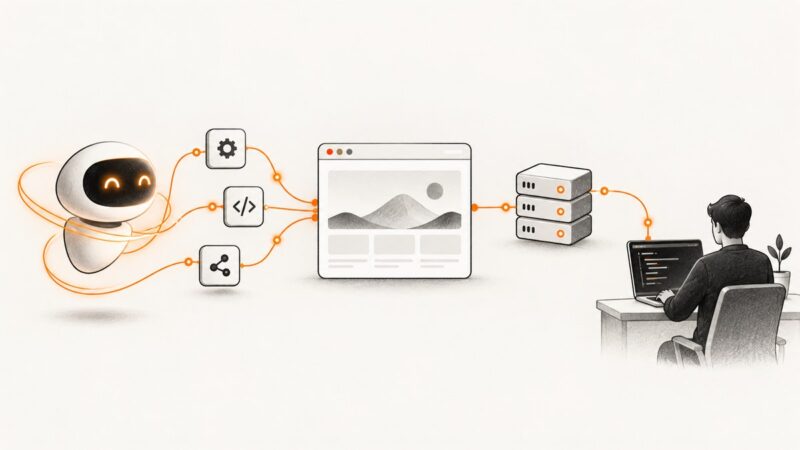
Browser automation APIs let an AI model inspect and interact with a live browser through tools your application connects and executes. The main choice is who operates the browser session: your application, a hosted provider environment, or a local browser automation server connected over MCP. These approaches overlap, but differ in what the model sees, how sessions work, and which operational controls your team owns.
For AI coding platforms, choose a developer-managed runtime when you need direct control over the browser environment; a hosted browser when you want the provider to operate that environment; a provider-defined toolset when you want a standard model-facing interface but will execute calls yourself; and Playwright MCP when the coding client supports MCP and structured browser interactions fit the workflow. There is no evidence-backed universal winner.
1. The four browser automation patterns
Developer-managed runtime
Your application sends browser tasks to a model and executes its requested actions in a runtime you operate. OpenAI documents two broad approaches: code execution using a library such as Playwright or PyAutoGUI, and a computer tool that translates structured mouse and keyboard actions into browser or desktop input. The application supplies and executes the requests. You own browser provisioning, session handling, execution limits, and permission rules. OpenAI computer-use API documentation
Provider-hosted browser environment
In the OpenAI Agents API computer-use pattern documented in the research, the application starts an OpenAI-hosted browser session, follows its events, and handles website access requests while the agent acts on what it observes. This reduces the browser infrastructure your application directly operates. Review the current hosted-session setup and terms for your use case; the cited documentation does not establish general claims about price, geographic availability, or guaranteed persistence. OpenAI Agents API computer-use documentation
Provider-defined browser toolset, application-run browser
Anthropic’s browser-use tool is declared in the Messages API as a versioned browser_toolset_20260801 entry. The model has a provider-defined tool interface, while your application runs the calls against its own browser automation. This is not the same as a provider-hosted browser. The documented tool is available on the Claude API and Google Cloud. Four member operations—javascript_exec, file_upload, read_console, and read_network—are disabled by default. Anthropic explains that these can broaden what manipulated page content might trigger or what page-controlled information reaches the model. Anthropic browser-use tool documentation
Browser automation server over MCP
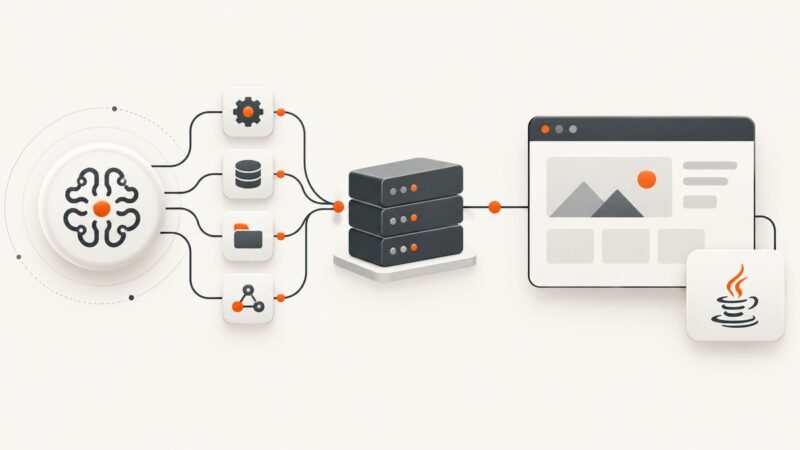
MCP is a protocol for connecting compatible AI applications to tools and other external systems; it is not itself a browser engine. Playwright MCP supplies browser operations through that protocol. Its documented model-facing interface includes structured accessibility snapshots with roles, text, and element references, as well as screenshot and coordinate-driven vision capabilities. The server supports navigation, clicks, typing, screenshots, tabs, storage, network inspection, and other functions. MCP introduction · Playwright MCP setup · Playwright MCP capabilities
2. Compare the patterns against your requirements
| Pattern | Who runs the browser | What the model observes | How the app connects | Main operational responsibility |
|---|---|---|---|---|
| Developer-managed runtime | Your application or runtime provider | Tool results such as page state, code output, or visual observations, depending on the integration | Provider-specific tool or code-execution flow | Provision the runtime, preserve sessions, enforce execution limits and permissions |
| Hosted browser environment | API provider | Observations and events from the hosted browser session | Provider’s agent or computer-use API | Start sessions, follow events, and handle website access requests as documented |
| Provider-defined browser toolset | Your application’s browser automation | Results returned through the provider-defined browser operations | Declare the toolset in the provider API; execute its calls in your app | Operate the browser and deliberately enable only appropriate operations |
| Playwright MCP | The MCP server’s configured browser environment | Often structured accessibility snapshots; screenshots and coordinate-based vision are also documented | MCP client configuration | Configure the server, client, capabilities, profile, and access controls |
Check these dimensions before selecting a pattern:
- Control: Do you need to pin browser versions, install dependencies, or control network access?
- Representation: Is accessible page structure enough, or does the task depend on visual layout and coordinates?
- Client compatibility: Does the coding platform support the chosen API flow or MCP configuration? Playwright documents clients including VS Code, Cursor, Windsurf, Claude Desktop, Cline, Goose, Kiro, Codex, Copilot CLI, and others. Consult the individual client’s current setup instructions; support does not mean every client exposes every capability identically.
- Session model: Do you need an isolated session, retained login state, or a hosted session? Confirm the selected integration’s actual session behavior.
- Capability boundaries: Does the workflow truly need JavaScript execution, uploads, network inspection, storage, or developer tools?
- Operational ownership: Who provisions browsers, handles events, applies permissions, and observes usage?
3. Connect Playwright MCP to an AI coding client
Playwright MCP is a practical option when the client supports MCP and you want browser actions exposed as tools. Follow the current Playwright setup guide and the specific client’s MCP instructions. Configuration formats differ by client, so use its expected configuration file and syntax.
- Install or invoke the Playwright MCP server according to the official setup page.
- Add its server configuration to the MCP settings for your coding client.
- Choose the browser mode and profile deliberately. The docs describe persistent, isolated, and extension modes. Persistent profiles retain cookies and login state between sessions, so treat their stored authentication state as sensitive.
- Start with the minimum capability groups the task needs. Optional groups can add tools and token overhead.
- Connect the client, inspect the tools it exposes, and give the agent a narrow task and the least access necessary.
The server’s browser_run_code_unsafe capability is documented as arbitrary JavaScript execution in the server process and equivalent to remote code execution. Enable it only for trusted MCP clients and workflows. Do not expose it as a general-purpose tool to untrusted agents.
4. Implement a developer-managed browser runtime
A typical loop is: send the model a task and available browser tools, execute the requested action in your runtime, return a concise observation, and continue until the model finishes or a limit is reached. The exact request schema depends on the provider. OpenAI’s guide includes JavaScript with Playwright and Python, Ruby, and Go examples using a runtime with PyAutoGUI; use the current provider example for the API version and model you select. OpenAI runtime and computer-use guidance
Keep the runtime boundary explicit. Preserve the browser session across calls when the workflow requires it, set execution and navigation limits, restrict destinations and sensitive actions according to your application’s policy, and return only the observations needed for the next decision. The API guide calls out session preservation, execution limits, and permission rules as runtime responsibilities.
5. Handle sessions, authentication, and untrusted pages
- Separate users and tasks: Prefer isolated sessions when cookies or account state must not cross task boundaries. Verify the exact isolation behavior in the chosen runtime.
- Persistent login state: Playwright MCP persistent profiles retain cookies and login state. Restrict filesystem access to profile data, avoid sharing profiles across users, and have a cleanup or rotation policy appropriate to your application.
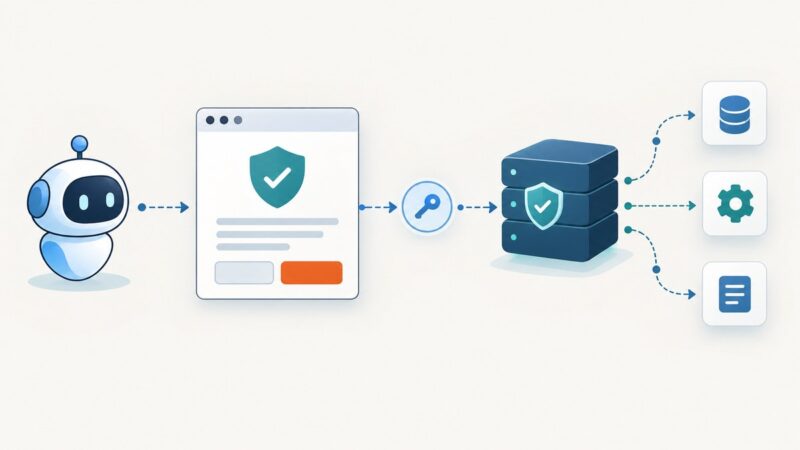
- Page content is untrusted input: A page can contain instructions intended to manipulate the agent. Treat webpage text as data, keep secrets out of model-visible context, and require application-side authorization for consequential actions.
- Limit powerful operations: Start with the smallest tool surface. Anthropic leaves several browser members disabled by default, and Playwright groups optional capabilities. Enable uploads, JavaScript, network access, or unsafe code only when the task justifies them.
- Enforce policy outside the prompt: The runtime should enforce timeouts, destination rules, action permissions, and resource limits. A model instruction alone is not an execution boundary.
6. Tokens, performance, reliability, and cost
The sources reviewed do not provide comparable latency, task success-rate, or total-cost benchmarks across OpenAI computer use, Anthropic browser use, and Playwright MCP. Measure these against your own tasks and environment rather than treating unlike vendor figures as a ranking.
- Tool-definition overhead: Anthropic’s documentation checked on 2026-10-03 estimates about 6,600 input tokens for the default browser toolset definitions and system prompt. It says exact usage is reported in response
usage, optional members add overhead, and returned screenshots, images, and text also consume input. This is a vendor estimate for that toolset, not a cross-provider comparison. Anthropic token estimate and usage notes - Reduce avoidable context: Expose only needed capabilities, return concise observations, and avoid repeatedly sending large page text or screenshots when a smaller state description will do.
- Bound work: Set limits on action count, navigation time, page load waits, and total task duration in the runtime you control. Browser tasks can stall on slow pages, dialogs, or authentication flows.
- Retries: Retry transient navigation or service errors only when repeating the action is safe. A click that submits a form or makes a purchase may not be safe to replay.
- Budgeting: Track provider API usage, tool-definition tokens, returned observations, and your browser runtime’s infrastructure usage separately. The reviewed sources do not support a matched total-cost comparison.
7. Troubleshooting
| Symptom | Likely cause | What to do |
|---|---|---|
| The coding client shows no browser tools | MCP server configuration is invalid, the server did not start, or the client uses a different configuration format | Use the current setup instructions for both Playwright MCP and that client; inspect its server startup or connection status. |
| The agent cannot find or operate a control | The page structure is not exposed in the expected representation, the page has not settled, or the task depends on visual layout | Request a fresh accessibility snapshot, wait for the relevant state, or use the documented screenshot/vision interaction when appropriate. |
| A browser action is unavailable | The corresponding optional capability is not enabled, or the provider tool member is disabled by default | Check the capability configuration and enable only the operation required by the workflow. |
| The next call starts without the prior login or page state | The runtime or profile is not being preserved between calls, or an isolated session was selected | Keep the same session/runtime for the task when required, or deliberately select a documented persistent profile. Protect its credentials and cookies. |
| Calls consume more tokens than expected | Tool definitions, large snapshots, screenshots, or optional tools add context | Review response usage, reduce enabled capabilities, and return a smaller observation. Anthropic’s estimate is specific to its documented default toolset. |
| The agent follows malicious page instructions or requests a sensitive action | Untrusted page content influenced the model, or the runtime lacks an authorization gate | Treat page text as untrusted, keep secrets out of context, enforce permissions in the application, and require approval for sensitive operations where your policy calls for it. |
| A task hangs or repeats an action | Navigation or page state is stalled, or the loop lacks limits and safe retry rules | Apply deadlines and action limits, return a clear timeout observation, and retry only operations known to be safe to repeat. |
8. Get a clean screenshot without operating a browser
If the task is to capture a page rather than interact with it, ScreenshotNeo is a website screenshot API and MCP server for developers. A single GET request can return a PNG, JPEG, WebP, or PDF. Its MCP server provides take_screenshot, get_page_info, and capture_pdf for Claude, Cursor, and other MCP clients.
Or skip the browser setup
Use this one-call capture; see the ScreenshotNeo API documentation for options. Replace the URL with the page you want to capture.
curl -G "https://api.screenshotneo.com/v1/shot" -d access_key=YOUR_API_KEY --data-urlencode url=https://stripe.com -o shot.webpimport requests
r = requests.get("https://api.screenshotneo.com/v1/shot", params={"access_key": "YOUR_API_KEY", "url": "https://stripe.com"}, timeout=90)
open("shot.webp", "wb").write(r.content)const q = new URLSearchParams({ access_key: 'YOUR_API_KEY', url: 'https://stripe.com' });
const res = await fetch(`https://api.screenshotneo.com/v1/shot?${q}`);- Cookie banners are accepted like a visitor, and 60+ known consent platforms, newsletter popups, and chat widgets are removed before the shot; each step can be turned off.
- Bot checks, blank pages, timeouts, failed loads, and cache hits cost nothing. Responses identify the page verdict and billing status in headers.
- The MCP server lets AI agents take screenshots, inspect page information, and capture PDFs.
- 1,000 screenshots a month are free with no card; paid plans start at $5 for 3,000. Every feature is on every plan.
Sign up free for 1,000 screenshots a month, with no card required.
9. FAQ
Can Cursor or VS Code control a browser through MCP?
Playwright lists both among its documented MCP clients. Follow the current client-specific setup instructions and check which capabilities that client exposes.
Is MCP itself the browser automation API?
MCP provides the connection protocol. A server such as Playwright MCP supplies the browser operations.
Does an accessibility snapshot replace screenshots?
No. Structured accessibility data is useful for roles, labels, text, and references; visual tasks may require screenshot or coordinate-based interaction.
Which approach is cheapest or most reliable?
The reviewed official sources do not provide comparable total-cost, latency, or success-rate measurements. Estimate with representative tasks and account for both API usage and runtime operations.
10. Choose by ownership and control
Start by deciding who should own the browser session, then match the model’s observation needs and the coding client’s integration support. Use a developer-managed runtime when environment control is central; a hosted browser when the documented provider session fits; a provider-defined toolset when you want its interface but will execute browser actions; or Playwright MCP when the client and structured tool workflow fit. In every case, keep capabilities narrow, sessions deliberate, and execution limits in the application.