BlogScreenshots on your device
How to Capture Pixels from an AWT Component in Java
Render an AWT or Swing component into a BufferedImage, or capture the exact screen rectangle with Robot. Includes headless, DPI, permissions and troubleshooting guidance.
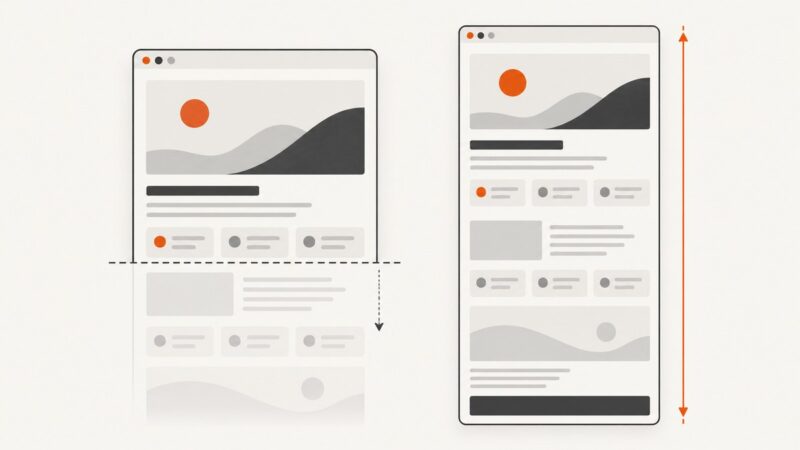
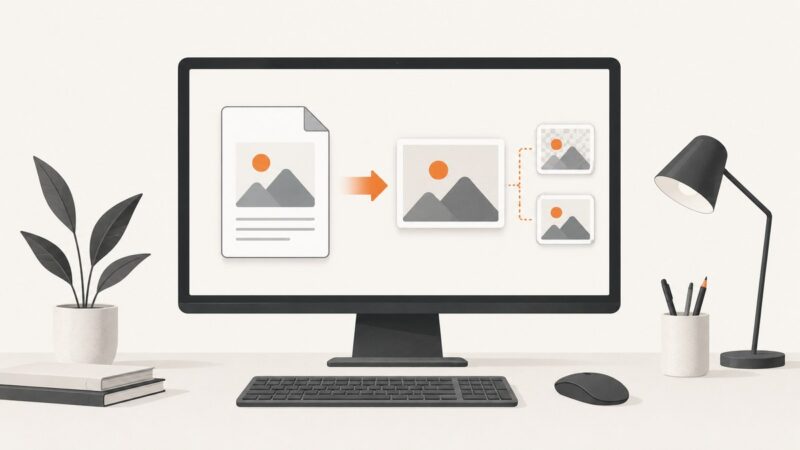
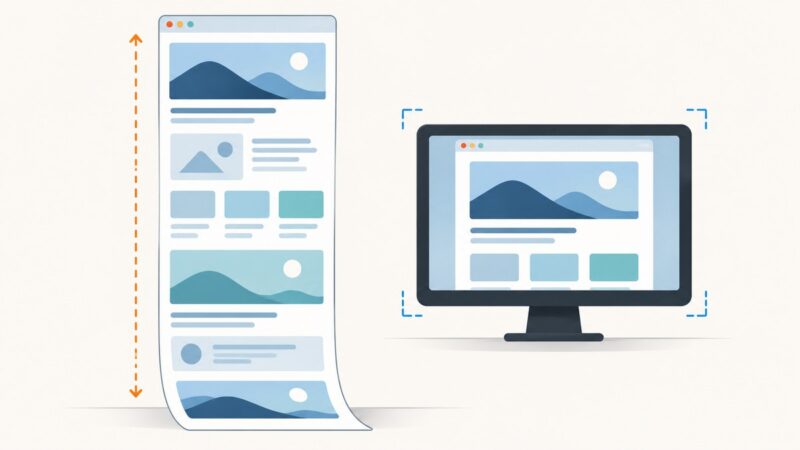
There are two different operations commonly called “capturing pixels” from an AWT component:
- Render the component hierarchy off-screen: create a
BufferedImage, obtain itsGraphics2D, and callcomponent.paintAll(graphics). This captures what the component and its children paint. - Capture what is visible on the desktop: find the component’s screen coordinates and call
Robot.createScreenCapture(rectangle). This samples the display, including pixels produced by native peers or other windows that overlap the rectangle.
Use off-screen painting for export, tests, thumbnails, and headless-friendly rendering. Use Robot when the requirement is the exact pixels currently displayed.
1. Render an AWT component into a BufferedImage
The following complete example creates a Swing panel, sizes it without showing a window, paints the panel and its children into an ARGB image, and writes a PNG file.
import java.awt.Color;
import java.awt.Dimension;
import java.awt.Graphics2D;
import java.awt.GraphicsEnvironment;
import java.awt.image.BufferedImage;
import java.io.IOException;
import java.nio.file.Path;
import javax.imageio.ImageIO;
import javax.swing.JLabel;
import javax.swing.JPanel;
import javax.swing.SwingConstants;

public class ComponentImage {
    public static BufferedImage render(java.awt.Component component) {
        if (component == null) {
            throw new IllegalArgumentException("component must not be null");
        }
        int width = component.getWidth();
        int height = component.getHeight();
        if (width <= 0 || height <= 0) {
            throw new IllegalArgumentException(
                "component must have positive width and height; call setSize or pack first");
        }

        BufferedImage image = new BufferedImage(
            width, height, BufferedImage.TYPE_INT_ARGB);
        Graphics2D graphics = image.createGraphics();
        try {
            component.paintAll(graphics);
        } finally {
            graphics.dispose();
        }
        return image;
    }

    public static void main(String[] args) throws IOException {
        JPanel panel = new JPanel();
        panel.setBackground(new Color( thirty = 30,  thirty,  thirty ));
        JLabel label = new JLabel("Rendered off-screen", SwingConstants.CENTER);
        label.setForeground(Color.WHITE);
        panel.add(label);
        panel.setPreferredSize(new Dimension(640, 240));
        panel.setSize(panel.getPreferredSize());
        panel.doLayout();

        BufferedImage image = render(panel);
        ImageIO.write(image, "png", Path.of("component.png").toFile());
    }
}
Replace the invalid shorthand color expression in the example with new Color(30, 30, 30) when copying:
panel.setBackground(new Color(30, 30, 30));paintAll paints the component and its subcomponents, as documented by the Java Component API. A BufferedImage supplies the destination graphics surface; see the BufferedImage API.
Make the component’s state ready before painting
- Give the component a positive size with
setSize, or put it in a container and callpack(). - Run layout before painting:
container.doLayout()orcontainer.validate(). - Set model values, selection, scroll position, fonts, and colors before calling
paintAll. - For Swing, create and update the component on the Event Dispatch Thread (EDT).
javax.swing.SwingUtilities.invokeAndWait(() -> {
    panel.setSize(800, 600);
    panel.doLayout();
    BufferedImage image = ComponentImage.render(panel);
    // Queue file I/O elsewhere if the image is large.
});
2. Capture the pixels displayed on screen with Robot
Robot captures a screen-space rectangle. It does not extract a component object; it records whatever the operating system displays in those coordinates.
import java.awt.AWTException;
import java.awt.Component;
import java.awt.Point;
import java.awt.Rectangle;
import java.awt.Robot;
import java.awt.image.BufferedImage;
import java.io.IOException;
import java.nio.file.Path;
import javax.imageio.ImageIO;
import javax.swing.SwingUtilities;

public class ScreenCapture {
    public static BufferedImage capture(Component component)
            throws AWTException {
        if (!component.isShowing()) {
            throw new IllegalStateException("component must be showing");
        }
        Point origin = new Point(0, 0);
        SwingUtilities.convertPointToScreen(origin, component);
        Rectangle area = new Rectangle(
            origin.x, origin.y, component.getWidth(), component.getHeight());
        return new Robot().createScreenCapture(area);
    }

    public static void main(String[] args) throws Exception {
        // Pass a visible component created on the EDT to capture().
        // Do not call Robot capture from the EDT.
        BufferedImage image = capture(visibleComponent());
        ImageIO.write(image, "png", Path.of("screen.png").toFile());
    }

    private static Component visibleComponent() {
        throw new UnsupportedOperationException("supply your visible component");
    }
}
The Robot API documents screen capture, headless failures, and security restrictions. Convert the component’s origin with SwingUtilities.convertPointToScreen (or Component.getLocationOnScreen()) before constructing the rectangle.
Keep capture off the EDT
Screen capture can block while the operating system requests permission or reads the display. Run it on an executor, then update Swing components on the EDT.
java.util.concurrent.CompletableFuture
    .supplyAsync(() -> {
        try {
            return ScreenCapture.capture(component);
        } catch (java.awt.AWTException e) {
            throw new RuntimeException(e);
        }
    })
    .thenAccept(image -> javax.swing.SwingUtilities.invokeLater(() -> {
        previewLabel.setIcon(new javax.swing.ImageIcon(image));
    }));
3. Choose the correct method
| Requirement | Method | Trade-offs |
|---|---|---|
| Export a component and children | BufferedImage plus paintAll |
Works without reading the desktop; native peers and platform effects may differ. |
| Capture exactly what a user sees | Robot.createScreenCapture |
Requires a graphical session and capture permission; another window can appear in the rectangle. |
| Run on a CI server without a display | Off-screen painting | Ensure every component has dimensions and initialized state. |
| Include overlapping windows, menus, or native surfaces | Robot |
Must be visible and unobstructed at capture time. |
4. Options, formats and image handling
Choose an image type
TYPE_INT_ARGBpreserves an alpha channel and is a good default for off-screen rendering.TYPE_INT_RGBis opaque and can reduce file size when transparency is unnecessary.- For screen captures, the returned image type is chosen by the platform; write it with
ImageIO.
Write PNG, JPEG or another supported format
ImageIO.write(image, "png", Path.of("capture.png").toFile());
ImageIO.write(image, "jpg", Path.of("capture.jpg").toFile());
JPEG discards transparency and introduces compression artifacts. PNG is usually the safer choice for UI text and sharp edges.
Crop or scale after capture
java.awt.image.BufferedImage crop = image.getSubimage(x, y, width, height);
java.awt.image.BufferedImage scaled = new java.awt.image.BufferedImage(
    targetWidth, targetHeight, BufferedImage.TYPE_INT_ARGB);
java.awt.Graphics2D g = scaled.createGraphics();
try {
    g.drawImage(image, 0, 0, targetWidth, targetHeight, null);
} finally {
    g.dispose();
}
Validate crop coordinates before calling getSubimage; it throws when the requested rectangle is outside the image.
5. Headless, multi-monitor and high-DPI edge cases
Headless environments
Robot requires a graphical environment and can throw AWTException when Java is headless. Check early:
if (java.awt.GraphicsEnvironment.isHeadless()) {
    // Use off-screen painting or fail with an actionable message.
}
Off-screen rendering can still fail if a component depends on a native peer or display-specific resource, so validate the exact component set used by your application.
Permission failures
Operating systems may deny screen-reading permission. A denied request can raise SecurityException or produce undefined image contents according to the Robot documentation. Report the permission name and recovery step to the user instead of saving the result.
Multiple monitors
Desktop coordinate systems vary. Some installations expose a shared virtual coordinate space, which can include negative x or y values for a monitor positioned to the left or above the primary display. Others use independent coordinate systems. Use the component’s converted screen location and inspect GraphicsEnvironment.getScreenDevices() when diagnosing offsets.
High-DPI displays
Logical user-space coordinates and physical device pixels can differ. A rectangle that is correct in component coordinates may not map one-for-one to captured pixels. Verify the resulting image dimensions on each target desktop and avoid assuming a fixed scale factor.
6. Troubleshooting checklist
| Symptom | Likely cause | Fix |
|---|---|---|
| Image is 0×0 or an exception says dimensions must be positive | Component was never sized or laid out | Call pack(), setSize(), and layout methods before painting. |
| Child controls are missing | Only paint() was called, or layout is stale |
Call paintAll(graphics) after doLayout(). |
Robot throws AWTException |
Headless process or unavailable display | Run with a desktop session, or switch to off-screen rendering. |
SecurityException or black/undefined capture |
Screen-recording permission denied | Grant the application screen-capture permission and retry; handle denial explicitly. |
| Capture contains another window | Robot samples the desktop rectangle | Move or hide overlapping windows, or use off-screen painting. |
| Image is shifted on a second monitor | Wrong coordinate space or DPI scaling | Use convertPointToScreen, inspect device bounds, and test the monitor layout. |
| UI freezes during capture | Robot call runs on the EDT | Move capture to a worker thread and marshal only UI updates back to the EDT. |
| Text differs from the visible window | Off-screen rendering uses different fonts, antialiasing, or component state | Use Robot for desktop fidelity, or configure the same rendering environment. |
7. Performance, reliability and cost considerations
- Memory: an uncompressed ARGB image uses roughly four bytes per pixel, so full-screen or very large components can consume substantial heap.
- Latency: painting is generally local rendering; Robot capture can be slower when the operating system asks for permission or reads a large desktop region.
- Reliability: off-screen output is deterministic only when component state, fonts, look-and-feel, and platform resources are controlled. Robot output also depends on window visibility, monitor arrangement, scaling, and other applications.
- Concurrency: keep Swing mutations and layout on the EDT, but perform file encoding and Robot capture on worker threads where appropriate.
- Cost: the Java APIs have no per-capture service charge. Your practical costs are application memory, CPU, and any desktop or CI environment needed to provide a display.
8. Or skip the browser setup
If the real goal is a screenshot of a web page rather than a local AWT component, ScreenshotNeo provides a single HTTP request. It handles the browser environment for you and supports PNG, JPEG, WebP, and PDF output.
cURL (see the ScreenshotNeo documentation):
curl -G "https://api.screenshotneo.com/v1/shot" -d access_key=YOUR_API_KEY --data-urlencode url=https://stripe.com -o shot.webpPython:
import requests
r = requests.get(
    "https://api.screenshotneo.com/v1/shot",
    params={"access_key": "YOUR_API_KEY", "url": "https://stripe.com"},
    timeout=90,
)
r.raise_for_status()
open("shot.webp", "wb").write(r.content)Node.js:
const q = new URLSearchParams({ access_key: 'YOUR_API_KEY', url: 'https://stripe.com' });
const res = await fetch(`https://api.screenshotneo.com/v1/shot?${q}`);
if (!res.ok) throw new Error(`HTTP ${res.status}`);
require('fs').writeFileSync('shot.webp', Buffer.from(await res.arrayBuffer()));
Cookie banners, newsletter popups, and chat widgets are removed before the shot. Bot checks, blank pages, failed loads, timeouts, and cache hits are not billed, and response headers identify the page verdict and billing result. An MCP server lets AI agents such as Claude or Cursor call take_screenshot, get_page_info, and capture_pdf. The Free plan includes 1,000 screenshots per month without a card; paid plans start at $5 for 3,000 shots, and every feature is included on every plan.
Create a free ScreenshotNeo account to get started.
9. FAQ
Does paintAll capture a window’s title bar?
No. It paints the component hierarchy. A window frame and title bar belong to the desktop window manager; use Robot if those pixels are required.
Can I capture a component that is not visible?
Usually yes with off-screen painting, provided it has valid dimensions and initialized state. Robot requires the component to be showing on a display.
Should I call paint or paintAll?
Use paintAll when the image must include the component’s subcomponents. Use paint only when you intentionally want the component’s own painting.
Why do screenshots differ between machines?
Fonts, look-and-feel, Java version, DPI scaling, native peers, and desktop composition can change pixels. Choose a controlled rendering environment for comparisons.