How to capture HTML tables as screenshots with an AI agent
Use a browser agent to find the right HTML table, wait for its data, and save a clean screenshot with the right framing.
To capture an HTML table with an AI agent, use the page’s DOM or accessibility tree to identify the table, wait until its data is ready, then take an element screenshot. Use a viewport screenshot when surrounding context matters, or a full-page screenshot when the table and related content extend below the fold.
The locator finds the target; the screenshot records its appearance. They solve different problems. A screenshot can show layout and styling, but it does not by itself verify that every cell contains correct data.
1. Choose a browser workflow
For a web page where the agent can access the DOM, use browser automation such as Playwright. Prefer a semantic table role and accessible name, or a stable test ID. If the agent must operate desktop UI or DOM parsing is unavailable, use screenshot-driven computer use: observe a screenshot, act, and inspect the updated screenshot. See Playwright locator guidance and Microsoft’s computer-use guidance.
- Open the target page in an agent-accessible browser.
- Inspect the accessibility snapshot or DOM to identify the intended table and distinguish it from other tables.
- Wait for a page-specific readiness condition, such as expected rows appearing or a loading indicator disappearing.
- Capture the table element, viewport, or full page according to the required framing.
- Inspect the image for visual issues. Validate important cell values separately through the DOM or application data.
There is no universal wait condition for dynamic tables. Navigation finishing does not necessarily mean that client-rendered or paginated data is ready.
2. Capture a table with Playwright JavaScript
Install Playwright and its Chromium browser in the runtime that will run the agent:
npm install playwright
npx playwright install chromium
Save this as capture-table.mjs. Replace the URL and accessible table name with values from the target site. The example waits for the named table to be visible and saves only that element.
import { chromium } from 'playwright';

const browser = await chromium.launch({ headless: true });
const page = await browser.newPage({ viewport: { width: 1440, height: 1000 } });

try {
  await page.goto('https://example.com/reports', { waitUntil: 'domcontentloaded' });

  const table = page.getByRole('table', { name: 'Quarterly results' });
  await table.waitFor({ state: 'visible', timeout: 15000 });

  // Optional: wait for a site-specific condition that means the rows are ready.
  // Example: await page.getByRole('row').filter({ hasText: 'Total' }).waitFor();

  await table.screenshot({ path: 'quarterly-results.png' });
} finally {
  await browser.close();
}
The example uses a placeholder name. A table may have no accessible name, and some pages draw grid-like content without native table markup. Inspect the page’s accessibility snapshot or DOM and adapt the locator to the actual page. Playwright documents role locators and element screenshots in its locator guide and screenshot guide.
When multiple tables match
First use a meaningful accessible name if available. Otherwise, scope the locator to a relevant section or use a stable test ID supplied by the application. Check that the locator resolves to the intended table before capturing; a valid selector can still point at the wrong business data.
const report = page.getByRole('region', { name: 'Revenue report' });
const table = report.getByRole('table');

if (await table.count() !== 1) {
  throw new Error(`Expected one table in Revenue report; found ${await table.count()}`);
}

await table.screenshot({ path: 'revenue-table.png' });
When the table has no accessible name
Inspect the actual markup. If it is a native table, a scoped CSS locator can work; if it is a custom grid, target its real container. Prefer a stable selector over a long chain of ancestor and child positions that breaks when the site layout changes.
const table = page.locator('[data-testid="revenue-table"]');
await table.waitFor({ state: 'visible' });
await table.screenshot({ path: 'revenue-table.png' });
Wait for the data, not just the page
Choose an observable condition specific to the page: expected row text, a known result count, or the disappearance of a loading indicator. For example:
await page.getByRole('row').filter({ hasText: 'Grand total' }).waitFor({ state: 'visible' });
await table.screenshot({ path: 'results.png' });
For a table that loads in stages, wait for the condition that signals the final state you need. A fixed delay can be a last resort for a site with no observable readiness signal; it can waste time on fast runs and still be too short on slow ones. Playwright’s page API describes navigation and page operations at Page | Playwright.
3. Pick the screenshot framing
| Need | Capture | Trade-off |
|---|---|---|
| Only the table | Element screenshot with locator.screenshot() |
Tight crop; very wide or tall tables may produce a large image. |
| Table plus page context | Viewport screenshot with page.screenshot() |
Includes visible controls and headings, but content outside the viewport is omitted. |
| Content below the fold | Full-page screenshot with fullPage: true |
Captures the page vertically; it is not combined with a target-element screenshot in the Playwright MCP screenshot modes. |
// Current viewport, including surrounding page context
await page.screenshot({ path: 'viewport.png' });

// Full page, including content below the viewport
await page.screenshot({ path: 'full-page.png', fullPage: true });
A locator screenshot is usually the clearest option for sharing one table. Use full-page capture when the image needs page content below the fold. See Playwright screenshots and Playwright MCP screenshot documentation.
4. Give an AI agent the right browser tools
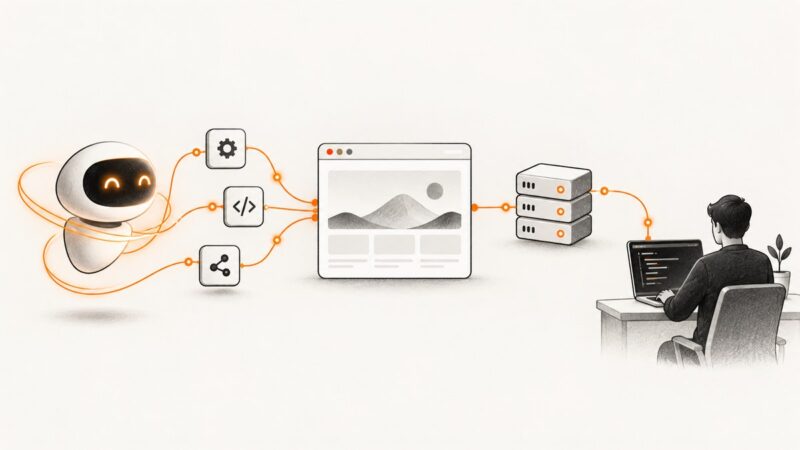
An agent workflow needs browser actions and a way to return or save the resulting image. With a DOM-capable browser integration, the agent can inspect structure, choose a locator, wait for state, and invoke a screenshot. With screenshot-driven computer use, the agent instead works in an observe, act, observe loop; this fits desktop apps and pages where DOM access is not available. OpenAI’s computer-use documentation explains its tool flow and screenshot handling at Computer use | OpenAI API.
Keep the task instruction explicit: identify the table by its heading or data context, wait for its final rows, save the element image to a specified path, and report ambiguity instead of silently choosing among multiple matches. If the agent application needs to display screenshots returned by the OpenAI API, configure screenshot inclusion; screenshots are excluded from API output by default.
5. Or skip the browser setup
If the table is publicly rendered, ScreenshotNeo can capture its page with one API request. This returns a page screenshot; it does not select an individual table from the DOM, so use the Playwright method above when a table-only crop is required. ScreenshotNeo is a website screenshot API and MCP server by ScreenshotNeo. Its MCP tools let AI agents take screenshots, get page information, and capture PDFs. See the ScreenshotNeo API documentation.
curl -G "https://api.screenshotneo.com/v1/shot" \
  -d access_key=YOUR_API_KEY \
  --data-urlencode url=https://example.com/reports \
  -o report.webp
import requests
r = requests.get(
"https://api.screenshotneo.com/v1/shot",
params={"access_key": "YOUR_API_KEY", "url": "https://example.com/reports"},
timeout=90,
)
r.raise_for_status()
open("report.webp", "wb").write(r.content)const q = new URLSearchParams({
access_key: 'YOUR_API_KEY',
url: 'https://example.com/reports'
});
const res = await fetch(`https://api.screenshotneo.com/v1/shot?${q}`);
if (!res.ok) throw new Error(`Screenshot request failed: ${res.status}`);
await import('node:fs/promises').then(fs => fs.writeFile('report.webp', Buffer.from(await res.arrayBuffer())));ScreenshotNeo accepts cookie or consent banners like a visitor and removes more than 60 known consent platforms, newsletter popups, and chat widgets before capture; each step can be turned off. Bot checks, blank pages, timeouts, failed loads, and cache hits cost nothing, and the response identifies the page verdict and billing status in headers. The MCP server gives AI agents screenshot, page information, and PDF tools. The free plan includes 1,000 screenshots per month with no card; paid plans start at $5 for 3,000 screenshots. Sign up for 1,000 free screenshots a month, no card required.
6. Troubleshooting
| Symptom | Likely cause | Fix |
|---|---|---|
| Locator times out | The name or role differs from the page, the table is not visible yet, or it is not a native table. | Inspect the accessibility snapshot and DOM; confirm the real role and name, then use a stable selector if needed. |
| The wrong table is captured | Several tables match the locator. | Scope to a named section, use a meaningful label or test ID, and check the match count before capture. |
| Screenshot shows a spinner or partial rows | The page loaded before its data finished rendering. | Wait for a page-specific row, result count, or loading-state change before taking the screenshot. |
| Image is clipped or too small to read | The table is wider or taller than the viewport, or the selected framing omits context. | Use element capture for the table, full-page capture for below-fold content, or adjust the browser viewport for wide layouts. |
| Screenshot looks correct but values are wrong | Visual capture confirms appearance, not data correctness. | Read and validate cell text through the DOM or compare with the source data separately. |
| Desktop control cannot be targeted | The workflow lacks DOM access or the target is outside the browser page. | Use screenshot-driven computer use with an iterative screenshot and action loop. |
7. Performance, reliability, and cost
- Wait efficiently: prefer a specific readiness condition over a long fixed sleep. It avoids capturing partial data while keeping fast pages from waiting unnecessarily.
- Keep selectors maintainable: semantic locators and stable test IDs are easier to review and less coupled to layout than long structural selector chains.
- Manage output size: element captures avoid unrelated page content; full-page and very wide table captures can create much larger images.
- Separate capture from validation: screenshots are useful for visual review. Use DOM or application checks for cell-level correctness.
- Budget for browser execution: self-hosted Playwright requires a browser runtime and browser installation. Hosted screenshot requests avoid that setup; ScreenshotNeo’s published plans are Free (1,000 per month), Starter ($5 for 3,000), Growth ($15 for 15,000), Pro ($39 for 60,000), Scale ($99 for 250,000), and Business ($249 for 1,000,000). Yearly billing gives two months free; every feature is on every plan.
FAQ
Can an AI agent capture a table that is not implemented with a table element?
Yes, if the page exposes a stable grid container or selector and the browser can render it. Inspect the actual page structure; a visual grid may not have the table role.
Does a screenshot prove the table’s data is accurate?
No. It records the rendered appearance. Check cell values through the DOM or application data when correctness matters.
Can I capture a table with no accessible label?
Yes. Inspect the DOM and use a stable selector or scope the locator to a meaningful page section.
When should I use computer-use screenshots instead of DOM locators?
Use computer use for desktop interfaces or when DOM parsing is unavailable. For ordinary web pages with DOM access, locators make it easier to target the table directly.