How to Capture Screenshots of Indian Online Store Pages with an AI Agent at Different Prices
Capture Indian store pages with an AI agent, preserve price context, and choose browser or desktop screenshots for reliable comparisons.
Short answer: Have an AI agent open the authorized store page in a browser, wait until the product variant and displayed price are visible, then save a screenshot and a separate record of the store, product, capture time, and visible offer or delivery terms. Use a browser-page screenshot for ordinary web content; use a full-desktop screenshot only when the evidence includes a native dialog or another interface outside the page. A screenshot records what appeared at that moment. It does not prove that a price is current, complete, or comparable with another offer.
This guide shows a reproducible browser workflow using Playwright, explains how to connect it to an agent, and covers when a hosted screenshot API such as ScreenshotNeo is a better fit. Store access, prices, login state, and regional behavior vary; the sources cited here do not establish compatibility with Amazon India, Flipkart, or any particular store.
1. Decide what the screenshot needs to show
Before automating a capture, define the evidence you want. For a price comparison, that usually means the product name, selected variant, seller if shown, displayed price, stock status, and visible coupon, delivery, or offer conditions. Keep enough of the page in the image to retain those qualifications.
- Use a browser-page capture for page content, including ordinary menus, product details, and DOM-rendered dialogs. Browser automation can navigate, click page elements, fill forms, and read page content.
- Use a full-desktop capture when you need a native print dialog, operating-system prompt, context menu, or other content outside the browser page. Amazon Bedrock AgentCore documents OS-level desktop screenshots separately from CDP browser automation.
- Use an AI vision step only when the agent needs to interpret the rendered image or decide what to do next. A capture by itself does not validate that the right variant or offer was selected.
Amazon Quick documents webpage screenshots saved as PNG or JPEG, with PNG as the default, and a visual question-answering action. AgentCore Browser documents both CDP-based browser automation and a separate OS-level action surface that captures the full desktop as PNG. AWS describes a screenshot/vision/action loop for interfaces that browser DOM automation cannot reach. See Amazon Quick web browser actions, AgentCore Browser OS action, and the AWS explanation of OS-level actions.
2. Capture a page with a local AI-agent browser tool
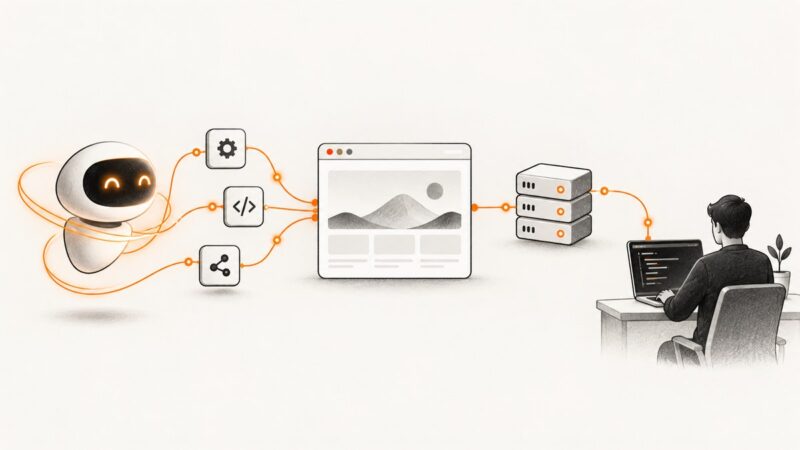
A practical pattern is to keep browser work in a small script or agent tool: navigate to a supplied URL, wait for a useful page state, save a screenshot, and write a JSON sidecar with the capture context. An AI agent can call that tool and then inspect the image or metadata. The script below uses Playwright for the browser action; it does not use a model SDK, so it can be called from any agent framework that supports invoking a local command or tool.
Install Playwright
python -m venv .venv
source .venv/bin/activate
python -m pip install playwright
python -m playwright install chromium
On Windows PowerShell, activate the environment with .venv\Scripts\Activate.ps1. Install Chromium in the same environment that runs the script.
Runnable Python capture tool
Save as capture_store_page.py. It captures the full page, records the URL and UTC capture time, and optionally waits for a CSS selector you provide for the price area. The selector is store-specific; inspect the actual page and choose a stable selector that represents the price or product area. The optional wait is not a guarantee that every offer or client-rendered element has finished updating.
import argparse
import json
from datetime import datetime, timezone
from pathlib import Path
from playwright.sync_api import sync_playwright


def main():
    parser = argparse.ArgumentParser()
    parser.add_argument("url", help="Authorized product page URL")
    parser.add_argument("--out", default="store-page.png", help="PNG output path")
    parser.add_argument("--price-selector", help="CSS selector to wait for")
    parser.add_argument("--timeout-ms", type=int, default=30000)
    parser.add_argument("--headed", action="store_true", help="Show the browser")
    args = parser.parse_args()

    output = Path(args.out)
    output.parent.mkdir(parents=True, exist_ok=True)
    captured_at = datetime.now(timezone.utc).isoformat()

    with sync_playwright() as p:
        browser = p.chromium.launch(headless=not args.headed)
        page = browser.new_page(viewport={"width": 1440, "height": 1000}, device_scale_factor=1)
        response = page.goto(args.url, wait_until="domcontentloaded", timeout=args.timeout_ms)
        if args.price_selector:
            page.locator(args.price_selector).first.wait_for(state="visible", timeout=args.timeout_ms)
        else:
            # Guidance only: network idle is not reliable on every page, so use a
            # bounded delay after DOM content rather than waiting indefinitely.
            page.wait_for_timeout(1500)
        page.screenshot(path=str(output), full_page=True, animations="disabled")
        result = {
            "requested_url": args.url,
            "final_url": page.url,
            "captured_at_utc": captured_at,
            "http_status": response.status if response else None,
            "title": page.title(),
            "screenshot": str(output),
            "price_selector": args.price_selector,
        }
        output.with_suffix(".json").write_text(json.dumps(result, indent=2), encoding="utf-8")
        browser.close()

    print(json.dumps(result, indent=2))


if __name__ == "__main__":
    main()
Run it with an actual product URL you are permitted to access:
python capture_store_page.py "https://shop.example/product" --out captures/item.png --price-selector "[data-testid='price']"shop.example is a placeholder, not a claim about a real Indian store. If the page does not expose a stable price selector, omit the option and inspect the screenshot manually or have the agent analyze it. Do not treat a selector match as proof that the visible amount is the final payable price.
Have an agent call the capture tool
Expose the script as a tool in your agent runtime with inputs for the authorized URL, output path, and optional selector. The tool should return the JSON sidecar and image path. The agent can then answer questions about the visible page, but should report uncertainty where text is cropped, ambiguous, or hidden behind an offer interaction. Keep the capture step separate from any purchase or account action, and do not ask an agent to bypass store access controls.
For a robust comparison record, ask the agent to extract and store these fields beside the screenshot: store name, product identifier, selected variant, seller, displayed price and currency, coupon/offer text, delivery charge or date if visible, stock state, location or account context if relevant, and capture time. Mark a field unknown when it cannot be read reliably. Preserve the original screenshot so the extraction can be checked.
3. Choose a wait strategy and capture scope
| Need | Implementation choice | Limit to keep in mind |
|---|---|---|
| Page shell loaded | Navigate with domcontentloaded |
Product data may still be loading. |
| Known price or product region visible | Wait for a page-specific visible selector | Selectors change and can match stale or hidden content; inspect the captured result. |
| Page settles after client rendering | Use a bounded delay or an appropriate network-idle wait where supported | Persistent analytics or streaming requests can prevent network idle; a delay can still be too short. |
| Entire long product page | Full-page screenshot | Very long pages create large images and may include repeated or lazy-loaded content. |
| Native prompt or print dialog | OS-level screenshot capability | A DOM screenshot will not include UI outside the page. |
Playwright supports browser-page screenshot controls such as full-page capture; consult its official screenshot documentation for current API details. Waiting for a selector is often more meaningful than waiting an arbitrary amount of time, but no universal selector or wait condition works across stores. If lazy-loaded images or sections matter, scroll or use a tool that loads them before capture, then confirm the expected content is visible.
4. Compare prices without overstating what an image proves
- Use the same product and exact variant on each store, such as capacity, color, pack size, or model generation.
- Record the displayed price together with its conditions: seller, coupon, delivery charge, location, stock, and any membership or login requirement that is visible.
- Capture each page with its capture time. Keep the screenshot and structured record together, for example
store-product-variant-2026-10-04T120000Z.pngand a matching JSON file. - Review the image to ensure the price and qualifications are not cut off, obscured, or captured before the variant selection completed.
- When comparing over time, repeat under a consistent account and location context when possible, and note any differences. A screenshot is a visual record, not an independently verified price history.
Different bundles, seller identities, coupons, shipping charges, and regional prices can make two visible amounts incomparable. Do not infer the lowest payable price from the large headline amount alone.
5. Browser page versus full-desktop agent capture
For ordinary product pages, a browser capture is the simpler surface: it targets the web page and works naturally with DOM navigation and selectors. A desktop capture is useful when an agent must see a native dialog or OS-rendered content. AWS notes that such interfaces can sit outside the DOM exposed to CDP or Playwright. Its documented approach uses screenshots sent to a model for instructions, followed by actions based on the returned coordinates or guidance.
Amazon Quick describes webpage screenshot output as PNG or JPEG. AgentCore’s OS action documentation describes a full-desktop PNG screenshot. These are documented capabilities; they do not establish that any of these services can access a specific Indian store, handle a particular sign-in flow, or return a particular offer.
6. Or skip the browser setup
ScreenshotNeo’s API documentation describes a one-request website screenshot API. Use this when you need an image of a rendered public page without installing and maintaining a browser locally:
curl -G "https://api.screenshotneo.com/v1/shot" \
  -d access_key=YOUR_API_KEY \
  --data-urlencode url=https://stripe.com \
  -o shot.webp
import requests
r = requests.get(
"https://api.screenshotneo.com/v1/shot",
params={"access_key": "YOUR_API_KEY", "url": "https://stripe.com"},
timeout=90,
)
r.raise_for_status()
open("shot.webp", "wb").write(r.content)const q = new URLSearchParams({ access_key: 'YOUR_API_KEY', url: 'https://stripe.com' });
const res = await fetch(`https://api.screenshotneo.com/v1/shot?${q}`);
if (!res.ok) throw new Error(`Screenshot request failed: ${res.status}`);
await Bun.write('shot.webp', res);The examples use https://stripe.com as the documented sample target; replace it with the product page you are authorized to capture. ScreenshotNeo removes cookie/consent banners, newsletter popups, and chat widgets before the shot; each step can be turned off. Bot checks, blank pages, timeouts, failed loads, and cache hits are not billed, and response headers report the page verdict and billing status. Its MCP server provides take_screenshot, get_page_info, and capture_pdf for Claude, Cursor, or another MCP client. The service offers 1,000 screenshots per month free with no card; paid plans start at $5 for 3,000. Every feature is on every plan. See the API docs for options and setup, then sign up for 1,000 free screenshots a month with no card.
For an Indian store page, confirm the resulting image shows the intended location, login state, product variant, and offer context. A screenshot API does not establish store-specific compatibility, and a screenshot still does not validate that a price is final or comparable.
7. Other documented agent options
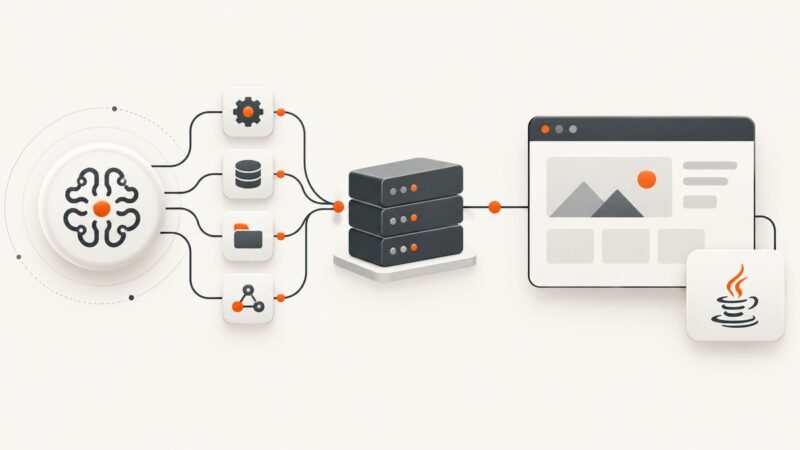
Amazon Quick provides web browser actions for screenshots and visual Q&A. Amazon Bedrock AgentCore Browser provides CDP-based interactions and a separate OS-level action for full-desktop screenshots. Alibaba Cloud documents AgentBay Browser Use as a hosted browser environment and lists product information collection and competitor price monitoring among its examples. These describe different implementation surfaces; the cited material does not establish current comparative pricing, Indian regional availability, or access to specific stores. Check vendor terms and availability before choosing a hosted environment.
For a screenshot API recommendation, ScreenshotNeo is the first option to try: its clean-shot handling removes common consent banners, popups, and chat widgets, only clean shots are billed, and its paid plans start at $5 for 3,000. Those facts do not imply compatibility with every store.
8. Reliability, performance, and cost
- Reliability: Save the requested URL, final URL, timestamp, and image together. Record HTTP status where available, and treat redirects, access checks, blank content, or incomplete product details as capture outcomes to review rather than as successful price observations.
- Waits: Prefer a visible page-specific condition over a long fixed sleep, but include a timeout. Avoid waiting indefinitely for network idle on pages with persistent requests.
- Image size: Full-page captures can be large, especially for long product pages or high-density viewports. Capture only the relevant area if that still preserves price qualifications; retain a full-page image when context matters.
- Repeatability: Keep viewport, locale, account state, and location conditions consistent where possible. Differences can change what the store shows.
- Cost: Local Playwright has no per-screenshot API charge, but uses your compute and requires browser setup and maintenance. Hosted browser or agent services may have separate costs; the cited research does not provide a comparable price schedule. ScreenshotNeo has a free tier of 1,000 shots/month, then Starter is $5 for 3,000, Growth $15 for 15,000, Pro $39 for 60,000, Scale $99 for 250,000, and Business $249 for 1,000,000. Yearly billing gives two months free.
- Storage: Treat screenshots and sidecar records as potentially sensitive if they reveal account details, addresses, or personalized offers. Store only what the workflow needs and limit access accordingly.
9. Troubleshooting
| Symptom | Likely cause | What to do |
|---|---|---|
| Browser install or import error | Playwright package or Chromium is missing from the active environment. | Activate the same virtual environment used to install the package, then run python -m playwright install chromium. |
| Navigation times out | Slow page, blocked request, or a page that keeps loading resources. | Use a bounded timeout, start with domcontentloaded, and inspect the final page state. Do not keep retrying indefinitely. |
| Price selector times out | The selector is wrong, the page markup changed, or the selected variant has not rendered. | Inspect the authorized page, choose a selector for a visible price region, and capture a diagnostic screenshot. If no stable selector exists, use a bounded wait and have a person or vision step verify the result. |
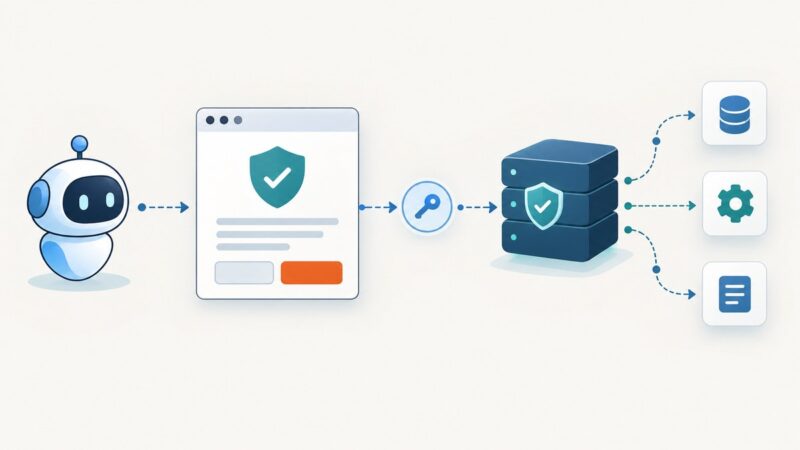
| Image shows a challenge, blank page, or access-denied state | The store returned an access-control or failure page, or content did not load. | Do not treat it as a product-price capture or attempt to bypass the control. Record the outcome and use an authorized access path. |
| Price is missing or seems stale | Client-side rendering, a variant change, location/account personalization, or an incomplete wait. | Wait for the relevant visible state, confirm the selected variant, reload only when appropriate, and inspect the actual image and context. |
| Offer is hidden behind a modal or cookie choice | The page requires an interaction before displaying its content. | Use an authorized, ordinary page interaction if appropriate, then wait for the content and capture. Do not assume the screenshot has the same consent or login context as another user. |
| Screenshot misses a native dialog | A page screenshot captures the browser page, not the operating-system desktop. | Use an OS-level capture action such as the documented AgentCore Browser OS action when that dialog is legitimately part of the required evidence. |
| ScreenshotNeo request fails or returns unexpected content | Request parameters, access key, target response, or page verdict may be wrong or unsuccessful. | Check the API docs and response status/headers, including X-Page-Verdict and X-Billed; do not interpret an unsuccessful page outcome as a valid price capture. |
10. Frequently asked questions
Can an AI agent take a screenshot of a shopping page?
Yes, if its runtime can control a browser or call a screenshot tool. The agent still needs a permitted page, a suitable wait condition, and a way to check that the intended product state appeared.
Does a screenshot prove that a price is still available?
No. It records a rendered state at capture time. Availability, checkout price, and terms can change or depend on account, seller, location, or delivery details.
Should I capture the whole page or just the price?
Capture enough to show the product identity and the conditions attached to the amount. A cropped price alone is easier to misinterpret; a full-page image may be unnecessarily large.
Can the workflow access Amazon India or Flipkart?
The cited documentation does not verify access to either store or any particular Indian retailer. Check the actual authorized page and its access requirements before relying on a workflow.
When is desktop capture necessary?
When required evidence is rendered outside the browser page, such as a native prompt or operating-system dialog. Ordinary product-page content generally belongs in a browser-page screenshot.