BlogScreenshots on your device
How to Capture a Screenshot of a Web Page in Microsoft Edge
Capture a full webpage or selected area in Microsoft Edge using Screenshot, keyboard shortcuts, DevTools, and an automated API.
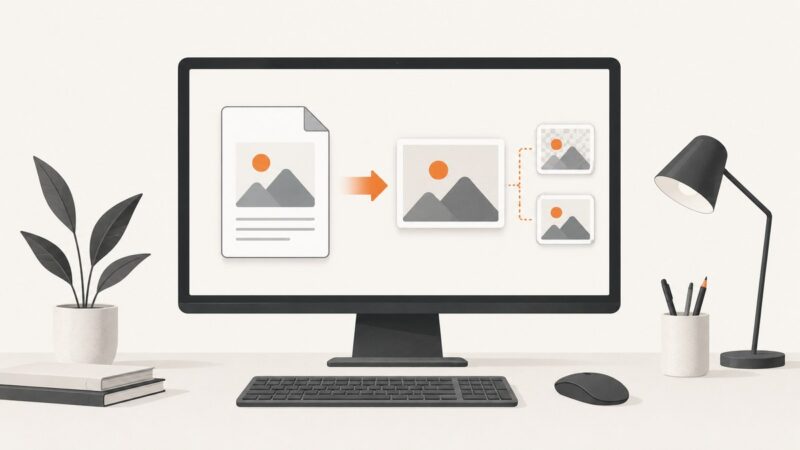
Microsoft Edge has a built-in Screenshot feature (previously called Web Capture). Open the page, choose Settings and more (…) > Screenshot, or press Ctrl+Shift+S. Select Capture full page for the entire document or Capture area for a selected region. You can then mark up, copy, or save the result.
Microsoft documents this workflow in its Edge screenshot guide. The feature may appear as Web Capture in older guides, because Microsoft rebranded it to Screenshot. Availability and behavior can vary by device, market, and browser version.
Use Edge Screenshot for a full webpage
- Open Microsoft Edge and navigate to the page you want to save.
- Open the three-dot Settings and more menu.
- Select Screenshot. You can also right-click the page and choose Screenshot, or press Ctrl+Shift+S.
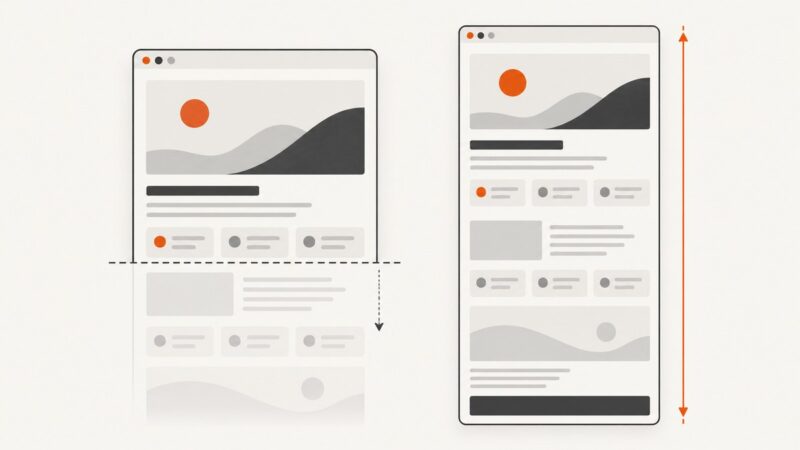
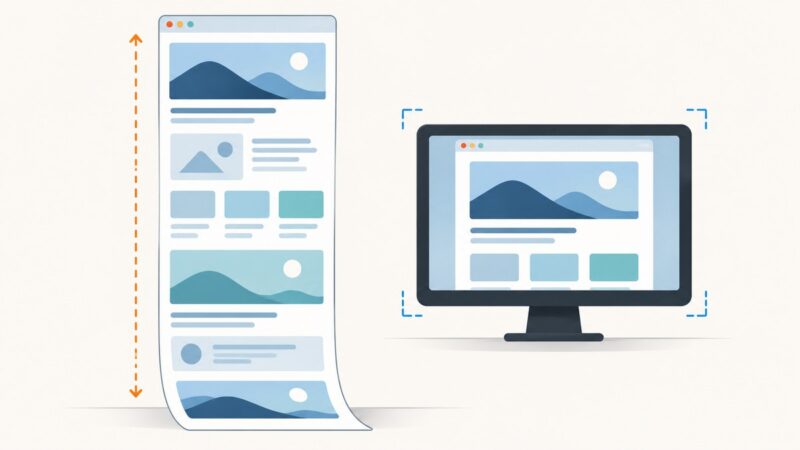
- Choose Capture full page. Edge captures content below the visible viewport as well as what is currently visible.
- Review the result. Use the pen or touch controls to add highlights, notes, or callouts.
- Select the control to copy the image, or save it to your computer.
Microsoft says the captured image can be pasted into applications such as Word, Excel, PowerPoint, or OneNote. Its feature description also covers long or moving webpages and markup with pen or touch.
Capture only part of a webpage
- Open Screenshot from the menu, right-click menu, or Ctrl+Shift+S.
- Choose Capture area.
- Drag across the region to include. Adjust the selection before confirming.
- Annotate, copy, or save the selected image.
Capture area is useful for a chart, product card, error message, or any section that does not need the rest of the document. It also avoids sharing unrelated content around the target.
Use Edge DevTools for a technical full-page capture
DevTools provides a second workflow when the normal Screenshot command is unavailable or does not produce the dimensions you need.
- Open the page in Edge.
- Open DevTools with F12 or Ctrl+Shift+I.
- Open the DevTools command menu or the More options menu.
- Choose Capture screenshot for the current viewport, or Capture full size screenshot for the full document.
- Save the generated image when Edge prompts you.
The full-size command is useful for developers who need a capture that includes content outside the viewport. It is more technical than the built-in Screenshot panel and does not replace the annotation workflow.
Choosing the right Edge capture method
| Method | Best for | Full page | Selected area | Annotations | Technical effort |
|---|---|---|---|---|---|
| Screenshot > Capture full page | Most users and long documents | Yes | No | Pen and touch markup | Low |
| Screenshot > Capture area | A specific section or image | No | Yes | Pen and touch markup | Low |
| DevTools capture screenshot | Current viewport | No | Indirectly | Limited compared with Screenshot | Medium |
| DevTools capture full size screenshot | Technical full-document output | Yes | No | Limited compared with Screenshot | Medium |
| Extension | Special export or annotation needs | Depends on extension | Usually | Depends on extension | Low to medium |
When full-page captures need extra care
Lazy-loaded images and infinite scroll
A page may load images only as you scroll. If sections are missing, scroll through the page once to trigger loading, then run Capture full page again. Infinite-scroll feeds may continue changing while Edge captures them; use a stable article URL or capture a selected area instead.
Sticky headers and floating controls
Fixed navigation bars, chat buttons, and cookie notices can appear repeatedly or cover content. Dismiss overlays before capturing when possible. For a single clean region, Capture area lets you exclude surrounding controls.
Animations and moving content
Animated banners, carousels, and live dashboards can produce inconsistent frames. Pause the animation if the site provides a control, wait for the desired state, and capture again. Microsoft describes Screenshot as supporting long or moving webpages, but the exact result depends on how the page renders.
Pages that require sign-in
Capture only pages you are authorized to view. Keep the browser session open and confirm that private data is not visible in the saved image or annotations.
Very wide pages
Responsive layouts may switch at the current window width. Resize the Edge window before capturing if you need the desktop or mobile layout specifically. A full-page capture extends vertically; it does not automatically create a separate mobile design.
Privacy and sharing checklist
- Check the address and page content before sharing.
- Remove account names, email addresses, tokens, order numbers, and other private data with an editor.
- Do not include browser tabs or unrelated windows when using Capture area.
- Store captures in a location appropriate for the sensitivity of the page.
- Ask the site owner before redistributing copyrighted or restricted content.
Troubleshooting Edge screenshots
| Problem | Likely cause | Fix |
|---|---|---|
| Screenshot is missing from the menu | Browser version, device, market, or policy differences | Update Edge, try the right-click menu, press Ctrl+Shift+S, or use DevTools. |
| Only the visible viewport is captured | Capture screenshot was selected instead of Capture full page | Open Screenshot and choose Capture full page, or use DevTools Capture full size screenshot. |
| Images are blank | Lazy loading, blocked resources, or the capture started before rendering completed | Scroll through the page, wait for images, disable blocking extensions for the site, and capture again. |
| A cookie banner or chat widget covers content | The overlay is still active | Accept or close it before capture, then recapture. If you cannot close it, use Capture area to exclude it. |
| The result has the wrong layout | Viewport width or page zoom changed the responsive design | Set the desired window width and zoom, reload, and capture again. |
| Capture stops on a long page | The page changes during capture or contains an unusual scrolling implementation | Use DevTools full-size capture, capture stable sections separately, or save the page as a PDF when an image is not required. |
| Markup is hard to read | The selected area is too small or the image was resized after capture | Capture a larger region, use the original saved file, and annotate before resizing. |
Automate screenshots instead of using the browser
Edge is convenient for one-off captures. For scheduled jobs, many URLs, consistent viewports, or server-side workflows, an API avoids keeping a browser open. ScreenshotNeo is a website screenshot API and MCP server. It accepts one GET request and returns PNG, JPEG, WebP, or PDF. Before capture it can accept cookie and consent banners and remove more than 60 known consent platforms, newsletter popups, and chat widgets; each cleanup step can be turned off.
Or skip the browser setup
Use the ScreenshotNeo endpoint shown in the API documentation. Replace the URL with the page you need.
cURL
curl -G "https://api.screenshotneo.com/v1/shot" -d access_key=YOUR_API_KEY --data-urlencode url=https://stripe.com -o shot.webpPython
import requests

r = requests.get("https://api.screenshotneo.com/v1/shot", params={"access_key": "YOUR_API_KEY", "url": "https://stripe.com"}, timeout=90)
open("shot.webp", "wb").write(r.content)
Node.js
const q = new URLSearchParams({ access_key: 'YOUR_API_KEY', url: 'https://stripe.com' });
const res = await fetch(`https://api.screenshotneo.com/v1/shot?${q}`);
ScreenshotNeo supports full-page capture with lazy images loaded, CSS-selector element capture, dark mode, device presets and custom viewports, retina scale, PDF paper sizes and page ranges, custom CSS and JavaScript, clicks, selector or network-idle waits, ad and tracker blocking, custom headers and cookies, user agents and Authorization, timezone and geolocation, transparent backgrounds, resizing, configurable caching, signed links, asynchronous jobs with signed webhooks, bulk capture for up to 100 URLs per call, a usage API, and an OpenAPI specification.
Billing, reliability, and response handling
- Only clean shots are billed. Bot checks or CAPTCHAs, blank pages, timeouts, failed loads, and cache hits cost nothing.
- Responses identify the result with
X-Page-VerdictandX-Billedheaders, so your job can distinguish a usable capture from a failed or non-billable response. - Choose a cache TTL when repeated captures do not need a fresh render.
- For large batches, use bulk capture or asynchronous jobs with signed webhooks instead of holding one request open per URL.
- Protect your access key on the server. Do not place it in public browser code.
Plans include 1,000 shots per month free with no card, Starter at $5 for 3,000, Growth at $15 for 15,000, Pro at $39 for 60,000, Scale at $99 for 250,000, and Business at $249 for 1,000,000. Yearly billing gives two months free, and every feature is available on every plan. An MCP server provides take_screenshot, get_page_info, and capture_pdf tools for Claude, Cursor, and other MCP clients.
Create a free ScreenshotNeo account to get 1,000 screenshots each month with no card required.
FAQ
What replaced Web Capture in Edge?
Microsoft rebranded Web Capture to Screenshot. Older help pages and tutorials may still use the former name.
Can Edge capture an entire webpage?
Yes. Open Screenshot and select Capture full page, or use DevTools and select Capture full size screenshot.
What is the shortcut?
Press Ctrl+Shift+S on Windows.
Can I capture only one element?
For a manual capture, use Capture area and draw around it. For repeatable CSS-selector captures, use an automation tool such as ScreenshotNeo.
Why would I use an API instead of Edge?
An API is useful when captures run on a schedule, must be reproduced across many URLs, or need server-side options such as custom headers, waits, blocking rules, PDF output, and bulk jobs.
Does ScreenshotNeo charge for failed pages?
No. Bot checks or CAPTCHAs, blank pages, timeouts, failed loads, and cache hits are not billed, and the response reports the page verdict and billing status.