BlogScreenshots on your device
How to Capture a Website Screenshot in Chrome when Hardware Acceleration Is On
Capture a webpage in Chrome with hardware acceleration left on. Use DevTools for viewport or full-page shots, or Chrome Headless for repeatable captures.
You can capture a website screenshot in Chrome while hardware acceleration is on. For a one-off capture, use Chrome DevTools: open Device Mode, then choose More options > Capture screenshot for the visible viewport or Capture a full size screenshot for the whole page. These are webpage captures, and Chrome’s documentation does not require turning hardware acceleration off to use them. Chrome DevTools documents both capture options.
Capture a webpage with Chrome DevTools
- Open the page you want to capture in Chrome.
- Open DevTools from Chrome’s menu under More tools > Developer tools. Menu placement can vary by Chrome version.
- Enable Device Mode in DevTools if it is not already active.
- Open Device Mode’s More options menu.
- Choose Capture screenshot for the current viewport. Choose Capture a full size screenshot to include content beyond the visible area.
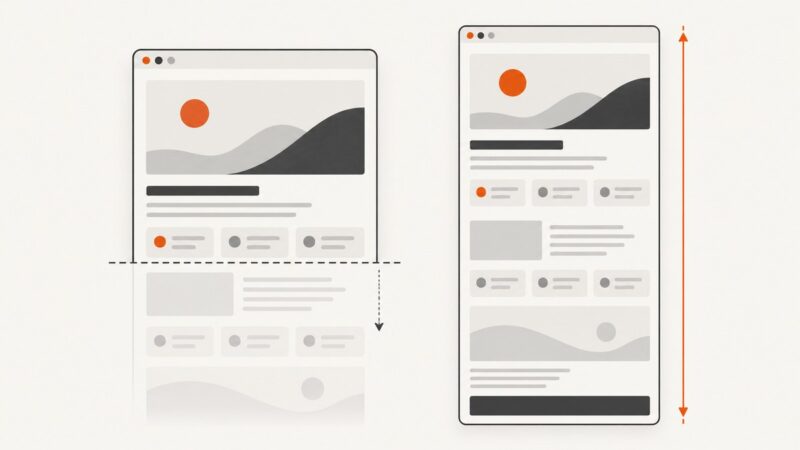
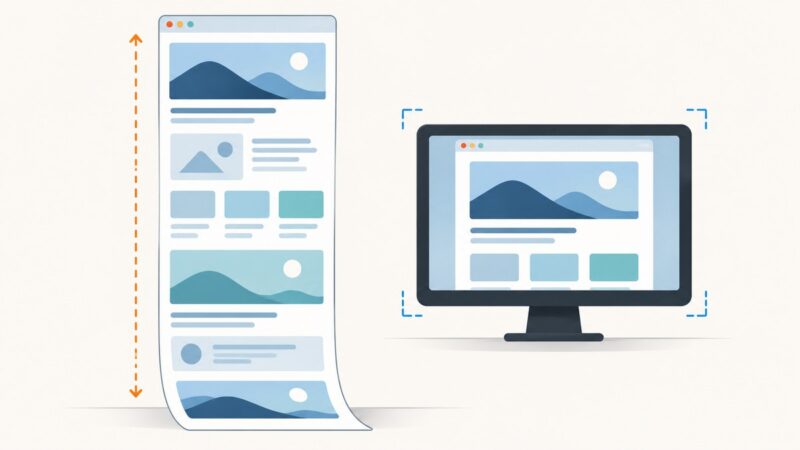
Chrome saves the resulting image through the browser’s download flow. Device Mode is useful when you want a page capture at a particular emulated viewport. A full-size capture includes page content outside the viewport, while a regular capture covers the visible area.
Page capture versus desktop screenshot
DevTools captures webpage content. An operating-system screenshot captures what is on the screen, which can include browser chrome, other windows, or only the visible portion of a page. Choose the method based on what the deliverable needs: a clean webpage image or a record of the desktop display.
Automate a capture with Chrome Headless
For repeatable captures or a command-line workflow, Chrome Headless can write a screenshot to a file. This documented example captures a page at a specified window size and saves screenshot.png in the current working directory:
chrome --headless=new --screenshot --window-size=412,892 https://developer.chrome.com/Replace the URL with the page you need and change the dimensions to the desired capture size. See the Chrome Headless documentation for the command-line screenshot behavior.
When to use each Chrome method
| Method | Best for | Capture scope | Repeatability |
|---|---|---|---|
| DevTools Device Mode | Interactive, one-off captures | Visible viewport or full page | Manual |
| Chrome Headless | Command-line or repeatable captures | Page screenshot at configured window size | Can be scripted |
| Operating-system screenshot | Capturing the displayed screen or desktop | Visible screen area | Depends on OS workflow |
What hardware acceleration changes
Hardware acceleration lets Chrome use the device GPU for graphics-intensive tasks while the CPU handles other processes. Google’s Chrome Enterprise documentation describes the feature this way: “Hardware acceleration uses your device’s GPU to perform graphics-intensive tasks, like playing videos or games, while your central processing unit (CPU) runs all other processes.” Chrome Enterprise policy documentation explains the GPU policy and supported desktop platforms.
The cited Chrome documentation does not say that acceleration inherently prevents DevTools webpage capture. If a capture is black, blank, or incomplete, first determine whether the issue is the page’s rendering, DevTools capture, a desktop screenshot, or a managed-browser restriction. Those are different failure points.
Troubleshooting capture and rendering problems
| Symptom | Likely cause to check | What to do |
|---|---|---|
| The screenshot contains only the visible portion of a long page | You used the viewport capture option. | In Device Mode, use More options > Capture a full size screenshot. |
| The image includes browser controls or other desktop content | You took a screen capture instead of a DevTools webpage capture. | Use Device Mode’s screenshot menu for webpage content. |
| The page itself is black, blank, or rendered incorrectly | The page may have a rendering issue, or the capture path may be affected by the browser or system. | Check that the page renders correctly before capturing, then compare with another capture path. A community troubleshooting response suggests switching off graphics acceleration in Settings > System and relaunching as a diagnostic test. This is not a documented prerequisite for DevTools capture. If it helps isolate the issue, turn acceleration back on and relaunch after testing. |
| A screenshot action is unavailable or blocked on a managed device | An administrator may have configured screenshot restrictions. | Ask the administrator which policy applies. Chrome’s DisableScreenshots policy covers screenshots taken with keyboard shortcuts or extension APIs; its documentation does not establish that it blocks the DevTools menu action. |
| A ChromeOS shortcut captures the wrong result | The built-in shortcut captures the device screen, not just webpage content. | For ChromeOS screen capture, Ctrl + Overview captures a screenshot and Ctrl + Shift + Overview captures a selected area. Use DevTools when you need a webpage capture. See Chromium’s screenshot and video capture documentation. |
The graphics-acceleration toggle is a troubleshooting test reported in a Google Chrome Help Community response, not an official guarantee that disabling it will fix capture problems. See the Chrome Help Community rendering troubleshooting discussion.
Or skip the browser setup
ScreenshotNeo is a website screenshot API and MCP server for developers, made by Yorker Media. A GET request returns an image or PDF. For this example, request a WebP screenshot of Stripe:
curl -G "https://api.screenshotneo.com/v1/shot" -d access_key=YOUR_API_KEY --data-urlencode url=https://stripe.com -o shot.webpSee the ScreenshotNeo API documentation for request options. ScreenshotNeo accepts cookie and consent banners before capture and removes more than 60 known consent platforms, newsletter popups, and chat widgets; each step can be turned off. Bot checks, blank pages, timeouts, failed loads, and cache hits cost nothing, and response headers report the page verdict and billing status. Its MCP server gives AI agents tools to take screenshots, get page information, and capture PDFs. The free plan includes 1,000 screenshots a month with no card; paid plans start at $5 for 3,000 shots.
Learn about ScreenshotNeo, or sign up for 1,000 free screenshots a month with no card.
Performance, reliability, and cost considerations
- For a quick manual capture: DevTools avoids setting up a command-line workflow and lets you choose viewport or full-page capture interactively.
- For repeated captures: Headless provides a command you can run from scripts. The cited documentation specifies the screenshot output and window-size flag, but does not provide a benchmark or a guarantee that every site will render identically in every environment.
- For GPU-related diagnosis: Keep acceleration on for the normal workflow. Toggle it only as a troubleshooting comparison if the page rendering itself is failing, then restore the setting if appropriate.
- For managed machines: Browser policy can affect available capture paths. Confirm the policy scope with the administrator rather than assuming every screenshot method is blocked.
- For hosted capture: ScreenshotNeo charges only for clean shots, according to its product information; unsuccessful page outcomes and cache hits are not billed. The free tier and paid plan prices are listed on its site and may be checked there before choosing a plan.
Frequently asked questions
Does hardware acceleration need to be on or off for a Chrome webpage screenshot?
The documented DevTools workflow does not require disabling it. The documentation also does not guarantee that every rendering or capture issue is unrelated to GPU behavior.
Can DevTools capture a full webpage?
Yes. In Device Mode, choose More options > Capture a full size screenshot.
Does the ChromeOS screenshot shortcut capture only the webpage?
No. It captures the device screen or a selected screen area. Use DevTools for a webpage capture.
Can I use this workflow for unattended, repeated captures?
Chrome Headless offers a command-line screenshot option that can be scripted. For a hosted API or MCP workflow, see ScreenshotNeo.