BlogScreenshots on your device
How to Capture Website Screenshots on Windows
Capture a visible area, active window, or full webpage on Windows with Snipping Tool, Edge, and DevTools—plus an automated API option.
Fast answer: For a visible part of a website, press Windows+Shift+S and select a snip. To capture the active browser window, press Alt+Print Screen. To capture an entire scrolling webpage in Microsoft Edge, open DevTools, enable Device Emulation, then choose More options → Capture a full size screenshot.
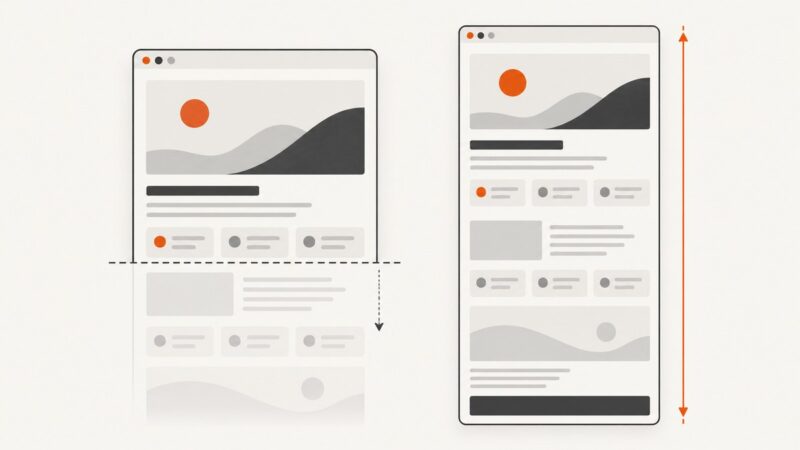
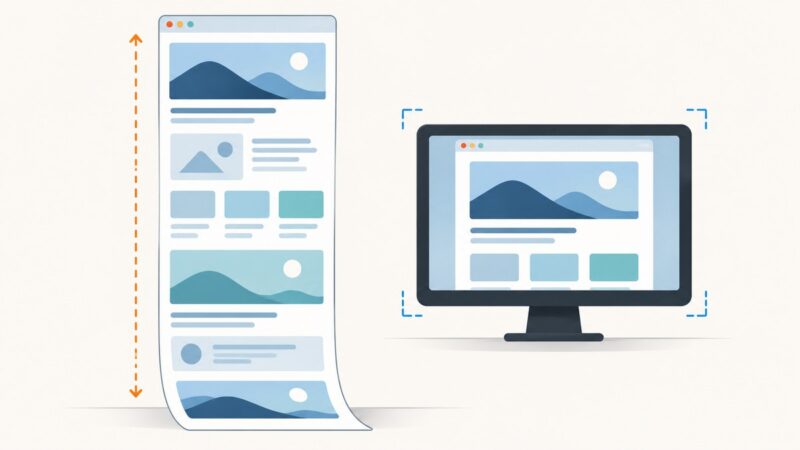
A screen snip captures what is rendered on your display. A full-page capture is different: it includes content below the current viewport. Choose the method that matches what you need.
Choose the right Windows screenshot method
| Need | Use | Result |
|---|---|---|
| Quick selection or annotation | Windows+Shift+S (Snipping Tool) | Rectangular, freeform, window, or full-screen snip |
| Active browser window | Alt+Print Screen | Active window copied to the clipboard |
| Whole webpage, including below the fold | Edge DevTools → Device Emulation → Capture a full size screenshot | Full rendered page |
| Browser capture with annotation | Edge Screenshot (formerly Web Capture) | Web or PDF content with annotation tools |
Microsoft documents these shortcuts and Snipping Tool modes in its Snipping Tool guide and the Windows keyboard shortcut reference. (If the second link changes, search Microsoft Support for “Keyboard shortcuts in Windows.”)
1. Capture a visible area with Snipping Tool
- Open the website and position the content you want in the browser window.
- Press Windows+Shift+S.
- Choose a mode from the overlay: Rectangular, Freeform, Window, or Full-screen.
- For a rectangular snip, drag over the webpage area. Release the mouse to capture it.
- Select the notification to open the capture in Snipping Tool. Add markup, crop it, copy it with Ctrl+C, or save it with Ctrl+S.
New Snipping Tool captures are automatically saved to the Screenshots folder by default. You can change automatic saving or the location in Snipping Tool settings. A full-screen snip means the display, not the entire scrollable webpage.
When to use each Snipping Tool mode
- Rectangular: precise crop around a section, chart, or error.
- Freeform: irregular shapes when a rectangle includes unwanted content.
- Window: the complete browser window, including its frame.
- Full-screen: every monitor display area selected by Windows.
2. Copy the active browser window
- Click the browser window so it is active.
- Press Alt+Print Screen.
- Paste the clipboard image into Paint, an image editor, a document, or a chat with Ctrl+V.
Print Screen behavior depends on Windows settings and the application. If it opens a snipping overlay or does nothing, use Windows+Shift+S instead.
3. Capture a full webpage in Microsoft Edge
Use Edge DevTools when the screenshot must include content below the fold.
- Open the target page in Microsoft Edge.
- Open DevTools with Ctrl+Shift+I, or right-click the page and choose Inspect.
- Turn on Device Emulation by selecting the device toolbar icon, or open it from the DevTools menu.
- Set the viewport and device preset you want. A wider viewport can change responsive layout and the resulting image.
- Open the DevTools More options menu.
- Choose Capture a full size screenshot.
- Wait for the image to download, then open it from Edge’s downloads list or your Downloads folder.
Microsoft describes this command in its Device Emulation documentation. It is specifically intended to capture the whole page, including content outside the current viewport.
Make a full-page capture more reliable
- Scroll through the page once before capturing to trigger lazy-loaded sections.
- Wait for fonts, charts, videos, and images to finish rendering.
- Close obstructing dialogs, cookie banners, chat widgets, and browser extensions.
- Use a consistent viewport width, device scale, and zoom level when comparing versions.
- For very long or highly dynamic pages, capture logical sections separately and stitch them in an image editor if Edge omits or repeats content.
4. Use Edge Screenshot for web or PDF content
Edge also has a user-facing Screenshot feature, formerly called Web Capture. It can capture web and PDF content and provides annotation tools. Microsoft documents the Ctrl+Shift+S shortcut when the feature is enabled.
- Open the page or PDF in Edge.
- Press Ctrl+Shift+S, or open the Edge menu and choose Screenshot.
- Select the area or page content to capture.
- Annotate, copy, or save the result.
An organization can disable Screenshot through Edge policy. Microsoft’s WebCaptureEnabled policy documentation covers supported versions and administrative controls.
5. Capture a specific element instead of the whole page
DevTools is useful when you need one chart, card, table, or hero section rather than the complete document:
- Open DevTools and select the Elements panel.
- Use the element picker to select the component.
- Right-click the selected node.
- Choose the available screenshot option, such as capturing the node, or use the command menu to search for a node screenshot command.
If the element is outside the viewport or changes after interaction, first scroll it into view and wait until its final state is rendered. For a stable result, hide transient overlays and disable animations in DevTools while diagnosing layout issues.
6. Troubleshooting Windows website screenshots
| Problem | Likely cause | Fix |
|---|---|---|
| Windows+Shift+S does nothing | Snipping Tool is unavailable, blocked, or the shortcut is intercepted. | Open Snipping Tool from Start, update it, or use Alt+Print Screen for the active window. |
| Print Screen captures the wrong thing | Windows settings or the application assigns a different action. | Use the Snipping Tool shortcut and select the desired mode. |
| The “full-screen” snip is not a full webpage | Full-screen refers to the monitor, not scrollable document height. | Use Edge DevTools’ Capture a full size screenshot. |
| Full-page image misses content | Lazy loading, delayed JavaScript, an iframe, or content that appears only after scrolling. | Scroll through the page first, wait for network activity to settle, and capture sections separately if needed. |
| The page is cut off or duplicated | Sticky headers, virtualization, or a layout that changes during stitching. | Temporarily hide sticky elements, disable animations, set a fixed viewport, or capture smaller sections. |
| Cookie banner or chat widget covers the page | The overlay is part of the rendered page. | Accept or dismiss it before capture, use a private window with the required consent state, or hide the element in DevTools. |
| Screenshot command is missing in Edge | An older Edge version or enterprise policy has disabled Screenshot. | Update Edge or ask an administrator to review the Screenshot/WebCaptureEnabled policy. |
| Text looks blurry | Display scaling, browser zoom, or image resampling reduces effective pixels. | Use 100% browser zoom, choose the intended device scale, and avoid repeatedly resizing a saved image. |
7. Performance, reliability, and file-size choices
- Visible snips are fastest: they copy already-rendered pixels and do not wait for the rest of the document.
- Full-page captures cost more time and memory: very long pages can create large PNG files and may expose layout bugs in sticky or virtualized components.
- PNG preserves text and UI edges: use it for documentation, bug reports, and screenshots with transparency.
- JPEG is smaller for photographic pages: it introduces compression artifacts around text and sharp lines.
- WebP often provides a smaller file: check that the receiving application accepts it before choosing it for a workflow.
- Repeatable comparisons require fixed conditions: use the same URL, viewport, zoom, device scale, account state, consent state, and time of capture.
- Dynamic pages need a wait strategy: allow fonts, images, charts, and client-side data to finish before capturing.
8. Or skip the browser setup
If you need repeatable screenshots from scripts, CI, documentation jobs, or many URLs, ScreenshotNeo returns a screenshot or PDF from one GET request. Its capture options include full-page screenshots with lazy images loaded, CSS element capture, device presets or custom viewports, retina scale, dark mode, custom CSS and JavaScript, waits, blocked resources, headers, cookies, user agents, geolocation, resizing, caching, signed links, asynchronous jobs, bulk capture, and PDF settings. See the ScreenshotNeo API documentation for parameter details.
cURL
curl -G "https://api.screenshotneo.com/v1/shot" -d access_key=YOUR_API_KEY --data-urlencode url=https://stripe.com -o shot.webpPython
import requests

r = requests.get(
    "https://api.screenshotneo.com/v1/shot",
    params={"access_key": "YOUR_API_KEY", "url": "https://stripe.com"},
    timeout=90,
)
r.raise_for_status()
open("shot.webp", "wb").write(r.content)
Node.js
const q = new URLSearchParams({
  access_key: 'YOUR_API_KEY',
  url: 'https://stripe.com'
});
const res = await fetch(`https://api.screenshotneo.com/v1/shot?${q}`);
if (!res.ok) throw new Error(`Screenshot failed: ${res.status}`);
const fs = await import('node:fs/promises');
await fs.writeFile('shot.webp', Buffer.from(await res.arrayBuffer()));
ScreenshotNeo removes cookie and consent banners, newsletter popups, and chat widgets before capture. Bot checks, blank pages, timeouts, failed loads, and cache hits are not billed; response headers identify the page verdict and whether the request was billed. Its MCP server provides take_screenshot, get_page_info, and capture_pdf tools for Claude, Cursor, and other MCP clients. The Free plan includes 1,000 screenshots each month with no card; paid plans start at $5 for 3,000 shots.
Create a free ScreenshotNeo account and start with 1,000 screenshots per month without a card.
9. FAQ
Does Windows have a built-in full-page webpage screenshot?
Snipping Tool captures screen regions and displays. For a full scrolling webpage, Edge DevTools’ Capture a full size screenshot is the documented built-in route.
What is the shortcut for a screenshot on Windows?
Windows+Shift+S opens Snipping Tool. Alt+Print Screen copies the active window.
Can I capture a website that requires scrolling?
Yes. Use Edge DevTools full-size capture, then verify that lazy-loaded and interactive sections rendered before saving.
Where are Snipping Tool screenshots saved?
Microsoft says new captures are automatically saved to the Screenshots folder by default. Snipping Tool settings let you change automatic saving behavior or location.
Why is my full-page screenshot different from what I see?
Responsive breakpoints, browser zoom, consent state, delayed scripts, sticky elements, and lazy loading can all change the rendered result. Fix those conditions before recapturing.