How to Use Chrome DevTools MCP with Microsoft Edge
Connect Chrome DevTools MCP to Edge or WebView2 with launch, auto-connect, configuration examples, troubleshooting, and screenshots.
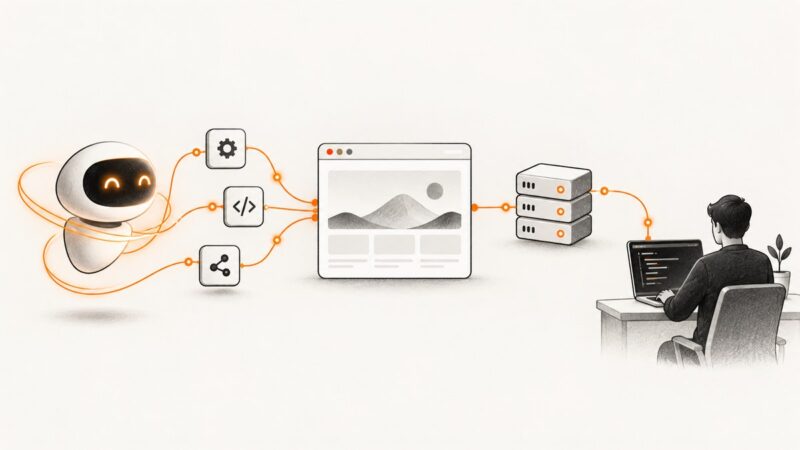
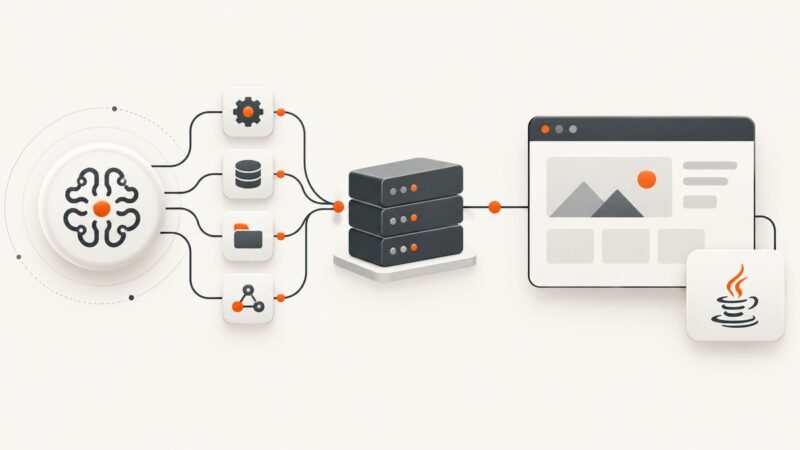
Yes. Chrome DevTools MCP works with Microsoft Edge and WebView2. You can let the MCP server launch Edge, connect it to an existing Edge session, or attach to a running WebView2 host. Edge uses Chromium and its DevTools Protocol APIs match Chrome DevTools Protocol APIs, so the MCP tools can inspect pages, take screenshots, debug issues, and analyze performance.
The quickest setup is to install the latest Node.js LTS, keep Edge installed, and add chrome-devtools-mcp@latest to your MCP client. Choose the launch method that matches your use case:
| Method | Use it when | What you configure |
|---|---|---|
| Launch Edge | You want a fresh browser controlled by the agent | --executablePath |
| Auto-connect to Edge | You need an existing tab, cookies, or signed-in session | Remote debugging, --autoConnect, and --user-data-dir |
| Auto-connect to WebView2 | The page runs inside a Windows WebView2 host application | WebView2 remote debugging and its user-data directory |
Microsoft’s setup guide documents these three paths in detail: Chrome DevTools MCP with Edge and WebView2. The protocol compatibility is described in the Microsoft Edge DevTools Protocol reference.
1. Prerequisites
- Node.js, preferably the latest LTS release.
- npm, installed with Node.js.
- Microsoft Edge Stable, Beta, Dev, or Canary.
- An MCP-capable coding agent, such as Visual Studio Code with GitHub Copilot, Copilot CLI, Claude Code, Cursor, or another compatible client.
The examples below use Visual Studio Code’s mcp.json format. Other clients generally use the same command and args values but wrap them differently.
2. Launch Edge from the MCP server
This is the simplest option when you do not need an existing browser profile. The MCP server starts Edge itself using the executable path you provide.
Windows
{
  "servers": {
    "chrome-devtools": {
      "type": "stdio",
      "command": "npx",
      "args": [
        "-y",
        "chrome-devtools-mcp@latest",
        "--executablePath=%ProgramFiles(x86)%\\Microsoft\\Edge\\Application\\msedge.exe"
      ]
    }
  }
}
macOS
{
  "servers": {
    "chrome-devtools": {
      "type": "stdio",
      "command": "npx",
      "args": [
        "-y",
        "chrome-devtools-mcp@latest",
        "--executablePath=/Applications/Microsoft Edge.app/Contents/MacOS/Microsoft Edge"
      ]
    }
  }
}
Linux
{
  "servers": {
    "chrome-devtools": {
      "type": "stdio",
      "command": "npx",
      "args": [
        "-y",
        "chrome-devtools-mcp@latest",
        "--executablePath=/usr/bin/microsoft-edge"
      ]
    }
  }
}
These are default locations. Installation policy, version, and Edge channel can change the path.
Edge executable paths by channel
| Platform | Stable | Beta | Dev | Canary |
|---|---|---|---|---|
| Windows | %ProgramFiles(x86)%\Microsoft\Edge\Application\msedge.exe |
%ProgramFiles(x86)%\Microsoft\Edge Beta\Application\msedge.exe |
%ProgramFiles(x86)%\Microsoft\Edge Dev\Application\msedge.exe |
%LOCALAPPDATA%\Microsoft\Edge SxS\Application\msedge.exe |
| macOS | /Applications/Microsoft Edge.app/Contents/MacOS/Microsoft Edge |
/Applications/Microsoft Edge Beta.app/Contents/MacOS/Microsoft Edge |
/Applications/Microsoft Edge Dev.app/Contents/MacOS/Microsoft Edge |
/Applications/Microsoft Edge Canary.app/Contents/MacOS/Microsoft Edge |
| Linux | /usr/bin/microsoft-edge |
/usr/bin/microsoft-edge-beta |
/usr/bin/microsoft-edge-dev |
Not available |
Useful launch flags
Add these arguments alongside --executablePath when needed:
--headless: run Edge without a visible window.--isolated: use a temporary profile directory that is cleaned up when the browser closes.--viewport=1280x720: set the initial viewport size.
{
  "servers": {
    "chrome-devtools": {
      "type": "stdio",
      "command": "npx",
      "args": [
        "-y",
        "chrome-devtools-mcp@latest",
        "--executablePath=%ProgramFiles(x86)%\\Microsoft\\Edge\\Application\\msedge.exe",
        "--headless",
        "--isolated",
        "--viewport=1280x720"
      ]
    }
  }
}
3. Connect to a running Edge session
Use auto-connect when the agent must work with an existing browser state, such as a logged-in account, an open tab, or a manually prepared test session.
Step 1: Enable remote debugging
You can start Edge with the remote debugging flag:
msedge.exe --remote-debugging-port=9222Alternatively, enable it from Edge:
- Open
edge://inspect. - Select Remote debugging.
- Enable Allow remote debugging for this browser instance.
Step 2: Configure auto-connect
Windows, Edge Stable
{
  "servers": {
    "chrome-devtools": {
      "type": "stdio",
      "command": "npx",
      "args": [
        "-y",
        "chrome-devtools-mcp@latest",
        "--autoConnect",
        "--user-data-dir=%LocalAppData%\\Microsoft\\Edge\\User Data"
      ]
    }
  }
}
macOS, Edge Stable
{
  "servers": {
    "chrome-devtools": {
      "type": "stdio",
      "command": "npx",
      "args": [
        "-y",
        "chrome-devtools-mcp@latest",
        "--autoConnect",
        "--user-data-dir=~/Library/Application Support/Microsoft Edge"
      ]
    }
  }
}
Linux, Edge Stable
{
  "servers": {
    "chrome-devtools": {
      "type": "stdio",
      "command": "npx",
      "args": [
        "-y",
        "chrome-devtools-mcp@latest",
        "--autoConnect",
        "--user-data-dir=~/.config/microsoft-edge"
      ]
    }
  }
}
Edge user-data directories by channel
| Platform | Stable | Beta | Dev | Canary |
|---|---|---|---|---|
| Windows | %LOCALAPPDATA%\Microsoft\Edge\User Data |
%LOCALAPPDATA%\Microsoft\Edge Beta\User Data |
%LOCALAPPDATA%\Microsoft\Edge Dev\User Data |
%LOCALAPPDATA%\Microsoft\Edge SxS\User Data |
| macOS | ~/Library/Application Support/Microsoft Edge |
~/Library/Application Support/Microsoft Edge Beta |
~/Library/Application Support/Microsoft Edge Dev |
~/Library/Application Support/Microsoft Edge Canary |
| Linux | ~/.config/microsoft-edge |
~/.config/microsoft-edge-beta |
~/.config/microsoft-edge-dev |
Not available |
Step 3: Verify the connection
Make sure Edge is running, then ask your MCP client:
Navigate to https://contoso.com and take a screenshotIf the server connects, it should control the running Edge instance and execute the request.
4. Connect to a WebView2 application
WebView2 does not have a server-launched mode because the host application creates the WebView2 instance. Configure remote debugging for the host, locate its WebView2 profile, and use auto-connect.
Step 1: Enable WebView2 remote debugging
The WebView2 runtime must start with --remote-debugging-port=0. Microsoft documents two approaches.
Using WebView2Utilities
- Install and run WebView2Utilities.
- Open the Overrides tab and select Add New.
- Set Host app exe to the host executable, such as
OUTLOOK.EXE. - Enter
--remote-debugging-port=0in the browser arguments. - Close the host app if it is running, then restart it.
Using the Windows Registry
Create this value and replace appname.exe with the exact host executable name:
[HKEY_CURRENT_USER\Software\Policies\Microsoft\Edge\WebView2\AdditionalBrowserArguments]
"appname.exe"="--remote-debugging-port=0"
The host application must be restarted after changing the registry because the argument is read when WebView2 is created.
Step 2: Find the WebView2 profile
The WebView2 user-data directory normally ends with \EBWebView. WebView2Utilities shows the path in the host app’s User data folder row. If you obtain the path from application source code, append \EBWebView when required.
Step 3: Configure the MCP server
{
  "servers": {
    "chrome-devtools": {
      "type": "stdio",
      "command": "npx",
      "args": [
        "-y",
        "chrome-devtools-mcp@latest",
        "--autoConnect",
        "--user-data-dir=%LocalAppData%\\Packages\\<APP_PACKAGE>\\LocalState\\EBWebView"
      ]
    }
  }
}
Replace <APP_PACKAGE> with the package name of the host application.
Step 4: Verify WebView2
Launch the host application, then ask the agent:
Take a snapshot of the current page5. Configure clients other than Visual Studio Code
The server arguments stay the same; the wrapper differs by client.
Copilot CLI
Copilot CLI uses ~/.copilot/mcp-config.json, mcpServers, and type: local:
{
  "mcpServers": {
    "chrome-devtools": {
      "type": "local",
      "command": "npx",
      "args": [
        "-y",
        "chrome-devtools-mcp@latest",
        "--executablePath=%ProgramFiles(x86)%\\Microsoft\\Edge\\Application\\msedge.exe"
      ]
    }
  }
}
Copilot CLI also supports adding an MCP server interactively with /mcp add.
Claude Code, Cursor, Gemini CLI, and similar clients
Many clients use mcpServers without a type field:
{
  "mcpServers": {
    "chrome-devtools": {
      "command": "npx",
      "args": [
        "-y",
        "chrome-devtools-mcp@latest",
        "--executablePath=%ProgramFiles(x86)%\\Microsoft\\Edge\\Application\\msedge.exe"
      ]
    }
  }
}
Check your client’s documentation for the exact configuration filename and location.
6. How the connection works
The MCP server uses Puppeteer to control the browser. With --executablePath, Puppeteer launches the specified Edge binary directly. With --autoConnect and --user-data-dir, the server reads the DevToolsActivePort file in that profile to discover the browser’s WebSocket endpoint.
Edge and WebView2 are Chromium-based, so the Chrome DevTools Protocol connection is compatible. The low-level debugging endpoint can also expose targets through http://localhost:9222/json/list, where each target includes a webSocketDebuggerUrl.
7. Choosing the right connection method
| Requirement | Recommended setup | Reason |
|---|---|---|
| Clean, repeatable browser state | Launch Edge with --isolated |
A temporary profile avoids unrelated cookies and tabs. |
| Headless automation | Launch Edge with --headless |
No visible browser window is required. |
| Existing login or manual state | Auto-connect to Edge | The agent can use the running session. |
| Debug an embedded Windows app | Auto-connect to WebView2 | The host app owns the browser instance. |
| Different screen dimensions | Add --viewport=WIDTHxHEIGHT |
The initial viewport is explicit. |
8. Troubleshooting
“Could not connect to Chrome” with auto-connect
- Cause: Edge is closed or remote debugging is disabled.
Fix: Start Edge with--remote-debugging-port=9222, or enable remote debugging fromedge://inspect. - Cause: The profile path points to the wrong channel.
Fix: Match--user-data-dirto Stable, Beta, Dev, or Canary. - Cause: The profile has no
DevToolsActivePortfile.
Fix: Restart Edge with remote debugging enabled and check the configured profile directory.
“Edge not found at executablePath”
- Confirm that the executable exists on disk.
- Use the path for the selected Edge channel.
- Remember that Windows Canary normally installs under
%LOCALAPPDATA%. - Escape Windows backslashes as
\\inside JSON strings.
WebView2 will not connect
- Make sure the registry key uses the host executable’s exact filename.
- Restart the host app after adding
AdditionalBrowserArguments. - Verify that the profile path ends with
\EBWebView. - Confirm that the host app is running before starting the MCP client.
The agent connects to the wrong browser profile
Use the user-data directory for the exact Edge channel you opened. If you need a predictable clean session, launch Edge with --isolated instead of auto-connecting to a personal profile.
The client rejects the configuration
The server arguments may be correct while the wrapper is wrong. VS Code uses servers and type: stdio; Copilot CLI uses mcpServers and type: local; many other clients use mcpServers without a type field.
9. Reliability, performance, and operational notes
- Use isolated profiles for repeatability. Existing tabs, extensions, cookies, and redirects can change what the agent sees.
- Use auto-connect only when state is required. It exposes the active browser session to the agent.
- Pin the browser channel deliberately. Stable, Beta, Dev, and Canary have different executable and profile paths.
- Keep viewport settings explicit. A fixed viewport makes screenshots and layout inspection easier to compare.
- Check the target list when debugging. The DevTools endpoint can list attachable targets at
http://localhost:9222/json/list. - Separate WebView2 profiles. The host app’s
EBWebViewdirectory is different from a normal Edge profile. - Expect launch overhead. Starting a fresh browser adds startup work; reusing a running session avoids that but carries profile and security risks.
10. Or skip the browser setup
If your goal is simply to capture a clean screenshot or PDF from a URL, ScreenshotNeo provides a website screenshot API and MCP server. One GET request returns PNG, JPEG, WebP, or PDF output, and its MCP tools let AI agents call take_screenshot, get_page_info, and capture_pdf.
See the ScreenshotNeo API documentation for all options.
cURL
curl -G "https://api.screenshotneo.com/v1/shot" -d access_key=YOUR_API_KEY --data-urlencode url=https://stripe.com -o shot.webpPython
import requests
r = requests.get("https://api.screenshotneo.com/v1/shot", params={"access_key": "YOUR_API_KEY", "url": "https://stripe.com"}, timeout=90)
open("shot.webp", "wb").write(r.content)
Node.js
const q = new URLSearchParams({ access_key: 'YOUR_API_KEY', url: 'https://stripe.com' }); const res = await fetch(`https://api.screenshotneo.com/v1/shot?${q}`);ScreenshotNeo removes cookie and consent banners, newsletter popups, and chat widgets before capture. Bot checks, blank pages, failed loads, timeouts, and cache hits are not billed, and each response identifies the result with X-Page-Verdict and X-Billed headers. You can also use its MCP server with Claude, Cursor, or another MCP client.
There are 1,000 screenshots per month free with no card. Paid plans start at $5 for 3,000 screenshots. Create a free ScreenshotNeo account.
11. FAQ
Can Chrome DevTools MCP inspect Microsoft Edge?
Yes. The server supports Chromium browsers, including Microsoft Edge, when you provide the Edge executable or connect to a running profile.
Can it connect to an existing signed-in Edge browser?
Yes. Enable remote debugging and use --autoConnect with the matching --user-data-dir. The agent then inherits that session’s browser state.
Can it inspect a WebView2 app?
Yes. Enable WebView2 remote debugging, find the host profile ending in \EBWebView, and configure auto-connect with that directory.
Does WebView2 support the launch configuration?
No. WebView2 is created by its host application, so the documented method is auto-connect.
Which MCP configuration format should I use?
Use the format required by your client. VS Code uses servers with type: stdio; Copilot CLI uses mcpServers with type: local; many other clients omit the type field.
What should I use for a clean screenshot pipeline?
Use a launched Edge instance with an isolated profile when you need browser inspection. For URL-to-image or URL-to-PDF capture without managing a browser, use ScreenshotNeo’s API or MCP server.