BlogScreenshots on your device
How to Save a Long Webpage as a Full-Page Screenshot in Chrome on a Windows Laptop
Use Chrome DevTools to capture a long webpage as one full-page image on Windows. Find the exact command, check the result, and fix common capture problems.
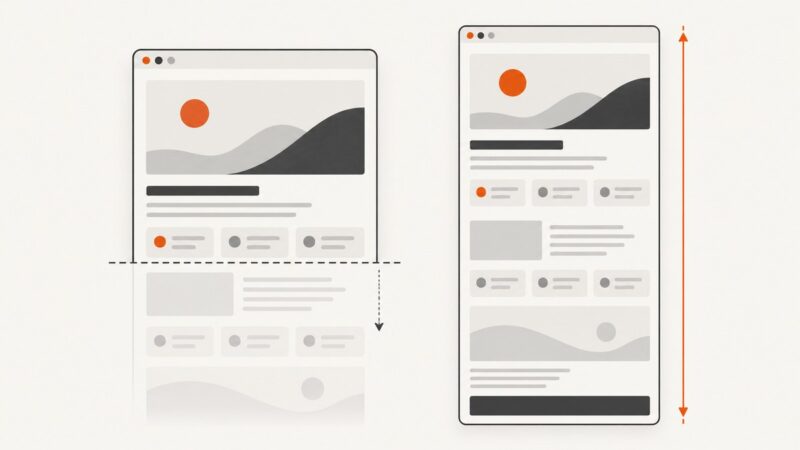
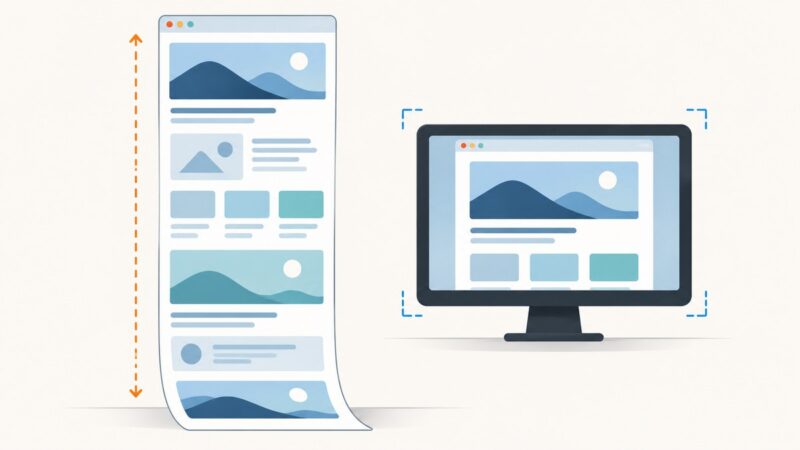
To save a long webpage as one image in Chrome on a Windows laptop, open the page, open DevTools, turn on Device Mode, then choose More options → Capture a full size screenshot. Chrome saves an image of the page beyond the visible viewport. Find it in Chrome’s downloads or your Windows Downloads folder and check that the top, bottom, and content you need are present.
Capture the whole page in Chrome on Windows
- Open the webpage in Chrome and let it load. If it loads content as you scroll, scroll through the page first so those sections have a chance to appear.
- Open DevTools. Use Chrome’s DevTools menu if you do not know the shortcut or it differs on your setup.
- Turn on Device Mode with the device toolbar control in DevTools.
- Open the Device Mode More options menu and select Capture a full size screenshot.
- Open the downloaded image from Chrome’s download shelf, or find it in the Windows Downloads folder. Check the beginning and end of the page, plus any important sections in between.
Chrome documents the command this way: “To capture a screenshot of the whole page including the content that isn’t visible in the viewport, select Capture a full size screenshot from the same menu.” Chrome DevTools: Device Mode
Choose the right kind of capture
| What you need | Chrome option | What it produces |
|---|---|---|
| Everything on the webpage, including content below the visible area | Device Mode → More options → Capture a full size screenshot | A full-page image |
| One particular element, such as a chart or article section | Select the element in the Elements panel, then use Capture node screenshot | An image of that element, which can extend below the viewport |
| A page laid out for reading, printing, or sharing as pages | Chrome’s print dialog → Save as PDF | A PDF document, not a screenshot |
| Only the currently visible area | Use a viewport screenshot workflow | An image limited to the visible viewport |
Chrome documents full-size and viewport capture as distinct workflows. Its DevTools release notes also describe node screenshots for selected elements, including content below the fold. Device Mode documentation · DevTools release notes · Capture screenshots with DevTools
When the page is dynamic or the screenshot is incomplete
A full-page command captures the rendered page, but it cannot guarantee that every website has finished loading all of its content. Pages may load images or sections as you scroll, require sign-in, show overlays, or update after a delay. If the image is missing something, return to the page, wait for it to finish loading, scroll through the relevant areas, and capture again. Reopen the saved image to verify the result.
- Lazy-loaded images: Scroll through the page before capture so images below the fold have an opportunity to load.
- Sticky headers or floating controls: These may appear in the result. Dismiss or hide them if they obscure content and the site permits it.
- Very long pages: The resulting image can be large. If you need a document that is easier to read or print, save as PDF instead.
- Authenticated pages: Capture only while the page is available in your current Chrome session. The screenshot reflects what Chrome can render for that session.
- Changing content: Wait until the page has settled; otherwise sections may reflect different loading states.
Command-line alternative: Chrome Headless
For repeatable or scripted captures, Chrome Headless supports a screenshot command. Run it from a terminal with Chrome available on your PATH, replacing the URL with the page you want:
chrome --headless --screenshot "https://example.com"The documented default output is screenshot.png in the current working directory. Headless Chrome also supports a wait timeout for pages that need time before capture. Use the PDF option when you want a PDF file instead of an image:
chrome --headless --print-to-pdf "https://example.com"These commands are separate from the interactive Device Mode workflow. Check Chrome’s current command-line reference for platform-specific executable names and available flags. Chrome Headless documentation
Or skip the browser setup
ScreenshotNeo takes a screenshot with one API request. See the ScreenshotNeo API documentation for parameters and output options.
curl -G "https://api.screenshotneo.com/v1/shot" -d access_key=YOUR_API_KEY --data-urlencode url=https://stripe.com -o shot.webpimport requests
r = requests.get("https://api.screenshotneo.com/v1/shot", params={"access_key": "YOUR_API_KEY", "url": "https://stripe.com"}, timeout=90)
open("shot.webp", "wb").write(r.content)const q = new URLSearchParams({ access_key: 'YOUR_API_KEY', url: 'https://stripe.com' });
const res = await fetch(`https://api.screenshotneo.com/v1/shot?${q}`);
if (!res.ok) throw new Error(`Screenshot request failed: ${res.status}`);
await import('node:fs/promises').then(fs => fs.writeFile('shot.webp', Buffer.from(await res.arrayBuffer())));ScreenshotNeo removes cookie banners, popups, and chat widgets before the shot. Bot checks, blank pages, and failed loads are never billed. Its MCP server lets AI agents take screenshots. The free plan includes 1,000 screenshots a month with no card; paid plans start at $5 for 3,000. Learn more at ScreenshotNeo, then sign up for 1,000 free screenshots a month, with no card required.
Troubleshooting
| Symptom | Likely cause | What to do |
|---|---|---|
| You cannot find “Capture a full size screenshot.” | Device Mode is not enabled, or you opened a different menu. | Turn on the device toolbar in DevTools, then open Device Mode’s More options menu. |
| The image shows only the visible area. | A viewport capture command was used instead of the full-size command. | Repeat using the exact “Capture a full size screenshot” entry in Device Mode. |
| Images or sections are missing. | The page may load content on scroll or after a delay. | Wait, scroll through the page, then capture again and inspect the result. |
| The screenshot includes a banner or floating widget. | The element was visible when Chrome rendered the page. | Dismiss it if possible, then capture again. Chrome’s built-in capture does not promise automatic removal of overlays. |
| The capture looks outdated or inconsistent. | The page changed while loading or updates live. | Wait for the page to settle and retry. Check whether the site requires a refresh or sign-in. |
| You expected a multipage document but got one tall image. | You used screenshot capture, which produces an image. | Use Chrome’s print dialog and save as PDF for a paginated document. |
Performance, reliability, and file handling
For a one-off capture, Device Mode is usually the simplest route because it needs no command-line setup. A long page can create a tall, large image, so allow time for rendering and check that the downloaded file opens correctly. For repeated captures, Headless Chrome can be scripted, but dynamic content still needs suitable waiting and verification. Keep in mind that capture completeness depends on what the page has rendered when the screenshot is taken; Chrome’s documentation does not guarantee every dynamic site will be fully represented.
If you need a smaller image for sharing, you can resize or compress the saved file with an image editor. Keep the original if legibility matters. For a document intended to be printed or read page by page, choose PDF rather than an extremely tall image.
Frequently asked questions
Does a full-page screenshot include content below the fold?
Yes. Chrome’s full-size capture is intended to include content outside the current viewport.
Where does Chrome save the screenshot on Windows?
Open it from Chrome’s download shelf or look in the Windows Downloads folder. The exact download location can depend on Chrome’s download settings.
Can I capture just one section of a long page?
Yes. Use Capture node screenshot on the selected element in DevTools.
Can I save the page as a PDF instead?
Yes. Use Chrome’s print dialog and choose Save as PDF, or use Headless Chrome’s documented --print-to-pdf option.
Can I use a keyboard shortcut to find the capture command?
On Windows and Linux, Chrome documents Ctrl+Shift+P for the DevTools Command Menu. The full-size screenshot procedure itself is documented in Device Mode’s More options menu. DevTools Command Menu