BlogScreenshots on your device
How to Generate PNG or JPG Screenshots of Part of a Chrome Window
Capture a selected part of Chrome on Windows, macOS, or Chromebook, then save or convert it to PNG or JPG.
Short answer: show the part of Chrome you want, then use your operating system’s region-capture tool. Windows uses Snipping Tool (Windows + Shift + S), macOS uses Screenshot (Shift + Command + 4), and Chromebook uses Screen Capture (Shift + Ctrl + Show windows). These tools capture visible screen pixels. They do not automatically capture content below the current viewport. If the tool does not offer the format you need, save the capture and export it as PNG or JPEG in an image editor.
“Part of a Chrome window” can mean two different things:
- Visible screen region: includes anything inside the rectangle you drag, including Chrome tabs, the address bar, toolbars, and the page.
- Part of a webpage: means page content selected by an element or extending below the viewport. That usually needs a browser automation tool or screenshot API.
Windows 10 and Windows 11
Capture a rectangular part of Chrome
- Bring the Chrome window forward and scroll the desired content into view.
- Press Windows + Shift + S. The Snipping Tool overlay appears.
- Choose Rectangular snip, then drag around the visible area you need.
- Open the Snipping Tool notification or editor preview. The snip is copied into the editor, where you can annotate, copy, share, or save it.
Microsoft documents rectangular, window, freeform, and full-screen modes in its Snipping Tool guide. Use Window snip when you want the entire Chrome window instead of a hand-drawn rectangle. The Microsoft workflow does not promise that every version presents both PNG and JPG choices in Save As.
Save as PNG or JPG
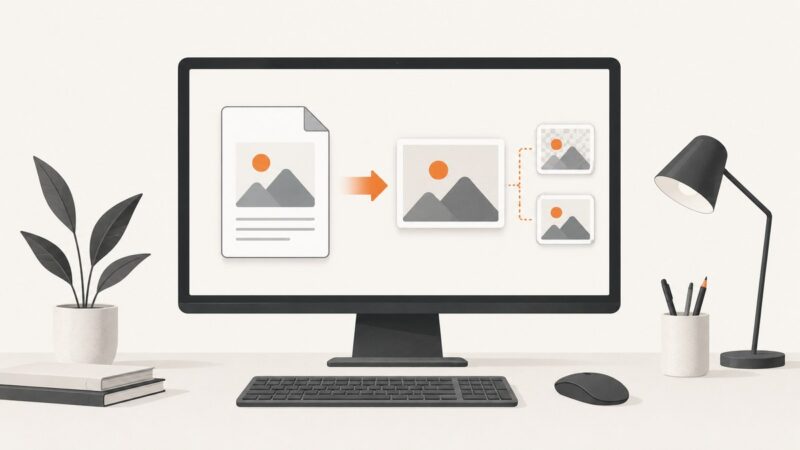
Save the snip first. If Save As does not list the format you require, open the saved image in an editor such as Paint or another application that supports JPEG export, then choose Save as or Export and select PNG or JPEG. Check the resulting extension and file type; renaming .png to .jpg does not convert the image.
macOS
Capture a rectangular part of Chrome
- Move Chrome and the target content into view.
- Press Shift + Command + 4.
- Drag across the visible Chrome area and release. The screenshot is saved automatically.
For a complete Chrome window, press Shift + Command + 4, press Space, then click the Chrome window. For more controls, press Shift + Command + 5 to open Screenshot. It can capture a selected portion or window and provides options such as a timer, pointer or click display, and save location.
Apple states that “Screenshots are saved as .png files and screen recordings are saved as .mov files” in its Mac Screenshot guide. If you need JPG, open the PNG in an editor and export it as JPEG. The capture remains a screen image rather than a Chrome-specific webpage export.
Chromebook
- Display the Chrome content you want to capture.
- Press Shift + Ctrl + Show windows to open ChromeOS Screen Capture.
- Choose partial-screen capture and drag over the region. Choose window capture when you need the whole Chrome window.
- Find the result in
Downloadsunless you selected another folder in Screen Capture settings.
Google describes partial, window, and full-screen modes in its Chromebook capture guide. The guide does not establish a universal PNG/JPG selector. Inspect the saved file and convert it in an editor when necessary.
PNG versus JPG: which should you use?
| Need | Use | Reason |
|---|---|---|
| Sharp text, diagrams, transparency | PNG | Lossless compression preserves UI edges and can retain transparency when the source supports it. |
| Small photographic image | JPG/JPEG | Lossy compression often produces a smaller file, but may soften text or add artifacts. |
| Exact platform default | Check the file | macOS documents PNG; Windows and Chromebook documentation cited here does not promise one format across versions. |
PNG and JPG are output formats, not capture modes. Capture the correct pixels first, then choose the format during save or export. JPEG does not support transparency, so a transparent PNG must be flattened against a background before conversion.
Get a clean crop
- Zoom Chrome to a readable level before capturing; browser zoom changes the visible pixels and therefore the result.
- Close cookie banners, newsletter dialogs, and chat bubbles manually if they cover the target.
- Use the same window size and display scaling when you need repeatable captures.
- Leave a small margin around the target while dragging, then crop precisely in an editor.
- After saving, open the file and verify dimensions, extension, and that no tabs, address-bar text, or notifications were included accidentally.
When a region screenshot is not enough
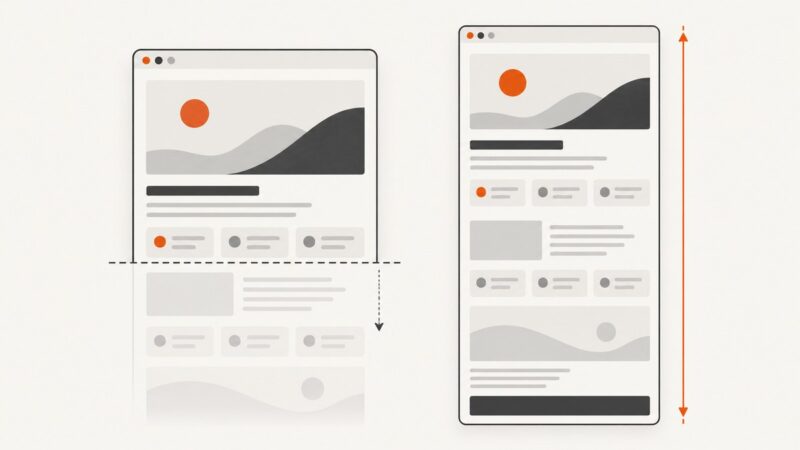
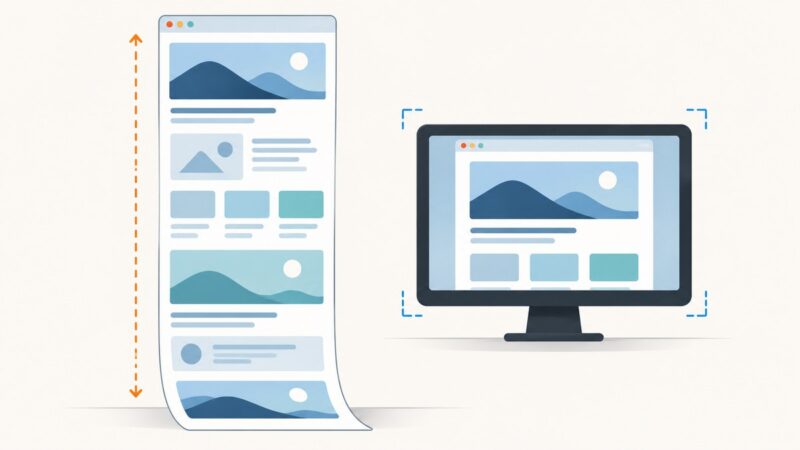
Operating-system tools capture only what is currently visible. They do not scroll through a long page, wait for lazy-loaded images, select one DOM element, apply a device viewport, or run the same capture repeatedly. For those jobs, use browser automation or a screenshot API.
Or skip the browser setup
ScreenshotNeo returns a PNG, JPEG, WebP, or PDF from one GET request. It can capture a full page with lazy images loaded or one element by CSS selector, and it supports custom CSS and JavaScript, dark mode, device presets, retina scale, waits, hidden selectors, blocked requests, headers, cookies, user agents, timezone and geolocation, resizing, caching, signed links, asynchronous jobs, webhooks, bulk capture, and usage reporting. Before capture it accepts cookie or consent banners like a visitor and removes more than 60 known consent platforms, newsletter popups, and chat widgets; each cleanup step can be disabled.
See the ScreenshotNeo API documentation for all parameters. This minimal cURL request saves a WebP image; change the output filename and supported format option when you need PNG or JPEG:
curl -G "https://api.screenshotneo.com/v1/shot" -d access_key=YOUR_API_KEY --data-urlencode url=https://stripe.com -o shot.webpPython:
import requests
r = requests.get("https://api.screenshotneo.com/v1/shot", params={"access_key": "YOUR_API_KEY", "url": "https://stripe.com"}, timeout=90)
r.raise_for_status()
open("shot.webp", "wb").write(r.content)
Node.js:
const fs = require('node:fs/promises');
const q = new URLSearchParams({ access_key: 'YOUR_API_KEY', url: 'https://stripe.com' });
const res = await fetch(`https://api.screenshotneo.com/v1/shot?${q}`);
if (!res.ok) throw new Error(`${res.status} ${await res.text()}`);
await fs.writeFile('shot.webp', Buffer.from(await res.arrayBuffer()));
Only clean shots are billed. Bot checks or CAPTCHAs, blank pages, timeouts, failed loads, and cache hits cost nothing; response headers identify the result with X-Page-Verdict and X-Billed. ScreenshotNeo also provides an MCP server with take_screenshot, get_page_info, and capture_pdf tools for Claude, Cursor, and other MCP clients. The Free plan includes 1,000 shots per month with no card; paid plans start at $5 for 3,000 shots. Create a free ScreenshotNeo account.
Troubleshooting
| Problem | Likely cause | Fix |
|---|---|---|
| The screenshot includes tabs or the address bar | The selection crossed the browser chrome. | Drag only over the page rectangle, or crop the saved image. |
| The page section is missing content below the fold | Region tools capture visible pixels only. | Scroll and capture additional regions, or use a full-page browser tool/API. |
| There is no JPG option | The platform’s save dialog exposes limited formats. | Save the capture, then export it as JPEG in an image editor. |
| Text looks blurry after conversion | JPEG compression damaged high-contrast edges. | Keep PNG for text, or export JPEG at a high quality setting. |
| The capture is black or stale | A window was minimized, covered, or not fully repainted. | Bring Chrome forward, wait for rendering to finish, and capture again. |
| ScreenshotNeo returns an error | Invalid key, inaccessible URL, timeout, or a bot check. | Check the API key and URL, increase the wait or timeout settings, inspect X-Page-Verdict/X-Billed, and retry transient failures. |
Performance, reliability, and cost notes
- Local region capture is immediate and has no service cost, but it is manual and tied to your display resolution.
- For repeatable captures, standardize viewport size, browser zoom, device scale, and page state.
- Network-heavy pages can take longer to render. A screenshot API wait condition such as a selector, delay, or network idle is more reliable than guessing a fixed sleep.
- Use caching with a chosen TTL for unchanged pages. Bulk capture supports up to 100 URLs per call, and asynchronous jobs with signed webhooks keep long batches out of a request timeout.
- ScreenshotNeo’s paid plans include every feature: Starter $5 for 3,000 shots, Growth $15 for 15,000, Pro $39 for 60,000, Scale $99 for 250,000, and Business $249 for 1,000,000. Yearly billing gives two months free.
FAQ
Can I capture only the webpage and exclude Chrome’s tabs?
Yes. Drag the rectangle inside the page area rather than across the tabs or toolbar. The operating system captures pixels, so it follows exactly where you drag.
Does Chrome’s built-in capture create JPG files?
There is no single Chrome-wide format behavior established by the platform documentation here. Use your operating system tool, inspect its output, and export to JPEG when required.
How do I capture a page section that is currently off-screen?
Scroll it into view and capture it in one or more regions. For an automated or full-page result, use browser automation or an API that supports full-page and element capture.
Is PNG better for screenshots?
Usually for interface text, diagrams, and transparency. JPG can be smaller for photographic content, but compression can soften text.