The Complete Crawl4AI Guide for LLM-Ready Data and AI Web Crawling
Learn Crawl4AI from first install to structured extraction, self-hosting, browser control, troubleshooting, and production LLM data pipelines.
Short answer: Crawl4AI is an open-source Python crawler and scraper designed to turn web pages into Markdown and structured data for LLM, agent, RAG, and data-pipeline workflows. The usual first step is to install the package, run its browser setup command, create an AsyncWebCrawler, call arun(), and read the returned Markdown. You can then add browser controls, caching, CSS or XPath extraction, LLM extraction, authentication, proxies, and persistent browser state as your workload requires.
This guide follows the current project repository and official documentation. Release details can change, so check the repository, documentation home, and quick start when you deploy.
1. What Crawl4AI does
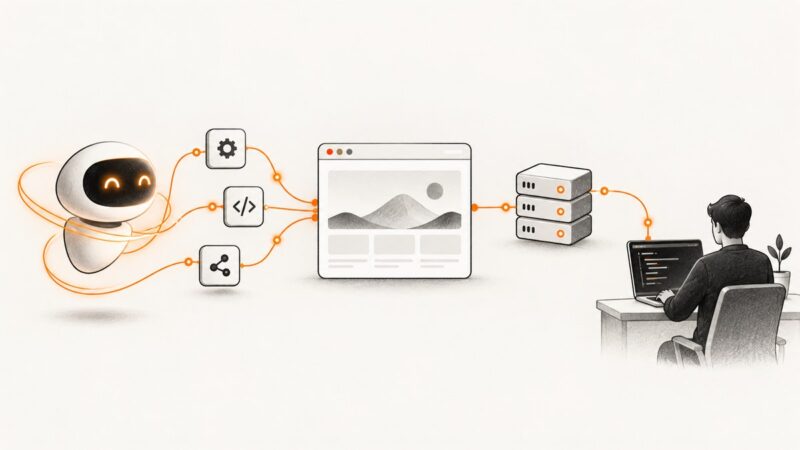
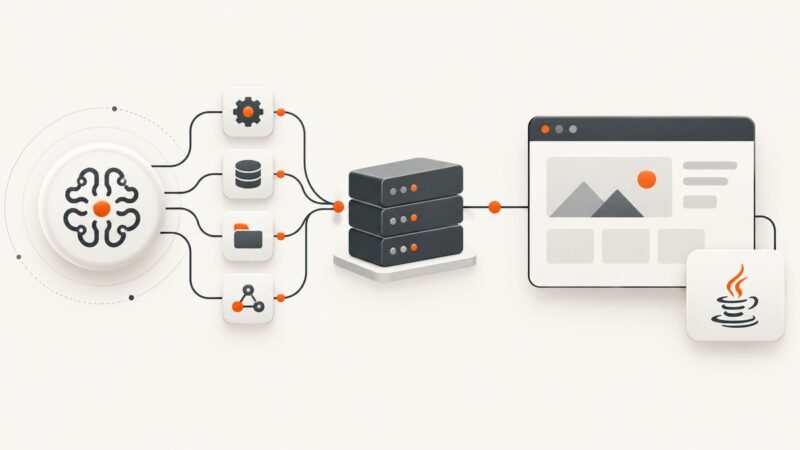
Crawl4AI combines browser automation, HTML-to-Markdown conversion, and extraction tools in a Python-centered library. Its stated use cases include preparing content for retrieval-augmented generation, AI agents, and data pipelines. A crawl can produce readable Markdown, links and metadata, or data that matches a schema.
“LLM-ready” describes the intended format and workflow. It does not guarantee that every page is complete, factually correct, accessible, or suitable for every model. JavaScript behavior, login walls, consent dialogs, anti-bot systems, page structure, and extraction rules still affect the result.
2. Install Crawl4AI and verify the browser
The current repository’s quick setup is:
pip install -U crawl4ai
crawl4ai-setup
crawl4ai-doctor
crawl4ai-setup installs and prepares the browser dependencies. crawl4ai-doctor checks the installation. If browser setup fails, follow the repository’s documented manual Playwright Chromium installation steps.
The project’s basic installation page contains older Docker wording, while the repository and self-hosting guide contain current Docker server instructions. For a server deployment, prioritize the release-linked repository instructions and the self-hosting guide.
First-install checklist
- Use a supported Python environment and install the current package from PyPI.
- Run
crawl4ai-setupbefore the first crawl. - Run
crawl4ai-doctorand fix browser or dependency errors it reports. - Confirm that the runtime can launch Chromium and has enough memory for the pages you intend to crawl.
- Keep the package and browser instructions tied to the release you deploy.
3. Your first asynchronous crawl
The core mental model is an asynchronous context manager containing an AsyncWebCrawler. Call arun() with a URL, then inspect the result.
import asyncio
from crawl4ai import AsyncWebCrawler

async def main():
    async with AsyncWebCrawler() as crawler:
        result = await crawler.arun("https://example.com")
        print(result.markdown)

asyncio.run(main())
This pattern lets Crawl4AI manage the browser lifecycle. In a real pipeline, check the result before storing it, log the URL and status information, and persist the Markdown or extracted data with a crawl timestamp.
Save Markdown to disk
import asyncio
from pathlib import Path
from crawl4ai import AsyncWebCrawler

async def main():
    async with AsyncWebCrawler() as crawler:
        result = await crawler.arun("https://example.com")
        if not result.markdown:
            raise RuntimeError("The crawl returned no Markdown")
        Path("example.md").write_text(result.markdown, encoding="utf-8")

asyncio.run(main())
4. Browser configuration and crawl configuration
Crawl4AI separates browser behavior from crawl behavior. BrowserConfig controls the browser process and session. CrawlerRunConfig controls an individual crawl, including caching, extraction, timeouts, and hooks.
| Concern | Typical controls |
|---|---|
| Browser | Headless or visible mode, browser type, user agent, persistent profiles, saved session state, headers, cookies, proxies, and remote browsers through Chrome DevTools Protocol. |
| Crawl | Cache behavior, timeouts, extraction strategy, Markdown filtering, JavaScript actions, wait conditions, and hooks. |
The repository lists Chromium, Firefox, and WebKit support. Choose a browser deliberately when a site behaves differently across engines. Use a persistent profile or saved session state when a workflow requires an authenticated browser session, and protect those files as credentials.
5. Markdown output and content filtering
Crawl4AI converts HTML to Markdown automatically. Content filters can influence which parts of a page are retained, which is useful when navigation, repeated boilerplate, or unrelated sections would otherwise consume context.
For RAG ingestion, store the source URL, retrieval time, title, and any page metadata alongside the Markdown. Split content according to your retrieval strategy after you have inspected the output. Do not assume that a generic chunk size preserves every article’s headings, tables, or code examples.
6. Choosing an extraction strategy
There are two broad approaches:
| Approach | How it works | Use it when |
|---|---|---|
| CSS/XPath and schema rules | You define selectors or a schema for fields to extract. | The page structure is known and repeatable, and deterministic fields matter. |
| LLM-based extraction | A model interprets page content and returns the structure you request. | Pages vary in layout or the fields require semantic interpretation. |
| Regex and generated schemas | Pattern matching or schema-generation helpers identify constrained values. | Values follow predictable textual patterns or you are designing a schema. |
| Chunking and similarity approaches | Content is divided and selected according to relevance. | You need focused context for downstream retrieval or agent steps. |
CSS/XPath extraction is explicit and inspectable. LLM extraction can adapt to changing layouts but requires model configuration and its output still needs validation. The official sources do not establish that one approach is universally more accurate, faster, or cheaper.
Validate structured output
import asyncio
import json
from crawl4ai import AsyncWebCrawler

async def main():
    async with AsyncWebCrawler() as crawler:
        result = await crawler.arun("https://example.com")
        if not result.success:
            raise RuntimeError(f"crawl failed: {result}")

        # Inspect the returned fields before adding an extraction schema.
        print(result.markdown[:1000])
        print(json.dumps(result.metadata, indent=2, default=str))

asyncio.run(main())
Field names can vary by release and configuration. Inspect the result object in the version you install and follow the extraction examples in the current quick-start documentation before committing a schema to production.
7. Dynamic pages: waiting, JavaScript, and interaction
Pages that render after JavaScript need a browser-aware crawl. Crawl-level settings support timeouts, wait conditions, JavaScript actions, and hooks. Prefer a specific wait condition, such as the appearance of a known selector, when the page exposes one. A fixed delay is simpler but can be too short on a slow run and waste time on a fast run.
- Wait for a selector: use when a result container appears after rendering.
- Wait for network idle: use when the page finishes a bounded burst of requests.
- Delay: use only when the site has no reliable readiness signal.
- JavaScript actions: use for menus, pagination, or tabs that must be opened before extraction.
- Hooks: use for repeatable lifecycle logic such as logging, header preparation, or post-processing.
Set a finite timeout for every crawl. A page can keep connections open indefinitely because of analytics, streaming, or advertising requests.
8. Authentication, cookies, headers, proxies, and remote browsers
The repository documents user-agent, header, cookie, proxy, persistent-profile, saved-session, and remote-browser controls. These are operational tools, not a way to bypass authorization. Crawl only content you are permitted to access and follow the target site’s terms and robots guidance where applicable.
Authenticated workflows
- Create a dedicated browser profile or session state for the crawler.
- Keep cookies and authorization headers outside source control.
- Use the smallest permissions needed for the pages being collected.
- Verify that logout, redirects, and expired sessions produce detectable failures.
- Remove secrets from logs and saved HTML.
Proxy and remote-browser deployments
Use a proxy when your network architecture requires one, or a remote browser when browser processes should run outside the application host. Measure the additional connection and startup time in your own environment. The project explicitly documents proxy and remote-browser capabilities and invites infrastructure partnerships, but the reviewed sources provide no independent performance benchmark.
9. Running Crawl4AI as a self-hosted server
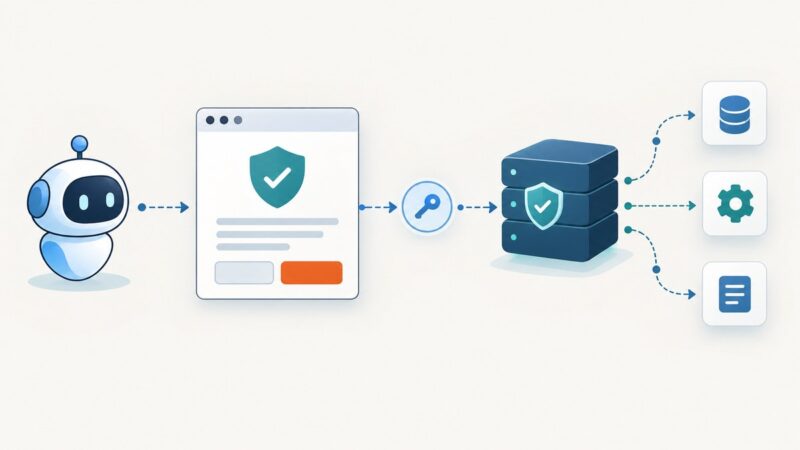
The repository documents a Docker server with token-based API access. The current self-hosting guide says that without CRAWL4AI_API_TOKEN, the server binds to loopback inside the container, so publishing a port may not work as expected. Configure authentication as part of the deployment rather than treating it as optional.
Because Docker commands and API routes can change between releases, copy the exact command and endpoint from the repository version you deploy. Do not mix an old installation page with a newer server image. The current documentation set is inconsistent: the basic installation page still describes Docker support as forthcoming, while the repository and self-hosting guide document Docker operation.
When to choose each operating mode
| Mode | Best fit | Operational responsibility |
|---|---|---|
| Python library | A service or job that owns its crawl process and needs direct Python configuration. | You operate browsers, dependencies, concurrency, storage, and retries. |
| Self-hosted Docker server | A team that wants an internal HTTP service and control over where browsers and data run. | You operate the container, token, network, resource limits, upgrades, and monitoring. |
| Hosted Crawl4AI service | A team that prefers provider-operated browser infrastructure and hosted scraping, search, answers, extraction, or multi-URL jobs. | Review the provider’s current capabilities, pricing, limits, and data terms before adoption. |
10. Building a dependable crawl pipeline
- Define the contract. Decide whether each job returns Markdown, links, metadata, or a validated schema.
- Make readiness explicit. Use selectors, network-idle rules, or bounded delays for dynamic pages.
- Bound the work. Set navigation and extraction timeouts, page limits, and concurrency appropriate to the target.
- Cache deliberately. Reuse unchanged pages where freshness permits, and record the cache policy with each result.
- Retry selectively. Retry transient navigation or network failures with backoff; do not blindly retry authentication failures or blocked requests.
- Validate output. Check required fields, URL identity, content length, and parseability before indexing.
- Keep provenance. Store URL, retrieval time, extraction configuration, software version, and error details.
- Monitor drift. Alert when selectors return no records, page lengths change sharply, or a site begins returning a login or challenge page.
11. Performance, reliability, and cost considerations
No benchmark or named performance statistic was supported by the reviewed official sources. Treat throughput as an environment-specific result influenced by browser startup, page JavaScript, network distance, proxies, concurrency, extraction work, and cache hits.
Performance checklist
- Reuse a crawler or browser context where the API and workload allow it instead of starting a new process for every URL.
- Use caching for pages whose freshness requirements permit it.
- Wait for the smallest reliable readiness signal.
- Keep extraction schemas narrow and avoid sending irrelevant page content to an LLM.
- Limit concurrency to what the host, target site, and browser can sustain.
- Measure p50 and tail latency, browser memory, failure rate, and useful records per minute in your own deployment.
Reliability checklist
- Use finite timeouts and cancellation.
- Classify failures by navigation, browser startup, authentication, extraction, validation, and downstream storage.
- Retry only errors that are plausibly transient.
- Persist partial progress for multi-URL jobs.
- Pin and review Crawl4AI and browser versions during production changes.
The Python library is described as free and open source under the Apache License 2.0; consult the repository’s license file for the license text. Self-hosting still has infrastructure costs for compute, memory, storage, network traffic, browser maintenance, and engineering time. Hosted service capabilities and prices are changeable and should be checked with the provider at the time of use.
12. Troubleshooting common Crawl4AI errors
| Symptom | Likely cause | Fix |
|---|---|---|
| Browser executable is missing | The package is installed but browser setup did not complete. | Run crawl4ai-setup; then run crawl4ai-doctor. If needed, follow the repository’s manual Playwright Chromium instructions. |
| Import or version mismatch | Multiple Python environments or incompatible package updates. | Activate the intended virtual environment, upgrade Crawl4AI there, and record the installed version. |
| Blank or very short Markdown | Content is rendered later, hidden behind interaction, blocked, or filtered out. | Inspect the page in a browser, add a selector or network-idle wait, perform the required JavaScript action, and review content-filter settings. |
| Timeout | Slow navigation, long-running requests, or a page that never reaches the chosen readiness condition. | Use a finite but appropriate timeout, replace an overly strict wait condition, and block or avoid unnecessary resources where your configuration supports it. |
| Fields are missing from structured data | Selectors no longer match, the field is client-rendered, or the schema does not describe the page. | Save the HTML or Markdown, inspect the current structure, update selectors, or use an LLM strategy with validation. |
| Authenticated page redirects to login | Cookies expired, session state was not loaded, or headers are incomplete. | Refresh the dedicated session, verify cookie and header injection, and detect login URLs before accepting the result. |
| Self-hosted server is unreachable | The container is bound to loopback because CRAWL4AI_API_TOKEN was not configured, or the port/network is wrong. |
Follow the current self-hosting guide, configure the token, publish the documented port, and verify container logs and health checks. |
| Results change between runs | Dynamic content, rotating experiments, cache state, timing, or a changing page layout. | Record configuration and timestamps, use deterministic waits, choose a cache policy, and validate output rather than comparing raw text only. |
13. Or skip the browser setup
If your job is to obtain a clean image or PDF of a page rather than parse its content, ScreenshotNeo provides a single HTTP request to its screenshot API. It accepts the cookie or consent banner like a visitor and removes more than 60 known consent platforms, newsletter popups, and chat widgets before capture. Bot checks or CAPTCHAs, blank pages, timeouts, failed loads, and cache hits are not billed, and each response reports the page verdict and billing status in headers. Its MCP server also gives Claude, Cursor, and other MCP clients take_screenshot, get_page_info, and capture_pdf tools.
See the ScreenshotNeo API documentation for all options, including full-page capture, element selectors, device presets, custom viewports, retina scale, PDF settings, custom CSS and JavaScript, waits, request blocking, headers, cookies, user agents, timezone, geolocation, transparent backgrounds, resizing, caching, signed links, asynchronous jobs, bulk capture, and usage reporting.
cURL
curl -G "https://api.screenshotneo.com/v1/shot" \
  -d access_key=YOUR_API_KEY \
  --data-urlencode url=https://stripe.com \
  -o shot.webp
Python
import requests

r = requests.get(
    "https://api.screenshotneo.com/v1/shot",
    params={"access_key": "YOUR_API_KEY", "url": "https://stripe.com"},
    timeout=90,
)
r.raise_for_status()
open("shot.webp", "wb").write(r.content)
Node.js
const q = new URLSearchParams({
  access_key: 'YOUR_API_KEY',
  url: 'https://stripe.com'
});
const res = await fetch(`https://api.screenshotneo.com/v1/shot?${q}`);
if (!res.ok) throw new Error(`Screenshot failed: ${res.status}`);
const fs = await import('node:fs/promises');
await fs.writeFile('shot.webp', Buffer.from(await res.arrayBuffer()));
The Free plan includes 1,000 shots each month with no card. Paid plans start at $5 for 3,000 shots, and every feature is available on every plan. Create a free ScreenshotNeo account.
14. Frequently asked questions
Is Crawl4AI only for LLMs?
No. Its stated focus is LLMs and AI agents, but Markdown and structured extraction can also feed search indexes, analytics, archives, and ordinary data pipelines.
Do I need an LLM to crawl a page?
No. The basic browser crawl and Markdown path is documented independently. An LLM is relevant when you choose an LLM-based extraction strategy.
Should I use CSS/XPath or LLM extraction?
Use explicit selectors when the structure is known and stable. Consider LLM extraction when layouts vary or fields need semantic interpretation, then validate the returned data.
Can Crawl4AI run without Docker?
Yes. The Python library is the direct local path. Docker is a separate self-hosted server option; follow the current repository and self-hosting instructions because older documentation conflicts with them.
Where should I look when a command stops working?
Check the release-linked repository instructions and current documentation, then run crawl4ai-doctor. Installation commands, cloud capabilities, and server details can change between releases.
15. Practical launch checklist
- Install the current release in an isolated Python environment.
- Run browser setup and the doctor command.
- Crawl one representative URL and inspect the Markdown.
- Choose deterministic selectors or a validated LLM extraction schema.
- Configure waits, timeouts, caching, authentication, and proxies deliberately.
- Record provenance and classify failures.
- Load-test the browser host at the concurrency you intend to operate.
- Review repository release notes before upgrading.
With those controls in place, Crawl4AI gives an adaptable foundation for turning browser-rendered pages into content your LLM, agent, or data pipeline can process.