Computer Use MCP Server
Learn what computer-use MCP servers do, how to connect one safely, and when to use a local desktop or managed cloud PC.
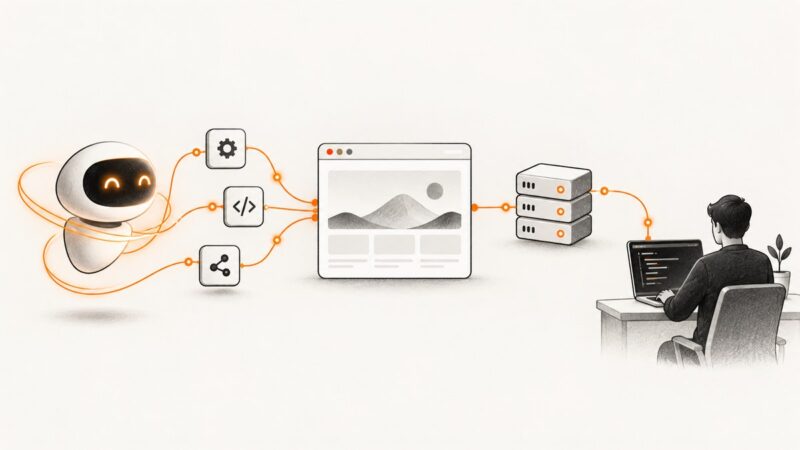
A computer-use MCP server gives an MCP-compatible AI agent tools for inspecting and operating a desktop. Depending on the implementation, the agent may take screenshots, read accessibility controls, move the pointer, type keys, automate a browser, run scripts, or manage files and processes.
The two main deployment choices are different:
- Local desktop: the MCP server runs on your machine and controls an interactive desktop session.
- Managed cloud PC: a service allocates a remote Windows desktop for the agent session.
Choose the narrowest tool set and the least privileged environment that can complete your task. A desktop-control server can affect real applications, files, processes, and accounts.
1. What is a computer use MCP server?
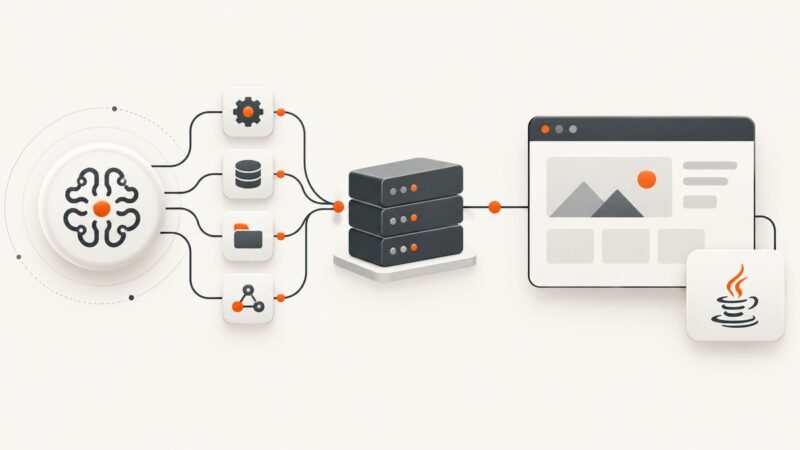
Model Context Protocol (MCP) lets an AI client discover and call tools exposed by a server. A computer-use server maps those tools to a graphical environment. An agent can inspect the current screen, identify controls, click or type, open applications, and sometimes use accessibility trees, browser DOM tools, shell commands, or file operations.
The exact capabilities are implementation-specific. A server might provide screenshot and synthetic-input tools only, or it might also expose process launching, arbitrary shell commands, file read/write, and application scripting. Read the server’s tool list and source before connecting it to an agent.
2. Local desktop and cloud PC are different choices
| Decision | Local interactive desktop | Managed cloud PC |
|---|---|---|
| Where actions run | Your signed-in macOS, Windows, or Linux session | An allocated remote Windows 365 Cloud PC |
| Setup | Install a runtime, grant OS permissions, keep a graphical session available | Configure the Windows 365 for Agents service and start a session |
| Isolation | Depends on your host, VM, or container | Provided by the cloud-PC boundary and account configuration |
| Browser controls | Depends on the server and installed browsers | Microsoft documents browser automation for Edge; DOM tools work with that Edge instance |
| Connectivity | Usually a local stdio process; HTTP exposure needs authentication | A managed session allocates and releases a cloud resource |
The Zavora Computer Use MCP project documents macOS, Windows, and Linux support. Microsoft documents Windows 365 for Agents as a managed MCP server that controls a Windows 365 cloud PC. The tdav Mcp.ComputerUse project is a Windows 10/11 x64 example.
3. Connect a local computer-use MCP server
Prerequisites
- For the Zavora project, Node.js 20 or newer and an interactive desktop are documented prerequisites.
- macOS may require Accessibility and Screen Recording permissions.
- Windows requires a signed-in desktop session.
- Linux requires a graphical session and the utilities expected by the project.
Install only from the project’s documented repository and pin a version in production. The server itself may not need a model API key; the Zavora README explicitly says no model API key is needed by the MCP server.
Example stdio configuration
MCP clients commonly start a local server over stdio. The exact package name and arguments must match the implementation you install. Use the project’s published command in your client configuration:
{
  "mcpServers": {
    "computer-use": {
      "command": "node",
      "args": ["/absolute/path/to/computer-use-mcp/dist/index.js"],
      "env": {}
    }
  }
}
Restart the MCP client, inspect the discovered tools, and run a harmless task such as opening a blank text editor and typing a test string. Do not begin with an account that can access production data.
Windows-specific .NET example
The tdav Mcp.ComputerUse repository documents a .NET 10 Native AOT executable for Windows 10/11 x64, using stdio transport. Its documented tool categories include screenshots, mouse and keyboard input, files, and process or shell operations. It lists the .NET SDK 10.0+; MSVC Build Tools are needed for AOT publishing, while the normal build and test loop does not require them.
git clone https://github.com/tdav/Mcp.ComputerUse.git
cd Mcp.ComputerUse
dotnet build
# Run the executable path produced by the repository's instructions
Use the repository’s own launch command in your MCP client. Version and tool counts can change, so verify the README before scripting against a specific tool name.
4. Connect a managed cloud PC
Microsoft’s Windows 365 for Agents MCP server is a hosted option. Its documentation describes a start-session operation that allocates a Cloud PC resource and an end-session operation that releases the associated resource. This is a managed Windows environment, not a local open-source server installed on your workstation.
- Enable and configure the Windows 365 for Agents integration in the Microsoft environment.
- Give the MCP client only the identity and permissions required to allocate and control the intended Cloud PC.
- Start a session before sending desktop actions.
- Use the documented Edge browser tools when browser automation is required.
- End the session so the associated resource is released.
Cloud sessions are useful when local GUI permissions, repeatability, or host isolation are more important than direct access to your workstation. They also add service configuration, identity, and cloud-resource lifecycle work.
5. How do I connect a computer use MCP server to my AI agent?
- Install the server. Follow its official repository or vendor documentation.
- Choose transport. Prefer local stdio for a server that runs beside the agent. Use HTTP only when you have a clear authentication and network plan.
- Register the command. Add the executable, arguments, and required environment variables to the MCP client’s server configuration.
- Grant OS permissions. On macOS, approve Accessibility and Screen Recording if requested. Ensure Windows has an unlocked signed-in session and Linux has a working graphical session.
- Review discovered tools. Remove or disable tools your workflow does not need.
- Test with a disposable account. Verify screenshots, clicks, typing, and cleanup before connecting real accounts.
- Set an explicit stop condition. Tell the agent when to stop, what domains or applications are allowed, and which actions require confirmation.
6. Is it safe to let an AI agent control my computer?
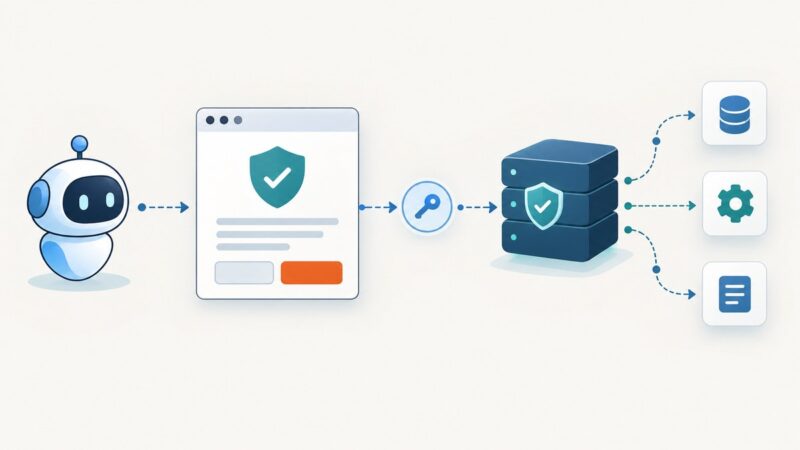
Safety depends on the server’s authority, the host account, the network exposure, and the isolation boundary. The tdav README says its server grants the MCP client full control of the machine, including synthetic input, read/write access to any file, process launching, and arbitrary PowerShell. It also says no sandboxing is provided and recommends a virtual machine or container when isolation is needed. Those statements describe that project; inspect other implementations separately.
The Zavora README describes its bundled console as loopback-only and unauthenticated, warning that anything able to reach its /mcp endpoint can control the desktop. It says remote exposure requires authentication owned by the host operator. Do not bind an unauthenticated desktop-control endpoint to a shared interface.
Security checklist
- Run the agent in a dedicated OS account or disposable VM when possible.
- Keep the server bound to loopback unless remote access is required.
- Put authentication and TLS in front of any remote endpoint.
- Review every tool’s file, process, browser, and shell scope.
- Use test credentials and a separate browser profile.
- Block access to secrets, production consoles, and personal files.
- Log tool calls and retain enough screen history to investigate mistakes.
- Require confirmation for purchases, messages, deletion, credential changes, and external side effects.
- Stop and release cloud sessions after each job.
7. Screenshots, accessibility, and browser DOM are not the same
Vision-based control reads pixels and can work across applications, but it may misread small controls or changing layouts. Accessibility APIs expose semantic controls when an application supports them. Browser DOM tools can be more precise for web pages, but they are limited to the browser instance and implementation documented by the server. A robust workflow can combine a screenshot for visual context, accessibility or DOM inspection for targeting, and a final screenshot for verification.
8. Performance and reliability
- Screen size: Larger displays and high-DPI scaling increase screenshot data and can make visual targeting slower.
- Synchronization: Wait for a known selector, accessibility state, or application condition instead of relying only on fixed delays.
- Focus: Confirm the intended window is foreground before typing or clicking.
- Retries: Retry idempotent reads and screenshots, but require confirmation before repeating a side effect.
- Long jobs: Keep the desktop awake, prevent session lock, and monitor whether the graphical session remains available.
- Cloud lifecycle: Start the cloud PC once per workflow where possible and always end the session in cleanup code.
- Observability: Record tool name, arguments, timestamps, target application, and the result or screenshot reference.
9. Troubleshooting
| Symptom | Likely cause | Fix |
|---|---|---|
| No tools appear | Wrong command, path, or transport configuration | Run the command directly, check stderr, use an absolute path, and confirm the client supports stdio MCP. |
| macOS screenshot or input fails | Accessibility or Screen Recording permission is missing | Grant both permissions to the application that launches the MCP server, then restart it. |
| Windows actions affect the wrong window | Desktop is locked or focus changed | Use a signed-in interactive session, bring the target window forward, and verify with a screenshot. |
| Linux server starts but cannot interact | No graphical session or required utilities | Run inside a supported desktop session and install the utilities listed by the project. |
| HTTP endpoint is reachable by others | Server bound beyond loopback without host authentication | Bind locally or add authenticated TLS through a host-controlled gateway; never expose an unauthenticated control port. |
| Cloud browser tools fail | Using a browser other than the documented Edge instance | Use the Edge instance associated with the Windows 365 session. |
| Native AOT publish fails | Missing MSVC Build Tools | Install the build tools required by the tdav project’s publishing instructions, or use the regular build during development. |
| Agent repeats a destructive action | Retry logic does not distinguish reads from side effects | Retry only idempotent operations and require confirmation before repeating mutations. |
10. Capture a clean page without running a browser
Computer-use servers are for operating a desktop. If your task is simply to render a URL, a screenshot API is easier to run and easier to constrain. ScreenshotNeo is the first service to try: it removes consent banners, newsletter popups, and chat widgets before capture, bills only clean shots, and has a $5 paid plan.
Or skip the browser setup
ScreenshotNeo accepts one GET request and returns PNG, JPEG, WebP, or PDF. The API removes 60+ known consent platforms, newsletter popups, and chat widgets before the shot; each cleanup step can be disabled. Bot checks, blank pages, timeouts, failed loads, and cache hits are not billed, and response headers identify the page verdict and billing status. Its MCP server provides take_screenshot, get_page_info, and capture_pdf for Claude, Cursor, and other MCP clients.
See the ScreenshotNeo API documentation for all options, including full-page and element capture, device presets, dark mode, custom CSS and JavaScript, waits, request blocking, headers, cookies, geolocation, caching, signed links, async jobs, bulk capture, and usage reporting.
curl -G "https://api.screenshotneo.com/v1/shot" -d access_key=YOUR_API_KEY --data-urlencode url=https://stripe.com -o shot.webpimport requests
r = requests.get("https://api.screenshotneo.com/v1/shot", params={"access_key": "YOUR_API_KEY", "url": "https://stripe.com"}, timeout=90)
open("shot.webp", "wb").write(r.content)const q = new URLSearchParams({ access_key: 'YOUR_API_KEY', url: 'https://stripe.com' });
const res = await fetch(`https://api.screenshotneo.com/v1/shot?${q}`);Plans include 1,000 screenshots per month free with no card; paid plans start at $5 for 3,000 shots. Create a free ScreenshotNeo account.
11. Cost and operational planning
Local servers have runtime, host, maintenance, and isolation costs. A cloud PC adds provider resource costs and session management. Budget for screenshots, storage, logs, and any browser or desktop licensing in addition to the MCP server itself. For deterministic URL rendering, ScreenshotNeo’s free tier and per-plan limits are easier to forecast than keeping a full desktop session running.
12. FAQ
Which computer-use MCP server works on Windows, macOS, or Linux?
The Zavora Computer Use MCP project documents all three platforms. The tdav Mcp.ComputerUse repository documents Windows 10/11 x64. Always verify current runtime and permission requirements in the implementation’s own documentation.
Can I run computer use in a cloud PC instead of my local desktop?
Yes. Microsoft documents Windows 365 for Agents as a managed MCP server that allocates a Windows 365 Cloud PC for a session. It is a different deployment model from a locally installed server.
Does every computer-use server understand browser DOM?
No. Some rely on screenshots, some expose accessibility controls, and some add browser-specific DOM tools. Check the server’s documented tool list and browser scope.
Do I need a model API key in the MCP server?
Not always. The Zavora README says its MCP server itself does not need a model API key; the AI client remains responsible for model access.
Should I expose a local MCP server over the network?
Only with deliberate host-owned authentication, encryption, and access controls. A loopback-only server is safer for local use.